Estudio de caso de una transición de alto riesgo: Lighthouse Children’s Village

Better Care Network and Kinnected

La Aldea Infantil Lighthouse se estableció en 2004 como una institución de atención residencial de gestión privada y financiada con fondos privados. En 2014, su donante principal desde hace mucho tiempo tomó la decisión de eliminar gradualmente la atención institucional de apoyo financiero. Este estudio de caso destaca algunas de las señales de advertencia tempranas y el posterior descubrimiento de comportamientos no éticos y delictivos que a veces se pueden observar en un proceso de transición.

Estudio de caso del proceso del cambio: Haciendo la Transición del Orfanato Firefly

Better Care Network and Kinnected

Este estudio de caso destaca algunas de las dinámicas clave que surgieron a lo largo del proceso de transición de sus servicios de la atención residencial a la programación no institucional de una organización y examina cómo esas dinámicas influyeron en la transición y determinaron el tipo de apoyo brindado, así como el más apropiado. estrategia de transición. El estudio de caso se organiza en torno a las distintas etapas de la transición y explora algunos de los temas clave descritos en la Herramienta de evaluación de modelos de atención en transición.

Estudio de caso de las condiciones que conllevan a una transició n segura: Bridges Safehouse

Better Care Network and Kinnected

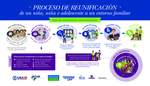
Este estudio de caso destaca algunos de los requisitos previos para el punto de partida de una transición exitosa de la atención residencial a un modelo no residencial, muchos de los cuales a menudo se pasan por alto o se subestiman. El estudio de caso se organiza en torno a las distintas etapas de la transición y explora algunos de los temas clave descritos en la Herramienta de evaluación de modelos de atención en transición.

Minimum Standards for the Care of Children in Residential Care Facilities

Catholic Relief Services (CRS)

This document presents a set of minimum standards of care, which it is recommended that residential care facilities (RCFs) strive to adopt, particularly those RCFs engaged with or receiving support from CRS. The standards are designed to be applicable to a variety of residential care settings and are recommended to be used to promote care practices and approaches that contribute to positive child well-being.

Webinar Recording: COVID-19, Children, and Caregiver Loss

Georgetown University's Collaborative on Global Children's Issues, Global Health Initiative, and Berkley Center for Religion, Peace, and World Affairs

This panel discussed coronavirus-associated caregiver loss and the work being done by the international community, the U.S. government, and faith-based actors to support vulnerable children and turn the tide toward better care. It was moderated by Gillian Huebner, executive director of the Georgetown University Collaborative on Global Children’s Issues.

Hidden Pain: Children Who Lost a Parent or Caretaker to COVID-19

Social Policy Analytics, COVID Collaborative

Among the more than 760,000 deaths from COVID-19 in the United States are parents, custodial grandparents, or other caregivers on whom children had relied for financial, emotional, and developmental support. Many of these children already faced significant social and economic adversity, and these devastating losses can impact their development and success for the rest of their lives. This report estimates the number of children who lost a parent or other caregiver to COVID-19 and provides concrete recommendations for urgent actions to protect these vulnerable children and their remaining caregivers.

File

Ending Corporal Punishment in the Early Years of Childhood: An Essential Right and Need of Every Child

Early Childhood Development Action Network, Global Partnership to End Violence Against Children

This briefing, authored by Jorge Cuartas with End Violence and the Early Childhood Development Action Network examines evidence from research on the impacts of violent punishment on young children, global prevalence and progress towards universal prohibition, and strategies to end corporal punishment. It adds yet more weight to the call that all countries must take steps to prohibit and eliminate violent punishment of all children without delay.

File

Au-delà des soins en établissement: Feuille de route pour la réforme du système de protection et de prise en charge des enfants pour les gouvernements d’Amérique latine et des Caraïbes

Hope and Homes for Children

Au-delà des soins institutionnels fournit un cadre aux gouvernements pour développer leur propre feuille de route pour la réforme et la désinstitutionnalisation du système de protection et de garde des enfants. Nous espérons qu'il inspirera une conversation, guidera le dialogue interministériel et interprofessionnel, soutiendra les groupes multidisciplinaires à tous les niveaux pour encadrer leur propre évaluation et planifier leur propre feuille de route pour le changement.

File

Más allá del cuidado institucional: Una hoja de ruta para la reforma del sistema de protección y cuidado infantil destinada a los Gobiernos de América Latina y el Caribe

Hope and Homes for Children

Más Allá del Cuidado Institucional proporciona un marco para que los gobiernos desarrollen su propia hoja de ruta para la reforma de sus sistemas de protección y cuidado infantil y la desinstitucionalización. Esperamos que esto inspire el diálogo, guíe las conversaciones entre grupos interministeriales y en la sociedad, oriente a grupos
multidisciplinarios de todos los niveles en la creación de su propia evaluación y ayude en la planificación de su propia hoja de ruta para el cambio.

File

Beyond Institutional Care: A roadmap for child protection and care system reform for governments in Latin America and the Caribbean

Hope and Homes for Children

This report provides a framework for governments to develop their own roadmap for child protection and care system reform and deinstitutionalisation. The authors hope that it will inspire a conversation, guide inter-ministerial and cross society dialogue, support multidisciplinary groups at all levels to frame their own assessment, and plan their own roadmap for change.

File

Toolkit for Disability Inclusion in Care Reform: Communication Strategies to Promote Family Care for Children with Disabilities

Changing the Way We Care

In this document, the awareness raising and advocacy is on behalf of or to benefit children with disabilities—many of whom may struggle to communicate because of their disability or whose voices are not heard—and because adults, systems and services often do not consider the opinions of children and children with disabilities are often left behind in changing or improving systems of care.

Toolkit for Disability Inclusion in Care Reform: Service and Resource Mapping Guidance to Support Inclusion of Children with Disabilities

Changing the Way We Care

This guidance specifically refers to mapping of services as the process of locating and sharing information to a wide range of people about available services to support children with disabilities and their families.

Toolkit for Disability Inclusion in Care Reform: Participation & Advocacy (Half Day Learning Workshop)

Changing the Way We Care

This is a presentation for a half-day workshop on participation and self-advocacy approaches for working with children with disabilities and their families; includes slides, facilitation notes and a sample list of country-specific disability rights.

Toolkit for Disability Inclusion in Care Reform: Facilitator’s Guide - Introduction to Identification of Developmental Delay and Disability

Changing the Way We Care

This facilitator’s guide accompanies the workshop slides by the same title, 'Introduction to the Identification of Developmental Delay and Disability' as part of the Toolkit for Disability Inclusion in Care Reform. It is designed to be used by the person providing the workshop.

Toolkit for Disability Inclusion in Care Reform: Disability Terminology and Resources

Changing the Way We Care

The terminology and tips that follow may help as you use the Toolkit for Disability Inclusion in Care Reform and apply its principles to your program activities. It is recommended that you become familiar with these terms before reading the rest of the content and revisit as needed. Please keep in mind that disability is an evolving concept. Language that is preferred in one context may be different in another. Ask local organizations of persons with disabilities (OPDs) for the preferred terms in your language and country text.
Toolkit for Disability Inclusion in Care Reform

Changing the Way We Care

This Toolkit for Disability Inclusion in Care Reform represents a collection of work developed from the experience of many practitioners and organizations. The aim of this toolkit is to increase the capacity and confidence of those working in children’s care, child protection and family strengthening to mainstream disability through every step, utilizing improvements to systems, practices, skills and attitudes. We envision family care for all children and the use of residential care only as a last resort when absolutely necessary and appropriate. The toolkit reinforces the importance of placing family care for children with disabilities at the top of any care reform agenda.

Ruta de coordinación para la derivación y seguimiento de casos de nna en proceso de reunificación y reintegración entre hogar de primera infancia zacapa de sbs, iniciativa “Cambiando la Forma en que Cuidamos” (CTWWC) y sede Departamental SBS en Zacapa

Changing the Way We Care and SBS Departmental Headquarters in Zacapa

Esta ruta fue aprobada por la Secretaría de Bienestar Social para ser utilizada en Zacapa por los trabajadores sociales y psicólogas que están involucrados en el proceso de manejo de caso para la reintegración de los niños y niñas del cuidado residencial hacia el cuidado familiar. Esta diseñada para apoyar la celeridad de los procesos y atención a casos.

File

Procedimiento sustantivo realizado por la Procuraduría General de la Nación para prevenir la separación familiar innecesaria en Guatemala, Quetzaltenango y Zacapa

Changing the Way We Care

El objetivo principal del informe es sistematizar el procedimiento sustantivo en los Departamentos de Guatemala, Quetzaltenango y de Zacapa realizado por Procuraduría General de la Nación (PGN) en el que se individualiza el tipo de amenaza o vulneración en el caso concreto e identifica si la misma puede ser resuelta mediante una intervención gubernamental específica, sin necesidad de intervención jurisdiccional y su análisis. El documento contiene un estudio del Sistema de Gestión para la Atención Integral de la Niñez y la Adolescencia, en relación al funcionamiento por parte de la Procuraduría General de la Nación de Quetzaltenango, Guatemala y Zacapa, y un análisis de casos resueltos judicialmente en Zacapa que podrían haberse tramitado previamente en la vía administrativa y evitar la institucionalización (gatekeeping mechanism en ingles)

File

National Care System Assessment Toolkit

Changing the Way We Care

This toolkit includes guidance for implementing the care system assessment, the assessment framework itself, and corresponding training materials. Together, this guidance document, the framework and training resources are intended to support stakeholders to plan and conduct an assessment, use assessment results to develop a national strategy and, over time, monitor progress in strengthening national care systems.

Care System Assessment Framework

Changing the Way We Care

This is an assessment framework with a series of assessment questions for countries interested in furthering care systems. It is intended as a participatory self-assessment and planning exericse to continue to improve national care systems. This assessment information can then be used to develop strategy and action planning towards improving systems of care. This document should be used together with CTWWC's Care System Assessment Guidance document. 

National Care System Assessments: Guidance to conduct a participatory self-assessment to inform national strategic planning

Changing the Way We Care

This guidance document is intended to support countries to assess nationalcare systems using the Care System Assessment Framework developed and implemented by Changing the Way We CareSM. This document is part of a toolkit that includes the assessment framework and corresponding training materials. Together, this guidance document, the framework and training resources are intended to support stakeholders to plan and conduct an assessment, use
assessment results to develop a national strategy and, over time, monitor progress in strengthening national care systems.

File

The Power Behind Good Intentions: A toolkit for critical European volunteering organisations and Global Education practitioners

Service Civil International Austria

This toolkit is the outcome of four seminars organised by the Service Civil International (SCI), and calls for all volunteering organisations in Europe to take a strong stand against racism and colonialism. 

File

Residential Care: U.S. Giving and Missions

Barna Group

This report contains the findings from a nationally representative study conducted by Barna Group of U.S. Christians to better understand U.S. Christian beliefs around and support for orphanages, children’s homes and other forms of residential care for children. It includes data on the amount of funding given to residential care, as well as visits and short-term missions to orphanages.

File

Readjusting to Parenthood: Peer Support Groups for Grandparents Assuming Care for Orphaned Children (Upendo Village, Kenya)

Better Care Network

When parents pass away, grandparents often assume the role of caregivers. Being thrust back into parenthood during a time of immense grief, and with a two-generation gap to bridge, introduces a range of challenges grandparents must overcome. This video look at the learning of practitioners from Upendo Village in Kenya in supporting grandparents caring for grandchildren after their own children have passed away from HIV/AIDs.

Grandmothers are Part of the Parenting Network, Too! A longitudinal study on coparenting, maternal sensitivity, child attachment and behavior problems in a Chinese sample

Xi Liang, Yige Lin, Marinus H. Van IJzendoorn, Zhengyan Wang

Grandmothers are important in Chinese families. This study explored the early emerging mother-grandmother-infant network and its association with a child's socioemotional development in multigenerational families in a non-WEIRD country. 

File

Case Study: Malaika Babies Home Uganda

Better Care Network, Child's i Foundation, USAID

Overtime, and after realising the full cost of running even a small residential program, and witnessing first-hand the developmental gains made by children once placed in foster care, Child’s i Foundation made a decision to fully transition and phase out their residential care program entirely.

File

Cycles of Exploitation: The Links Between Children's Institutions and Human Trafficking

Emiel Coltof and Abigail Munroe

This Global Thematic Review examines the growing evidence of the links between the institutionalisation of children and human trafficking. It highlights how the relationship between the two compounds the harmful nature of both phenomena and offers insight into the global response needed.

Catholic Care for Children: Principles, Beginnings, & Impact

Catholic Care for Children - A Family for Every Child

Catholic Care for Children (CCC) is a visionary initiative, led by Catholic sisters, to see children growing up in safe, nurturing families. Guided by the biblical mandate to care for the most vulnerable and animated by the principles of Catholic Social Teaching—especially the dignity of each person—CCC teams are reducing the need for institutional care by encouraging and facilitating family- and community-based care for children.

File

Kinderen zonder ‘thuis’

Mirjam Vossen, Loïs Batteux, Patricia Nieuwenhuizen

Miljoenen kinderen in ontwikkelingslanden kunnen tijdelijk of langdurig niet thuis wonen. Soms omdat hun ouders zijn overleden of omdat de problemen thuis te groot zijn. Soms omdat ze zijn weggelopen of van hun familie gescheiden door oorlogen, rampen of kinderhandelaren. Het lot van deze kwetsbare kinderen gaat veel mensen aan het hart. Ze starten een project, doen vrijwilligerswerk met kinderen of ondersteunen een weeshuis.

Voor hen is Kinderen zonder ‘thuis’ bedoeld.

File

Children Without a 'Home'

Mirjam Vossen, Loïs Batteux, Patricia Nieuwenhuizen

Millions of children in developing countries are unable to live at home for a variety of reasons. The fate of these children is a concern for many people. Some start projects, volunteer with children or support an orphanage. This guide is for them. It is also important for organisations that do not specifically focus on vulnerable children. Because children without sufficient paren-tal care are everywhere: in schools, villages and poor areas in big cities.

File

Webinar Recording: Transforming Children's Care Webinar #7: Foster Care

Transforming Children's Care Global Collaborative Platform

This webinar, co-hosted with the Martin James Foundation, explores lessons learned in the development and strengthening of foster care systems in a number of countries and contexts, including emerging foster care systems in Bulgaria, Uganda, Cambodia, and Bangladesh as well as the more established foster care system in the UK, with a view to examining challenges and successes in implementation.

Participant Handbook Companion: Practical Life Skills - A workshop for care leavers and those who have recently left care aged 18 to 25 years

Kenya Society of Care Leavers, Changing the Way We Care

This participants handbook has come into being by care leavers for care leavers. It has been developed based on the myriad of challenges shared and experienced by care leavers, hoping with the hope that it will support others leaving care.

File

Facilitator's Guide: Practical Life Skills - Workshops for care leavers and those who have recently left care aged 18 to 25 years old

Kenya Society of Care Leavers, Changing the Way We Care

This series of resources are designed by care leavers for care leavers to help equip youth for life outside of care, strengthen coping strategies, foster safety nets and community networks. It builds from earlier life skills work that the Kenyan Society of Care Leavers has done, supported by Changing the Way We Care with global best practices.

File

Facilitator's Guide: Practical Life Skills - Workshops for care leavers and those remaining in care aged 14 to 17 years old

Kenya Society of Care Leavers, Changing the Way We Care

This series of resources are designed by care leavers for care leavers to help equip youth for life outside of care, strengthen coping strategies, foster safety nets and community networks. This Facilitator's Guide is based on the 10 to 13 guidebook and 18 to 25 guidebook.

File

Facilitator Guide: Practical Life Skills - Workshops for care leavers and those remaining in care aged 10 to 13 years old

Kenya Society of Care Leavers, Changing the Way We Care

This series of resources are designed by care leavers for care leavers to help equip youth for life outside of care, strengthen coping strategies, foster safety nets and community networks. It builds from earlier life skills work that the Kenyan Society of Care Leavers has done, supported by Changing the Way We Care with global best practices.

File

Policy Brief: International Review of Parent Advocacy in Child Welfare

Better Care Network, International Parent Advocacy Network

This policy brief summarizes the key findings and recommendations from the International Review of Parent Advocacy in Child Welfare in low, middle and high-income countries, and identifies elements of a strategy to strengthen children’s care and protection through parent participation.

File

Put Children First: Recommendations to End Orphanage Volunteering and the Institutionalisation of Children

Put Children First: End Orphanage Care Campaign

Research has shown the harm of orphanage care on children’s health, development and wellbeing and how orphanage volunteering is working to perpetuate these institutional systems which separate children from their families and communities. There is now a global movement to end both practices. These key policy recommendations were published as part of the "Put Children First: End Orphanage Care" campaign.

File

Global COVID-19 Associated Orphanhood Webinar

Centers for Disease Control and Prevention (CDC)

The COVID-19 pandemic is destined to leave millions more children without family caregivers. Increases in mortality of parents and other caregivers in the COVID-19 pandemic are accompanied by increases in extreme vulnerability from loss of livelihoods, schooling, health recovery and usual sources of service provision and support. This webinar aims to bring an understanding of how COVID-19 will affect the lives of children, how lessons learned from prior emergencies can be adapted, and how an understanding of complex adversities can maximize the effectiveness of our response.

The Views of Children in Residential Care on the COVID-19 Lockdown: Implications for and their well-being and psychosocial intervention

Carme Montserrat, Marta Garcia-Molsosa , Joan Llosada-Gistau and Rosa Sitjes-Figueras

Recent international research has warned of the impact of the COVID-19 lockdown on vulnerable children. However, little is known regarding the in-care population. The objective of this study was to find out how children in residential care perceived the influence of the COVID-19 lockdown in their everyday life, relationships and subjective well-being. Participants and setting: 856 children from 10 to 17 years old (Mage = 15.5, males = 71.2%, females = 28.8%) living in residential centres in Catalonia.

File