Social Service Workers Mitigating the Impact of COVID-19
In this blog post, the Global Social Service Workforce Alliance describes how the social service workforce is responding to the COVID-19 pandemic and highlights relevant resources and tools.
In this blog post, the Global Social Service Workforce Alliance describes how the social service workforce is responding to the COVID-19 pandemic and highlights relevant resources and tools.
In this joint statement, 21 global leaders in child protection call for an urgent, united effort to address violence against children as part of the broader response to COVID-19.
This document from the United Nations Office for the Coordination of Humanitarian Affairs (OCHA) outlines the Global Humanitarian Response Plan for COVID-19, a joint effort by members of the Inter-Agency Standing Committee (IASC), including UN, other international organizations and NGOs with a humanitarian mandate, to analyse and respond to the direct public health and indirect immediate humanitarian consequences of the pandemic, particularly on people in countries already facing other crises.
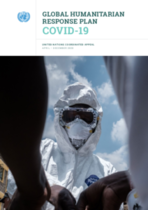
This appeal seeks to respond to additional needs which have emerged, or may do so in the short and medium term, in national contexts currently affected by humanitarian situations, as well as those that present more stable environments yet are equally vulnerable to the global pandemic, due to ill-prepared health systems and assistance mechanisms to respond at scale.
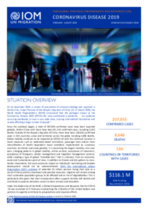
This webpage from the International Organization for Migration (IOM) website features resources on COVID-19 and migration, including IOM's COVID-19 Global Strategic Preparedness and Response Plan (SRP).
This note sets out how the children and young people your organisation supports are affected and what you can ask your government to do to ensure that they have the information they need to stay safe.
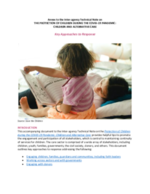
This accompanying document to the Inter-agency Technical Note on the Protection of Children during the COVID-19 Pandemic: Children and Alternative Care provides helpful tips to promote the engagement and participation of all stakeholders, which is central to maintaining continuity of services for children.
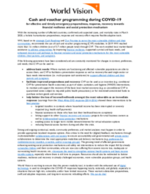
This one-page document from World Vision outlines how cash and voucher programming (CVP) can be used to support vulnerable families in light of the COVID-19 pandemic.
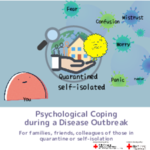
This document features mental health and psychosocial support messages developed by Hong Kong Red Cross for families, friends, colleagues of those in quarantine or self-isolation.
The considerations presented in this document have been developed by the WHO Department of Mental Health and Substance Use as a series of messages that can be used in communications to support mental and psychosocial well-being in different target groups, including carers of children, during the outbreak.