
File
Displaying 901 - 910 of 2252
In this article, the authors analyse how interventions of the State may undermine, rather than activate, the caring capabilities of vulnerable families across the life course, drawing on examples from Australia, England and the USA.
This research gathers data on the volume of search queries that indicate an intention to do orphanage volunteering in a foreign country in order to gauge the pro-active demand for this type of volunteering in five different countries (Australia, France, Germany, United Kingdom, United States of America).
Since 2017, The Chronicle of Social Change has been working to build the first public resource on foster care capacity in the United States, through the Who Cares project which collects data directly from each state, and combines it with specially obtained federal reports. This executive summary provides and overview of methodology and findings of the Who Cares project for 2019.
On Sept. 19, the Casey Foundation hosted a webinar sharing data and lessons from the first phase of Learn and Earn to Achieve Potential (LEAP)™, an effort to boost employment and educational opportunities for young people ages 15 to 25 who’ve experienced homelessness or been involved with public systems.
The purpose of this article is to provide an introduction to social workers of child welfare reform by class action lawsuits and subsequent consent decrees in the United States.
In this article for the Washington Post, Judith S. Lewis discusses the findings from several studies on separated children in the UK after World War II in relation to the family separation of migrant families in the US today.
This article from the New York Times tells the story of a man in New York whose daughter was removed from his care and placed into foster care due child abuse committed by his daughter's mother.
The current study compares risk factors and sleep in a sample of foster care alumni and low-income young adults aged 18–24.
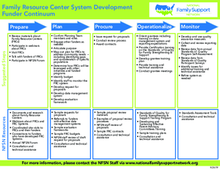
This guide from the National Family Support Network provides a brief outline of suggested steps for funders to invest in Family Resource Centers, including resources from the National Family Support Network for each step.
This study aims to explore parents’ lived experiences of receiving child neglect allegations and how they make sense of these experiences.