Physical and mental health changes in aging foster parents: Do child behavioural problems hasten declines?
This study examined foster parent physical and mental health over time.
This study examined foster parent physical and mental health over time.
The aim of this paper is to describe and analyse the notion of age and maturity in child protection proceedings in order to elucidate how these aspects could influence children's rights to participate.
This article reports on a qualitative study involving 31 social workers and provides an analysis of their experiences and dilemmas in working with families marked by high levels of conflict between separated parents.
The authors of this study compared individual patterns of change in three parenting outcomes in 256 at risk parents with young children attending the group‐based Growing Up Happily in the Family program delivered in municipal social services.
This resource from Save the Children US features tools and tips for parents, caregivers, teachers and all those who care about children in crisis.
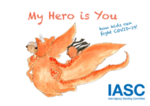
This book was a project developed by the Inter-Agency Standing Committee Reference Group on Mental Health and Psychosocial Support in Emergency Settings (IASC MHPSS RG). This is a story developed for and by children around the world on how to cope with the COVID-19 pandemic.
This guidance is for Chief Officers, professional leaders in children’s services and child protection committees, who should ensure it is taken account of within local partnerships.
This guidance from Health Protection Scotland is to support those working in social or community care and residential settings (residential children’s homes, including secure children’s homes) to give advice to their staff and users of their services about COVID-19.
This advice from Public Health England is to help adults with caring responsibilities look after the mental health and wellbeing of children or young people, including those with additional needs and disabilities, during the coronavirus (COVID-19) outbreak.
CELCIS has gathered together important guidance, information and resources to help children and families in Scotland and the UK during the COVID-19 crisis.
This resource from the U.S. National Child Traumatic Stress Network will help you think about how an infectious disease outbreak might affect your family—both physically and emotionally—and what you can do to help your family cope.
This guidance from the UK Department for Education and the Department for Public Health England answers some key questions regarding meeting the needs of vulnerable children during the COVID-19 crisis, including children in care and children with a child protection plan.
This webinar reviews how to transition to remote gender-based violence (GBV) assessments and services in light of the COVID-19 pandemic.
This webinar reviewed the impacts of the COVID-19 crisis on women and girls and how to mitigate the risks of gender-based violence (GBV).
This country care review includes the Concluding Observations of the Committee on the Rights of the Child.
This country care review includes the care related Concluding Observations adopted by the Committee on the Rights of the Child.
As part of a larger project on decision‐making at intake, this systematic review addressed the question of the factors associated with worker decisions to investigate alleged maltreatment referrals.
The current study seeks to explore clinicians' and parents' perspectives regarding the role of psychotherapy services (e.g. individual or conjoint counselling/therapy) for child welfare cases.
This study examines how the interpretation of vulnerability by the national shelter system for male UAMs in Greece shapes their trajectories into adulthood.
This study investigated the association between resilience and burnout in a Swiss population of professional caregivers working in youth residential care.
Building on an earlier pilot study where foster carers of young children saw education as something that largely happens outside the home, this paper presents a knowledge exchange project that aimed to build foster carers' self‐concept as educators.
This article contributes to the growing area of research appertaining to the use of mobile communication devices and the internet by children in care in order to maintain contact with family and friends. It is based on a triadic method of semi-structured interviews with 12 young people and their foster carers and social work practitioners.
Using an ethnographic approach including interviews, walks, observation and photomap making, this article reports on the findings from a unique pilot study of the social and educational lives of young foster children (aged 0‒4) in an inner London borough.
This paper (1) examines the human rights concerns and challenges that often emerge as states respond to epidemics – with specific reference to state responses to COVID-19 – across different phases of the response, and (2) summarizes states’ human rights obligations and the key human rights laws, standards and principles that must be reflected in these responses.
This document from Human Rights Watch provides an overview of human rights concerns posed by the coronavirus outbreak, drawing on examples of government responses to date, and recommends ways governments and other actors can respect human rights in their response. It includes chapters on protecting people in custody and institutions, fulfilling the right to education, and addressing the disproportionate impact on women and girls.
This brief article from the Lancet reviews the UK's response to the needs of people living in homelessness during the COVID-19 crisis.
FEANTSA calls for public authorities at local, regional, national and European level to take these seven measures to protect homeless people and public health.
This resource from the Consortium for Street Children aims to answer the questions of those who work with street-connected children in light of the COVID-19 crisis.
This guide aims to help parents and families of children who are looked after in the care system during the Coronavirus outbreak.
This Comment will propose a theoretical international criminal law response to the family separation that occurred in summer 2018.
This guide summarizes findings from relevant literature on what helps emerging adults (including youth transitioning from foster care) succeed, describes examples of how US communities are innovating to meet those needs, and shares key takeaways from interviews with emerging adults.
This multilevel meta-analysis compared the outcomes of Treatment Foster Care Oregon for Adolescents (TFCO-A) and home-based treatment programs (HBT) with residential youth care for children and youth aged 0 to 23 years.
The aims of this article were to identify the types and characteristics of social support for families in vulnerable situations and to analyze what elements influence families’ attitudes towards these supports.
This chapter describes and proposes a new social inclusion model for supporting unaccompanied minors in becoming autonomous, as they are one of the most vulnerable groups of contemporary migration flows.
This study addresses the ethnic identity of transculturally placed adolescent foster youth with ethnic minority backgrounds in The Netherlands. The authors conducted qualitative interviews to provide insight into the lifeworlds of twenty foster youth. They found that constructing an ethnic identity was complex for these ethnic minority foster youth.
This brief report describes social media-based advertising strategies employed to recruit an anonymous sample of young adults who had recently aged out of foster care to participate in an online survey.
This study examines the psychosocial impact of rural-to-urban migration on youth in China, a fast-urbanizing country with 268 million rural migrant workers and 103 million migrant youth. Using data from 2012 China Family Panel Studies (n = 2084, age 10–15), this study examines psychosocial disparities (depressive symptoms, social relationships, and future aspirations) among youth migrated with parents, youth left behind by migrant parents, and their peers.
This paper attempts to determine socio-economic structure of female labor migrants from Tanahun District of Gandaki Province, Nepal. Similarly, it also attempts to analyze the causes of female migration, process and dynamics of foreign labor migration and its impact on the left behind family specially children and elder citizens at home.
The present research contains two studies: in Study 1 the authors compared prosocial behavior between emerging adults with left-behind experience (EA-LB) and their non-left-behind counterparts; in Study 2, the authors, adopting a sub-sample of Study 1, examined the direct and interactive effects of parental autonomy support, mindfulness, and gender on prosocial behavior in EA-LB.
In this study conducted over a couple of years, the authors design and develop a digital hub deployed to serve children living on the streets in Dhaka, the capital of Bangladesh.
Through an online study, the authors of this paper explored the links between familial (parents/grandparents) Indian Residential School (IRS) attendance and subsequent involvement in the child welfare system (CWS) in a non-representative sample of Indigenous adults in Canada born during the Sixties Scoop era.
Analyzing how a public health approach helps to fill these gaps, this paper presents a systematic, conceptual and practical case for incorporating a public health approach in the measurement of and programming for separation of children in humanitarian settings.
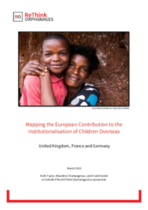
Significant anecdotal evidence suggests that other countries across Europe also make a considerable contribution to the supply chain of people, money and resources that continue to sustain and foster the orphanage industry worldwide. This report seeks to map the contribution of the three countries in Europe with the largest volunteer travel markets: The United Kingdom, Germany and France.
This webpage from the Global Partnership to End Violence Against Children features resources to protect children, protect yourself, and stay informed of the latest information on COVID-19.
Esta página de Plataforma de Infancia presenta una selección de los artículos o recursos educativos que han identificado hasta ahora y que pueden facilitar la tarea de hablar con niñas y niños sobre el coronavirus y resolver sus dudas.
The Alliance of Child Protection in Humanitarian Action with UNHCR hosted a webinar to explore the key considerations for adapting child protection responses in refugee settings to the current pandemic, including broader protection considerations.
This document is a repository of resources focusing on Covid-19, disability, mental health, chronic health conditions and related topics curated by the International Disability and Development Consortium Inclusive Health Task Group (IDDC IHTG) and the CORE Group Disability Inclusive Health Technical Advisory Group.
In this short video, Richard Weissbourd, a senior lecturer at the Harvard Graduate School of Education, shares ideas about how adults can talk to children about the coronavirus.
Save the Children Italy has launched an extraordinary intervention program for children and adolescents involved in their projects. The program aims to be a valid support for vulnerable minors and their families.
This guidance provides an overview of the risks associated with COVID-19 outbreak that could cause children to be left without appropriate parental care, and provides scenarios for where children may be identified as separated in Iraq due to issues related to COVID-19.
In this webinar, veteran online instructors help identify steps to move online and strategies for adapting the lessons already in motion to this new format.
This comment from the Lancet reviews the implications of the COVID-19 crisis on children's mental health, including children who are separated from their caregivers.
This resource brings together new 2019 novel coronavirus disease (COVID-19) content from across The Lancet journals as it is published.
This article from UNICEF offers seven ways employers can support parents working to care for themselves, their children and their families during the COVID-19 outbreak.
This list of educational applications, platforms and resources below aim to help parents, teachers, schools and school administrators facilitate student learning and provide social care and interaction during periods of school closure.
This brief article from SOS Children's Villages offers some tips on how parents can best address the topic of COVID-19 with their children.
This article from UNICEF outlines 8 tips for parents and caregivers on how to talk to children about the coronavirus.
This Guidance Note aims to provide humanitarian child protection practitioners, particularly child protection advisors and program managers, with guidance on how to engage in responses to infectious disease outbreaks to ensure children’s protection needs are taken into account in preparedness for, and during responses to, the outbreaks.
This briefing note provides an overview of the Guidance Note: Protection of children during infectious disease outbreaks which provides child protection practitioners with guidance on how to ensure that children's protection needs are considered in preparation for, and in response to, infectious disease outbreaks.
The Alliance for Child Protection in Humanitarian Action hosted a global webinar introducing the newly-released Guidance Note: Protection of Children During Infectious Disease Outbreaks (IDOs) and associated briefing paper.
This Guidance Note aims to provide humanitarian child protection practitioners, particularly child protection advisors and program managers, with guidance on how to engage in responses to infectious disease outbreaks to ensure children’s protection needs are taken into account in preparedness for, and during responses to, the outbreaks.
This study guide is a companion to Guidance Note: Protection of Children during Infectious Disease Outbreaks, which provides humanitarian child protection practitioners with guidance on how to engage in responses to infectious disease outbreaks to ensure children’s protection needs are taken into account in preparedness for, and during responses to, the outbreaks.
This guide from UNICEF East Asia and Pacific Region provides guidance on preparing for, and responding to child protection needs during the COVID-19 crisis.
This webpage from Save the Children features answers to frequently asked questions about the coronavirus, as well as advice for talking to your children about the situation.
This webpage from ZERO TO THREE features resources offering tips for families including age-appropriate responses to common questions, a guide to self-care, and activities for young children experiencing social distancing.
The Psychological First Aid Training Manual for Child Practitioners (PFA) was developed by Save the Children Denmark for the Child Protection Initiative, to facilitate training in psychological first aid with a focus on children.
This report examines three Ebola-affected countries – Liberia, Sierra Leone, and Guinea – to analyse the degree to which the response was successful in addressing the scale and unique nature of the child protection situation that arose due to the epidemic.
On Monday, January 23, 2017, the Alliance’s Minimum Standards for Child Protection in Humanitarian Action (CPMS) Working Group organized and led the webinar “What have we learned from the child protection response in epidemics during the Ebola crisis?”
Using an ethnographic approach including interviews, walks, observation and photomap making, this article reports on the findings from a unique pilot study of the social and educational lives of young foster children (aged 0‒4) in an inner London borough.
The study reported here was undertaken as part of a children’s health needs assessment in an English local authority. It sought to understand why looked after children experience such high levels of poor mental health and make growing demands on therapeutic services.
This statistical release provides national and local authority (LA) level information on the outcomes for children who have been looked after continuously for at least 12 months at 31 March 2019, by local authorities in England.
This paper from the Annie E. Casey Foundation provides guidance for state child welfare agencies on what to consider when developing a preventive practice model that aligns with the requirements of Family First, addresses the unique needs of families within local communities and ensures that selected programs and practices are feasible to implement with quality.
This paper reports findings from an innovative arts-based intervention with Looked After Children and Young People and concludes that holding these competing value sets in creative tension is central to the success of the programme in helping young people to cope with and contest social harm.
In this chapter, the authors describe the scale-up and impact of a linked multilevel intervention in a public child welfare system.
This study aimed to examine characteristic and outcome of mothers and babies focusing on the teen-mothers and their existing risk-behaviors, also to evaluate factors associated with subsequent foster care placements of their infants.
This report from the VAWG Helpdesk explores the ways in which the COVID-19 pandemic may impact on violence against women and girls, based on emerging evidence, including increased risk of corporal punishment, sexual exploitation, and abuse of girls, as well as intensification of child protection issues due to children being separated from caregivers.
Este documento de ONU Mujeres describe los impactos e implicaciones de COVID-19 para mujeres y niñas en América Latina y el Caribe, incluyendo el riesgo más alto de violencia.
This analysis from CARE highlights the impacts of the COVID-19 crisis on women and girls, including the increased risk of violence and/or separation from caregivers for children, particularly girls.
This resource outlines the gender impacts of the COVID-19 crisis, including the greater risk of exploitation and violence for women and children, as well as some recommendations for mitigating and responding to these challenges.
The Alliance for Child Protection in Humanitarian Action hosted a webinar on 24 March 2020 to introduce the new Technical Note: Protection of Children during the COVID-19 Pandemic.
This page on the website for the Inter-Agency Standing Committee Gender-based Violence (GBV) Guidelines contains COVID-19-specific resources and pulls from the knowledge-base of ebola, zika and cholera outbreaks.
Este recurso de Changing the Way We Care ofrece una guía en la adaptación y/o el desarrollo de servicios y programas para continuar atendiendo de mejor forma a los NNA y las familias durante este periodo de tiempo de cambio constante, particularmente en el monitoreo virtual de niños, niñas, adolescentes, sus familias y para el personal de hogares de protección durante la pandemia de COVID-19.

Este documento de Changing the Way We Care utiliza un marco ecológico para mostrar como la pandemia del COVID-19 crisis podría afectar a los NNA, las familias y las comunidades y como ayudar a los programas a reorganizar, adaptar y priorizar las actividades de prevención y respuesta.
This brief from Changing the Way We Care uses an ecological framework to help illustrate how the COVID-19 crisis might impact the children, families and communities and how to help programs adapt, reorganize and prioritize prevention and response activities.
This call to public authorities presents recommendations from RELAF for preventing family separation and implementing adequate care and protection measures to protect children’s rights put at risk by the pandemic and its implications.
This resource provides specific guidance to parents on how to talk to children about, and help them understand, the COVID-19 crisis.
This note from the GBV AoR Helpdesk aims to provide practical support to Gender-Based Violence (GBV) practitioners to adapt GBV case management service delivery models quickly and ethically during the current COVID-19 pandemic.
The authors of this paper conducted a review of the psychological impact of quarantine, including the impact on children, using three electronic databases.
This briefing from the World Health Organization (WHO) outlines actions for meeting the needs of people with disabilities during the COVID-19 pandemic.
This concept note from the Better Care Network (BCN), the Child Protection in Crisis Learning Network (CPC Learning Network) and the Child Protection Monitoring and Evaluation Reference Group (CP MERG) calls for the participation of other leading organizations in an inter-agency coalition, the Children’s Care Research Initiative, in an effort to strengthen the evidence base around the best ways to improve care for children and to reinforce global capacity to utilize this evidence.
This article from the Children's Bureau of the U.S. Administration for Children and Families provides information and resources on the COVID-19 crisis for child welfare workers, children involved in the child welfare system, foster care providers, and more.
A la luz de la pandemia de COVID19 y su impacto desproporcionado en las personas con discapacidad, la Alianza Internacional de Discapacidad (IDA) ha compilado la siguiente lista de las principales barreras que enfrentan las personas con discapacidad en esta situación de emergencia junto con algunas soluciones prácticas y recomendaciones.
This webpage from Be Strong Families features resources for families during the COVID-19 crisis.
This statement from the Center for the Study of Social Policy emphasizes the need to respond to the needs of children, youth, and families who are likely to suffer most during the COVID-19 crisis, including children, youth, and families in institutional settings and families involved in the child welfare system.
In this statement on the COVID-19 pandemic, the U.S. Center for the Study of Social Policy calls for more support for those who are likely to be hurt most by the current crisis, particularly low-income families.
For this study, one hundred and twenty‐six 11–21 year olds (53 who had experience of the care system and 73 who did not) were recruited from the community and NHS. All participants had self‐harmed in the past 6 months. Participants completed an Audio Computer‐Assisted Self‐interview (ACASI) regarding their views about the support they had received, how helpful it was, and what further help they felt they needed.
This page from the UNICEF website features the latest updates, explainers for parents and teachers, and resources for media related to COVID-19.
In this comment, the authors have suggested ways that the Chinese government could establish and improve the intervention system based on sound scientific advice, to effectively deal with the mental health problems caused by public health emergencies.
These guidelines reflect the insights of practitioners from different geographic regions, disciplines and sectors, and reflect an emerging consensus on good practice among practitioners. The core idea behind them is that, in the early phase of an emergency, social supports are essential to protect and support mental health and psychosocial well-being. In addition, the guidelines recommend selected psychological and psychiatric interventions for specific problems.
This literature scan identifies and synthesizes existing literature examining the effects of pandemics and the identification of policy solutions to mitigate their effects on a well defined group of Canada’s population—children in the care of Canada’s child welfare system.