The African Report on Child Wellbeing 2008: How child-friendly are African governments?
Assessment of individual African government's performance in regards to child welfare.
This report presents the findings of an assessment conducted between 8 July and 22 August 2006 that gathered and analyzed information on inter-country adoption to support strengthening Liberia’s adoption laws and develop operating guidelines for adoption agencies.
Evaluates the need for reform within Nepal's intercountry adoption programming and the broader needs within the child protection and alternative care arenas nationally.
This country care review includes the care-related Concluding Observations adopted by the Committee on the Rights of the Child and the Committee on the Rights of Persons with Disabilities.
This Program Review documents the evolution of EveryChild/Partnerships for Every Child’s Program in Moldova since 1994, presenting the development of interventions to improve the lives of children through deinstitutionalization and identifying the best practices and lessons that may be relevant, useful, and replicable to other initiatives and organizations around the world.
Although the relationship between child sexual abuse and mental disorders life has been well established, the health consequences of other forms of child maltreatment, including physical abuse, emotional abuse, and neglect have not been systematically examined. This study summarizes the evidence relating to the possible relationship between child physical abuse, emotional abuse, and neglect, and subsequent mental and physical health outcomes.
This Child Welfare Information Gateway bulletin for professionals in the US discusses what chronic neglect is and reviews ways to work with families experiencing chronic neglect, including critical elements of successful casework practice, examples of what agencies are doing, and ways agencies can integrate child welfare approaches to chronic neglect with prevention and early intervention efforts.
This paper presents new estimates of the average lifetime cost per child maltreatment (CM) victim in the United States and aggregate lifetime costs for all new cases of CM incurred in 2008 using an incidence-based approach. The authors find that the lifetime economic burden of CM is approximately $124 billion. Given this substantial economic burden, the authors argue that the benefits of prevention will likely outweigh the costs for effective programs.
In this article, Kathryn Joyce the author of the book 'The Child Catchers: Rescue, Trafficking, and the New Gospel of Adoption' chronicles the rapidly growing evangelical movement for international adoption in the United States, and its impact on children and their families, with a particular focus on Liberia.
Charts that accompany the article Orphan Fever: The Evangelical Movement’s Adoption Obsession, illustrating the trends in international adoptions from Liberia, Kyrgyzstan, Ethiopia, Uganda, and Haiti to families in the United States.
The Congressional Coalition on Adoption Institute’s The Way Forward Project brought together a group of international experts to discuss opportunities and challenges facing governmental and non-governmental organization leaders in six African nations (Ethiopia, Ghana, Kenya, Malawi, Rwanda, and Uganda) as they work to develop systems of care that serve children in and through their families.
This country care review includes the care-related Concluding Observations adopted by the Committee on the Rights of the Child and the Committee on the Rights of Persons with Disabilities.
This country care review includes the care-related Concluding Observations adopted by the Committee on the Rights of Persons with Disabilities and the Committee on the Rights of the Child.
This country care review includes the care-related Concluding Observations adopted by the Committee on the Rights of the Child and the Committee on the Rights of Persons with Disabilities.
This country care review includes the care related Concluding Observations adopted by the Committee on the Rights of Persons with Disabilities as part of its examination of Tunisia’s initial report adopted by the Committee at its fifth session.
The Millennium Development Goals will come to an end in 2015 and discussions are currently taking place on what framework will replace them. Children’s participation is crucial to these discussions. Between July 2012 and March 2013, members of Family for Every Child consulted with children living in seven different countries. This report summarizes the main findings that emerged from these consultations.
This paper is the culmination of a series of inter-agency papers on the links between child protection and major development goals, designed to feed into the thematic debates around the post-2015 development framework.
The lack of care and protection facing children is a global crisis. This paper is part of an inter-agency series originally developed to feed into the global thematic consultation for the post MDG framework: ‘Addressing Inequalities. The Heart of the Post-2015 Development Agenda and the Future We Want for All.’ It looks at the relationship between this lack of care and protection and inequality. It explores how inadequate care and protection produces and contributes to inequalities and how inequality is itself a cause of inadequate care and protection. The paper also examines the long-lasting impact of inadequate care and protection which greatly affects children’s life chances into adulthood, suggesting that inadequate care and protection is in itself a form of inequity.
This statement from a group of international and national agencies working towards children's protection include recommendations for the inclusion of a major goal and specific targets on children's care and protection as part of the framework that will replace the current Millennium Development Goals in 2015.
This paper was commissioned by Family for Every Child and is part of an inter-agency series on the links between child protection and major development goals. This report focuses on the links between child protection and economic growth.
This paper is part of an inter-agency series on the links between child protection and major development goals. The report focuses on the links between child protection and population dynamics as they relate to the post-2015 Millennium Development Goals agenda.
This paper is part of an inter-agency series on the links between child protection and major development goals. The report focuses on the links between child protection and good governance as they relate to the post-2015 Millennium Development Goals development agenda.
This systematic review, co-registered within both the Cochrane and Campbell Collaborations, summarizes the evidence from empirical studies comparing the effectiveness of interventions that have been established to promote inclusion and reintegration, and to reduce harm, in street-connected children and young people (who work and/or live on the streets) worldwide. The review includes 11 studies, evaluating 12 interventions from high income countries. No studies from middle and low income countries are included due to inadequate quality of available studies.
This document is a Bulgarian language summary brochure of the Manual of Good Practice titled ‘Child Abandonment and its Prevention in Europe,’ specific to child abandonment in Bulgaria.
This document is a Danish language summary brochure of the Manual of Good Practice titled ‘Child Abandonment and its Prevention in Europe,’ specific to child abandonment in Denmark.
This document is a French language summary brochure of the Manual of Good Practice titled ‘Child Abandonment and its Prevention in Europe,’ specific to child abandonment in France.
This document is a Hungarian language summary brochure of the Manual of Good Practice titled ‘Child Abandonment and its Prevention in Europe,’ specific to child abandonment in Hungary.
This document is a Polish language summary brochure of the Manual of Best Practice titled ‘Child Abandonment and its Prevention in Europe,’ specific to child abandonment in Poland.
This document is a Romanian language summary brochure of the Manual of Best Practice titled ‘Child Abandonment and its Prevention in Europe,’ specific to child abandonment in Romania.
This document is a Slovakian language summary brochure of the Manual of Best Practice titled ‘Child Abandonment and its Prevention in Europe,’ specific to child abandonment in Slovakia.
This document is an English language summary brochure of the Manual of Best Practice titled ‘Child Abandonment and its Prevention in Europe,’ specific to child abandonment in the UK.
This document is an English language summary brochure of the Manual of Best Practice titled ‘Child Abandonment and its Prevention in Europe,’ specific to child abandonment in Romania.
This article briefly summarizes the literature on elements of research, practice, and policy pertaining to the development and care of children raised in institutions. It covers such children’s development while they reside in institutions and after their transition to adoptive or foster families.
The study covers all residential child care institutions operating in Armenia, with the purpose of creating a basic baseline for further analysis required for the progressive reduction of placement of children and the development of alternative child care services. The aim of the assessment is to verify the situation of each child in relation to their families, and the respect of their entitlements related to their specific condition.
This report, commissioned by Plan International, and supported by Consortium for Street Children (CSC) through collaboration and information, and written by GCPS, provides an analysis of the situation of street involved children, how their issues are currently addressed within legislative and policy frameworks, and highlights programmatic initiatives being implemented by International and local NGOs. Its aim is to inform and provide suggestions for improved practice by NGOs working with street involved children.
In 2009 Eurochild carried out a survey of the situation of children in alternative care in Europe through its member organisations. The survey was not intended as a scientifically rigorous research exercise but rather to identify what information is readily available and to note some common trends across Europe.
Say and Play is an interactive tool designed for orphans and vulnerable children from three to six years old and those who care for them. It uses pictures, stories and games to help children talk about their lives and, through these activities, it guides adults to identify and support the emotional and social needs of children.
Family engagement is the foundation of good casework practice that promotes the safety, permanency, and well-being of children and families in the US child welfare system. This brief offers information to help State child welfare managers improve family engagement across program areas.
Retrak is an organization that works with street children in Africa. This report offers an evaluation of the impact of Retrak's programs in Ethiopia and Uganda in its pilot period (2011 and 2012) and the progress of the children involved in the programs using the Child Status Index (CSI), as a measurement of child wellbeing and a tool for tracking children’s progress as they transition from the street to family homes.
This report, published by the National Society for the Prevention of Cruelty to Children (NSPCC) in the UK, highlights the need to improve outcomes for children leaving care and returning to parents or families. The NSPCC provides recommendations for policymakers and practitioners to improve the quality of assessment, planning, and preparation regarding when and if a child should be returned home from care and to increase the support for children and their families once they return to their families.
This 5-minute animated video depicts a theory of change for achieving breakthrough outcomes for vulnerable children and families. It describes the need to focus on building the capabilities of caregivers and strengthening the communities that together form the environment of relationships essential to children’s lifelong learning, health, and behavior.
This Resource Guide was developed to support service providers in the US in their work with parents, caregivers, and their children to prevent child abuse and neglect and promote child and family well-being. The Resource Guide was created primarily to support community-based child abuse prevention professionals who work to prevent child maltreatment and promote well-being. However, others such as policymakers, parent educators, family support workers, health-care providers, program administrators, teachers, child care providers, mentors, and clergy also will find the resources useful.
This report presents the survey Kevin Browne and colleagues conducted in 33 European countries to identify the number and characteristics of children less than three placed in residential care without their parents for more than three months during the year ending December 31, 2003. The purpose was to assess the rate and cost of residential care as a response to children in adversity.
This report, produced by the Joint United Nations Programme on HIV/AIDS provides an update on the global AIDS epidemic as well as information on HIV prevention and treatment, HIV/AIDS as it relates to human rights and gender, HIV investments, HIV/AIDS estimates and data, and country progress indicators and data. Particularly relevant to children’s care are the sections on children orphaned due to the loss of one or both parents to HIV/AIDS.
This 15-month project aimed to map the number and characteristics of children under three placed in European institutions for more than three months without a parent as this information was previously unknown.
This paper is the first in a series of four papers that aim to critically assess the expanding evidence base on child maltreatment with the aim of informing policy and practice relating to child maltreatment. The series focuses mainly on high-income countries and eastern European countries that are in economic transition, since the problem and systems for response differ in low-income and many middle-income countries. This first paper of the Series aims to quantify the magnitude of the problem, its determinants, and consequences.
This article provides an update on a series of projects that have highlighted the issue of institutionalization of children in Europe, arguing that babies and small children aged less than 3 years old, with or without disability, should not be placed in residential care without a parent or primary caregiver.
In this commentary, Kevin Browne and Shihning Chou focus on the issues raised by the critical responses to their article in Adoption & Fostering.
The study reported by Shihning Chou and Kevin Browne explored the link between institutional care for young children and international adoption, using a survey of 33 European countries. The evidence suggests that, rather than reduce the number of children in institutions, international adoption may contribute to the continuation of this harmful practice. A child rights-based approach to providing alternative care for children separated from their parents is proposed.
This study by Shihning Chou, Kevin Browne and Melanie Kirkaldy investigated whether intercountry adoption agencies on the internet upheld the principles of the UN Convention of the Rights of the Child (UNCRC 1989) and the Hague Convention (1993).
Save the Children's "First Resort" series focuses on the needs and rights of children who, for a wide variety of reasons, are lacking adequate parental care. This third paper in the First Resort series presents practical examples of the range of options available to policy-makers, practitioners and others with responsibilities for the care and protection of children without adequate parental care.
This background paper and individual country briefs were commissioned to examine the current status of family support services and alternative care in 18 sub-Saharan Francophone, four Anglophone and two Lusophone African countries (a total of 22 countries). This background paper represents a comparative regional analysis, providing an overview of the current situation and illustrating promising practices, opportunities and challenges.
This background paper draws attention to the child protection reforms to be made to gatekeeping access to services. The paper draws attention to critical linkages to relevant legal, policy and procedural reforms and the reform of services to support children and families.
Retrak, a UK-based organization working with street children in Africa, has published an excellent practical manual detailing its standard operating procedures (SOPs) for family reintegration for children working or living on the street. This document includes guiding principles of family reintegration, key steps, tools, monitoring and evaluation, as well as variations on the key steps of family reintegration.
This report looks at children who enter institutional care because of being without parental care, children with disabilities, child victims of abuse and children in conflict with the law. The aim is to identify key routes through the systems in order to understand the nature of the difficulties that lead children to be placed in institutions and thereby to be able to identify alternative strategies that will better support families and children.
This resource guide is based on and elaborates the UN Committee on the Rights of the Child General Comment No. 12, ‘The Right of the Child to be Heard.’ The aim of this handbook is to try to make easier the task of governments in moving that agenda forward.
This handbook aims to provide a useful tool and reference for all those engaging with and within religious communities and faith-based institutions and organisations to prohibit and eliminate corporal punishment of children. It provides information, tools and resources which can be used to work in partnership with others, engage with religious leaders, mobilise support and encourage multi-religious and community collaboration towards the prohibition and elimination of all corporal punishment of children.
This study provides a new contribution to our learning about neglect by exploring the circumstances in which neglect can be catastrophic and have a fatal or seriously harmful outcome for a child. It provides a systematic analysis of neglect in serious case reviews in England, between 2003 and 2011.
This document is the seventh, and final, chapter of Doing Better for Children: The Way Forward, produced by the Organisation for Economic Co-operation and Development. The aim of this chapter is to contribute to the policy debate on child well-being, synthesising the previous chapters and drawing on the existing research and policy literature.
This manual offers a training session targeted at policy makers, professionals and paraprofessionals who are already working on programs to support children without appropriate care, or who may begin work in this area. This workshop focuses on children in developing contexts, who require support within their families and those who need an alternative care placement.
This presentation, conducted by Peter Evans at the Second Child Protection Forum in Bishkek from 12 to14 May, 2009, includes information on gatekeeping, including a definition, the components of gatekeeping, a flowchart of entry routes for children into institutions, outlines of assessments and intervention plans, monthly monitoring and information systems, and more.
This report provides data on children living in urban settings, including statistics, conditions, and personal testimonies. The report also includes UNICEF’s recommendations for policy regarding children in urban settings, working with this population, and for future action. Sections that are relevant to children’s care include: children living and working on the streets, migrant children, urban emergencies, and many more.
This document represents the agreements made at the Second International Conference on Children and Residential Care in Stockholm, Sweden, held from 12 to 15 May, 2003. The conference was sponsored by the Swedish Foreign Ministry and the Swedish International Development and Co-operation Agency (Sida). The document includes the principles and actions, regarding children and residential care, that were agreed upon by the participants at the conference.
This paper is a response to the increasing need for agreement on approaches and documented evidence of good practices consistent with system strengthening work. The purpose of the Inter-Agency Working Paper is to consolidate current thinking, examples and lessons learned about child protection system strengthening in sub-Saharan Africa and suggest a way forward.
This paper, written for a US audience, describes recent efforts to reduce child poverty by a peer country, Britain. Drawing on research carried out over the past decade, this paper summarizes what we know about Britain’s war on poverty, their likely next steps, and implications and lessons for the US.
A series of three videos on how early experiences are built into our bodies and brains.
The Essential Package (EP) is a comprehensive set of tools and guides for policy makers, program managers and service providers to address the unique needs and competencies of young children, particularly those affected or infected by HIV/AIDS, in an integrated and holistic way. The work that has been conducted to date encourages service providers to consider the holistic needs of children according to their ages and stage of development as well as cultural context and resources available within their community.
This 10-page newsletter, translated into English, is issue number two of a series produced by the “Protecting children of Moldova from family separation, violence, abuse, neglect and exploitation” project, which is implemented by Partnerships for Every Child, the Ministry of Labour, Social Protection and Family of Moldova, and the Ministry of Education of Moldova.
This newsletter, translated into English, is the first of three issues produced by the “Protecting children of Moldova from family separation, violence, abuse, neglect and exploitation” project, which is implemented by Partnerships for Every Child, the Ministry of Labour, Social Protection and Family of Moldova, and the Ministry of Education of Moldova.
Representatives from International Social Service, Save the Children, and SOS Children’s Villages met with the African Committee on Experts on the Rights and Welfare of the Child during its 21st session on 15 April, 2013 to present on the international Guidelines for the Alternative Care of Children (UNGA resolution A/RES/64/142) and its new implementation Handbook “Moving Forward.”
TransMonEE is a database that captures a vast range of data on social and economic issues relevant to the situation and wellbeing of children, adolescents and women in 28 countries of Central and Eastern Europe, Commonwealth of Independent States and the European Union. This document includes inter-country comparisons of data on several issues related to children’s care.
This data pack, produced by the Department for Education, aims to summarize national data about children who leave care aged 16 and over and outcomes of care leavers at age 19. The pack was also developed to help local authorities to compare their performance with others and to investigate issues such as age of leaving care and placement stability on the outcomes of care leavers.
This Charter lists the promises that care leavers want the central and local governments to make. The Charter for Care Leavers is designed to raise expectations, aspirations and understanding of what care leavers need and what the government and local authorities should do to be good “Corporate Parents.”
This report analyzes how a small sample of 12 children’s homes in England achieved and sustained outstanding status over a period of three years. The report describes and interprets what inspectors found to be the reasons for success in these outstanding homes and how the providers themselves explained the factors that contribute to outstanding care. The experience of the children and young people who live in these homes is also a key element of the report as it is, of course, the real hallmark of quality.
This informational note for action, produced by World Day of Prayer and Action for Children, aims to support religious communities and partners in promoting “positive parenting” and non-violent disciplining of children.
The purpose of this paper is to provide background information and offer pragmatic steps in relation to priority no. 3 of the European Declaration on the Health of Children and Young People with Intellectual Disabilities and their Families: “To transfer care from institutions to the community”. The paper was produced in preparation for the conference in Bucharest, Romania 26-27 November, 2010.
This document contains the UK National Minimum Standards (NMS) applicable to residential family centres.
This document contains the UK National Minimum Standards (NMS) applicable to the provision of adoption services.
Volume 2 of the Children Act 1989 Guidance and Regulations provides guidance, primarily addressed to local authorities and their staff in England, about their functions under Part 3 of the Children Act 1989 which concerns the provision of local authority support for children and families. In particular it describes how local authorities should carry out their responsibilities in relation to care planning, placement and case review for looked after children.
The Training, Support and Development (TSD) standards form part of a foster carer's induction into the role. They provide a national minimum benchmark that sets out what foster carers should know, understand and be able to do within the first 12-18 months after being approved.
This guide provides professionals in the UK with information about registering as a children’s social care provider. It helps those considering registration to decide whether to apply and what processes their applications will go through before a decision is made as to their suitability to be registered.
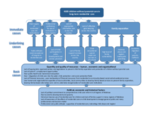
This graphic provides a visual representation of the causal framework of children’s institutionalization in Moldova. It was developed as part of the USAID/DCOF-funded project “Protecting children in Moldova from family separation, violence, abuse, neglect and exploitation.”
This paper was submitted to the Inter-Agency Task Team (IATT) on Children affected by HIV and AIDS in June 2013. It presents findings from a study commissioned by the IATT.
This preliminary report analyzes the practice of foster care in Argentina. The material will be useful for the development of foster care services in the Latin American region, due to the fact that the situation of foster care in Argentina can be seen as a model of the current regional context.
This paper is based on The Latin American Report: The situation of children in Latin America without parental care or at risk of losing it. Contexts, causes and responses, which was prepared using reports from 13 countries in the region. The paper gives an overview of the state of one of the most fundamental rights - the right to parental care, a keystone for the right to live in a family and a community.
This paper, produced by RELAF, is part of a series of publications on children without parental care in Latin America: Contexts, causes and answers. This document, and others in the series, pertains to the broad topic of children without parental care and examines the particular situation of institutionalised children.
The main aims of this assessment were to identify and address problems in both the domestic and intercountry adoption processes, with a view to assisting Viet Nam in its preparations to accede to the 1993 Hague Convention on Intercountry Adoption (THC-93); and to review the new draft law on adoption, and propose any amendments that may appear necessary to ensure compliance with international standards and good practice.
The 2013 KIDS COUNT Data Book provides a detailed picture of how children are faring in the United States. In addition to ranking states on overall child well-being, the Data Book ranks states in four domains: Economic Well-Being, Education, Health, and Family and Community.
General Comment 14, issued by the Committee on the Rights of the Child, refers to article 3, paragraph 1, of the Convention on the Rights of the Child that asserts the right of the child to have his or her best interests taken as primary consideration in all actions or decisions that concern him or her (in both the public and private spheres).
The USA-based National Child Traumatic Stress Network has recently released a second edition of the Child Welfare Trauma Training Toolkit, which is part of the Child Welfare Trauma Training course. The course assists those in the field of child welfare who wish to learn more about child welfare and trauma.
This paper provides details of research into the gatekeeping system in Bulgaria for children under three and examples from recent Bulgarian and international practice. It suggests that gatekeeping could benefit from a social development orientation including activities to combat poverty and promote social inclusion through supporting community and family strengths.
This paper presents a comprehensive literature review of evidence-based parenting programs from around the world. The report reviews published literature from 2000 to 2012 and summarizes empirically based recommendations for supporting and strengthening child-caregiver relationships in the context of AIDS and poverty.
Following three previous initiatives – the Road to Toronto, the Road to Vienna, and the Road to Washington, The Coalition for Children Affected by AIDS, with the cooperation and support of other UNICEF, UNAIDS and organizations, led the Road to Melbourne meeting in New York on May 30-31, 2013. The objective of the meeting was to influence funder and policy-maker priorities, and country-level practice for children affected by AIDS and their families.
This country care review includes the care related Concluding Observations adopted by the Committee on the Rights of the Child as part of its examination during the sixty-third session (27 May-14 June 2013) of Israel’s second to fourth periodic reports to the Convention on the Rights of the Child, as well as other care-related concluding observations, ratification dates, and links to the Universal Periodic Review and Hague Intercountry Adoption Country Profile.
This country care review includes the care-related Concluding Observations adopted by the Committee on the Rights of Persons with Disabilities during the seventeenth session (20 March 2017 - 12 April 2017) of the Convention on the Rights of Persons with Disabilities.
This country care review includes the care related Concluding Observations adopted by the Committee on the Rights of the Child as part of its examination during the sixty-third session (27 May-14 June 2013) of Guinea Bissau’s second through fourth periodic reports to the Convention on the Rights of the Child, as well as other care-related concluding observations, ratification dates, and links to the Universal Periodic Review and Hague Intercountry Adoption Country Profile.
This article describes the historical background and current situation of the child welfare system for children without parental care in Poland.
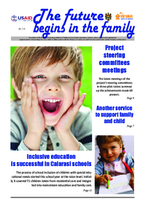
This issue No. 3-4 is one in a newsletter series concerning care reform in Moldova. The magazine was produced by Partnerships for Every Child (P4EC), an NGO in Moldova, with funding from the project, “Protecting children in Moldova from family separation, violence, abuse, neglect and exploitation.”
This paper presents an examination of the linkages between education and the deinstitutionalization of children in Azerbaijan. The paper explores the role of education in social policy and its interplay with economic policy; underlines the links needed between deinstitutionalization, inclusive education and alternative services; and examines how child protection can be understood in the context of inter-Ministerial responsibilities and coordination.
This study, published by the UNICEF Office of Research and Brooks World Poverty Institute, examines the direct, indirect, and implementation impacts of social transfers on child protection outcomes in low- and middle-income countries. The paper discusses the ways in which social transfers can promote the welfare of children by preventing violence, abuse, and exploitation of children and offers recommendations for future research, programming, and practice.