Poster: 7 Best Practices to Support Community Volunteers
A poster for Child Protection teams to emphasize the evidence based practices of engaging volunteers that were documented in the research.
File
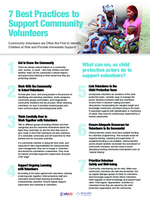
A poster for Child Protection teams to emphasize the evidence based practices of engaging volunteers that were documented in the research.
This is a 3-page document targeting donors, policy makers, and UN agencies regarding the roles of volunteers and how decision makers can support their roles
The Alliance for Child Protection in Humanitarian Action undertook an inter-agency project to provide a better understanding of community volunteers’ engagement in the case management process and develop guidance and tools to support their work.
Community volunteers are an integral part of preventing and responding to cases of violence, abuse, neglect and exploitation of children in humanitarian settings. They have a deep understanding of their communities, and help to identify children who are at-risk, have experienced harm, or have been separated from their family. Following global and field research conducted in 2020, the Alliance has produced key resources related to the roles of community volunteers in Child Protection case management in humanitarian settings.
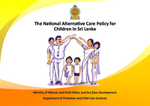
Sri Lanka's National Policy on the Alternative Care of Children outlines a comprehensive range of alternative care options and encourages the reforming of all formal structures that provide at-home and out-of-home services for children deprived of care and protection or at risk of being so. This policy also extends to children under care of the Juvenile Justice System. It provides policy solutions to programming for children at risk of family separation and facing deprivations such as child abuse, neglect, child labor, poverty, addiction, imprisonment, human trafficking, mental and physical disabilities, HIV/AIDS, domestic violence, orphanhood, abandonment and displacement etc. The policy also takes into consideration and encompasses provisions to children who are forced to live and work on streets.
It is starting to be recognised that young people with mental health and/or intellectual disabilities making the transition to adulthood from out-of-home care require focused attention to understand their needs and service requirements. Within the UK jurisdiction of Northern Ireland (NI), young people with mental health and/or intellectual disabilities are over-represented in the population of care leavers and yet very little is known about their specific needs. The overall aim of the study reported here was to examine the profile of care leavers with mental health and/or intellectual disabilities in order to better inform how best to configure child and adult service systems to meet their transitional needs.
There are limited studies which investigate the perceived needs and wellbeing of parents caring for their children with disability from culturally and linguistically diverse communities. This qualitative study uniquely explored the experiences and cultural factors of Vietnamese parents caring for children with a disability in multicultural Australia.
At least 5 million children have lost a parent or caregiver due to #COVID19 since March 2020, updated figures suggest. The authors urge actions to prioritise affected children, incl. economic strengthening, enhanced community and family support, and education.
The goal of the summit was to lead lasting change in the lives of millions of people with disabilities. To succeed, it is crucial that governments, international organizations, civil society and private business commit themselves to increased efforts to promote inclusion and rights-based development.
An estimated 6.7 million children have suffered from COVID-19-associated orphanhood and caregiver death in the past two years (as of January 15, 2022). This number is rapidly growing: every 6 seconds another child loses a parent or caregiver. This report, issued by dozens of leading international NGOs, outlines the magnitude of loss globally due to COVID-19 and presents tangible steps that the U.S. government can take to support children and families.