
Sleep in Young Adults: Comparing Foster Care Alumni to a Low-Income Sample
The current study compares risk factors and sleep in a sample of foster care alumni and low-income young adults aged 18–24.
The current study compares risk factors and sleep in a sample of foster care alumni and low-income young adults aged 18–24.
This webinar offers foundational information related to the intersection of culture, the migration journey, trauma and assessment.
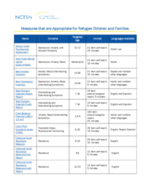
The National Child Traumatic Network (NCTN) has published a list of measures that front line professionals can use to assess the exposure to trauma among migrant and refugee families and children.
The webinar recording provides a basic overview of the intersection of early childhood development (0-5), attachment and trauma in young migrant children.
This documentary from CBS News takes viewers inside the real-life challenges facing migrant families split apart by the Trump administration's "Zero Tolerance" policy.
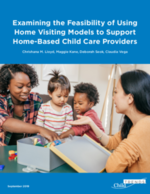
This report examines home visiting models and curricula, state- and federal-level policies related to early care and education and home visiting, funding streams to support early care and education and home visiting, and the perspectives of home-based child care (HBCC) providers and parents in order to explore the potential for scaling up this model of professional development for HBCC providers in the United States.
In this article, the stories of children left-behind by parental migration in Central America and Mexico are conveyed in their own words detailing how vulnerable they felt when abandoned, confused, and at times, rejected after finally connecting with their long-lost families.
The aim of this article is to develop proposals for the organization of a legal and regulatory framework in Russia, in accordance with the social and psychological needs of guardianship families and to identify the possibilities of the Ombudsman for the Rights of the Child to protect the rights of minors raised in guardianship families.
This study aimed to assess differences in the level of post-traumatic symptoms reported by those who experienced commercial sexual exploitation of children (CSEC) during adolescence and those who did not.
This book outlines narrative and dramatic approaches to improve vulnerable family relationships. It provides a model which offers new ways for parents to practise communicating with their children and develop positive relationships.