
Wise and Honoring Representations of Children in Media: Protecting Vulnerable Children
This guide from the Christian Alliance for Orphans (CAFO) offers strategies for protecting children in creating and sharing digital media of children.
File
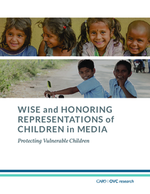
This guide from the Christian Alliance for Orphans (CAFO) offers strategies for protecting children in creating and sharing digital media of children.
This resource is free for use by organizations or individuals seeking to explore or learn more about expanding family care options for children.
CAFO engaged with markempa to study how OVC-serving organizations inspired donors to give toward a new model of family-based care. In this guide, you’ll learn the five steps to help transition your donors to improve fundraising outcomes and create the financial capacity to provide better care for vulnerable children and families.
This article examines the tension between the rhetoric of children’s rights and the realities of residential care for children in Taiwan.
This paper presents a therapeutic model of practice that incorporates Aboriginal concepts of healing and spirit within a creative therapeutic framework.
This article describes current applications of Trauma-Focused Cognitive Behavioral Therapy (TF-CBT) for Childhood Traumatic Separation.
This chapter from the Handbook of Population reviews demographic research focusing on the adoption of children.
This study reports on a qualitative investigation involving 15 young kinship care alumni in Ghana to explore what kinship caregivers' unpreparedness means and what causes them to be unprepared.
The purpose of this transcendental phenomenological study (a doctoral dissertation) was to explore how post-Ebola student-orphans enrolled in an agricultural university in rural Sierra Leone experienced post disaster specialized case management to enhance student performance.
This study examined (1) how perceived social support (PSS) varied across orphan‐related characteristics (e.g., orphan status, such as single, maternal or paternal, and their living environments, such as in child‐headed households, on the street, in an orphanage or in a foster home) and (2) the relative importance of sources of PSS (relatives/community/adults and peers) and functional social support (emotional/informational/instrumental and social) and its association with emotional well‐being and mental distress.