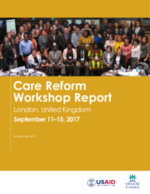
Care Reform Workshop Report: London, United Kingdom September 11-15, 2017
This report outlines the MEASURE Evaluation workshop sessions and provides highlights, key discussion points, and action items.
File
This report outlines the MEASURE Evaluation workshop sessions and provides highlights, key discussion points, and action items.
The aim of the paper is to explore selected pertinent challenges that impede child and youth care centres (CYCCs) from providing holistic support and care to children found in need of care as stated in the Children’s Act No. 38/2005.
This study determined the socio-economic status of Orphans and Vulnerable Children (OVC) in relation to service areas in Lagos Nigeria.
This article will discuss the impact of reforms on time limits in decision-making for children, questioning whether they achieve both good decisions for children and justice for families.
This country care review includes the care-related Concluding Observations adopted by the Committee on the Rights of the Child as part of its examination of Cyprus’s periodic report to the Convention on the Rights of the Child.

This country care review includes the care-related Concluding Observations adopted by the Committee on the Rights of the Child and the Committee on the Rights of Persons with Disabilities.
This country care review includes the care-related Concluding Observations adopted by the Committee on the Rights of the Child as part of its examination of Tajikistan’s periodic report to the Convention on the Rights of the Child.

This article describes the history and philosophy of foster care in Egypt.
The aim of this guide is to enable advocates to access the legal and practical tools needed to secure an end to, and compensation for, violations of rights suffered while in institutional care.
This policy brief highlights the work of the Grandfamilies Advocacy Network Demonstration to advocate for policy reforms for grandfamilies in the US.