Displaying 371 - 380 of 384
A comprehensive tool kit providing a methodology, questionnaire and software for assessing the needs of young children affected by the HIV/AIDS epidemic. Used to help design of service programs, secure funding, and monitor and evaluate programs specifically targeting the needs of young children and their families.
Research project examining the problems faced in the education of youth in care in Canada. Provides recommendations for supporting high school education and for including children in their educational planning.
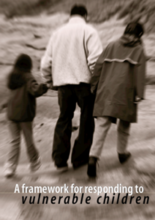
An overview of the key challenges surrounding youth in crisis and the framework for dealing with these issues based on Save the Children principles in youth programming. Includes detailed examination of international programming examples.
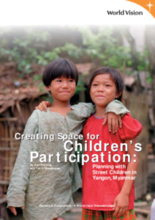
Summarizes an empowerment evaluation of the Street and Working Children Program in Yangon and Mandalay. Includes detailed methodology and lessons learned.
Discusses the importance, benefits and challenges to community mobilisation for refugees and other displaced persons, with a particular emphasis on children. Includes facilitators notes, participatory exercises, overheads, and handouts.
Discusses the value of the UK Children in Need assessment framework for use by Victorian Family Services (Australia).
Resource pack for a course introducing the skills necessary for communicating with children. Includes facilitator’s notes, exercises, and handouts, as well as a list of relevant resources.
This report reviews existing the literature on separated children and examines childhood, family, childcare practices and separation. It highlights the importance of context and child participation in designing programs and policies to assist separated children.
This report reviews childcare policy for separated children in the Central Europe and the Balkan States. It emphasizes the need to establish training, resources and effective procedures in order to meet the standards outlined in the Statement of Good Practice. Data from Bulgaria, Croatia, the Czech Republic, Estonia, Hungary, Latvia, Lithuania, Poland, Romania, Slovakia and Slovenia is presented.
Guidance on principles and recommendations for work with children and adolescents who survive landmine injuries. Appendices include detailed lists of relevant resources.