
Displaying 641 - 650 of 1810
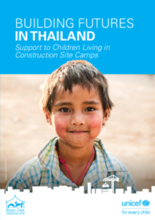
This report is based on in-depth interviews with migrant children and parents, real estate and construction companies, government Ministries, and NGOs. It explores the challenges faced by children living in construction site camps, and suggests solutions that can be scaled to foster social responsibility within Thailand’s construction sector.
This exploratory study aimed to further the understanding of voluntary foster care placements, a topic on which there has been very little research and attention.
The current paper explores the accessible and equitable services to deaf children in the child welfare system, in terms of the Social Work Grand Challenge: Healthy growth and development of all youth.
In this study, the participation of children in the Dutch child protection system (CPS) under the new Youth Act 2015 is critically analyzed.
In this study, the researchers critically explore the narratives of six youth with ethnic minority backgrounds who had experienced out-of-home placements in Norway.
Widely regarded as the state-of-the-science reference on attachment, this handbook interweaves theory and cutting-edge research with clinical applications.
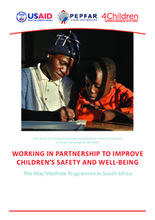
This case study is one in a series of case studies highlighting different aspects of a case management system and referral mechanisms utilized by OVC programs. The case study looks at the work of the Children in Distress Network (CINDI) in the uMgungundlovu District of KwaZulu-Natal Province (KZN) of South Africa.
This article describes the results of a scoping review to better understand child welfare professionals' and service users' (families' and children's) perspectives on and experiences with family engagement in the child protection system.
Through qualitative interviews with local child protection workers, this paper indicates that traditional values assist legislative intervention and that significant potential exists in better integration of Indigenous approaches into practice.
This brief presents key takeaway messages from a mixed methods study examining how substance use affects child welfare systems across the country.
