
Country Care Profile: Kenya
01 Sep 2023
Displaying 21 - 30 of 456
On October 2, 2025, Kenya’s government, civil society organizations, and child protection practitioners met with Lumos Kenya to launch “costed, holistic and systematic care reform roadmaps” and case management process plans to transition children from institutional care into family‐ and community‐based care.
This resource presents a costed policy study on investing in disability-inclusive and gender-responsive community care and support systems across the life cycle in Kenya, developed by the Ministry of Labour and Social Protection.
At the close of the Changing the Way We Care (CTWWC) The Changing the Way We Care (CTWWC) initiative launched in 2018 with the aim to reform child care systems by promoting safe, nurturing family-based care over institutional ca
At the close of the Changing the Way We Care (CTWWC) The Changing the Way We Care (CTWWC) initiative launched in 2018 with the aim to reform child care systems by promoting safe, nurturing family-based care over institutional ca
The Kafaalah Community Engagement Facilitator's Flipbook is a practical guide designed to support trained facilitators—such as Children Officers, Imams, Ustadh, Ustadhas, and other Muslim community leaders—in delivering community sessions on the Kafaalah. It offers structured guidance for engaging male caregivers, female caregivers, and children through interactive sessions.
The Kafaalah Facilitator’s Guide is part of a training package to strengthen understanding and implementation of Kafaalah, a family-based alternative care option for children in Kenya. Developed by the Government of Kenya with support from Changing the Way We Care, it provides structured session plans, tools, and activities to help child protection professionals and community members effectively promote and practice Kafaalah.
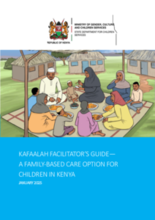
This package of materials on Kafaalah - was developed by the Government of Kenya in collaboration with Changing the Way We Care, UNICEF, and other key development partners and civil society actors.
This study explores how stigma management communication can reduce the stigmatization of adoptive parents in Kiambu County, Kenya, where cultural beliefs often privilege biological lineage over adoption. Findings reveal that adoptive parents use strategies such as concealment, disclosure, reframing, and advocacy to challenge stigma and gradually normalize adoption, highlighting the vital role of communication in transforming societal attitudes and promoting acceptance.
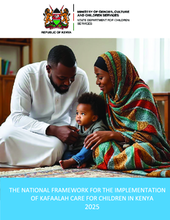
The Government of Kenya’s National Framework for the Implementation of Kafaalah Care provides structured guidance for practitioners, aiming to promote childcare to family-based settings. It outlines roles, coordination mechanisms, and monitoring strategies to ensure safe, standardized care for vulnerable children, and is intended for use by both state and non-state child protection practitioners.
This case study showcases Kar Geno’s transition from institutional care to community-based support for children with disabilities in Siaya County, Kenya, guided by CTWWC and Catholic Relief Services. Through family reintegration, disability-inclusive services, and strong collaboration with government and civil society, Kar Geno has become a model for sustainable care reform, reintegrating nearly all resident children while continuing to provide accessible medical and psychosocial support through a community drop-in center.
