File

Displaying 71 - 80 of 85
This Guide, written in Spanish, features a compilation of several social protection programs, services and public policies that resulted in the prevention of family breakdown and in the support of families and communities in caring and protecting their children. All these examples are taken from the Latin American region, Italy and Romania.
In advance of the 21st Pan American Child and Adolescent Congress, an international consultation on the elimination of violence against children in alternative care was convened. This position statement from the consultation was presented at the 21st Pan American Child and Adolescent Congress.
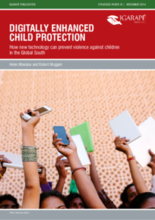
This Strategic Paper, from the Igarapé Institute, reviews emerging capabilities of information and communication technologies (ICTs) to prevent violence against children in the Global South.
This presentation from Innocenti’s Expert Consultation on Family and Parenting Support focuses on the risks facing, and the needs of, poor families in Brazil.
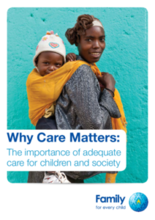
This report highlights the needs of children without adequate family care, the impact inadequate care on children and society, and why family care is important. In this report, Family for Every Child also issues several recommendations for those in all sectors of society and an example of care reform from Brazil.
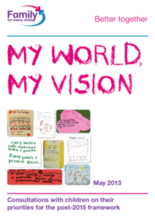
The Millennium Development Goals will come to an end in 2015 and discussions are currently taking place on what framework will replace them. Children’s participation is crucial to these discussions. Between July 2012 and March 2013, members of Family for Every Child consulted with children living in seven different countries. This report summarizes the main findings that emerged from these consultations.
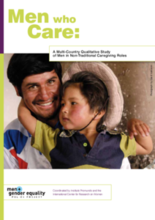
A report examining the experiences and attitudes of men involved in non-traditional care activities and roles in Brazil, Chile, India, Mexico, and South Africa.
This paper looks at how social protection is evolving in developing countries and how it relates to the vulnerabilities of children. It goes on to present the different conceptual models for protection and how they have changed and been influenced by the changing definition of poverty and the growth in transnational knowledge and policymaking.
Examines the institutional challenges in implementing national social protection programmes
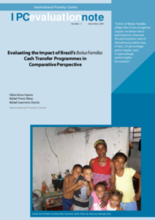
Evaluates targeting and human capital impacts of Brazil's Bolsa Familia Program in comparison with Mexico's Oportunidades, and Chile's Chile Solidario.