
File
Displaying 81 - 90 of 455
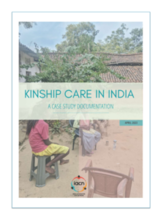
This IACN report outlines the importance of families for the emotional, physical, and cognitive growth of children. The authors discuss that all efforts should be made to provide family-based care to children without parental care, and institutionalisation should be a measure of last resort for the optimum development of children. The report draws on the experiences of eight families in kinship care arrangements and the children placed with them.
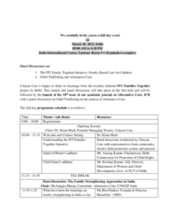
Udayan Care is happy to invite you to join its full-day program on the 20th of March to be held at the India International Centre (IIC, Kamladevi complex seminar hall 1). For those who cannot join the event in person, please register for the pre and post-lunch sessions separately.
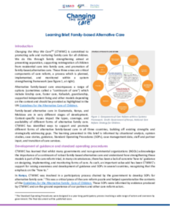
This learning brief was developed as part of Changing the Way We Care's 2022 annual report and shares learning on family-based alternative care from Guatemala, Moldova, India and Kenya and links the reader to additional CTWWC resources on the topic.
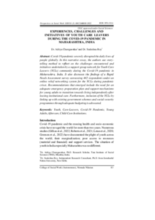
The COVID-19 pandemic severely disrupted the daily lives of people globally. In this narrative essay, the authors use the story-telling method to reflect on the challenges encountered and initiatives undertaken by a support group network for Youth Care Leavers (YCLs) community during the COVID-19 pandemic in Maharashtra, India.
India Alternative Care Network (IACN) is calling for contributions to the tenth edition of its newsletter, IACN Quarterly .
IACN Secretariat is looking for a Consultant, for a period of three months, to carry out the literature review, visit four states (to be decided) across the four regions of India and document eight case stories (two per state) to capture the context and experiences of children and caregivers in kinship care arrangement in India.
IACN seek a Communications and Knowledge Associate. This person will oversee internal and external communications and knowledge management strategies to strengthen communication and knowledge-sharing between IACN Secretariat, its membership and the broader community with an interest in the issues of children without parental care or at risk of separation, to advocate for family-based care, strengthening care in families and across the continuum of care.
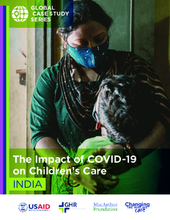
This case study is part of a series of case studies conducted in India, Kenya, Moldova and Uganda over the course of 2020-2022 to share information on how COVID-19 has and is affecting family-child reunification, alternative care placement, and offers recommendations for family- and community-based care of vulnerable children in the context of COVID-19 and future emergencies.
Join the Transforming Children’s Care Global Collaborative Platform Task Force on Family Reunification and Reintegration on a virtual panel on country examples of family reintegration in India, Uganda and Kenya.
Importance should be given to bringing up children in a family environment, Minister for Women and Child Development Veena George has said. She was speaking after virtually inaugurating a two-day national workshop on ‘Deinstitutionalisation and family-based alternative care’ organised by the Women and Child Development department in association with UNICEF here on Tuesday.