An Examination of Needs, Matched Services, and Child Protective Services Re-Report Among Families With Complex Needs
this study examines the relationship between needs, matched services, and child protective services (CPS) re-report.
this study examines the relationship between needs, matched services, and child protective services (CPS) re-report.
This qualitative study sought to understand the causes of separation among Syrian families in Jordan and the obstacles to family reunification.
The authors of this article sought to better understand the relationship between homelessness and child welfare services (CWS) involvement and examine whether homeless shelter data could combine with CWS data to enhance intervention targeting.
The authors of this article conducted a systematic review of the impact of parent-training interventions on children’s and caregivers’ cortisol levels, and meta-analyzed the results.
This brief article from Student Affairs Today highlights some of the lessons learned by student affairs professionals regarding foster care support programs at higher education institutions in the United States in light of the COVID-19 crisis.
This study assesses the magnitude of, and factors associated with undisclosed HIV status to a community-based HIV prevention program among caregivers of orphans and vulnerable children (OVC) in Tanzania.
This short report calls attention to heightened risks, and raises awareness, for practitioners in the fields of intercountry adoption and international surrogacy in light of the COVID-19 pandemic and asserts the need for caution.
This article reports on initial research from a survey study to describe the current state of play from practitioners into their perceptions and practices of children's participation in family support contexts.
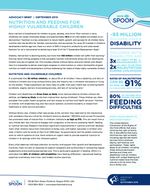
This advocacy brief from SPOON Foundation notes that successful nutrition interventions are not reaching the children who are at highest risk, including children without family care and children with disabilities, and outlines four key actions that can help to ensure that children without family care and children with disabilities have opportunities to grow and thrive.
This review from PeerJ aimed to evaluate currently available data on the nutrition status of children living within institutionalized care.
The purpose of this longitudinal study from BMC Public Health is to develop, implement and to test the efficacy of an evidence-based nutrition education programme (NEP) for orphans and vulnerable children (OVC) in South Africa that will integrate their families/caregivers, schools and communities.
This paper explores malnutrition among children in foster care in the U.S. and programs and interventions that help to improve the nutritional health of children in foster care.
This two-page brief outlines the UNICEF-WFP partnership's two-pronged strategy to respond to the immediate and medium-term needs to prevent and treat child wasting during and after COVID-19.
This resource document collates available guidance and tools on the Novel Coronavirus Disease (COVID-19) to assist Nutrition in Emergencies (NiE) practitioners in integrating COVID-19 preparedness and response into humanitarian nutrition responses.
This joint note aims to consolidate the current recommendations on Infant and Young Child Feeding in the context of the COVID-19 pandemic in Eastern, Central and Southern Africa.
This editorial from The Lancet Global Health discusses the effect of COVID-19 on food insecurity, particularly for women and children.
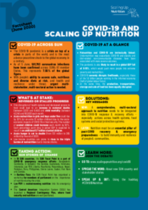
This one-page factsheet from Scaling Up Nutrition (SUN) provides facts and information about COVID-19 and malnutrition.
This information note provides initial considerations and actions for Scaling Up Nutrition (SUN) Government Focal Points and country multi-stakeholder platforms (MSPs) to help them engage in national COVID-19 response efforts to protect and promote good nutrition.
This document aims to guide the revision of existing Standard Operating Procedures (SOPs) for Food Distribution in the COVID-19 context at the country level to minimize the risk of exposure of personnel, partners and beneficiaries.
This guide is designed to assist Concern's health and nutrition staff responsible for the management and coordination of Community-based Management of Acute Malnutrition (CMAM) operations to adapt and modify programme modalities in the context of COVID-19.
In this webinar, hosted by Better Care Network and SOS Children's Villages International, panelists - including careleavers who served as co-trainers in the Leaving Care project - discussed the training, building a supportive network for care leavers, and the support needed to ensure that the rights of young people in alternative care are respected and that they are prepared for an independent life.
This report is based on findings the Nationwide Assessment of all Child Care Facilities (CCFs) in Zambia, which aimed to gather evidence for the purpose of updating baseline information pertaining to the condition of all Child Care Facilities (CCFs) in Zambia; in line with the Minimum Standards of Care for Child Care Facilities (MSC), United Nations Convention on the Rights of the Child (UNCRC) as well as the UN Guidelines for the Alternative Care of Children.
In this video, Grace Mwangi takes a critical look at the social work approach to the prevention of child abandonment, and the impact different approaches can have on outcomes for women and their children.
In this video, Ruth Wacuka and Samora Korea, two key leaders of the Kenya Society of Care Leavers, discuss the importance of care leaver networks, to enable care leavers to have a collective voice and to build a peer-to-peer supportive platform that aids in the transition of young people into independent living.
In this video, Peter Kamau from Child in Family Focus discusses his organisation’s approach to engaging with the directors of privately-run charitable children’s institutions (CCI’s) to secure their buy-in for transition and the reintegration of children into families, in line with government policy.
Comprised of videos and accompanying discussion guides, this video series features the learning from practitioners working across a range of care-related programs and practices in Kenya.
Through the two-year project ‘Leaving Care – An Integrated Approach to Capacity Building of Professionals and Young People’, SOS Children’s Villages, in collaboration with international project partners, aimed to train care professionals in how to apply a child rights-based approach in their work with young people leaving care and worked to strengthen support networks for young care leavers.
This report from SOS Children's Villages describes the Leaving Care Project, a project that was set up to develop and implement a state-of-the-art training programme for care professionals who work directly with young people leaving care in order to equip them with the skills, knowledge and tools they need to work with young people in transition.
This report looks at six crucial pathways that can not only help save lives and livelihoods but also lay the foundations for safer, healthier, more sustainable societies and a more promising future for children.
This brief from Save the Children describes how the COVID-19 pandemic has disrupted children's education in West and Central Africa and outlines recommendations for responding to the growing vulnerabilities of children in the region.
New analysis in this global report shows how COVID-19 may impact the funding of education, as well as the countries most at risk of falling behind.
This guidance from the UK Department for Education outlines actions to be taken by educational providers - working together with other partners, where relevant, such as local authorities - to meet the needs of vulnerable children and young people during the COVID-19 pandemic.
This advice seeks to support staff working in schools, colleges and childcare settings, to care for children in the safest way possible, focusing on measures they can put in place to help limit risk of the virus spreading within education and childcare settings.
This guidance explains the strategy for infection prevention and control, including the specific circumstances PPE should be used, to enable safe working in education, childcare and children’s social care settings in England during the coronavirus (COVID-19) outbreak.
This study aims to develop a Korean out-of-home care satisfaction scale based on questions from the Foster Care Improvements Project.
This study aims to advance understanding of social workers’ perceptions of the circumstances necessitating and preventing the placement of children with disabilities (CwDs) in institutions.
In response to the ongoing call for a complex systems approach for understanding and informing child welfare practice and policy, this article presents a context-specific conceptual framework that combines complexity theory and network analysis.
This study aims to explore parents’ lived experiences of receiving child neglect allegations and how they make sense of these experiences.
The manner in which foster children present and the frightening feelings this may trigger can overwhelm the foster carers’ capacity to sustain a nurturing stance in relation to the children and jeopardise the placement. In this article, two case studies chart such a dynamic and show that if carers are able to reflect upon the painful and unwanted feelings evoked in them, and acknowledge and take responsibility for what has become enacted in the placement, there may be an opportunity for this harmful dynamic to be processed and repaired.
The current study employed Interpretative Phenomenological Analysis (IPA) to guide the analysis of semi-structured interviews with eight young people with a range of care experiences, looking at the topic of confiding in others.
This article summarises the Narrative Model and shows how it supports placement stability for children.
This article describes a major development in child care practice in Wales that has occurred over the past two years. The Adopting Together Service (ATS) involves a unique, innovative and multi-layered collaboration between the voluntary adoption agencies (VAAs – non-governmental charities) and regional adoption teams (statutory agencies) to secure permanence for children who wait the longest to find families.
This study explores how male unaccompanied migrant children’s interactions with child protection staff in Greece shape their future trajectories as migrants.
The objective of this study was to explore the effects of previous maltreatment on current self-representations (i.e., the attributes used to describe oneself) of youth in residential care and the moderating role of gender, age, number of previous placements and length of placement in residential care.
This research set out to capture the ways in which adaptations were made by UK local authorities in light of the COVID-19 pandemic. This report is based on the experiences of 15 local authority children’s social care (CSC) departments that volunteered to participate in the research and whose views were captured between late May and early June 2020.
This study aims at examining if processes proposed by self-determination theory (SDT) are supported in a foster care sample.
This study explored how youth and foster caregivers perceive new foster care environments and how cohesion and conflict within the foster care setting (i.e., traditional or group-care) may be impacting youths’ mental health.
The current exploratory study examined the associations of children’s attachment security, parental sensitivity, and child inhibitory control with reported and observed indiscriminate friendliness (IF) in 60 family-reared, never-institutionalized foster children.
This paper compares incidence data on Black and White families investigated by Ontario’s child welfare system over a 20-year period.
This study examined quality of care from the foster parent's perspective and associated characteristics.
This article describes the psychosocial resilience processes that facilitate successful transitioning of young women as they journey out of residential care towards young adulthood.
The aim of this study was to investigate counselors’ and caregivers’ experiences with Project Support (PS) in Sweden, a program designed for families with children who have been exposed to intimate partner violence (IPV).
This desk review provides a picture of funding for the child protection sector over the period 2010–2018. The authors highlight funding trends, main donors and recipients, and examine funding levels in comparison to financial requirements in a selection of countries in 2018.

This paper reports on an empirical study of child protection services in a local authority where rates of investigations and interventions rose to unprecedented levels during the course of a single year.
This paper reports a small qualitative research study where 10 sets of grandparents were interviewed to explore their journey to becoming GSGs and to theorize their subsequent experiences.
In this episode of the Protected! Podcast, Hani Mansourian and Joan Lombardi - director of Early Opportunities - talk about how responsive care and early childhood experiences shape a child’s development and future wellbeing within families and communities.
In this podcast episode, Mark Canavera, the co-director of the Care and Protection of Children Learning Network, at Columbia University, unpacks the topic of social norms around child rearing and how they've been impacted by the COVID-19 pandemic.
This How We Care series explores how Family for Every Child's Members are providing essential psychosocial support to vulnerable children and families within the context of the pandemic.
In this comment piece, the The WHO–UNICEF–Lancet Commissioners argue that "recovery and adaptation to COVID-19 can be used to build a better world for children and future generations."
This study aimed to explore the experiences and perceptions of health among young people (YP) who have previously lived in care.
In this article, the authors outline some of the issues in the implementation and understanding of the Convention and highlight three major international developments over the last decade: the adoption of General Comment No 13, the work of the Special Representative of the Secretary General on Violence Against Children, and the adoption of the 2030 Agenda for Sustainable Development by the UN General Assembly in 2005.
This article examines rates of disparity using secondary longitudinal clinical-administrative data provided by a child protection agency in Quebec for a subsample of Black, White, and other visible minority children over a ten-year span.
In this study the authors examined the relative contributions of maternal versus paternal criminal offending or mental health problems in relation to the time to the offspring’s first report to child protection services, or first placement in out of home care (OOHC), using administrative records for a population sample of 71,661 children.
Using a phenomenological research design, this study delves into the motivations and challenging experience of foster carers in South-Kivu.
By synthesising the research evidence, this study seeks to address the questions of whether early childhood parenting programmes are effective in improving parenting and enhancing children's development; and which factors of the programme design and implementation contribute to the successful outcomes of parenting programmes.
In this article, the authors propose a definition of child well-being that draws on the economic literature pertaining to skill formation and human capital.
This article reports the findings of MIRRA, a participatory research project on the memory and identity dimensions of social care recordkeeping.
The goal of this paper was to conduct a review of studies from 2008 to 2019 that evaluated community‐based caregiver or family interventions to support the mental health of orphans and vulnerable children (OVC) in sub‐Saharan Africa, across four domains: (a) study methodology, (b) cultural adaptation and community participation, (c) intervention strategies, and (d) effects on child mental health.
In this case, we meet Maya, an adolescent girl in foster care who is trafficked for sex.
This study examines how childhood experiences of being left behind by migrant parents affect the behaviors of adults.
This document summarizes the 2019 UNGA Resolution on the Rights of the Child focusing on children without parental care (A/RES/74/133) in an easy-to-follow way.
This editorial piece from the Lancet posits whether today's children "will be defined and confined by the losses from COVID-19."
The Nourished and Thriving Children toolkit was designed by SPOON to build capacity among the foster care community in feeding and nutrition topics so that they are equipped to address challenges commonly experienced by foster children.
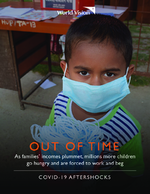
World Vision has conducted rapid assessments in 24 countries across Latin America, Sub-Saharan Africa, and Asia confirming alarming predictions of increased child hunger, violence, and poverty due to the economic impact of COVID-19.
Drawing on a large‐scale online survey of looked after children's subjective well‐being, this paper demonstrates that a significant number of children and young people (age 4–18 years) did not fully understand the reasons for their entry to care.
To analyse how professionals and parents position themselves, the authors of this study chose to focus on the content of social workers' interviews with parents and on the associated interactions. To this end, the authors recorded 13 parent–professional interviews after receiving the consent of the concerned parties.
The authors of this study interviewed 20 parents about their experiences with the Dutch child protection system (CPS).
In this paper, the authors report the results of a study examining parenting challenges among a sample of African immigrant parents in Alberta, Canada.
This study investigated whether parental stress was associated with parenting and whether this relationship was mediated by social support in a sample of 255 Chinese immigrant parents from the Survey of Asian American Families in New York City.
The present study aims to identify the adoptee, parents and family related predictors of the adoptive parents' parenting stress, exploring direct and indirect effects. Fifty Portuguese adolescents' adoptive parents participated in this study.
The purposes of this study are to document and analyse the point of view of children in foster families on their subjective well‐being and also to identify contextual factors that influence it.
Building on 10 qualitative interviews with parents of children in Norwegian Child Welfare Services, this paper discusses parents' views on collaboration between children and child welfare professionals.
This massive online open course (MOOC) aims to enhance understanding of the heightened protection risks and vulnerabilities that children are facing around the world during the COVID-19 pandemic.
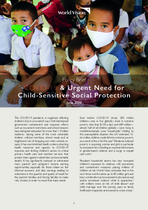
Based on World Vision's extensive experience working with children and families in crisis, this policy brief outlines recommendations to stakeholders, such governments, UN agencies, NGOs, and donors, and calls for the use of child-sensitive social protection in these stakeholder’s responses to the COVID-19 pandemic.
This brief provides an overview, including key questions and considerations, of version 2 of the Alliance for Child Protection in Humanitarian Action's Technical Note on Protection of Children during the COVID-19 Pandemic.
This webinar aspires to share examples of successful approaches for supporting the most vulnerable families and young children during the COVID-19 pandemic in Italy, Belgium, Germany, and Ukraine.
El programa de Educación del Diálogo Interamericano, Early Childhood Development Action Network (ECDAN) y la Oficina Regional para América Latina y el Caribe de UNICEF convocan un seminario virtual para reflexionar sobre cómo la emergencia ha afectado a la primera infancia y qué respuestas están organizando los gobiernos para responder a la cambiante situación y asegurar que los objetivos de desarrollo infantil continúan recibiendo la atención necesaria.
This systematic review critically evaluated the evidence for a causal association between child maltreatment and impaired cognition in children under 12 years.
This study explored (1) the role of ethnic identity in predicting internationally adopted adolescents' expectancies for success and task values and (2) the extent to which school belonging mediated these relations.
This paper investigates whether the Government of Zimbabwe’s Harmonized Social Cash Transfer (HSCT) Program, which combines cash transfers with complementary services, affects youth exposure to physical violence.
In the present paper, the Ecological Systems Theory is used to depict different vulnerabilities associated with orphanhood in the Ghanaian context.
The present study examined the protective effect of the error-related-negativity (ERN) in a sample of children who experienced at least 3-years of stable, relatively enriched caregiving after being internationally-adopted as infants/toddlers from institutional-care.
Using in-depth interviews and participant observation over a two-year period, this study explores workers’ experiences of and strategies for ending relationships with youth in an independent living program.
This article examines the legal and practical implications of fostering and adoption law and policy in Britain. It includes an examination of the barriers preventing Muslim carers from coming into fostering and adoption, as well as the sensitive issue of caring for maḥram and non-maḥram children.
This technical assessment report uses a transformative social protection framework adapted for studying the provisions and practice in alternative care and adoption in Kenya.
In response to the continuing need for agencies providing residential care and treatment to children and youth to develop and/or to enhance their ability to examine the effectiveness and efficiency of their services, this article explores successful strategies for building and sustaining research capacity in these settings.
Este informe describe las lecciones aprendidas de aquellos que estuvieron directamente involucrados en la implementación del Programa de Protección Infantil durante la respuesta epidémica a la Enfermedad por el Virus del Ébola (EVE) en África Occidental.
Pandemia COVID-19 solicită adaptarea și / sau dezvoltarea de servicii și programe pentru a continua să servim cel mai bine copiii și familiile lor în timpul acestei perioade rapid schimbătoare.
Această mapă, de asemenea, ajută programelor la adaptare, reorganizare și determinarea priorității activităților de prevenire și răspuns.
This report presents the findings from a survey commissioned by the Asia-Pacific Regional Network for Early Childhood (ARNEC) to get insights and share experiences on the situation of children and the status of early childhood development (ECD) as a result of COVID-19 and the resulting containment and risk mitigation measures being implemented in countries in Asia-Pacific region.