Services Received vs Services Needed by Families in Child Welfare Systems
This article compares and contrasts the services needed by families in child welfare systems with the services that families receive.
This article compares and contrasts the services needed by families in child welfare systems with the services that families receive.
The aim of this article is to offer a working blue print to guide the adaptation of quality initiatives aimed at transforming residential care in other child welfare organizations or jurisdictions while taking into consideration the fit of such initiatives within the service environment and the complexities of system-wide change.
This article describes the process of revising a measure of out‐of‐home living restrictiveness to be culturally congruent for Portugal, providing preliminary data on validity and reliability, and discusses the feasibility of using this measure in Portugal.
This paper explores how the principle of linked lives can illuminate our understanding of how relationships positively influence the educational journeys of adults with care experience over time.
The goals of the present study were (a) to explore relationships amongst various child‐level correlates of school engagement and problem behaviors—namely, self‐esteem and social skills—and (b) to respectively investigate the protective potential of self‐esteem and social skills in the association between school engagement and behavior problems that threaten educational trajectories.
This open access article reports on a qualitative study, which sought to retrospectively understand the contribution family group conferencing (FGC) makes to longer‐term outcomes for children at risk of entering State care and their families.
These standards set out a common agreement on what needs to be achieved in order for child protection in humanitarian settings to be of adequate quality.
This study used qualitative telephone interviews with participants sampled from a statewide cohort of newly-hired, frontline child welfare workers. The authors used thematic analysis to consider participants' training experiences and the conditions that facilitated meaning.
The purpose of this article is to address at a broad level the issue of how overarching concepts of child protection and Islam influence social work practice with Muslim communities.
In this article [from the Child & Family Social Work special issue on teenagers in foster care], the author reviews a range of theoretical and practical issues that are relevant to the foster care of teenagers.
Using evidence from the evaluation of specialist foster care provision and a child sexual exploitation (CSE) training course for foster carers, this paper [from the Child & Family Social Work special issue on teenagers in foster care] considers how training might be used to widen the pool of potential foster carers for children affected by CSE and identifies qualities displayed by effective carers.
This open access paper [from the Child & Family Social Work special issue on teenagers in foster care] reports on findings from the first study of LGBTQ young people in care in England and focuses on the nature of foster carers' experiences and perspectives on caring for LGBTQ young people.
This paper [from the Child & Family Social Work special issue on teenagers in foster care] reports findings from the first UK study into the experiences of unaccompanied asylum‐seeking young people in the UK, describing issues arising from initial assessment and preparation for fostering and the ways in which young people and foster carers adjusted to their lives together.
The aim of this article [from the Child & Family Social Work special issue on teenagers in foster care] is to account for and discuss support to young care leavers within the comparable welfare regimes of Norway and Sweden and to explore key differences between these 2 countries.
This paper explores practice examples relating to young people's transitions from care to adulthood.
This paper offers a brief consideration of the internal and external factors impacting children and young people who have become in conflict with the law.
This special issue of the Child & Family Social Work journal focuses on teenagers in foster care. Articles and papers in this issue include:
This editorial summarises a range of research in this special issue covering parenting styles, transitions out of care, child sexual exploitation, and the needs of LGBTQ and separated teenagers.
This article examines how the Hague Convention on the Protection of Children and Co‐operation in Respect of Intercountry Adoption (Hague Adoption Convention) plays a central role in justifying the institution of legal adoption.
This research poster presents an overview of a study conducted in Northern Italy. The study's aims were to: (1) investgate the associatons among atachment paterns, Emotonal Regulaton (ER) strategies and internalizing or externalizing symptoms showed by adolescents in residental-care and (2) examine the predictve role of atachment and ER strategies for the rates of internalizing/externalizing symptoms.

This descriptive study portrays a sample of children from Chinese migrant families residing in western Sydney, New South Wales, Australia, whose parents temporarily relinquished their care to grandparents in China.
The sole purpose of the study was to determine the factors influencing utilization of cash transferred to orphans and vulnerable children in Runyenjes Subcounty, Embu County. The study concluded that demographic characteristics had the greatest effect on the utilization of cash transferred to orphans and vulnerable children, followed by frequency of cash transferred then attitude of beneficiaries while home factors had the least effect to the utilization of cash transferred to orphans and vulnerable children.
Drawing from focus groups with Therapeutic Foster Care (TFC) foster parents, this paper explores different aspects of their experiences, identifies multiple ways in which they need support, and provides recommendations for foster care agencies looking to retain skilled foster parents and increase the quality and stability of children's experience in TFC programs.
The objective of this open access study was to analyse infants placed in out‐of‐home care in Sweden by incidence, medical diagnoses, and perinatal factors.
This article from Marquette Law Review focuses on how children and parents interacting with the child welfare system in the US experience the removal process, the genesis of a foster care case.
This country care review includes the care-related Concluding Observations adopted by the Committee on the Rights of the Child.
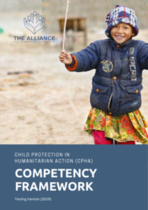
The Learning and Development Working Group (LDWG) of the Alliance for Child Protection in Humanitarian Action has revised the 2010 Child Protection in Humanitarian Action Competency Framework to this testing version.
This country care review includes the care-related Concluding Observations adopted by the Committee on the Rights of the Child.
This country care review includes the care-related Concluding Observations adopted by the Committee on the Rights of the Child.
This country care review includes the care-related Concluding Observations adopted by the Committee on the Rights of the Child.
This study was designed to extend previous research, help explain the role of the residential childcare context in bullying behaviors, and explore the relation of bullying with psychological distress among youths in residential childcare in Spain.
This paper explores foster carers’ therapeutic capacities and considers some key implications for fostering agencies.
This open access article details a culturally informed approach by sharing the findings of a Cultural Healing Program (CHP) designed, developed and delivered by an Aboriginal Community Controlled Organisation. The program was for Aboriginal survivors of institutional child sexual abuse who had also experienced cultural abuse having been forcibly removed from their families as children and in the process disconnected from their communities, culture and land.
This study sought to understand how post‐institutionalized children interact with unfamiliar peers and the factors that predict the quality of these interactions in order to shed light on the processes contributing to the persistent, often increasing social deficits seen in post‐institutionalized children.
The current study provides an in-depth examination of the psychometric properties of the “Your Life, Your Care” survey which measured the subjective well-being (SWB) of children and young people in out of home care (OHC) in England and Wales.
The purpose of this research was to gather opinions on, and experiences of, implementation of Part 12: Services in relation to children at risk of becoming looked after, etc. of the Children and Young People (Scotland) Act 2014.
This paper reviews and contributes to evolving analyses of the public health, legal, and ethical consequences of immigration policy.
In this paper, the authors present the results of the Studiare Migrando project (www.studiaremigrando.it), in which an online learning platform to improve the language skills of young migrants and accessible via mobile devices has been implemented.
This infographic from the Center on the Developing Child at Harvard University shares some suggestions for building resilience and strength in families and communities to mitigate the impacts of toxic stress.
This staff report has been prepared at the request of Chairman Elijah E. Cummings to summarize the data obtained by the Committee on Oversight and Reform's subpoenas to compel the Trump Administration to produce documents relating to its policy of separating immigrant children from their families.
This open access study examined the feasibility and acceptability of a randomized controlled trial (RCT) of mentalization-based therapy (MBT), delivered in a family-format, for children who are in foster care in the UK.
This video explores Sugira Muryango: "Families Strengthening Intervention for Early Childhood Development: Alternative Delivery System of Poverty Reduction Strategies" in Rwanda—a project by the Research Program For Children and Adversity at the Boston College School of Social Work led by Salem Professor in Global Practice Theresa Betancourt.
This video shines a light on the work of the USAID-supported Partnership Program for the Protection of Children (3PC), a network of community support services in Cambodia, to keep children safe and families together.
The content of this Call to Action comes from what was heard from young people with care experience as well as from the professionals working with them. It outlines three primary actions to realize careleavers' rights in the law and in practice and to allocate adequate funds for realizing these rights.
In words, images, facts and figures, this report details the results that UNICEF achieved in 2018, together with its generous partners and supporters, a dedicated global workforce and children and young people themselves.
The purpose of this study is to better understand how gender inequality impacts the Community Based Child Protection Mechanisms in Cambodia, its child clubs and caregiver groups and how programming should be targeted to being gender transformative – changing social norms that promote gender inequality.
State of the World’s Fathers, produced by Promundo, is a globally recognized, biennial report and advocacy platform aiming to change power structures, policies, and social norms around care work and to advance gender equality. The report examines the benefits of men's involvement in childcare, including benefits to the children themselves, and presents recommendations for achieving greater equity in care work among men and women.
This report by War Child aims to bring global attention to the challenges related to the reintegration of children associated with armed forces and groups, and promote better policy, practice and funding in the future.
This paper from the Alliance for Child Protection in Humanitarian Action summarises findings from an initial scoping study, which seeks to review how child protection outcomes are captured when monitoring multi-purpose humanitarian cash programmes. The paper proposes a theory of change of the possible links between cash and child protection to inform the development of a monitoring strategy, including hypotheses that humanitarian cash might contribute to prevention of family separation, reduction of family violence, and supporting foster and temporary caregivers to care for separated and unaccompanied children.
This review aimed to identify, appraise, and synthesize published literature concerned with the reunification of looked‐after children with their birth parents in the United Kingdom
This article elucidates the challenges parents face when they lose the care of their children and their experiences of family counselling as a support service in Norway.
The aim of the presentation is to describe the personal features of biological families whose children are in non-kinship foster care and with whom they have face-to-face contact in Málaga, Granada and Jaén (provinces of Andalusia, Spain).
The aim of the presentation is to describe the personal features of non-kinship foster care children who have visits with their birth family in Málaga, Granada and Jaén (provinces of Andalusia, Spain).
This study aims at analyzing adoption-related feelings, which include the feelings of loss and the ensuing curiosity about the birth family and pre-adoption life.
Spotlight: Child Welfare is a collaborative journalism project that aims to deepen and improve reporting on B.C.’s child-welfare system.
Using a pooled data set of two waves of the National Surveys of Children’s Exposure to Violence, this study investigates links between indicators of socioeconomic resources and lifetime exposure to two different forms of child neglect (physical and supervisory), examines how neglect is associated with the risk of other types of victimization, and estimates the impact of neglect on trauma symptoms.
The goals of this study were twofold: (1) to compare the pragmatic language skills (i.e., social communication skills) of 42-month-old neglected children with those of same-aged non-neglected children and (2) to measure the prevalence of pragmatic difficulties among the neglected children.
This desk review provides a picture of funding for the child protection sector over the period 2010–2018.
This report explores what family means to children and adults in five countries using the digital storytelling technique.
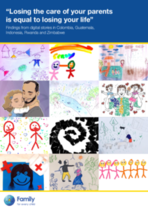
Pese a que hay un consenso sobre la importancia del cuidado efectivo en las familias para los niños, existe una falta de discusión y acuerdo sobre los componentes precisos de este cuidado. Este informe contribuye a debatir sobre este importante tema al proporcionar perspectivas de los grupos focales con 198 niños y 81 adultos de Brasil, Colombia, Egipto, México, Rusia, Ruanda y Zimbabue.

There is extensive research demonstrating clearly the importance of a safe and caring family for child wellbeing and development. While there is consensus on the importance of effective care in families for children, there is a lack of discussion and agreement about the precise components of this care. This report contributes to debates on the components of family care by providing perspectives from nearly 200 children and over 80 adults from Brazil, Colombia, Egypt, Mexico, Russia, Rwanda and Zimbabwe. The report demonstrates that there are many commonalities in perspectives on and experiences of care across contexts.

As foster and kinship carers are central to the lives of looked after children, it is important to recognise their unmet needs and the impact of these on the caring task. This article explores these issues by applying a hierarchy of needs to the foster and kinship care context, drawing on the perspectives of those involved, a group of Australian foster and kinship carers.
The aim of this article is to raise the voices of a group of birth mothers, a historically stigmatised, powerless and neglected group, with substantial experience of counselling following the loss of a child.
The current study is the first to explore the perspectives of foster carers and clinicians working in Child and Adolescent Mental Health Services (CAMHS) in relation to the use of two brief screening tools: the Strengths and Difficulties Questionnaire (SDQ) and the Brief Assessment Checklists (BACs).
This article aims to study the legal measures that Thailand should take to solve the problem of abandoned children in unsafe places.
In this chapter of the Handbook of Emotional Development, the authors discuss animal models that support developmental theories underscoring the importance of the caregiver–infant relationship for emotional development, explore how varying degrees of neglect may be differentially associated with subsequent emotional outcome, and review empirical work in this area from a developmental perspective by addressing how early neglect may impact the development of biological and behavioral mechanisms that underlie emotional functioning across multiple developmental periods.
The aim of this article is to analyse the evaluations made by the main stakeholders involved in the school situation of young people in residential care and propose an explanatory model of their level of school satisfaction (SS) based on variables related to the youngsters' subjective well-being. The sample was composed of 219 subjects from five European countries (Germany, Austria, Croatia, Spain and France), including 75 young people, 75 caregivers, and 69 teachers.
This review examines the legislative history leading up to extended care, the research on youth leaving foster care, youth preferences for extended care, the competition of extended care with permanency options, and the effects of extended foster care on transition-age youth.
The Decision making for children report is one strand of the Permanently Progressing? study. In this strand, during 2015-17, 160 decision makers were interviewed across Scotland mainly in groups, but some individually.
The aim of this particular strand of the Permanently Progressing? study was to investigate the experiences, pathways, and outcomes of children who became looked after away from home, together with the factors associated with achieving permanence.
This report on the linkage of Children Looked After Statistics (CLAS) with data from Scottish Children’s Reporter Administration (SCRA) is one strand of the Permanently Progressing? study. The study is the first in Scotland to investigate decision making, permanence, progress, outcomes and belonging for children who became ‘looked after’ at home, or away from home (with kinship carers, foster carers or prospective adopters) when they were aged five and under.
This report presents the findings from strand one of the Permanently Progressing? study, Pathways to Permanence for children who become looked after in Scotland. This strand analysed data from the Children Looked After Statistics (CLAS) provided to the Scottish Government by all 32 local authorities on the total cohort of children who became looked after during the year 1 August 2012 - 31 July 2013 when they were aged five and under
This report has been completed as one part of the study Permanently Progressing? Building secure futures for children in Scotland which heard directly from children about their experiences.
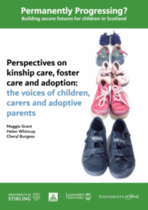
After almost five years of detailed research and analysis, the reports of the Permanently Progressing study (phase one) were published on 20 June 2019. The study investigated decision making, permanence, progress, outcomes and belonging for a large cohort (1,836 children) of all children in Scotland who became looked after in 2012-13, when they were aged five or under.
This open access systematic review aimed to appraise the extant research evidence from longitudinal studies and answer the question: how do educational outcomes differ between children in contact with Children’s Social Care (CSC) and the general population in the UK?
In this piece for Health Progress, the Journal of the Catholic Health Association of the United States, Shannon Senefeld, Philip Goldman and Anne Smith explain why many aid groups are working to end the use of orphanages in favor of family-based care and describe the work of the Changing the Way We Care initiative which seeks to "mobilize other likeminded organizations, raise awareness, promote new policies and encourage well-meaning donors to shift their support away from orphanages and toward families."
In this article, the authors provide children’s insights into their own life experiences and individual identities. The data was collected during an ethnographic research in one of Estonia’s SOS Children’s Villages (SOS CV).
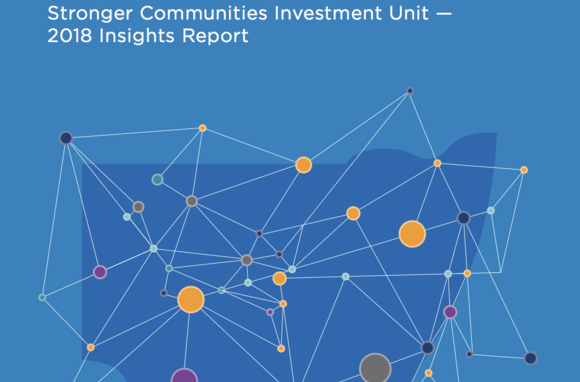
This report, which was authored by Taylor Fry with support from Their Futures Matter (TFM) - a landmark reform of the Government of New South Wales (NSW), Australia to deliver improved outcomes for vulnerable children, young people and their families - and stakeholder agencies, presents key results and insights from the TFM Investment Model, an actuarial model of future outcomes and costs of providing key government services to children and young people in NSW.
While much of the published research on orphanage volunteering has focused on the effects of the practice on volunteers, the authors of this comment paper from the Lancet argue that there is also substantial reason for concern about the harm this practice might have on the children—especially in young children (ie, ≤5 years)—being raised in these settings.
In this chapter of Filiation and the Protection of Parentless Children, the author shows the ways in which premodern Muslim jurists and judges (with focus on early modern Egypt) were able to circumvent the prohibition of adoption through discursive moves and practices, which helped create a family life for many parentless and non-biological children.
Without access to their own families, how do young, unaccompanied refugee minors re-establish their social lives in ways that facilitate a sense of togetherness in their everyday lives during resettlement? This question was approached by exploring young persons’ creation of relational practices and the kinds of sociomaterial conditions that seemed to facilitate the evolvement of these practices in Norway, including the professional caregivers’ contributions.
The report highlights how children’s movement is driven by different motivations, exposes children to different forms of harm, and presents multiple barriers to accessing services.
This study explores facilitators of and barriers to effective collaboration between workers at partner organizations working on a program focused on the reunification of housing-unstable families with their children in out-of-home placement in the US.
This report highlights more than 70 child welfare agencies across the United States that partnered with the Human Rights Campaign Foundation’s All Children - All Families project to improve the services they provide to the LGBTQ community, including children in foster care and prospective foster and adoptive parents.
A descriptive study was undertaken to assess self-esteem and its associated factors among adolescents living in orphanage and with parents at home in a selected orphanage and community, West Bengal with the objectives to assess level of self-esteem among adolescents living in orphanage and in home and to find out the associated factors related to self-esteem.
The research presented in this report aimed to broaden and deepen understanding of the barriers and enablers that care experienced students encounter in going to, being at and staying at college and university in Scotland.
This report presents analyses of selected outcomes for Aboriginal and Torres Strait Islander children who live in households with members of the Stolen Generations.
This paper presents the current vulnerabilities faced by children and the scenario of child protection in India. While discussing the legal provisions prevailing in the country, it sheds light on the socio-cultural barriers that are creating resistance within the society in making the Alternative Care model (and the process of deinstitutionalisation of children) a success. Lastly it suggests viable options that may be helpful for the same.
This poster, presented at the Annual Meeting of the Belgian Association for Psychological Sciences, provides an overview of a study on foster children's sense of belonging.
This paper explores the impact of international migration on school enrollment of children staying behind in Tajikistan, by using data from a large nationally representative household survey. The results show that migration of household members reduces the probability of enrolling in school by 10 percentage points for children who belong to households with migrants. The effect of parental migration is much larger than that of migration of other household members. Receiving remittances reduces the adverse impact of migration by only 1‒3 percentage points.
This study sought to identify the heterogeneous characteristics of rural left-behind children’s anxiety and explore the related factors through a cross-sectional survey using a school-based sample in January 2018 in Qingxin district, Qingyuan city, Guangdong province, China.
This paper is concerned with outcomes for young parents in and leaving care and draws on findings from a post-doctoral fellowship study conducted in Wales.
En esta publicación, a partir de la experiencia de trabajo y la reflexión sobre su propia práctica, La Barca ordena, sistematiza y pone a disposición de todos los actores del sistema de protección a la infancia de Uruguay los principales aprendizajes de la tarea realizada en los últimos años.
La presente investigación trata de los jóvenes sin tiempo y cómo trabajar, con ellos y ellas, en un tránsito inclusivo a la vida adulta, especialmente jóvenes que han pasado una parte importante de sus vidas en recursos residenciales del sistema de protección y que cuando son mayores de edad deben dejarlos para salir a la vida adulta, en un tránsito cargado de complejidades.
El presente curso surge del Acuerdo de Cooperación suscripto en 2014 entre UNICEF Argentina y la Asociación civil por los derechos de niños niñas adolescentes y jóvenes Doncel que tiene por objetivo principal contribuir a desarrollar un modelo de acompañamiento integral para adolescentes residentes en los hogares asistenciales de las provincias argentinas de Misiones, Jujuy, Chaco, Santa Fe y Tucumán en transición del sistema de protección hacia la autonomía y la vida adulta.
Las evidencias presentadas en este documento fueron elaboradas a partir de una investigación que se propuso realizar una primera aproximación a la situación de los jóvenes sin cuidados parentales frente al egreso en Argentina.
En este artículo se revisan diversas investigaciones de carácter nacional de España e internacional sobre los adolescentes que egresan del sistema de protección.
The purpose of this article is to examine the current well-being of the population of Bulgaria and to put emphasis on negative trends, including the abandonment of children due to poverty or other causes.
This study investigated the role of childhood parental deprivation in the association between quality of life (QOL) and the Epstein–Barr virus (EBV) antibody titer, a marker of cellular immune functioning, using data from 734 adults living in seven communities in rural Fujian, China.