Parenting a Child Who Has Experienced Trauma
This factsheet discusses the nature of trauma, its effects on children and youth, and ways to help your child.
File

This factsheet discusses the nature of trauma, its effects on children and youth, and ways to help your child.
In this video, Philip A. Fisher, a senior fellow at the Center on the Developing Child at Harvard University presents at NBC News’ 2013 Education Nation Summit, explaining why positive, reciprocal interactions between caregivers and children can have enormous positive effects on children’s development and lay the groundwork for a prosperous future.
This study reviews relevant empirical literature on the impact of forced family separations in the US on child and youth wellbeing from 2000 to the present.
The qualitative Australian study reported here explored how contact between grandparents and their grandchildren could be optimised after child-safety concerns.
The present research sought to explore the capacity, experience and understanding of local authorities to provide a support system that can best ensure the wellbeing of children, as it has been suggested that outside of the large urban authorities there is limited experience of working with separated children.
This study sought to find out the current numbers of autistic Looked-After children formally recorded across local authorities in England, and whether their needs are given special attention via strategic planning and oversight, using Freedom of Information (FoI) requests sent to all local authorities in England.
This book explores the legal and human rights dimensions of kinship care, the preferred alternative to parental care in the African context.
This article by Ellen Livingood in Volume 13, Issue 9 of Postings describes the ways in which Christian churches and faith communities are moving away from orphanage volunteering to supporting other forms of care for children.
This study from Global Social Welfare examined the contributions of potentially stigmatizing war violence exposures and more recent post-conflict reintegration experiences to intimate partner violence for girls in Sierra Leone. Overall, this sample reported middling levels of community reintegration, and similar average rates of family reintegration.
The main goal of this article was to explore the correlates of mental health diseases in a sample of 169 children with intellectual disability (6–18 years old) in residential care in Spain compared with a group of 625 children, also in residential care but without disability.
This study examines family separation within the context of a binational social network.
The purpose of this systematic review is to summarize the effects of interagency and cross-system collaboration aimed to improve child welfare-involved children and family outcomes related to safety, permanency, and well-being.
This study examined disruptions in caregiving, as well as the association of these disruptions, with cognitive, behavioral, and social outcomes at age 12 in a sample of 136 Romanian children who were abandoned to institutions as infants and who experienced a range of subsequent types of care.
The ninth International Foster Care Research Network Conference was held in September 2017 in Paris (France) on the theme ‘Continuity and disruption in foster care’. A selection of the presentations there were rewritten into a paper as part of this special issue.

This exploratory focus group study examines foster parent perspectives on what facilitates and impedes their engagement in child welfare court processes.
The aim of this study is to evaluate a training in non-violent resistance (NVR) for foster parents who take care of a foster child (ages 6-18) with externalizing problem behavior.
This study evaluates one mid-Atlantic state’s implementation of a FGDM called family involvement meetings (FIMs) to improve family strengths and their active engagement in the service planning process.
This revision of Relational Child and Youth Care comes after nearly fifteen years from the first expression of the characteristics and is based on extensive feedback and observations from around the world.
This article describes the 1‐year outcomes of youth transitioning out of a residential care facility in South Africa.
This study reports on a large quantitative, descriptive study focusing on children in contact with children’s services on a single date in 2015 across the four UK countries (England, Northern Ireland, Scotland and Wales).
This paper provides an update on developments in therapeutic residential care, discusses the implications of these developments, and touches on further issues and dilemmas that should form the focus of research and practitioner partnerships in the future.
This qualitative study examines the academic pathways of 33 college students with a history or foster care placement, homelessness, or both, to better understand the ways in which forms of social capital influence the transition to college and early college experiences in the US.
The ninth International Foster Care Research Network Conference was held in September 2017 in Paris (France) on the theme ‘Continuity and disruption in foster care’. A selection of the presentations there were rewritten into a paper as part of this special issue.
This paper documents findings from an evaluation of the Live-In Family Enhancement (LIFE) program, and recommends that this approach be expanded for use in prevention as well as reunification.
This article explores the issue of the major reform of the child welfare sector that has been carried out in Russia in recent years.
This review seeks to identify and summarise findings from literature about the nature of relationships that develop between older children and young people, and those caring for them within and beyond residential and fostering settings.
The purpose of this study was to assess vaccine coverage for a cohort of children who have been in the care of the child welfare system compared to children in the general population in Alberta, Canada.
This paper deals with the design and development procedures involved in child protection practices in India.
This webinar reviews some of the new and ongoing work conducted under the Transfer Project, a multi-organizational research and learning initiative. The first presentation will summarize findings from recent reviews published on understanding linkages and impacts of cash transfers and social safety nets on intimate partner violence and violence against children in low- and middle income settings.
The purpose of this study is to support the funding of Aboriginal-controlled research on Aboriginal and Torres Strait Islander children under government-administered foster care arrangements.
Child Trends reviewed the literature on parenting knowledge among first-time parents with young children (2 years and younger). Specifically, they examined research on what parents know and want to know about parenting and child development, where they get their information, and what sources of information they trust.
The purpose of this guide and its companion tools is to offer a sustainable approach to child protection in humanitarian and development settings that is community-led rather than NGO- or expert-led.
It has long been recognized that early adversity represents a strong risk factor for the development of later psychopathology.
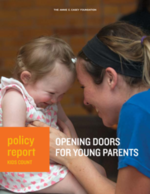
This report from the Annie E. Casey Foundation reminds policymakers and child advocates in the US of the barriers that young families face. It examines national and state-level trends — highlighting areas of opportunity and concern — and then shares potential solutions that can help these families thrive.
This article highlights a range of factors which can support good quality, consistent and confident decision making, towards the aim of ensuring that care leavers' contact with police is avoided unless absolutely necessary.
The article is the author’s reflections on a working life in social care that has spanned over 20 years in Scotland, starting with the most recent as Chair of Scottish Children’s Reporter Administration.
This study explored whether patterns of catch-up growth affect metabolic and cardiovascular outcomes in previously institutionalized adolescents in Romania.
This research-to-practice brief highlights findings from Child Trends’ study of first-time parents of young children (under age 3) and their knowledge about parenting and child development.
This article explores the issue of the major reform of the child welfare sector that has been carried out in Russia in recent years.
Drawing from more than 160 interviews with jailed and formerly jailed mothers, substitute caregivers, children, attorneys, service providers, advocates, jail officials, and child welfare employees, this report shows how pretrial detention can snowball into neverending family separation.

This study evaluated the psychometric properties of a Portuguese version of the Compass of Shame Scale using an adolescent sample, to investigate if its internal structure was valid for diverse adolescent subsamples, and to gather evidence on the construct validity of the instrument.
In the present exploratory study 69 case-files of children referred to a Dutch national center for residential youth care for children with intellectual disabilities (ID) were analyzed to assess the prevalence and associations of Adverse Childhood Experiences (ACEs).
This chapter from the book Resilience and the Re-integration of Street Children and Youth in Sub-Saharan Africa is comprised of two studies. The first study provides an analysis of the psychological situation of street children and youth in Yaoundé and Douala, while the second one deals with resilience building within a rehabilitation home.
This project adds to the newly emerging literature on orphan tourism. In-depth, open-ended interviews and participant observations were conducted over a three-month period with American travelers to a Malawian orphanage between 2009 and 2010.
In this video from the Brainwaves Video Anthology, Dr. Charles Nelson shares some findings from his research on the impacts of deprivation on children's cognitive and brain development through the Bucharest Early Intervention Project.
As part of NOVA's look at childhood education, Dr. Charles Nelson came to this Boston Cafe Sci to share his research on the effects of early profound adversity on child and brain development.
This documentary from 'Real Stories' tells the stories of three young adults who were born in Romania and spent their early years in large-scale institutions.
This paper reports on a qualitative study of outcomes for permanence and stability for children in long-term care in Ireland.
An important goal of out of home care is to prepare the family and child for reunification. Practitioners are often required to make the decision whether to reunify a foster child with their biological family. This study examines this complex reunification decision in Portugal.
The scope of this work is to link family reunification between static EU citizens and third country nationals to the current European immigration background in order to appreciate it as a way to channel safe immigration.
The objective of this study was to identify different kin and fictive kin network support profiles available to children in foster care and examine whether these profiles predict behavioral outcomes.
This study evaluates whether the psychometric properties of the Pediatric Symptoms Checklist-17 (PSC-17), a common behavioral health measure typically used as a dichotomous screening tool for mental health needs, support its use as a continuous measure for tracking behavioral health over time.
This article from Children's Legal Rights Journal discusses the statistics and data regarding foster youth who are commercially exploited for sex, and examines the various reasons why foster care children represent such a large proportion of the victims.
This paper explores the literature of the existing interventions that are specifically used with American Indian families affected by child abuse and neglect.
This practice brief provides recommendations about best practices for ensuring that children and/or their caregivers facing deportation are provided with necessary pre-departure and reintegration services to support safe and sustainable return.
El manual es tanto una hoja de ruta para los responsables de la formulación de políticas como una guía diaria para los profesionales que trabajan con niños y niñas en situación de migración: desde los trabajadores humanitarios y el personal de fronteras hasta los trabajadores sociales responsables de la creación de planes individualizados que pongan a los niños y niñas primero.
The quantitative study presented here contributes knowledge regarding the attitude of professionals towards positive parenting and child participation in professional support of families that are under temporary protection, with the goal of reunification.
This webinar from Child Family Community Australia (CFCA) was recorded on 14 March 2018. It explored the implications of recent research on women's and children’s experiences of family violence and inter-parental conflict.
The purpose of this article is to explore how child sexual abuse (CSA) prevention opportunities can include parents in new and innovative ways.
This paper summarises how genetically-informed research designs can help disentangle genetic from environmental processes underlying psychopathology outcomes for children, and how this evidence can provide improved insights into the development of more effective preventative intervention targets for adoption and foster-care families.
This study is an outcome evaluation of the Guardian Scholars Program (GSP) at San Francisco State University, which supports current and former foster care youth on the campus.
En este documento se presentan los principales resultados de una investigación se propuso conocer las dinámicas y trayectorias de transición del sistema de cuidados alternativos a la autonomía de los y las jóvenes que vivieron en instituciones de cuidado residencial de la Ciudad de Buenos Aires, Argentina.

The purpose of the current study was to explore how adolescent mothers experienced pregnancy and parenthood within the context of residential foster care.
This secondary analysis of data describing 1186 maltreated children, drawn from the US National Survey of Child and Adolescent Well-Being II, examined racial disparities in their access to and receipt of needed services and in their caseworkers' case planning and engagement with caregivers.
This report looks at the nature and extent of the income and housing challenges faced by Tasmanian families who have had children removed by Child Safety Services, and the impacts those challenges may have on positive family reunification outcomes.

The aim of this study was to examine trajectories of latent psychopathology factors—general (P), internalizing (INT), and externalizing (EXT)—among children reared in institutions and to evaluate whether randomization to foster care is associated with reductions in psychopathology from middle childhood through adolescence.
This paper is rooted in research commissioned by one local authority that used an innovative visual ‘river of experience’ co- production approach to understand better the experiences of children and families on their journeys to the edge of care and to inform how statutory services might respond ‘better’, and possibly earlier, to prevent children being taken into care.
This presentation, delivered at the ISPCAN Conference in September 2018, highlights the preliminary findings from the ASPIRES Family Care Projects as regards the effects of a combined economic and social intervention on child protection and economic outcomes.
This presentation highlights the preliminary findings from the ASPIRES Family Care Projects as regards the impacts of cash transfers on child protection benefits.
This report, the first of its kind in Cambodia, brings together the dispersed data into a comprehensive profile of child protection in the country.

The aim of the systematic review described in this article was to determine the outcomes for individuals exposed to severe neglect in congregate care institutions such as orphanages.
Nationally representative, population-based data from rounds four and five of the Multiple Indicator Cluster Surveys (MICS) and four to eight of the Demographic and Health Surveys (DHS) from 61 low- and middle-income countries were used to estimate prevalence and socio-economic factors associated with leaving children under five years old home alone or under the care of another child younger than 10 years of age.
This report continues a predecessor Committee’s inquiry into fostering in the UK. It emphasizes the importance of valuing the young people in foster care, foster carers, and the foster care system itself.
This review analyzes and critiques the foster care system in England, offering recommendations for improving the system.
The article presents the findings of an international literature review conducted to examine the factors that drive inter‐country adoption rates within both sending and receiving countries.
This paper describes specific challenges to family unity and child welfare among children in immigrant families resulting from immigration enforcement.
This article is a call to action for social workers who may now encounter Unaccompanied Minors (UAM) for the first time in their practice.
This longitudinal study is the first to evaluate the ways in which out-of-home (OOH) caregivers influence permanency outcomes for children in the foster care system while controlling for child-level and parent-level characteristics.
This study aimed to explore refugees’ experiences in Bangkok, assess agencies’ service delivery models, and strengthen their capabilities to address service gaps.
In this qualitative study with four Child and Youth Care Centers in a town in the Eastern Cape, South Africa, focus groups were held with young people in care and their care workers to discuss preparation for leaving care and aftercare services and the evaluation of these by each group of participants.
This paper reports on a qualitative study of outcomes for permanence and stability for children in long-term care in Ireland.
This Plan presents key findings and 23 recommendations, sub-divided into short-term, medium-term and long-term actions, for an effective and efficient implementation of foster care, adoption and family support in Cambodia.
This Plan presents key findings and 23 recommendations, sub-divided into short-term, medium-term and long-term actions, for an effective and efficient implementation of foster care, adoption and family support in Cambodia.
The ‘Study on Alternative Care Community Practices for Children in Cambodia, including Pagoda-based care’ (published in Khmer) is the first of its kind which sheds light on how different forms of alternative care are being used in the community.

This study commissioned by the Ministry of Social Affairs, Veterans and Youth Rehabilitation of the Kingdom of Cambodia and UNICEF Cambodia sheds light on how different forms of alternative care are being used in the community.
This article aims to provide a detailed account and reflection of the involvement of care leavers as peer researchers in the qualitative case study phase of a three-year, mixed method study of the transitions of young people leaving care in Northern Ireland.
The focus of this article is on children trafficked or migrating alone from rural areas of the Wolaita zone of the Southern Nations, Nationalities, and Peoples’ Region to the urban centres of Jimma or Addis Ababa in Ethiopia.
The objective of the present study is to describe the context in which temporary placements are used by children’s services in Quebec (Canada) while analyzing the associative link between temporary placements and physical abuse as the reason for the placement.
The purpose of this scholarly project was to create a guide for trauma-informed interventions for occupational therapists specifically to use with foster care children.
This study reports on a large quantitative, descriptive study focusing on children in contact with children’s services on a single date in 2015 in the four UK countries (England, Northern Ireland, Scotland and Wales) to provide a potential ‘natural experiment’ for comparing intervention patterns.
This report is the product of a two-year investigation by Disability Rights International (DRI) into institutions and orphanages across Kenya. The report describes the "egregious human rights violations" perpetrated against children with disabilities in Kenya, particularly those who are confined to institutions and "orphanages."
The present study is the first to examine reunification rates and characteristics associated with reunification decisions in Flemish short-term foster care.
This study tests the associations of risk and protective factors on mental health outcome variables of youth in foster care with disabilities.
This study sought to investigate the emotional facet of self–esteem (SE) in 46 adult survivors of institutional childhood maltreatment (IM) in foster care settings provided by the City of Vienna.
This evaluation study focuses on the implementation of and the outcomes from the Programme for Prevention, Partnership and Family Support (PPFS) programme, a programme of action being undertaken by Tusla, the Child and Family Agency of Ireland.
The objective of this study was to determine Families First Home Visiting Program (FFHV)’s effectiveness at improving outcomes for First Nations children and parents.
The objective of this research project is to contribute to the process of facilitating a more family-like childhood for Russian orphans.

This study linked Child and Family Services (CFS), Justice, and Population Health Registry data to quantify the overlap between having a history of CFS during childhood (0-17 years) and being charged with a crime as a youth (12-17 years).