
Chapter 4: Establishing a sense of belonging for looked after children: the journey from fear and shame to love and belonging
This chapter explores the idea of belonging through the lens of attachment theory.
This chapter explores the idea of belonging through the lens of attachment theory.
This study explores the experiences of Jamaican transnational mothers in New York City and documents their stories in light of current research which investigates how transnational motherhood transgresses gender stereotypes and pushes the boundaries of gender roles and expectations.
This publication from the Scottish government examines 2016/17 data on looked after children’s attainment, post-school destinations, school attendance, school exclusions and achievement of curriculum for excellence attainment levels.

This article discusses the use of professional theories in the field of residential child care.
This Comment will look first at the mechanics behind rehoming—what it is and where it fits into the legal framework of the child welfare system. Next, it will look at the causes of rehoming, focusing specifically on how trauma in a child’s background can create a need for specialized training techniques. Lastly, it will look at other states’ legislation to combat rehoming and suggest different areas where Texas can improve its child welfare laws to both prevent and deter rehoming.

The present quantitative study of adolescents in orphanages in South Korea explored the following questions: (1) Do adolescents in institutions experience cognitions and feelings about birth parent loss? (2) What is the association between birth parent loss and mental health (depression, trauma), behavior problems (YSR total internalizing, externalizing), and school problems (school engagement, grades)?
This report from UNICEF assesses the world’s performance towards meeting the 2030 Sustainable Development Goals (SDGs) to date, focusing on 44 indicators that directly concern 2030’s most important constituency: children.
This page from the Human Rights Campaign provides a list of resources for child welfare professionals working with LGBTQ youth and families.
This chapter briefly outlines the range of assessments that are undertaken by psychologists in regards to placements for children in care, and underlines the importance of drawing together information about the child from different sources and perspectives.
The chapters in this book discuss the complexity immediately encountered when approaching the task of improving the lives of Looked After Children (LAC).
This narrative documents the experience of researchers with the objective of documenting lessons learned in the Amajuba Child Health and Wellbeing Research Project, a collaboration between researchers from two universities and a community in South Africa which measured the impact of orphaning due to HIV/AIDS on South African households between 2004 and 2007.
This study aimed to determine whether parents with two generations of involvement in out-of-home care (themselves as children, and their own children) are at increased risk of death by suicide than parents with no involvement or parents with one generation of involvement in out-of-home care.
This chapter will critically examine the difficulties faced by young people who are looked after by local authorities in accessing mental health services and argue, based on findings of recent Serious Case Reviews that there has never been a more dangerous time to be a looked-after child.
This case study follows a foster teen's matriculation through high school and the challenges she faces while trying to achieve her dream of going to college.
This paper describes the experiences of parents with child welfare cases in family court. The paper argues the need to build a court process to support parents and keep families together.
This paper outlines key findings from the first comprehensive study of permanence planning in Scotland.
This report from the UN Special Rapporteur on the right of everyone to the enjoyment of the highest attainable standard of physical and mental health calls for an end to the use of detention and confinement as a tool "to promote public safety, “morals” and public health."
This working paper is based on findings discussed in the project report CURANT: a first evaluation report (Ravn et al., 2018), which focuses on the first impressions and experiences of the young refugees and their local buddies, who entered the project during its first year of implementation.
This comment will argue that unaccompanied alien children have a due process right to appointed counsel at the government’s expense.
This thesis took on a meta-analytical approach to examine sources of heterogeneity between studies evaluating the effect of foster care on adaptive functioning, cognitive functioning, externalizing behavior, internalizing behavior, and total problems behavior.
This research study proposes to explore aggregate of factors responsible for the academic struggles of foster care youth.
This article examines the positive and negative ways in which media affect the processes of out-going adoption from the U. S. and disrupted adoption.
The aim of this paper is to define social and psychological problems faced by children of unknown parentage in foster families in the governorate of Muscat, Oman.
This guide is intended to equip State, Tribal, and Territorial child welfare managers and administrators — as well as family support organizations — with current information about effective strategies for developing data-driven family support services and research findings to help them make the case for implementing and sustaining these services.
This bulletin draws from available literature and practice knowledge to summarize key issues related to providing effective services to support the stability and permanency of adoptions.
This dissertation is composed of four papers. It builds on the postcolonial and post-development theories to provide a critical and a multifaceted approach to understand volunteer tourism as a poverty business.
In this paper, the authors outline key findings about the educational attainment of children and young people in care as identified by national and international research on this topic.
This article examines the case of three groups of young people in Filipino transnational families: stay-behind children of migrant parents, migrant children reunited with their parents in their receiving country, and children of ‘mixed’ couples.
The aim of this chapter is to explore how caregiving arrangements among parents of the recent East European labour migrants in Sweden develop in a transnational setting.
Based on ongoing qualitative research conducted with migrant families in Switzerland, this paper builds on empirical data gathered through interviews with both migrants and their G0 parents, from EU (France, Italy, Germany, Romania and Portugal) and non-EU countries (Brazil and North-African).
In this introductory chapter of the International Perspectives on Migration book series, the authors offer an overview on some of the book’s main topics – such as transnational care, childhood and parenthood, transnational spaces and temporality, – aiming to offer a coherent picture of the issues therein from a synchretic, however problematic, point of view.
The paper aims at contributing to the knowledge and understanding of growing up transnationally and ‘doing transnational family’ between China and Hungary. It has a special focus on mobile childhoods in transnational families and links specific childcare-related phenomena with the process of the integration of second generation migrants.
The authors of this article have started to conduct a qualitative research intending to determine, if and to which extent, children left behind are vulnerable to human trafficking.
This article presents an overview of the few studies carried out so far in the European residential institutions, including children’s homes, over the years 1940–2011 in the UK, Germany, Romania, and Poland.
This study adds to the literature by comparing the association between children's exposure to placement in care and lack of secondary education (i.e. post-compulsory education after age 16) across three Nordic countries: Denmark, Finland, and Sweden.
The objectives of this study were to examine the prevalence and type of trauma exposure, and investigate the relationship between prior trauma and serious illness among foster children at end of life.
his Note explores how the standard practice of removing a child without prior judicial authorization has quietly contributed to a civil rights crisis by enabling racial bias to go unchecked in the placement decision-making process.
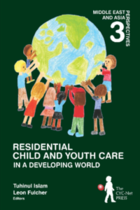
This volume offers glimpses of extended family care as well as residential child and youth care in 25 countries never gathered together before in one collection.
This paper draws attention to a small sample of policy approaches and developments in certain jurisdictions in this area of young people leaving care settings.
The subject of this report is to present the findings of stage two of a project aimed to address the anticipated risk to the foster care workforce by identifying and disseminating the most effective strategies to attract, support and retain foster caring families across all states and territories in Australia.
In this study, the authors sought to identify sleep habits and suspected sleep disorders among abused children and adolescents admitted to residential care facilities in Japan and to investigate their association with emotional and behavioral problems.
In this study, the authors interviewed 46 professionals who had contact with young people in residential care settings in New South Wales, Australia about their perceptions of the link between residential care and contact with the criminal justice system.
This paper identifies some of the key debates about the evidence from outcomes for children placed in foster care, the challenging issues in the design of the system, how it operates and what the outcomes for children look like.
This article focuses on the variability in developmental outcomes of foster children and the implications for foster care research and practice.
The authors of this paper sought to explore the psychometric properties and validity of the Achenbach Youth Self-Report and Child Posttraumatic Stress Disorder Symptom Scale among orphans and vulnerable children (OVC) living in Lusaka, Zambia.
This qualitative ethnographic case study explored the phenomenon of Child- Headed Households (CHHs) in rural Zimbabwe from the perspectives of a Shona community.
This paper analyses the role of community-based child protection structures for the survival and development of orphans and vulnerable children.
In this article, the authors explore whether current relational health (connectedness) promotes positive outcomes for child welfare-involved youth while controlling for developmental risk (history of adverse, and lack of relationally positive, experiences).
This study explores how the social workers and the families cope with the paradox of constrained help and enter into some form of collaboration.
This paper seeks to contribute to debates about how people's adult lives unfold after experiencing childhood adversity. It presents analysis from the British Chinese Adoption Study: a mixed methods follow-up study of women, now aged in their 40s and early 50s, who spent their infant lives in Hong Kong orphanages and were then adopted by families in the UK in the 1960s.
This paper summarises the main concepts behind Childonomics and presents the key findings so far.
This study presents findings from the first known population-based estimation of separation in an emergency setting.
This document provides a brief summary of the field testing of the population-based estimation method (or ‘estimation method’) in North Kivu in the Democratic Republic of Congo (DRC).
This pilot summary document provides a brief summary of the field testing of the community-based surveillance method in North Kivu in the Democratic Republic of Congo (DRC).
On September 24, 2015, the CPC Learning Network hosted a webinar about measuring the separation of children from their families in emergency settings.
The authors of this paper argue that young migrants without legal documentation are urgently in need of our attention as child and youth care workers and scholars.
This short flyer from UNICEF Nepal answers the questions: What is orphanage voluntourism? Are the children in orphanages actually orphans? How can orphanage volunteering be harmful? Why is there greater risk following the 2015 earthquake? What are the risks to children of residing in orphanages? What is the solution for children that are genuine orphans? And how can you help children in Nepal?
This guidance aims to raise awareness of the importance of children and young people in alternative care settings being able to make, influence and participate in decisions about their own lives, and other matters affecting them.
This paper reports on the evaluation of an English experiment which, for the first time, moved statutory social work support for children and young people in out-of-home care from the public to the private or independent sector.
This report outlines the learning from a project aimed at involving care-experienced young people and the voluntary sector in the inspections of local authority children's services and identifies the added value of the approach and methods used.
This report examines the proposed reforms for the regulation of children’s residential care in England.

To understand what states are doing, the U.S. Juvenile Law Center created the National Extended Foster Care Review.
The primary aim of the current study was to examine the longitudinal effects of ongoing physical abuse on the co-development of externalizing behavior problems and posttraumatic stress (PTS) symptoms among child welfare-involved adolescents.
The current service-data study explored the emotional and behavioural symptom trajectories of 207 young people under the long-term care of a local authority in the South West of England, over their first five years in the care system.
The investigators specifically queried the phenomenon of seeking healthcare services after foster care drawing from the Phenomenology of Practice approach.
This study explores the prediction that child abuse and neglect has an impact on Stanford-Binet Intelligence Scales 5th Edition (SB5) IQ scores, in relation to gender, age and type of abuse experienced.
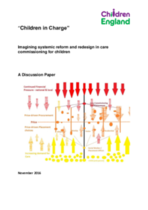
This paper is an attempt at rethinking the systemic problems facing the funding and commissioning of care services and placements for children in need of care and adoption, across ALL types and specialisms of placement, from kinship care, through foster care, to residential care and adoption.
Este informe examina el cumplimiento por parte de las autoridades estadounidenses de las protecciones específicas que deben otorgarse a los niños, basándose en 110 entrevistas a niños y mujeres detenidas con sus hijos.
This report examines US authorities’ compliance with the specific protections that should be afforded to children, drawing on 110 interviews with children themselves or women detained with their children.
This study examines the mental health of adolescents living with HIV (ALHIV) in Namibia, and the factors that contribute to mental health problems.
This study had two purposes; first to examine mental health disparities among LGBTQ youth and their heterosexual peers who are involved in the child welfare system, and second to observe the effectiveness of systems of care with youth in child welfare and if any differences exist between LGBTQ youth and heterosexual youth.
This study compares the level of social competence and quality of life among orphans and non-orphans.
This article explores main and underlying reasons for why children may be or may feel unwelcome in the home and thus migrate to the street.
This paper discusses the struggles of young women who are “crossover youth.” Crossover youth are children who are simultaneously involved in the foster care and juvenile justice systems.
The Handbook of Adolescent Development Research and its Impact on Global Policy aims to fill critical evidence gaps to speed evolution of better policy-making specifically tuned to this dynamic life stage.
Developed with Columbia University and experts from the Lancet Commission on Adolescent Health and Wellbeing this series of briefs from UNICEF Innocenti provides a much needed review of contemporary research methodologies for adolescent well-being in low- and middle-income countries.
In The Adolescent Brain: A second window of opportunity, a new compendium publication produced by UNICEF Innocenti, eight experts in adolescent neuroscience present emerging findings from their research.
This paper provides an illustrative case involving the development and testing of models used to predict the probability of whether U.S. foster children would achieve legal permanency.
The Standards of Quality for Family Strengthening & Support are designed to help ensure that families are supported and strengthened through quality practice.
This resource from the U.S. Center for the Study of Social Policy presents recommendations highlighting strategies for improving the delivery of developmental screening and early intervention for children who become known to state and local child welfare systems.
This is a series of briefing notes for UNICEF regional and country offices on SDG indicators. The first note summarises the development and implementation of the SDG global indicator framework and UNICEF’s role in supporting member states to collect, analyse and report on child-related SDG indicators at national and global levels.
This study outlines several ways in which family separation negatively impacts Syrian refugees in Jordan.
This paper draws on the perspectives of foster and kinship carers, describing the disconnection between their role as mental health advocates and their interest in early intervention in a field which is dominated by crisis and the historic marginalisation of foster and kinship carers.
This paper investigates avoidant attachment, which is characterized by emotional guardedness and reluctance to rely on others for support.
This study aims to confirm the proof of concept within foster carers and to explore the potential risks associated with intent to continue fostering, overall job satisfaction and psychological factors (avoidant coping) that could be targets for interventions.
The Child Welfare and the Travel Industry: Global Good Practice Guidelines have been developed to provide a common understanding of child welfare issues throughout the travel industry and to provide all travel businesses with guidance to prevent all forms of exploitation and abuse of children that could be related to travelers and the tourism industry.
The aim of this study was to evaluate the social and cultural acceptability of the Winangay Tool to practitioners responsible for assessing kinship carers.
This country care review includes the care-related Concluding Observations adopted by the Committee on the Rights of Persons with Disabilities.
This is a pilot study on the sensitive issue of how children and young people experience family contact in foster care, and the views of key adults in their lives on the same issue.
The authors of this paper conducted a systematic review with the aim of developing a better understanding of the psychosocial factors associated with the behavioral health of children in foster and kinship care.
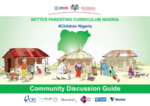
Better Parenting Nigeria is a parenting education curriculum whose goal is to build caregiver protective factors so that parents can provide better support to children.

The Better Parenting Nigeria Community Discussion Guide supplements the Better Parenting Nigeria Facilitator Manual to facilitate guided discussions and learning by parents to improve parenting knowledge, attitudes and skills.
In this paper, the authors review published literature on the mental health status of mothers living with HIV (MLH) and how this affects their children; outline the pathways between maternal HIV, maternal mental health problems, and negative child outcomes; and then describe a number of intervention entry points that they argue have the potential to enhance impact across PEPFAR platforms.
This brief brings together the critical mass of evidence emerging from recent rigorous impact evaluations of government-run cash transfer programmes in seven countries in sub-Saharan Africa.
This video from Catholic Relief Services provides an overview of the Mothers and Babies Course.
This video from Catholic Relief Services provides an overview of the Thrive II project, a program designed to enhance parent-child bonds and strengthen early child development.
This study is a pioneer effort to comparatively examine how the life satisfaction of children is influenced by their experiences of migration and by their interactions with parents in two geographical contexts: Ghana and China.
The authors of this study use data from surveys in three countries to document the frequency and variability of intensive, engaged transnational parenting in the diverse global regions of Asia, Africa, and the Americas.
This paper aims to fill a knowledge gap by comparing transnational and nontransnational African families with parents living in Europe to understand their different family structures.

In this article, differential individual and family needs are explored in a sample of children whose case has been substantiated by Child Protection Services.