Redefining Aid: The Journey from Child Sponsorship to Community Empowerment

Helping Children Worldwide

Melody Curtis, Laura Horvath, Jared Scheppman, and Kelly Strong discuss the journey from traditional child sponsorship models to a new paradigm that champions community empowerment. They also tackle the ethical dilemmas and strategic decisions that are reshaping the way we support vulnerable children around the world.

Leaving Sponsorship Behind - Pitfalls and Benefits

Helping Children Worldwide

Discover the unforeseen ripple effects of child sponsorship programs with Laura Horvath, Jared Scheppman, and Kelly Strong as they dissect the challenges and triumphs in philanthropy's evolving landscape. The guests in this episode reveal how well-intentioned aid can sometimes miss the mark, inadvertently creating dependencies that hobble the very communities they intend to uplift. They also analyze the intricacies of international aid, focusing on the necessary shift from quick fixes to sustainable, community-driven development.

Statements of Support for the Transition of Residential Care Services

Transitioning Residential Care Services Working Group

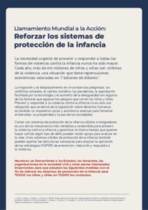
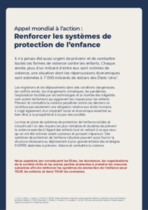
These statements can be used in donor facing advocacy efforts. The purpose of these statements are to demonstrate to donors that care experienced experts, advocates and networks are calling for care reforms, including for the transition of residential care services, so that children can access more appropriate services and be raised in families.

A avaliação e gestão de caso no contexto das reformas dos cuidados alternativos na África Oriental e Austral

Changing the Way We Care

Este artigo explora o papel da avaliação e gestão de caso no contexto das reformas do sistema de cuidados alternativos. Oferece princípios transversais de boas práticas, as etapas essenciais e descreve os fatores críticos envolvidos nas práticas de avaliação e gestão de caso eficazes. Baseando-se na literatura da região, o artigo visa fornecer uma orientação abrangente aos profissionais e às partes interessadas envolvidas nos cuidados, no bem-estar e na proteção das crianças. O anexo fornece detalhes dos recursos de avaliação e gestão de caso da região da África Oriental e Austral e também em outros lugares.

File

La gestion de cas dans le contexte des réformes de la prise en charge en Afrique de l’Est et Afrique australe

Changing the Way We Care

Ce document explore le rôle de la gestion de cas dans le contexte des réformes de la prise en charge. Il propose des principes transversaux de bonnes pratiques, des étapes essentielles et décrit les facteurs critiques impliqués dans des pratiques efficaces de gestion de cas. S’appuyant sur la littérature de la région, ce document vise à fournir une orientation générale aux professionnels et aux acteurs impliqués dans la prise en charge, le bien-être et la protection de l’enfance. L’annexe fournit des détails sur les ressources en matière de gestion de cas dans la région de l’Afrique de l’Est et australe ainsi qu’au-delà.

File

Case Management in the Context of Care Reform in Eastern and Southern Africa

Changing the Way We Care and UNICEF

This paper explores the role of case management in the context of care reforms. It offers cross-cutting principles of good practice, essential steps, and describes critical factors involved in effective case management practices. Drawing on literature from the Eastern and Southern Africa region and beyond, the paper aims to provide overarching guidance to professionals and stakeholders involved in children’s care, welfare, and protection. 

File

"Care Conversations" ICB Podcast Episode #2: Niels Peter Rygaard

Uduyan Care

Niels Peter Rygaard, a leading child psychologist, sheds light on 'missing links' and growth-encouraging assessment methods in this episode of episode of Care Conversations: ICB Podcast. He explores the ways of connecting with children without parental care and ways to make small changes that create a large impact in the world of family strengthening and alternative care. 

Advancing Protection and Care for Children in Adversity: A U.S. Government Strategy for Children to Thrive 2024–2029

USAID

The Thrive Strategy incorporates updated evidence on children in adversity and their needs, and considers the ongoing impact of global events such as the COVID-19 pandemic, spotlighting the polycrisis that children in adversity and families are experiencing.

File

Unpacking Childrens' Involvement in Armed Conflict: The Current Context in the Middle East, Sub-Saharan Africa, Asia and Latin America

CPC Learning Network, ChildFund Alliance, the Program on Forced Migration and Health at Columbia University, the Watchlist on Children and Armed Conflict

This webinar was a panel conversation hosted by the CPC Learning Network, ChildFund Alliance, the Program on Forced Migration and Health at Columbia University, and the Watchlist on Children and Armed Conflict that brought together a panel of experts to discuss the root causes leading to recruitment and involvement in activities of armed groups as well as the current context in countries such as Sudan, Colombia, Syria, Iraq, Yemen, and more.

Family Matters: Growing up in Family-Based Care Makes a World of a Difference

Marian J. Bakermans-Kranenburg, Marinus H. van IJzendoorn

This article reviews a study conducted about child development in residential care, foster/kafalah care, and adoptive families. The authors of the study demonstrated that institutions cannot provide safe, stable, and shared care for children, and lead to substantial delays in their development, not only for physical health but also for mental health and neurocognitive growth.

File

Podcast: Why the Move from Orphanages to Family Homes is an African Ideal - Revolutionizing Child Welfare in Sierra Leone

Helping Children Worldwide, Laura Horvath, Emmanuel M. Nabieu, Yasmine Vaughan, Melody Curtiss

Listen to transition support experts David Musa and Yatta Palmer of the Child Reintegration Centre (CRC) explain how transition is getting more children home to family and learn about the challenges, successes, and the powerful role of the CRC in revolutionizing child welfare in Sierra Leone.

Updated Checklist for the Integration of the Protection of Children Affected by Armed Conflict into CSDP Mission and Operations

Council of the European Union - Committee for Civilian Aspects of Crisis Management Politico-Military Group

Updated Checklist for the Integration of Protection of Children Affected by Armed Conflict into the Common Security and Defence Policy (CSDP) Missions and Operations

File

EU Guidelines on Children and Armed Conflict

European Commission's Directorate-General for European Civil Protection and Humanitarian Aid Operations

Originally published in 2018 and updated in 2024 defines the EU’s global approach to protecting children affected by wars. These guidelines are intended to serve as a practical tool to direct and assist EU actors throughout the world in their work on children and armed conflict, including other situations of armed violence by state and non-state actors, such as terrorist organisations and organised criminal groups.

File

Adverse Childhood Experiences (ACEs), Resilience, and Outcomes in Older Adulthood: A Scoping Review

Kelsey M. Haczkewicz, Sheza Shahid, Heather A. Finnegan, Caroline Monnin, Courtney D. Cameron, Natasha L. Gallant

This global scoping review aimed to examine the extent and nature of existing literature on the influence of adverse childhood experiences and resilience on the cognitive, physical, mental, and social health outcomes among older adults.

File

Approaches to Engaging Vulnerable Youth in Advocacy: Pillars Ka Pou Whakahou and the Aotearoa New Zealand Context

Family for Every Child

This practitioner guidance paper outlines the work of the Pillars Ka Pou Whakahou -- a charity based in New Zealand that provides support for the children and families of those in prison by providing wraparound support for these families, with home-based social work and a youth mentoring programme. 

File
Approaches to Engaging Vulnerable Youth in Advocacy: VOYCE – Whakarongo Mai and the Aotearoa New Zealand context

Family for Every Child

This practitioner guidance paper details the work of the VOYCE – Whakarongo Mai centres in New Zealand which centres its work around the belief that care-experienced young people are already experts on the care system – they just need to be offered appropriate training and support to get their voices heard. 

File
The Role of Boarding Schools for Vulnerable Children in the Europe and Central Asia Region

UNICEF

This UNICEF paper summarises evidence on the current use and impact of boarding schools in the Europe and Central Asia (ECA) region and draws on wider international evidence. It proposes a typology of boarding schools and considers the drivers for their use, as well as the concerns and challenges related to that use for vulnerable children.

2024 Trafficking in Persons Report

United States State Department

Around the globe, an estimated 27 million people are exploited for labor, services, and commercial sex. Through force, fraud, and coercion, they are made to toil in fields and factories, in restaurants and residences. Traffickers prey on some of the world’s most marginalized and vulnerable individuals – profiting from their plight. Among these individuals are children who are forced into criminality, sex trafficking, child soldiering, and in some countries the forced marriage of children has been defined as a form of exploitation.

Immersive Simulation Lab in Sri Lanka: Transition to Family-based Care in Sri Lanka 2024

Children's Emergency Relief International (CERI)

On March 20, 2024, an immersive simulation lab event took place in Sri Lanka. Child protection allies from the Western Province of Sri Lanka gathered for a hands-on experience aimed at transitioning from a system reliant on child care institutions to one focused on promoting family-based care and strengthening family initiatives.

File
Traces in the History of Swedish Transnational Adoption—A Diffractive Mapping through the Voices of Adoptees and Their Parents

Ingrid Bosseldal

This article aims to trace and present some themes on Sweden's history of transnational adoption, with a particular focus on the public debate and the different narratives that representatives of the adoption triangle—the adoptees, the adoptive parents, and the biological parents—tell when dealing with transnational and transracial adoption as a personal and political phenomenon.

File
Developmental Challenges Faced by Adolescent Orphans and Vulnerable Children in Chimanimani District in Manicaland Province, Zimbabwe

Vincent Chidhumo, Fortunate Zambezi, Pridemore Thondhlana

The study investigated the psychosocial consequences of poverty on rural Zimbabwean learners from child-headed households who are lagging behind in their learning. The study also aimed to generate recommendations based on the research findings.

File
The Role of the Social Worker in Developing Children's Independence in Community Care Homes
Rita Virbalienė, Janina Čižikienė

This article aims to examine how the training and competencies of social workers during the deinstitutionalization processes in Lithuania impacted the preparation of children for independent living in society. The review of the scientific literature, presented in the article and the research data, can be applied to improve community care homes providing social services to highlight the role of social workers in creating a safe environment for the child, involving the child in the planning and organization of activities, fostering self-confidence and their abilities.

File

Special Challenges Working with Foster Care Youth in the Inpatient Setting

Michael W. Naylor, James Chambliss, Ravneet Singh, Robin Du

This article details to unique challenges faced by youth in care in the US when receiving inpatient treatment and how that varies in several ways from the care of non-foster care youth. Children in care have more medical, behavioral, and psychiatric problems and require health care at higher rates than youth not engaged in the child welfare system.

Life-Course Trajectories of Children Through the U. S. Foster Care System

Dylan Jones, Rebecca Orsi-Hunt, Hyunil Kim, Melissa Jonson-Reid, Brett Drake

This article details the authors' findings that provide the first description of foster care trajectories in the US. Both practice and policy formulation can benefit from these empirically supported descriptions. Using such trajectory typologies, researchers can now explore how trajectories may predict wellbeing outcomes.

The Commodification of Care: Precarious Custodial Relationships, Disability, and Settler-Colonialism

Nicole Ineese-Nash, Kathryn Underwood, Arlene Hache, Patty Douglas

In this chapter, the authors explore the intricate relationships between young disabled children, their families, institutional settings, and disability services in Canada, with an emphasis on the challenges stemming from unstable custodial dynamics and governmental interference.

A Decade of Outsourcing in Health and Social Care in England: What Was it Meant to Achieve?

Anders Bach-Mortensen, Benjamin Goodair, Christine Corlet Walker

This article provides an analysis of key policy and regulatory documents preceding or accompanying outsourcing policies in England (e.g., policy document relating to the 2012 and 2022 Health and Social Care Acts and the 2014 Care Act), and peer reviewed research on the impact of outsourcing within the NHS, adult's social care, and children's social care.

File

Promoting Kafaalah as an Alternative Family Care System within the Muslim Community

Changing the Way We Care

This brief provides an overview of Kafaalah, an alternative family care option rooted in Islamic tradition, where a sponsor (Kafiil) cares for a child (Makfuul) without severing the child's ties to their birth family. It explains how Kafaalah differs from adoption by emphasizing that the child retains their birth family name and inheritance rights.

Children Around the World: The Future of Our Earth (International Psychology)

Julia Larock (Editor), Niels P. Rygaard (Editor), Uwe Gielen (Editor), Elaine P. Congress (Editor)

This book looks at major macro trends affecting children as well as interventions that have been used to address problems that children face. Topics that are addressed include the UN Convention on Children, Non-Governmental Organizations (NGOs) that support children, and development issues like pre and post-natal health, family systems, gender roles, and puberty/adolescent issues. Attention is given to major risk factors and challenges such as sex trafficking, child labor, street children, protecting children in congregate care, and violence against children in the home, in institutions, and in the community.

Image
Children Around the World: The Future of Our Earth (International Psychology)

Foster Care Leads to Lower Irritability Among Adolescents with a History of Early Psychosocial Deprivation

Yanbin Niu, George A. Buzzell, Ana Cosmoiu, Nathan A. Fox, Charles A. Nelson, Charles H. Zeanah, Kathryn L. Humphreys

The current study examined irritability in 107 16-year-olds with a history of institutional care from a randomized controlled trial of foster care as an alternative to institutional care and 49 community comparison children.

File

Development of a Child-Informed Measure of Subjective Well-Being for Research on Residential Care Institutions and Their Alternatives in Low- and Middle-Income Countries

Sarah Elizabeth Neville, Joanna Wakia, John Hembling, Beth Bradford, Indrani Saran, Margaret Lombe, Thomas M. Crea

This study describes a participatory, child-informed process of developing a multidimensional measure of child subjective well-being tailored towards the priorities of children who have lived in residential care. The survey was administered to 180 young people in Kenya and Guatemala who were reunified with family after living in residential care or at risk of entering residential care.

File