
7 Measures Public Authorities Must Take to Protect Homeless People from Covid-19
FEANTSA calls for public authorities at local, regional, national and European level to take these seven measures to protect homeless people and public health.
File
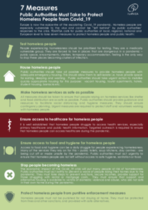
FEANTSA calls for public authorities at local, regional, national and European level to take these seven measures to protect homeless people and public health.
This resource from the Consortium for Street Children aims to answer the questions of those who work with street-connected children in light of the COVID-19 crisis.
This guide aims to help parents and families of children who are looked after in the care system during the Coronavirus outbreak.

This Comment will propose a theoretical international criminal law response to the family separation that occurred in summer 2018.
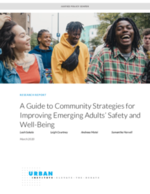
This guide summarizes findings from relevant literature on what helps emerging adults (including youth transitioning from foster care) succeed, describes examples of how US communities are innovating to meet those needs, and shares key takeaways from interviews with emerging adults.
This multilevel meta-analysis compared the outcomes of Treatment Foster Care Oregon for Adolescents (TFCO-A) and home-based treatment programs (HBT) with residential youth care for children and youth aged 0 to 23 years.
The aims of this article were to identify the types and characteristics of social support for families in vulnerable situations and to analyze what elements influence families’ attitudes towards these supports.
This chapter describes and proposes a new social inclusion model for supporting unaccompanied minors in becoming autonomous, as they are one of the most vulnerable groups of contemporary migration flows.
This study addresses the ethnic identity of transculturally placed adolescent foster youth with ethnic minority backgrounds in The Netherlands. The authors conducted qualitative interviews to provide insight into the lifeworlds of twenty foster youth. They found that constructing an ethnic identity was complex for these ethnic minority foster youth.
This brief report describes social media-based advertising strategies employed to recruit an anonymous sample of young adults who had recently aged out of foster care to participate in an online survey.