
Indigenous Children and Young People in Residential Care: A Systematic Scoping Review
This article provides an overview of literature investigating the needs of Indigenous children in residential care facilities in Australia.
This article provides an overview of literature investigating the needs of Indigenous children in residential care facilities in Australia.
The purpose of the roadmap is to document and communicate the vision and strategy towards establishing, operating and developing the Barnahus model in a simple and accessible format.

The Promise evaluation and impact assessment templates in this resource provide inspiration and examples for both evaluation and impact assessment of the Barnahus model's performance.
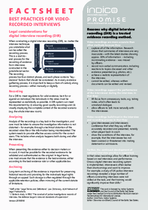
This factsheet reviews best practices for conducting a digital interview recording (DIR) with children who have experienced or witnessed violence.
This document offers inspiration and guidance for drafting an interagency agreement which formalises multidisciplinary and interagency (MDIA) team collaboration between agencies involved in Barnahus (a child-friendly, interdisciplinary and multi-agency centre for child victims and witnesses where children could be interviewed and medically examined for forensic purposes, comprehensively assessed and receive all relevant therapeutic services from appropriate professionals).
On Sept. 19, the Casey Foundation hosted a webinar sharing data and lessons from the first phase of Learn and Earn to Achieve Potential (LEAP)™, an effort to boost employment and educational opportunities for young people ages 15 to 25 who’ve experienced homelessness or been involved with public systems.
This report presents findings from an implementation analysis aimed at describing implementation of the U.S. state of Florida Title IV-E Demonstration Project, which allowed the state to use certain federal funds more flexibly, for services other than room and board expenses for children served in out-of-home care.
The purpose of this study was to gain insights into the perspectives of child welfare alumni related to the educational experiences that facilitated or presented obstacles to academic and social-emotional resilience and well-being and to what extent.
In this study, a sample of 97 (out of 505) foster care workers in Flanders (Dutch speaking part of Belgium) from all foster care agencies were asked to answer in writing the question: “What characteristics does a successful foster family have?”
This chapter focusses on the experiences of expectant parents in Scotland of navigating the child protection involvement with their as yet unborn infant.