Country Care Review: Japan
This country care review includes the care-related Concluding Observations adopted by the Committee on the Rights of the Child.
File
This country care review includes the care-related Concluding Observations adopted by the Committee on the Rights of the Child.
Family for Every Child has shared three pre-recorded presentations to watch in advance of their Online Event on Kinship Care in Brazil on Wednesday 3 April at 13:00 UK time.
The objective of this study was to provide basic information on the current situation of children under institutional care in the entire country of Sri Lanka, in order to identify the issues affecting those institutionalized children and to recommend plausible solutions.
This report - prepared for the European Commission by Applica and the Luxembourg Institute of Socio-Economic Research (LISER), in close collaboration with Eurochild and Save the Children - provides a first mapping of the situation across the 28 Member States of the EU outlining the situation in relation to children, particularly the four target groups (TGs) of disadvantaged children (children in institutions, children with disabilities, children of recent migrants and refugees, and children living in precarious family situations) as well as an indication of the key issues in relation to children’s access to the five policy areas (PAs): housing, healthcare, nutrition, early childhood education and care, and education.
This country care review includes the care-related Concluding Observations adopted by the Committee on the Rights of the Child.
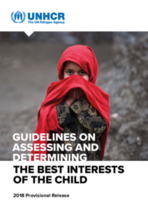
These updated UN High Commissioner for Refugees (UNHCR) Guidelines provide guidance on determining the best interests of the child in decisions affecting children at risk, in particular children who are separated from their parents and families.
This Resolution on "empowering children with disabilities for the enjoyment of their human rights" was adopted by the UN Human Rights Council on 22 March 2019. The Resolution makes mention of the particular vulnerability of children with disabilities to institutionalization, reaffirms the importance of a family environment for all children, and calls upon States to provide necessary support services to children and families so as to prevent institutionalization and family separation, encouraging States to "undertake every effort to provide alternative care within the wider family and, failing that, within the community in a family setting" where the immediate family is unable to care for the child.
The Child Protection Hub for South East Europe’s (ChildHub) overall objective is to contribute to the realisation of children’s fundamental rights across South East Europe, in particular the rights to be protected from abuse and violence. This report presents the findings of the final evaluation of this project.
This publication is aimed at children and young people (and adults too!) so that they know what the governments of the world have said they will do. As the Global Compacts can be difficult to read, this ‘child and youth friendly’ briefing summarizes what these documents say about migrant and refugee children and young people.
This study analyses the incidence of human trafficking among people travelling along the ‘Eastern Mediterranean route,’ the ‘Balkan route’ and the ‘Central Mediterranean route’; factors of resilience to human trafficking and other abuses; and factors of vulnerability to human trafficking and other abuses. The study reveals the particular vulnerability of unaccompanied minors to child exploitation and abduction and highlights key recommendations for addressing human trafficking along these routes.