Displaying 191 - 200 of 243
This document provides an outline of the Workshop on Indicators and Information Systems, held on day 2 of the Alternative Care Workshop in Bangkok in November 2005.

This presentation, delivered at the Alternative Care Workshop in Bangkok in November 2005, provides an outline of alternative care in the Philippines.
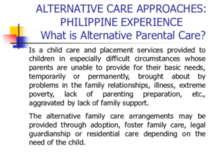
This presentation was given at the Alternative Care Workshop in Bangkok in November 2005.
This presentation, delivered at an Alternative Care Workshop in Bangkok in November 2005, provides an outline of alternative care in Laos.

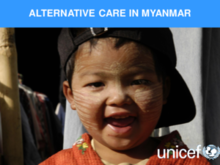
This presentation from UNICEF provides an overview of the situation in Myanmar, particulary for children without parental care, and the alternative care system, or lack thereof, in the country.
This presentation from UNICEF provides an overview of the situation in Cambodia, particulary for children without parental care, and the alternative care system in the country.
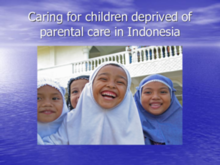
This presentation provides an overview of the situation in Indonesia for children without parental care in a post-tsunami context and the alternative care system in the country.
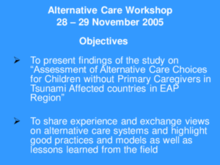
This presentation includes the objectives and agenda from an Alternative Care Workshop held in Bangkok in November 2005 to present findings from a study on alternative care choices for children affected by the Tsunami in South East Asia and to share experiences and best practices related to children's care.
Guidance on planning and implementation of child-specific disarmament, demobilization and reintegration (DDR) programming in a peacekeeping environment. Includes definitions, roles for child protection agencies, and key programming considerations on prevention of recruitment.
A twelve page policy brief that outlines Save the Children's position on the type of protection children need in an emergency. Contains some statistical information.