
Displaying 201 - 210 of 243
A paper with guidelines for keeping children with families and providing proper care and protection for them. It provides examples and plans for those interested in planning care for separated children.
Guidelines for good practices in conducting assessments following an emergency.
A simple, one-page form designed to assess child protection needs in immediate relief situations.
Guidance on planning and implementation of child-specific disarmament, demobilization and reintegration (DDR) programming in a peacekeeping environment. Includes definitions, roles for child protection agencies, and key programming considerations on prevention of recruitment.
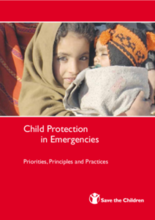
A twelve page policy brief that outlines Save the Children's position on the type of protection children need in an emergency. Contains some statistical information.
A research study which explores strategies used by children, families and communities to prevent child recruitment into armed forces.
Guidance on preventing child separation, interviewing separated children, and programming for their care and protection needs. Contains specific information on temporary and longer term care options.
Indonesian policy paper on the practice principles for separated and unaccompanied children in an emergency, including guidance on short and long-term care arrangements, tracing, and family reunification
A guidebook focusing on the assessment to be conducted when an emergency first hits or just after a major event in an armed conflict. Outlines the preparation needs of an assessment team and describes what an assessment should concentrate on.
Guidelines for the care of young children separated from their families in emergencies. Includes detailed information on prevention of separation, child registration and documentation, and family reunification.
