Displaying 181 - 190 of 243
Practical guidance on responding to the protection and care needs of children separated from their families, with sections on consideration of and arrangements for interim care, family reunion, and alternative long-term placements.
Examines institutional and family care in post-Tsunami Indonesia. Includes situational analysis, key issues, and recommendations.
An assessment of alternative care responses for children without primary caregivers in tsunami-affected regions of Malaysia, Myanmar, Indonesia, and Thailand. Includes good practices, recommendations, and detailed country reports.
The report details the scale and nature of migritaion by children entering the United States. It includes policy analysis and recommendations around the protection of seperated and unaccompanied children.
Evaluates global improvements in nutrition as progress towards achieving the Millenium Development Goals (MDGs). Suggests that the MDGs are attainable only with re-prioritization of efforts to reduce child undernutrition.
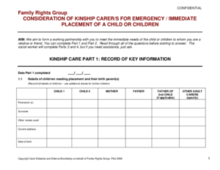
A template for assessing the suitability of kinship caregivers in the short term, and for planning the care of a child in kinship care. There are sections that can be given to potential caregivers to help them prepare for caring for a child.
A manual outlining a detailed 3-day training program in how to respond to the psychosocial effects of disasters. Designed for use by psychosocial program administrators or trainers.
Guidelines for when and how to make a decision regarding the best interests of the child in the case of emergencies. Includes useful information for addressing unaccompanied and separated children including, temporary and alternative care arrangements, tracing and reunification, and child participation.
This document provides an outline of the Workshop on Indicators and Information Systems, held on day 2 of the Alternative Care Workshop in Bangkok in November 2005.

This presentation from UNICEF was given at the Alternative Care Workshop in Bangkok in November 2005. It highlights the links between alternative care and social protection in the South East Asia region and outlines a strategic plan.