Displaying 231 - 240 of 243
Resource pack for a rigorous course on international legal standards for children. Includes notes for facilitators, participatory exercises, overheads, and handouts.
Guidelines and criteria for establishing and monitoring alternative care arrangements including emergency transit booth care (ETBC), foster care, and independent living for separated Liberian refugee children in Sierra Leone.
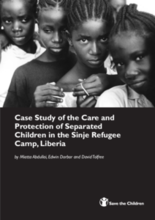
This paper outlines the response of Save the Children to the civil war outbreak in Liberia. Using the concept of child participation, the organization was able to address the needs of the children, which included family tracing and reunification, child protection and education.
An overview of the key challenges surrounding youth in crisis and the framework for dealing with these issues based on Save the Children principles in youth programming. Includes detailed examination of international programming examples.
Training materials on the threats to children’s development from displacement and armed conflict and other emergency situations. It includes guidance on strategies to promote children’s development in adverse conditions.

This article seeks to draw attention to some of the issues affecting women detainees and the applicable international humanitarian standards which afford them protection and assistance.
Outlines a comprehensive strategy for dealing with children and armed conflict based on the CRC. Includes detailed policy recommendations on prevention, protection, and reintegration.
Argues that cash-based responses should play a growing role in humanitarian response to crises
Outlines strategies for responding to education needs in communities affected by crisis or chronic instability. Includes a summary of UNICEF’s approach, some practical information on implementation, and an identification of areas where more work is needed.
Guidance on the importance of preventing family separation and ensuring reintegration with families, communities or country of origin.