Breaking the cycle: Solidarity with care-leaver mothers
This paper aims to address the underexplored dilemma between protecting children and safeguarding mothering opportunities for care-experienced mothers.
File

This paper aims to address the underexplored dilemma between protecting children and safeguarding mothering opportunities for care-experienced mothers.
This article explores population-level prevalence of Posttraumatic stress disorder for Young Children (PTSD-YC) to test whether application of Alternative Algorithm for PTSD (AA-PTSD) criteria, relative to the DSM-IV PTSD algorithm, increases identification of 5-6 year old children with clinical needs, in both the general population, and among looked-after-children where the risk of mental health issues is greater.
Families over Facilities is a call to action to end the unnecessary institutionalization of children in child welfare. The report details the physical, mental and emotional harm done to children in group settings, the significant unnecessary taxpayer costs associated with the practice, and violations of children’s civil and human rights.
This essay describes the impact of the pandemic on the authors' experiences as Independent Visitors (IVs) for children who are looked-after.
This issue of the e-journal CYC-Online includes articles on the impact of COVID-19 on children in alternative care in South Asia, residential care centers during COVID-19, child welfare experience among child and youth care practitioners, and more.
This article describes the steps taken by Udayan Care responded to the needs of children in their care during the COVID-19 pandemic.
This paper is a condensed version of a study entitled “Beyond 18: Leaving Child Care Institutions - Supporting Youth Leaving Care: A Study of Aftercare Practices in Five States of India”, which found that upon turning 18, youth transitioning out of child care institutions to independent life in India experience many challenges, such as securing housing and identity documents; accessing education, skill development, and employment opportunities; and garnering psychosocial support.
Este documento profundiza en la investigación de la inversión pública en aquellos programas o actividades en Guatemala que tienen como beneficiario final la niñez y adolescencia, separado de sus progenitores y que crece bajo el abrigo de una institución o de una familia extendida o sustituta.
This video tells the story of Georgi, a boy born with Down's Syndrome in Bulgaria whose parents were told they wouldn't be able to care for him and were encouraged to place him in an orphanage. They placed him in an orphanage and were later supported by Hope and Homes for Children to have him returned to their care.
This briefing paper - developed by UNICEF and the Social Policy Research Institute, in collaboration with the National Development Planning Commission - built on existing microdata, analyses of children’s vulnerabilities and specific phone survey data collected between March and June 2020. The paper outlines the primary and secondary impacts of COVID-19 on children in Ghana, including the impacts on vulnerable children such as children with disabilities, street-connected children, and children in residential care.
Catholic Medical Mission Board Zambia (CMMB), SPOON, and St. Catherine's University conducted this Health Impact Assessment (HIA) in Lusaka Province, Zambia, to understand the disparate impact that COVID-19 and the containment measures had on children with disabilities and their families. his two-phased assessment is designed to gather evidence about the impact through seven domains: COVID-19 knowledge and practices, food consumption, housing and livelihood, child safety and risk of separation, child health and wellness, parental and child stress, and education.
This article discusses findings from an evaluation of a pioneering early help service in North West England. This new service aimed to improve the safety and wellbeing of families (mothers and children) who were assessed as below the level of ‘high risk’ domestic violence and below the threshold for a child protection order.
This article synthesizes relevant theories and models of disaster, migration, and family resilience in order to create a framework in which to organize the complex processes that occur within families as a result of migration and that affect the mental health of children.
This report presents the latest findings from the Growth Beyond the Town Girls and Boys Town South Africa (GBTSA)/University of Johannesburg (UJ) joint partnership longitudinal research study. Presented are the findings from 150 participants who were interviewed as they disengaged from GBTSA, as well as the outcomes of many of these care-leavers that have been measured each year during follow-up interviews.
This booklet has been designed to help local authorities, schools and their partners work together to ensure they can provide every child, including looked after children, with the kind of positive learning experience which is the foundation for future success.
This report shares the findings of a focused piece of research carried out in Scotland by CELCIS and partners at the University of Edinburgh. The aim of the research was to understand care leavers' experiences of digital exclusion before and during the COVID-19 restrictions in Scotland in 2020.
This webinar event launched the report 'The digital divide: The impact on the rights of care leavers in Scotland,' which shares the findings of a focused piece of research that sought to understand care leavers' experiences of digital exclusion before and during the COVID-19 restrictions in Scotland in 2020.
This guidance from the UK Department for Education sets out the steps local authorities and their partners should take to prevent children from going missing and to protect them when they do go missing.
This article from the Journal of Clinical Child & Adolescent Psychology examines the extent to which psychosocial deprivation increases the risk of later cognitive and psychiatric difficulties and the downstream consequences of this for risk-taking behavior in adolescence. The current study included 165 children, 113 with a history of institutionalization and 52 with no such history.
The Children’s Commissioner of New Zealand undertook a thematic review of the policies, processes and practices of Oranga Tamariki Ministry for Children relating to care and protection issues for pēpi Māori (Māori infants) aged 0-3 months. This second report comes to the clear conclusion that to keep pēpi in the care of their whānau, Māori must be recognised as best placed to care for their own.

The Children’s Commissioner of New Zealand undertook a thematic review of the policies, processes and practices of Oranga Tamariki Ministry for Children relating to care and protection issues for pēpi Māori (Māori infants) aged 0-3 months. This first report presents the insights gained from interviews with mums and whānau (family) who had experience with pēpi (aged 0-3 months) who had either been removed, or were at risk of being removed, from their whānau by Oranga Tamariki or its predecessor Child, Youth and Family.

This study aimed to unravel the different issues and challenges that hinder the effective rehabilitation of children in child care institutions in India.
This study analyzed three open-ended responses from a national online survey examining compassion fatigue in Children’s Advocacy Centers (CACs) to understand the impact of work-related stress on child welfare workers (CWWs).
This article reports on a systematic scoping review which investigated research publications on participation in making life-impacting decisions by young people.
This resource is provided as a working bibliography of key research and evidence-based policy papers on the care of orphans and other vulnerable children separated from parental care.
Esta guía es la tercera publicación en una serie producida por the Faith to Action Initiative (Iniciativa de Fe en Acción) para proporcionar a las iglesias, a las organizaciones basadas en la fe, e individuos de fe con información para ayudar a guiar la “mejor práctica”. La guía proporciona una visión general de una gama de opciones de cuidado alternativo para los niños que han sido separados del cuidado parental.
This study addresses a gap in the literature regarding older youth with intellectual disabilities who are sexually victimized and pushed to engage in transactional sex while they are transitioning from child welfare systems involvement. It does so by examining risk and protective factors at the individual, micro, exo, and macro systems levels.
This paper synthesizes the conceptual and empirical literature on place-based approaches to meeting the needs of young children and their families.
This article evaluates a pilot project in 2016 aiming to improve health care access for children in out-of-home care (OOHC) in Victoria, Australia and identifies significant systems issues.
This brief summarizes actions that programme planners and implementers should take to minimize the impact that emergencies have on the lives of young children and their families.
The current study aimed to identify the critical components of an efficacious dyadic relationship enhancement intervention for siblings in foster care through a secondary analysis of fidelity of implementation and trial outcome data.
This paper examines the academic discourse in child protection research concerning how Article 12 of the CRC is implemented and how it is manifested in child protection service (CPS) casework practices.
This study examines a promising new coping and parental competency (CPC) intervention for parents of children with special educational needs that targets parents' mental health outcomes.
The overall aim of this article to gain updated knowledge on how children and youth who have received or are receiving child welfare (CW) interventions from the Nordic CWS fare in relation to suicidality.
This booklet emphasizes the importance of family based care for the care of orphaned and vulnerable children (OVC) in Kenya, provides answers to regularly asked questions, and lists current government efforts to support OVC, including the policy and legal frameworks and existing forms of family and community-based care.
The Department launched a consultation on the use of independent and semi-independent children's care settings that are not required to register with Ofsted (unregulated provision) as a matter of urgency, ahead of the Government’s anticipated wider care review. This report presents the key findings from an independent analysis of responses to the consultation.

The current study aimed to identify the critical components of an efficacious dyadic relationship enhancement intervention for siblings in foster care through a secondary analysis of fidelity of implementation and trial outcome data.
In July 2016, the UK government committed to implementing several recommendations laid out in Sir Martin Narey’s independent review of children’s residential care. This report sets out more detail on each of these recommendations and also sets out the government’s response to the recommendations in Sir Martin’s report.
On 28 October 2015 the Prime Minister of the UK told the House of Commons that he and the Secretary of State for Education had commissioned Sir Martin Narey to review residential care for children in England.
This rapid review of the literature on residential care for looked-after children in the UK aims to describe the use of residential care for children within the child welfare systems of England and other relevant countries; review the evidence on children’s outcomes from residential care; and review the quality of the evidence and identify gaps in the evidence base in order to inform future research priorities.
The article analyzes the results of a sociological study of the prospects for improving the system of social protection of graduates of institutional institutions in Uzbekistan.
This meta-analysis aims to clarify the size of the associations between disinhibited social engagement behavior (DSEB) and attachment insecurity or disorganization.
This is the final report of the evaluation of the Salvation Army Westcare Continuing Care Program, which aimed to provide relationship-based support to assist the planning, preparation and support needs of young people during their transition from out-of-home care (OOHC) to independent living.
"While Pennsylvania has made great strides in ensuring family preservation, placement with kin and the maintenance of kinship connections, there is an opportunity to identify strategies to increase these outcomes and become a national leader in putting families first," this report argues. The paper outlines concrete policy solutions that "can improve this trajectory, making Pennsylvania a model for other states [in the U.S.]."
This article explores evidence which shows that the use of ‘private family arrangements’ is motivated partly by a concern for subsidiarity, and partly by necessity: they provide a source of placements in cases where regulatory requirements and a lack of resources would otherwise make the placement challenging or impossible.
The purpose of the present study was to identify the prevalence of traumatic brain injury (TBI), adverse childhood experiences (ACE), and poor sustained attention and the associations of these events in youth and young adults who previously experienced foster care.
To understand network governance among actors involved in contracting out foster care services, service funders, service providers, and service users were interviewed. A thematic analysis of interviews combined with a critical review of archival data was conducted.
This study assesses whether youth in foster care in the United States who are over age 18 have better financial capability and related supports compared with younger youth and whether there are associations between supports and financial capability.
This study examines whether former foster youth are more likely to stop out of a 4-year university than low-income, first-generation students who did not experience out-of-home care.
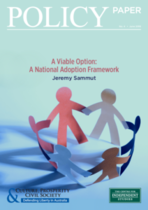
This paper will examine recent initiatives to boost adoptions in New South Wales (NSW) and a way to roll out the core of these reforms nationally.
A qualitative study was designed highlighting the voices of children, analysing their fostering experience, interpersonal relationships, their participation in daily decisions, and future aspirations.
This report offers a blueprint for creating equity-centered, anti-racist policies that support the health and well-being of children and families of color.
Through interviews with adoptive parents, this study explores what and how adoption-related exploitation occurred in Ethiopia.
This article explores the possibilities of a systemic approach in the support of parents whose children are placed in public care.
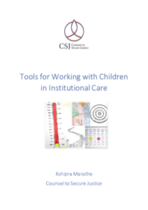
This knowledge resource discusses and provides examples of practice tools and calming techniques (in English and Hindi) which counsellors and adults can use while working with children who are in institutional care. The paper reviews evidence on the impact of institutionalisation on children as well as evidence-based interventions that can help mitigate this impact.
In this article, the authors aim to examine in greater depth aspects that have an influence on the lives of the in-care population.
UNICEF’s new report, Building Bridges for Every Child: Reception, Care and Services to Support Unaccompanied Children in the United States, considers global discussions on adequate reception and care for unaccompanied migrant and asylum-seeking children. Following the journey of children traveling alone from northern Central America to the U.S. – entering, navigating and leaving the U.S. reception and care system and transitioning to community life – this report presents eight overarching recommendations for the realization of a better and more equitable system of care and support for every child.
UNICEF Bulgaria's project, "Family for Every Child," aimed to demonstrate that viable alternatives to institutionalization exist, and that as long as a network of suitable support services is in place, deinstitutionalization is achievable. UNICEF Bulgaria commissioned this evaluation to establish whether the project had been successful
This publication from UNICEF showcases 18 reports from 2020 with a high potential for impact on policies and programmes that benefit children, including a report on deinstitutionalization in Bulgaria, a report on unaccompanied minors in Italy, and more.
Despite the growing need for investment in early childhood development in emergencies (ECDiE), no methodology currently exists to track and report on donor commitments and funding. This report aims to help fill that gap by estimating funding going to ECDiE in recent years.
This research explored the experiences of the postmarital life of women with a history of residence in foster care centers. It was conducted using a qualitative content analysis.
Based on analysis of legal documents on family reunification and educational material concerning transnational adoption in Denmark, this article suggests that the concept of attachment may be conceptualized as a specific operationalization of belonging, and that belonging and biopower may be viewed as intertwined (rather than opposites).
This systematic narrative review of the literature reports on the experiences of foster youth regarding the use of Internet Communication Technologies (ICTs) such as social media, focusing only on studies that include youth voice.
This study examined the effectiveness of a two-session preventive parenting intervention, the Parent Check-In. The intervention, grounded in Self-Determination Theory (SDT), is designed to facilitate adaptive parenting, specifically autonomy support, structure and involvement, and parenting efficacy, and to increase autonomous self-regulation and decrease behavior problems in children.
This article offers a critical cultural reading of narratives on family reunification in Haiti in social media and advocacy discourse, revealing how this approach privileges Northern assumptions about proper parenting and family life.
The purpose of this research was to examine the overlap between the Youth Justice (YJ) and the Child Protection (CP) systems in Australia, and profile selected characteristics of children and young people who have YJ and CP system involvement.
This video features interviews and presentations from a seminar that took place in Nairobi, Kenya in March 2018 which brought together orphanage directors to discuss the importance of children growing up in safe and loving families and the need to transition models of care.
This study examined racial/ethnic disparities in reunification rates across U.S. child welfare systems controlling for child- and system-factors.
The purpose of this study was to determine the effectiveness of the Positive Parenting Program (Triple-P) in enabling mothers to manage stress related to parenting a child with intellectual disability (ID).
The present research study is an exploratory study to examine factors like lack of communication and attachment to parents, abuse, poverty and peer influence with a sample size of 100 runaway children (50 girls, 50 boys) residing in a non-governmental organisation in NCR, Delhi.
In this article, the authors trace how government responsibility for the prevention of child maltreatment became centered within the U.S. child protection response.
This article examines existing knowledge on the scope, nature, and causes of child abuse and neglect in the U.S.
This article summarizes the causes of racial disproportionality, arguing that internal and external causes of disproportional involvement originate from a common underlying factor: structural and institutional racism that is both within child welfare systems and part of society at large.
This document provides interim guidance for child protection and health actors in the context of quarantine and isolation measures to mitigate related child protection risks, minimize family separation, and promote family unity and social cohesion.

Настоящий документ представляет собой временное руководство для субъектов в области защиты прав детей и в системе здравоохранения в контексте карантинно-изоляционных мероприятий с целью снижения рисков, связанных с защитой прав детей, минимизации случаев разлучения семей, а также содействия единству семей и социальной сплоченности.

En este documento se ofrece orientación provisional a los agentes de protección de la niñez y de la salud en el contexto de las medidas de cuarentena y aislamiento para mitigar los riesgos conexos de protección de la niñez, reducir al mínimo la separación familiar y promover la unidad familiar y la cohesión social.
Le présent document fournit des orientations provisoires aux acteurs des secteurs de la protection de l’enfance et de la santé, dans le contexte des mesures de quarantaine et d’isolement, pour leur permettre d’atténuer les risques liés à la protection de l’enfance, de réduire au minimum la séparation des familles et de favoriser l’unité des familles et la cohésion sociale.
This introduction sets a foundation for understanding the contents of this volume of The ANNALS, which aims to increase awareness among scholars, policy-makers, and practitioners of the size, scope, and functions of child welfare services in the United States.
This article provides an overview of the funding streams that finance the U.S. child welfare system, reviews the federal legislation since 1970 that has led to the current funding structure, and ends with a discussion of how the Family First Prevention Services Act of 2018 has the potential to create better outcomes for children and families by promoting prevention activities and program support with strong evidence of success.
This article considers how U.S. child welfare agencies can best leverage the opportunities presented by the Family First Prevention Services Act of 2018 while addressing potential barriers posed by the paucity of evidence-supported prevention programs and avoiding the unintended consequences of limiting reimbursement to only selective prevention services that meet rigorous evidence standards of effectiveness.
This chapter summarises the detailed findings of the United Nations Global Study on Children Deprived of Liberty and exemplifies the significant leading role of academia in ‘making the invisible and forgotten visible’ throughout the world.
The author of this article analyzes young people’s experiences in foster care from a life course perspective, accounting for when foster care happens, how long it lasts, and what happens when foster care placements end.
This exploratory research led by Kindernothilfe between May – July 2020 shows how the challenges facing working children and their families have been exacerbated since the outbreak and it presents their recommendations for effective and relevant responses to the pandemic.
The aim of this study was to examine whether 1) attachment to the biological parents mediates the association between abuse and suicidal risk (SR) and 2) attachment to a foster parent (whether from a foster home or an institution) moderates the effect of attachment to biological parents on SR.
The two primary objectives of this study were 1) to compare recent child abuse (physical, emotional, and sexual) between orphaned and separated children and adolescents’ (OSCA) living in institutional environments and those in family-based care; and 2) to understand how recent child abuse among street-connected children and youth compared to these other vulnerable youth populations.
The purpose of this empirical study is to investigate the perceived difficulties and outcomes of young adults with a left behind background.
The aim of the current paper is to examine the demographic, crime-related and psychosocial characteristics of child welfare and juvenile justice youths in shared residential care and subsequently examine its relationship with offending behavior in adulthood.
This study was designed to evaluate the content of US state-sponsored online mandated reporter training in order to identify gaps and need for improvement in mandated reporter training.
This substudy aimed to contribute to a larger study—the Ripple project—through exploring the experiences of practitioners working across child welfare and mental health services regarding collaboration in the care of young people; and to identify practices that might enhance collaborative work and improve mental health outcomes.
With current knowledge of alternative child care and in light of the holistic ministry, this article suggests an approach for the Christian church to care for orphans and children at risk by focusing on the family and the local community.
This paper presents data from a unique programme evaluation of the parenting programme titled ‘Learning together, growing as a family’ applied in 14 cities in Spain and targeting families at risk of neglectful behaviour.
In this study, interventions addressing cognitive or educational outcomes for HIV OVC worldwide were examined through systematic searches conducted from October 2016 to 2019.
The authors of this study examined attitudes about child maltreatment in China and the Netherlands.
This article presents evidence of son preference in the child trafficking market for illegal adoption in China, where son preference is explicitly revealed by choice and quantified by the price premium of a boy.
This commentary challenges the stereotypes created by hyper-attention to the struggles of child welfare-affected parents of color (CW-PaoC) and situates them, and their families, within the broader context of the American appetite for family separation, wherein specific types of families are targeted for scrutiny, intervention and regulation.
This one-page technical brief accompanies a Guidance Note on public expenditure and children's care. It describes how to include government strategy to promote the better care of children in the public budget.
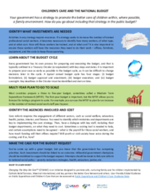
This guidance is designed to strengthen the capacity of government agencies in low resource settings to prepare a sound budgetary framework for policies, programs and services that aim to keep children in safe and nurturing family environments.
The aim of this study was to compare the efficacy of direct therapy and indirect consultation for treating mental health difficulties among looked after children (LAC), and also to identify any demographic or clinical predictor variables for outcomes in this cohort.
This article examines the housing and social policies for URMs in Greece.
This paper aims to provide a broad overview of child neglect in relation to current thinking and to generate discussion points for practitioners, policy makers and researchers.