Towards recognising practitioners working in out-of-home care as experts in everyday life: A conceptual critique

Claire Cameron - International Journal of Social Pedagogy

This article examines the case for greater recognition of the children’s workforce in out-of-home care (OHC), and situates the concept of ‘expertise’ in the rise of recognition of children’s status as competent social actors, as well as in professionalisation debates.

File

The Relationship between Loneliness, Self-Efficacy, and Satisfaction with Life in Left-Behind Middle School Students in China: Taking Binhai County of Jiangsu Province as an Example

Lei Jiang, Mingyue Liao, Ronghua Ying - Best Evidence in Chinese Education

The purpose of this study was to explore the relationship between loneliness, self-efficacy, and satisfaction with life of Left-behind middle school students in China.

File

Trends in the prevalence and incidence of orphanhood in children and adolescents <20 years in rural KwaZulu-Natal South Africa, 2000-2014

Gabriela Mejia-Pailles, Ann Berrington, Nuala McGrath, Victoria Hosegood - PLoS ONE

In South Africa, large increases in early adult mortality during the 1990s and early 2000s have reversed since public HIV treatment rollout in 2004. In a rural population in KwaZulu-Natal, the authors of this study investigated trends in parental mortality and orphanhood from 2000–2014.

File

The impact of parental migration on non-cognitive abilities of left behind children in northwestern China

Han Liu, Fang Chang, Hannah Corn, Yi Zhang, Yaojiang Shi - Journal of Asian Economics

Using survey data consisting of 5002 eighth graders from 160 middle schools in northwestern China, this paper investigates how parental migration affects children’s non-cognitive abilities, as is measured by Big Five components of conscientiousness, extraversion, neuroticism, agreeableness, and openness, as well as children’s grit.

Social Protection & Child Protection: Working together to protect children from the impact of COVID-19 and beyond

The Alliance for Children Protection in Humanitarian Action, UNICEF, Save the Children

This paper presents evidence of how social protection approaches can contribute to child protection outcomes and outlines recommendations which call for strong mobilization and uptake by governments, UN and multilateral development agencies, regional bodies, donors, and Civil Society Organizations (CSOs).

File

International Kinship Care Guide

Cross Border Child Safeguarding Working Group, Children and Families Across Borders

This guide is the first of its kind which comprehensively addresses the best practice for placing Looked After Children currently in the UK into the care of a family member(s) who lives in another country.

File

COVID-19: Adapting Child Protection Case Management MOOC Follow-Up

MOOC Taskforce

Following thousands of comments and responses posted by the 8,000 course participants for the MOOC on COVID-19: Adapting Child Protection Case Management, as well as research and evidence being issued by child protection agencies, three international experts were invited to provide short videos containing advice and opinions of experts in different regions of the world regarding the need to plan for support for children for the evolving situation of COVID-19 and in particular post-pandemic scenario. 

Social Welfare Workforce Capacity Assessment to develop a long-term capacity building strategy for the social welfare service sector in Ghana

Ministry of Gender, Children and Social Protection, and UNICEF Ghana

This report notes existing gaps and needs in social service provision and provides recommendations for specific actions to strengthen the social welfare workforce in Ghana.

File

Data collection on children in residential care: Protocol and tools for a national census and survey on children in residential care

UNICEF

In response to the need for accurate and reliable statistics on children in residential care, UNICEF has developed the first-ever comprehensive methodology to collect data on children living in residential care settings by applying a number of preexisting tools from international survey programmes, such as the Multiple Indicator Cluster Surveys (MICS) and other validated instruments, to an institutional population.

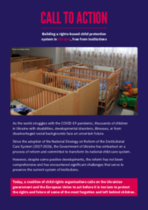
Behind the Mask of Care: A Report Based on the Results of the Situation Analysis of Baby Homes in Ukraine

USAID, UK aid, Hope and Homes for Children

This report presents the findings of the 2019-2020 assessment conducted within the Pilot assessment of residential healthcare facilities for children and development of recommendations for reform in five baby homes of Dnipropetrovsk, Poltava and Kherson regions of Ukraine. In addition to the findings from the assessment of baby homes, the report presents results from the region assessments regarding needs in the medical rehabilitation, paediatric palliative care, and social services for children aged 0-6 years and their families. 

File

Early Childhood Development Index 2030

UNICEF

The ECDI2030 is a tool, developed by UNICEF, to measure progress toward SDG indicator 4.2.1. It captures the achievement of key developmental milestones by children between the ages of 24 and 59 months. Mothers or primary caregivers are asked 20 questions about the way their children behave in certain everyday situations, and the skills and knowledge they have acquired.

Children in care institutions

Evie Browne - K4D Helpdesk Report

This paper explores the question: What does the literature tell us about how many children worldwide are in institutions/orphanages; how likely they are to be exploited and in which ways; and what interventions are most effective in preventing this?

File

Situation Analysis of Children in Uganda - 2019

Ministry of Gender, Labour and Social Development, and UNICEF Uganda, with support from the Uganda Bureau of Statistics

This situation analysis explores multidimensional poverty in Uganda, including an examination of both material and social needs of children – including health care and education, a social and family life, clean and safe drinking water, housing that is not squalid and overcrowded, adequate clothing, and regular meals with sufficient and nutritious food.

File

Principle of Subsidiarity - ISS/IRC comparative working paper 1: Spotlight on solutions

International Social Service

Having the best interest principle and taking into account the individual needs of each child in intercountry adoptions, this paper endeavours to promote the two tier approach of the principle of subsidiarity by examining the drafting spirit behind international standards (Section 1), providing examples of legislation and jurisprudence (Section 2) and identifying promising practices (Section 3) that reflect the principle.

File

What Works to Protect Children on the Move: Rapid Evidence Assessment

Rachel Marcus, Amina Khan, Carmen Leon-Himmelstine and Jenny Rivett - UNICEF

This rapid evidence assessment (REA) aimed to answer three questions: (1) What interventions have been effective in ensuring the protection of children on the move? (2) What are the implementation factors that make these interventions effective or that hamper effectiveness (for example the context of the intervention, and specific design features such as who is targeted)? and (3) What kinds of social welfare and child protection systems are linked to effective interventions?

File

“I Had No Hope, I Had No Help at All”: Insights from a First Study of Fathers and Recurrent Care Proceedings

Georgia Philip, Lindsay Youansamouth, Stuart Bedston, Karen Broadhurst, Yang Hu, John Clifton and Marian Brandon - Societies

This article presents data from the first large-scale study of fathers involved in repeat (or recurrent) care proceedings in England. The study consisted of three elements: an analysis of population-level administrative data from the Child and Family Court Advisory and Support Service (CAFCASS), a survey of fathers in pre-proceedings and care proceedings, and a qualitative longitudinal (QL) study of recurrent fathers.

File

Heightened sensitivity to the caregiving environment during adolescence: implications for recovery following early‐life adversity

Natalie L. Colich, Margaret A. Sheridan, Kathryn L. Humphreys, Mark Wade, Florin Tibu, Charles A. Nelson, Charles H. Zeanah, Nathan A. Fox, Katie A. McLaughlin - The Journal of Child Psychology and Psychiatry

This study used data from the Bucharest Early Intervention Project – a randomized controlled trial of foster care for children raised in psychosocially depriving institutions – to examine the associations of the caregiving environment with reward processing, executive functioning, and internalizing and externalizing psychopathology at ages 8, 12, and 16 years, and evaluated whether these associations change across development.

Team Decision-making Service Planning for Children and Adolescents at Risk for Placement Instability: Fidelity and Initial Outcomes

Sonya J. Leathers, Roni Diamant-Wilson, Jill E. Spielfogel, Lee Annes, Amy Thomas, Shirlyn Garrett-Wilson - Children and Youth Services Review

This research focused on a U.S. statewide program that uses team decision-making meetings to identify needs and plan services for youth who are at risk for instability while in foster care.

Examining the Impact of COVID-19 on Parental Stress: A Study of Foster Parents

J. Jay Miller, Morgan E. Cooley & Brittany P. Mihalec-Adkins - Child and Adolescent Social Work Journal

The overarching purpose of this exploratory study was to understand how foster parents’ parenting-related stress levels have changed over the course of the COVID-19 pandemic, including the role of sociodemographic characteristics in exacerbating risk for increased stress.

File

Family Law and Policy for LGBTQ Individuals and Families: Adoption, Foster Care, Assisted Reproduction, and Parental Rights

Naomi G. Goldberg and Amira Hasenbush - Politics, Oxford University Press

This article argues that the patchwork of legal protections across U.S. states means that many LGBTQ-headed families lack needed security, stability, and legal recognition.

Reproductive coercion, intimate partner violence, and pregnancy risk among adolescent women with a history of foster care involvement

Morgan E. PettyJohn, Taylor A. Reid, Elizabeth Miller, Katherine W. Bogen, Heather L. McCauley - Children and Youth Services Review

The current study is the first to explore the prevalence of reproductive coercion among adolescent women currently or previously involved in the U.S. foster care system.

Child Maltreatment in the Time of the COVID-19 Pandemic: A Proposed Global Framework on Research, Policy and Practice

Carmit Katz, Sidnei R. Priolo Filho, Jill Korbin, et al - Child Abuse & Neglect

The current paper aims to suggest a framework for risk and protective factors that need to be considered in child protection in its various domains of research, policy, and practice during and after the COVID-19 pandemic.

EASO Guidance on Reception Conditions for Unaccompanied Children: Operational standards and indicators

EASO, European Asylum Support Office

This guidance on reception conditions for unaccompanied children was created by the European Asylum Support Office in order to support the development of reception tools, but also to enable the planning and provision of adequate care for children on the move. 

File

The Nature of Domestic and Family Violence Reported to Child Protection Prenatally

Jenna Meiksans, Stewart McDougall, Fiona Arney, Rosemaria Flaherty, Alwin Chong, Fiona Ward, Cathy Taylor - Children and Youth Services Review

For this study, a qualitative case file review was carried out to examine the nature of violence recorded in the narratives of 91 prenatal child protection reports from a single Australian jurisdiction in 2014.

The House Project for Young People Leaving Care: Evaluation report

Jo Dixon, Caroline Cresswell and Jade Ward, Department of Social Policy and Social Work, University of York

This report presents findings from an evaluation of the House Project (HP) in the U.K., which aims to improve outcomes for young people (in accommodation, education, employment and training (EET), wellbeing, autonomy and integration) and service level outcomes for young people leaving care aged 16 and over.

File

Don’t Let Me Fall Through the Cracks: Homelessness amongst Care-Experienced Young People in Wales

Sharon Lovell - End Youth Homelessness Cymru

This report is based on the voices and experiences of care experienced young people who have been, or are currently, homeless across Wales. The aim of this research is to amplify these young people’s voices to highlight the challenges they have faced when homeless and the need for reform of systems which have failed to prevent their homelessness.

File

Experiences and Well-Being of Sexual and Gender Diverse Youth in Foster Care in New York City: Disproportionality and Disparities

Theo G. M. Sandfort - New York City Administration for Children's Services (ACS)

This report provides the detailed findings from a survey on the proportion of youth in foster care in New York City who are LGBTQAI+ and differences in their experiences compared to those of youth who are not LGBTQAI+.

File

Assessment of mental health difficulties in children and young people in care attending a specialist mental health service

Kathryn Eadie, Ashleigh Wegener, Warren Bergh - Developmental Child Welfare

The purpose of this study is to test the validity of the Assessment Checklist measures in assessing complex mental health and behavioural difficulties of children and young people in care attending a specialist mental health service in Queensland, Australia.

Parental Drug Use and Family Reunification

Maria X. Sanmartin, Mir M. Ali, Angélica Meinhofer - Psychiatric Services

This study used the 2000–2017 waves of the Adoption and Foster Care Analysis and Reporting Systems. The authors identified foster care entries among children removed from their homes because of parental drug use (PDU) and calculated the number of entries for each year. They also identified foster care discharges achieved through parental reunification among children removed from their homes each year.

Agency and the school-to-work transition of care leavers: A retrospective study of Luxembourgish young people

Sabrina Göbel, Andreas Hadjar, Ute Karl - Children and Youth Services Review

This article presents empirical results from a study (2015–2018) on young people leaving care in Luxembourg. A special focus deals with the processes of transitioning from care to work.

Cost effectiveness of SEEK: A primary care-based child maltreatment prevention model

Wendy G. Lane, Howard Dubowitz, Kevin D. Frick, Josh Semiatin, Laurence Magder - Child Abuse & Neglect

The purpose of this study was to determine the (1) overall cost for implementing the Safe Environment for Every Kid (SEEK) model, (2) cost of implementation per child, and (3) cost per case of maltreatment averted.

Development and validation of a questionnaire to assess Unaccompanied Migrant Minors’ needs (AEGIS-Q)

Maria Luisa Di Pietro, Drieda Zaçe, Leuconoe Grazia Sisti, Emanuela Maria Frisicale, Alice Corsaro, Andrea Gentili, Luca Giraldi, Stefania Bruno, Stefania Boccia

The authors of this paper developed and validated a questionnaire to thoroughly assess unAccompaniEd miGrant mInorS’ physical, psychological, legal, spiritual, social and educational needs (AEGIS-Q).

Effect of home environment on academic achievement in child protective service-involved children: Results from the second national survey of child and adolescent well-being study

Jennifer Johnson, Judith L. Perrigo, Alexis Deavenport-Saman, Choo Phei Wee, Karen KayImagawa, David J. Schonfeld, Douglas Vanderbilt - Child Abuse & Neglect

This study sought to determine whether home environments with higher levels of emotional support and cognitive stimulation predict later academic achievement and whether this relationship is moderated by placement type (i.e. biological/adoptive parent care, kinship care, or non-kinship foster care). This study included 1,206 children from the second U.S. National Survey of Child and Adolescent Well-Being (NSCAW-II) who were involved with Child Protective Services (CPS) between 2–7 years of age.

Social Protection and Child Protection: How to Join Forces to Protect Children from the Impact of COVID-19 and Beyond (Provisional Release)

The Alliance for Child Protection in Humanitarian Action

The objective of this guidance is to lay out key arguments for close collaboration across Social Protection and Child Protection to address the socio-economic impact of COVID-19 on children and families towards reduction of adverse Child Protection outcomes.

File

COVID-19: Consequences for the child welfare system in Catalonia

Daniel Ortega - Scottish Journal of Residential Child Care

The aim of this article is to reflect on the consequences of the global pandemic on the child welfare system, analysing the main consequences on children, adolescents and educational teams. The context of analysis focuses on the author's experiences in the child welfare system in Catalonia (Spain) during the pandemic, through his work as a social educator and researcher.

File

Embedding Anti-Oppression and Anti-Racism Perspectives in the Field of Child and Youth Care: A Case for Rearticulating Relational Care

Beverly-Jean Margaret Daniel - Child & Youth Services

This paper examines the ways in which anti-oppression and anti-racism perspectives can be included as an aspect of Child and Youth Care (CYC) thought and practice, with particular relevance to service provision for African Canadian families.

Lecciones de una Investigación Entre Pares

Save the Children International

El meollo de este proyecto de investigación de dos años está en los testimonios de más de 300 jóvenes con experiencia en acogimiento en Albania, República Checa, Finlandia y Polonia. Su conciencia colectiva del proceso de finalización de la acogida nutrió directamente a los hallazgos y a las recomendaciones sobre políticas presentadas en este volumen.

File

Act Now: Experiences and recommendations of girls and boys on the impact of COVID-19

World Vision

This global report is a consolidation of six regional reports based on consultations conducted between April and August 2020 that used a qualitative approach. The report is organised around the three themes emerging from the data: (1) the impacts of COVID-19 on children and young people; (2) their resilient responses to these impacts personally, in their families and communities; and (3) the support that children and young people need to be safe, healthy and help to fight the further spread of the virus.

File

Model of Integrated Child Protection in the Family in West Timor Integrated Area in Belu District

Mientje Ratoe Oedjoe, Apriana H. J. Fanggidae, Reny R. Masu - International Journal of Economics, Business and Management Research

The objectives of the study are: 1) Identifying and classifying the level of child presence and the needs of children in the family and 2) implementation of integrated child protection models in families in integrated areas of West Timor.

File

Young Voices - Zambia 2020

Save the Children Zambia

The Young Voices survey was conducted primarily to establish the level of children’s awareness about their rights and understanding what critical issues they face in terms of their rights.

File

Moving Towards Children as Partners in Child Protection in COVID-19 Guide: From Participation to Partnerships

Vanessa Currie, Laura H.V. Wright, Helen Veitch, Yana Mayevskaya, and Lindsay Rogers - Child Protection Area of Responsibility, CPC Learning Network, International Institute for Child Rights and Development, IFRC and UNICEF

How is it best for adult-led organizations to reach out to children? Who should do so, and how can they do so safely? This guide provides some guidance on those questions and links to additional resources.

File

Home Learning During COVID-19

Family for Every Child

This Practitioner Guidance Paper shares the different approaches taken by three Family for Every Child Members to mitigate this disruption: moving to online learning for unaccompanied minors with METAdrasi in Greece; using the radio to provide far-reaching lessons with FOST in Zimbabwe; and engaging parents in their children's education using a socially-distanced homework collection system with CAP Liberia. 

Training Manual for Caregivers of Children with Disabilities

Republic of Ghana Department of Social Welfare, UNICEF

This Training Manual for Caregivers of Children with disabilities has been developed to equip caregivers of children with disabilities (which include biological parents, foster parents, adoptive parents, caregivers in institutions, caregivers in day care centers, healthcare providers, teachers of special needs schools, etc.) with the needed knowledge and skill in order for them to be able to provide the required quality of care for the children for them to grow and develop well and become productive in society.
File

State of Children in Nepal 2017

Government of Nepal Ministry of Women, Children and Social Welfare Central Child Welfare Board

This report from the Ministry of Women, Children and Social Welfare Central Child Welfare Board reviews the state of children and child rights in Nepal in 2017.

File

Better Protection through Localisation

Child Protection Area of Responsibility, Protection and Education Clusters

This technical note presents a conceptual framework for localisation in protection and education coordination. It includes a description of the role of coordinators and coordination groups in localization and examples of how localization can be integrated in the humanitarian program cycle.

File

The exposure of children with and without disabilities to violent parental discipline: Cross-sectional surveys in 17 middle- and low-income countries

Eric Emerson and Gwynnyth Llewellyn - Child Abuse & Neglect

The aim of this study was to estimate prevalence rates and adjusted rate ratios of exposure to violent parental discipline among children with and without disabilities in middle- and low-income countries.

Growing up in lockdown: Europe’s children in the age of COVID-19

Eurochild

This report reflects on the effects of the coronavirus pandemic on children. It compiles information gathered from 25 countries across Europe, and provides recommendations for improving public policies in the short and long-term to support better outcomes for children and families, including children in alternative care or at risk of separation.

File

Engaging community voices to assess Kenya’s strengths and limitations to support a child maltreatment prevention program

Jenelle R. Shanley, Lisa P. Armistead, Christine Musyimi, Darius Nyamai, Martha Ishiekwene, Victoria Mutiso, David Ndetei - Child Abuse & Neglect

The purpose of this study was to assess systematically Kenya’s strengths and limitations to implement a parent support program using a mixed-methods study design.

Narrative Child Protection in Hungary. The Importance of Knowing the History of the Families in Need in the Social Work with Children
Andrea Rácz, Ernő Bogács - Acta Universitatis Sapientiae, Social Analysis

The study is reflecting on the nature and features of social work with families with children, attempting to discuss social work as assistance and apprehension and to detect whether there is any causal link between the efficiency of social work and the narrative approach and the “unstoried”, “faceless” condition of the families. The authors argue that professional attitude aimed at providing child protection support is not possible without knowing the story of families with children.
Sustained effects of left-behind experience during childhood on mental health in Chinese university undergraduates

Xiaojing Li, Jeremy W. Coid, Wanjie Tang, Qiuyue Lv, Yamin Zhang, Hua Yu, Qiang Wang, Wei Deng, Liansheng Zhao, Xiaohong Ma, Yajing Meng, Mingli Li, Huiyao Wang, Ting Chen, Wanjun Guo & Tao Li - European Child & Adolescent Psychiatry

To investigate psychopathological consequences for university students who were left-behind children (LBC) and to estimate the effects of one or both parents being migrants, the duration of left-behind experience, and parental absence during critical periods of growth on psychiatric morbidity, the authors of this study conducted an annual survey of all freshmen at a Chinese university from 2014 to 2018.

Grandparenting styles, childhood food insecurity, and depression among Chinese rural left-behind children: a structural equation model

Fan Yang and Xiaoli Liu - Children and Youth Services Review

The present study aims to explore the associations between grandparenting styles and childhood depression, as well as the mediating role of childhood food insecurity on the focal associations among Chinese rural left-behind children.

State of Children in Nepal 2019

Government of Nepal Ministry of Women, Children and Senior Citizens National Child Rights Council

The national report on the State of Children in Nepal, 2019 includes child related information - Constitutional and legal provisions, policy, programmatic efforts and results in line with the implementation of the Convention on the Rights of the Child.

File

¿Cómo involucrar a los egresados del cuidado residencial en la reforma del cuidado de la niñez?

Changing the Way We Care and the Kenya Society of Care Leavers

Esta guía promueve la participación de los egresados del cuidado residencial de una forma empoderada, siendo siempre sensible a sus historias y experiencias. Promueve la dignidad, respeta los derechos y crea un espacio para que sus voces aboguen por un cambio positivo.

File

Preservation and reunification for families of young children: case file review of a home-visiting program

Rebecca Giallo, Holly Rominov, Catherine Fisher, Kirsty Evans & Ali Fogarty - Journal of Reproductive and Infant Psychology

The aims of the study were to (a) describe families who had participated in the Home Parenting Education and Support (HoPES) programme, (b) describe the key education content and support activities of the programme, and (c) identify the enablers and challenges in implementing HoPES.

An Attachment-Based Parental Capacity Assessment to Orient Decision-Making in Child Protection Cases: A Randomized Control Trial

Chantal Cyr, Karine Dubois-Comtois, Daniel Paquette, Leonor Lopez, Marc Bigras - Child Maltreatment

Two parenting capacity assessment (PCA) protocols, with a short parent-child intervention embedded in each protocol, evaluated the potential for enhanced parenting to orient child placement decision.

Baby brain: Neuroscience, policy-making and child protection

Ariane Critchley - Scottish Affairs

This paper draws upon findings from a study which followed families through the process of pre-birth child protection assessment. It is argued that it is necessary to engage critically with the ‘first three years’ narrative that has become dominant in Scottish policy making and the impact this has had on child protection practice and the lives of families. The paper argues for a broader interpretation of ACEs focused on community and public health across the life course.

Overdose among mothers: The association between child removal and unintentional drug overdose in a longitudinal cohort of marginalised women in Canada

Meaghan Thumath, David Humphreys, Jane Barlow, Putu Duff, Melissa Braschel, Brittany Bingham, Sophie Pierre, Kate Shannon - International Journal of Drug Policy

This study aims to examine the prevalence of overdose and the association with child removal in a cohort of marginalised women.

Connecting Cash Transfers with Care for Better Child and Family Well-Being: Evidence from a Qualitative Evaluation in South Africa

Leila Patel & Eleanor Ross - Child and Adolescent Social Work Journal

This study provides evidence from an evaluation of a bespoke family strengthening intervention for Child Support Grant beneficiaries in 10 urban communities in Johannesburg, South Africa.

Care Experience and Friendship: Theory and International Evidence to Improve Practice and Future Research

Autumn Roesch-Marsh, Ruth Emond - The British Journal of Social Work

Drawing on a review of recent international literature, this article argues for the first time that an understanding of, and engagement with, the theory and practice of friendship is essential to working alongside those who have care experience.

Aplicación de la metodología del proceso de manejo de casos: Informe en Guatemala

Changing the Way We Care

Este documento presenta el proceso, los resultados y las lecciones aprendidas durante la implementación de una iniciativa en Guatemala que instale buenas prácticas para la prevención de la separación familiar innecesaria y el fortalecimiento de las familias a través de las búsqueda y acercamiento de servicios sociales primarios y especializados. 

File