Guide pratique pour la mise en place d’Espaces amis des enfants
Ce guide est conçu pour aider le personnel et les partenaires de l’UNICEF à mettre en place et à faire fonctionner des Espaces amis des enfants (EAE) dans une situation d'urgence.
File
Ce guide est conçu pour aider le personnel et les partenaires de l’UNICEF à mettre en place et à faire fonctionner des Espaces amis des enfants (EAE) dans une situation d'urgence.
This handbook (in Russian) is designed as a tool for legislators, policy-makers, and all professionals and care providers to support the implementation of the Guidelines for the Alternative Care of Children, endorsed by the United Nations General Assembly in 2009.
This handbook (in Mandarin) is designed as a tool for legislators, policy-makers, and all professionals and care providers to support the implementation of the Guidelines for the Alternative Care of Children, endorsed by the United Nations General Assembly in 2009.
This handbook (in German) is designed as a tool for legislators, policy-makers, and all professionals and care providers to support the implementation of the Guidelines for the Alternative Care of Children, endorsed by the United Nations General Assembly in 2009.
Este manual está diseñado como una herramienta para legisladores, responsables de políticas públicas, y todos los profesionales y provedores de cuidados para apoyar la implementación de las Directrices para el Cuidado Alternativo de la Infancia, avalada por la Asamblea General de las Naciones Unidas en 2009.
Ce manuel est conçu comme un outil pour les législateurs, les décideurs politiques, et tous les professionnels afin de soutenir la mise en œuvre des lignes directrices pour la prise en charge alternative des enfants, approuvées par l'Assemblée générale des Nations Unies en 2009
The Dutch Ministry of Security and Justice has developed this flyer, along with ECPAT Netherlands, Better Care Network Netherlands and Terre des Hommes Netherlands, to motivate foreign organizations working with children to ask for a Certificate of Conduct when recruiting Dutch volunteers or employees.
This country brief provides an overview of data on children’s living arrangements in Zambia, extracted from the 2013-14 DHS survey.
This country brief provides an overview of data on children’s living arrangements in Uganda, extracted from the 2011 DHS survey.
This country brief provides an overview of data on children’s living arrangements in Tanzania extracted from the 2010 DHS survey.
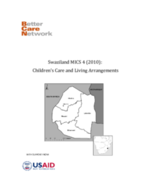
This country brief provides an overview of data on children’s living arrangements in Swaziland, extracted from the MICS 4 (2010) survey.
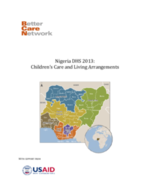
This country brief provides an overview of data on children’s living arrangements in Nigeria, extracted from the 2013 DHS survey.
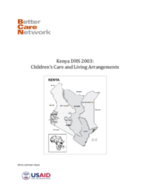
This country brief provides an overview of data on children’s living arrangements in Kenya, extracted from the 2003 DHS survey.
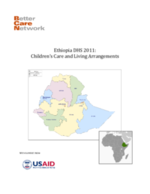
This country brief provides an overview of data on children’s living arrangements in Ethiopia, extracted from the 2011 DHS survey.
This country brief provides an overview of data on children’s living arrangements in Burundi, extracted from the 2010 DHS survey.
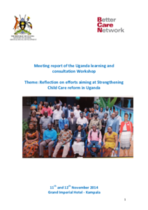
As part of its Eastern and Southern Africa Regional Initiative, BCN, along with the Ministry of Gender, Labour and Social Development (MGLSD) and the National Child Protection Working Group (CPWG) – an interagency platform of national child protection stakeholders - convened a national consultative workshop on 11 and 12 November 2014. This report from the workshop presents the priorities for action identified by the workshop participants, including: strengthening capacity for family strengthening and alternative care, evidence building and sharing, and strengthening advocacy.
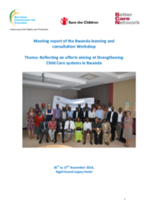
As part of the work of the BCN Eastern and Southern Africa Regional Initiative, the National Commission for Children in partnership with BCN, and Save the Children convened a national consultative workshop in Kigali, Rwanda on 26 and 27 November 2014. This report presents a summary of the main priority outcomes which were identified by participants during the meeting, including: evidence building and sharing, strengthening advocacy, and strengthening capacity.
Florence Martin, director of the Better Care Network, presented on the need for better data on children’s living and care arrangements at the 5th International Conference of the International Society for Child Indicators: “From Welfare to Well-being: Child Indicators in Research, Policy & Practice.”
This country care profile provides an overview of key lessons learned in the children’s care reform process in Ghana, including successes, challenges and areas for progress, and gaps in learning and best practice.
This country care profile provides an overview of key lessons learned in the children’s care reform process in Rwanda, including successes, challenges and areas for progress, and gaps in learning and best practice.
This country care profile provides an overview of key lessons learned in the children’s care reform process in Liberia, including successes, challenges and areas for progress, and gaps in learning and best practice.
This report summarizes the care-reform process of three sub-Saharan African countries – Ghana, Liberia and Rwanda.
Le présent document rend compte de l'essai sur le terrain de la méthode de surveillance basée dans la communauté au Nord-Kivu, en République démocratique du Congo (RDC).
Le présent document rend compte de l'essai sur le terrain de la méthode d'estimation basée sur une population (ou «méthode d'estimation») au Nord-Kivu en République démocratique du Congo (RDC).
This pilot summary document reports on the field testing of the community-based surveillance method in North Kivu in the Democratic Republic of Congo (DRC).
This document reports on the field testing of the population-based estimation method (or ‘estimation method’) in North Kivu in the Democratic Republic of Congo (DRC).
This research brief provides an overview of the Measuring Separation in Emergencies (MSiE) project, including the rationale, measurement tools, and next steps.
This report presents findings of a survey designed to document experience and examples of practice in setting up feedback and complaint mechanisms that are accessible to children in the programmes of five international non-governmental organisations: Educo, Plan International, Save the Children UK, War Child UK and World Vision.
This 28-minute documentary film, by filmmaker Chloe Sanguinetti, explores the phenomenon of “voluntourism,” a recent trend in which people, typically young people from Western countries, travel to countries in the Global South to volunteer.
This study on legal guardianship and adoption practices in Uganda was designed to explore and get insight into current care practices.
This animated video from Lumos, narrated by Lumos founder J.K. Rowling, illustrates the “tragic consequences of orphanage care,” and argues that more can and should be done to support families to care for their children, eliminating the use of institutional care.
Guide de Programmation pour les enfants sans prise en charge parental.
Ceci est une présentation à la Conférence sur le Renforcement de la Famille et la Prise en Charge Alternative en Afrique subsaharienne francophone en Mai 2012 en Dakar, Sénégal.
Ceci est une présentation à la Conférence sur le Renforcement de la Famille et la Prise en Charge Alternative en Afrique subsaharienne francophone en Mai 2012 en Dakar, Sénégal.
Le droit de l’enfant d’être entendu
La conférence, qui aura lieu le 10-11 mai 2012 à Dakar (Sénégal) a pour but de mobiliser et inspirer les acteurs et donateurs d’Afrique francophone pour rejoindre l’initiative régionale en faveur des enfants privés d’une prise en charge alternative appropriée. La participa
L'objectif de ce manuel est de présenter un ensemble d'indicateurs globaux communs pour la prise en charge formelle des enfants, notamment des enfants vivant en institution ou en famille d'accueil suite à un arrangement formel (qu’il s’agisse de parents ou de familles auparavan
A l’heure actuelle, Tdh ayant surtout expérimenté et valorisé cette approche pour l’accompagnement des enfants en situation de mobilité, le présent document fait un focus sur cette catégorie d’enfants, et de manière plus spécifique dans un contexte de migration de travail, l’une des causes principales de la mobilité des enfants en Afrique de l’ouest.
Le présent guide fait partie d’une série de guides de bonne pratique développés par l’International HIV/AIDS Alliance (l’Alliance).
Rapport de capitalisation sur le volet médicosocial du projet « Tamkine-Migrants » 2011 – 2014 d’appui à la prise en charge de femmes migrantes enceintes et de leurs enfants.
Le Gouvernement du Burundi, en collaboration avec l’UNICEF et l’ONG International Rescue Committee (IRC), a prévu de faire un état de lieux des centres résidentiels pour les enfants.
This report, published by the US Embassy in Nepal, includes a segment on human rights issues related to orphanage voluntourism and donors, child abuse in child care homes, and a lack of Government regulation of institutions.
The objective of this study was to determine whether children's characteristics and/or institutional characteristics were predictors of severe punishments (including beatings) and/or frequency of punishments that children received from staff in Romanian institutions.
This report presents a summary of progress in Lumos’ first three country demonstration programmes – the Republic of Moldova, the Czech Republic and Bulgaria.
This booklet was developed by Mamelani Projects, a community development organisation in South Africa. The booklet outlines Mamelani’s approach to Youth Development and providing transitional support to young people as they transition out of Child and Youth Care Centres (CYCCs).
This book is designed to help children and young people understand what abuse and neglect are, and who to ask for help if it happens to them or to someone they know. The book is written in the Serbian context and is available in English and Serbian.
This book is designed to help children and young people understand what abuse and neglect are, and who to ask for help if it happens to them or to someone they know. The book is written in the Serbian context and is available in English and Serbian.
Visionaries, a documentary series on public television in the United States, aired two episodes featuring the work of Disability Rights International (DRI) in uncovering the egregious abuses suffered by children and adults with disabilities living in institutions around the world.
This interpretive study examines the experiences of 54 Ethiopian emerging adults who had aged out of institutional care facilities.
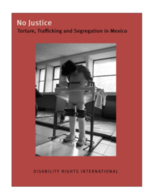
This report from Disability Rights International (DRI) outlines the findings from a two-year investigation into the treatment of children and adults with mental disabilities in Mexico City, particularly those in the care of state-funded and private residential facilities.
In August 2015, Child Family Health International (CFHI) held a webinar reviewing the situation of children living in residential care facilities around the world.
This report was developed as part of a mapping study aimed at analysing the situation of alternative care and family support in the Baltic Sea Region, assessing the achievements since the 2005 Ministerial Forum and identifying relevant opportunities and challenges for the future.
This report provides an overview of the two-day expert meeting on alternative care and family support in the Baltic Sea Region that took place in Tallinn, Estonia in May 2015.
This background paper was developed as part of a regional study which gathered relevant data and information on family support and alternative care in the eleven Member States of the Council of the Baltic Sea States (CBSS).
Government representatives, experts and professionals from the Baltic Sea Region including Denmark, Estonia, Finland, Germany, Iceland, Latvia, Lithuania, Norway, Poland, the Russian Federation, Sweden and wider Europe gathered at a two-day expert meeting in Tallinn, Estonia and, together, endorsed a set of recommendations and action plan on alternative care and family support on 6 May 2015.
In this position statement, the Association of Massage Therapists (AMT) of Australia clearly states that it does not endorse orphanage volunteering, referring to the positions of the Better Care Network, UNICEF, Save the Children and the ChildSafe network.
The International Association of Infant Massage in Australia has launched a position paper on volunteering in orphanages in order to address the problem of untrained volunteers being encouraged to conduct child care and infant massage practice in residential care centres, particularly in developing countries.
Using cross-sectional data from rural left-behind children aged 10–17 years in the Henan Province of China, the present study examined the roles of father–child cohesion, mother–child cohesion, and friend companionship in emotional adaptation (loneliness, depression, and life satisfaction) among children left behind by both of their rural-to-urban migrant parents compared to those with only a migrating father.
This study investigated different environmental and contextual factors associated with maltreated children's adjustment in foster care in Quebec, Canada.
This thesis explores orphanage tourism within the context of Cambodia, adopting a critical geography approach to investigate the intricate and contentious aspects of tourism within this space.
This technical assistance brief answers the question “What steps can a judge take when a child runs away or goes missing from care?” The brief is intended to educate juvenile and family court judges in the United States on the steps to be taken to assist in in locating and recovering children who go missing from care.
Using structural equation modeling the present study analyzed the associations between quality of sibling relationship and self-concept of institutionalized adolescents, testing the mediating role of resilience in this association, and the moderating effect of the maintenance of contact between siblings.
This country care review includes the care related Concluding Observations adopted by the Committee on the Rights of the Child.
This country care review includes the care-related Concluding Observations adopted by the Committee on the Rights of Persons with Disabilities during the seventeenth session (20 March 2017 - 12 April 2017) of the Convention on the Rights of Persons with Disabilities.
This country care review includes the care related Concluding Observations adopted by the Committee on the Rights of the Child.
On June 29, 2015, the CPC Learning Network hosted a webinar focused on the experience of developing, piloting and refining a child protection index.
This animated video, made by Dr. Mike Evans, founder of the Health Design Lab at the Li Ka Shing Knowledge Institute, illustrates the impacts of trauma and negative experiences on young children’s brain development and the ways in which healthy cognitive development can be promoted.
OVCsupport.net’s mission is to improve the lives of children affected by HIV and AIDS through providing the most up-to-date information on HIV and children to the global community, and connecting community and nongovernmental organizations, policy-makers, donors and other stakeholders in order to
Child Rights Connect (formerly known as the NGO Group for the CRC) is an independent, non-profit network of 84 national, regional and international organisations, networks and coalitions that support children’s rights, and include a focus on children without parental care.
ISS is an international NGO that assists children and families confronted with complex social problems as a result of migration, and promotes child protection and welfare.
IFCP is a global, not-for-profit networking organisation serving to promote and support family based foster care across the world.
IFSW is an international, non-governmental organisation of national associations of social workers striving for social justice, human rights and social development through the promotion of social work, best practice models and the facilitation of international cooperation.
CYC-Net aims to promote and facilitate reading, learning, information sharing, discussion, networking, support and accountable practice amongst all who work with children, youth and families.
FICE-International works in over 30 countries to support at-risk children, children with special needs, and children in out-of-home-care.
CRIN is a global research, policy and advocacy organisation grounded in the UN Convention on the Rights of the Child, which promotes children’s rights including adequate care.
The International Movement ATD Fourth World is an NGO that engages with individuals and institutions to find solutions to eradicate extreme poverty, and includes a focus on strengthening families.
UK based organization that works across Europe and Africa to support deinstitutionalisation and strengthen family-based care for children.
Save the Children is an international NGO that support’s children’s rights around the world, and focuses on protecting children from abuse, neglect, exploitation and violence.
The United Nations Children’s Fund is a United Nations programme that provides humanitarian and development support to children across the world.
Lumos works to support children in institutions worldwide to regain their right to a family life and to end the institutionalisation of children.
DCOF supports programs that help families and communities to provide necessary care, protection, and support for children without adequate care.
Family for Every Child is a global network of national civil society organisations that support children to grow up in caring families, safe from exploitation and abuse.
This country care review includes the care-related Concluding Observations adopted by the Committee on the Rights of Persons with Disabilities during the sixteenth session (15 Aug 2016 – 2 Sep 2016) of the Convention on the Rights of Persons with Disabilities.
To facilitate well-informed decisions, the researchers collected and disseminated evidence from systematic reviews (SR) to local child welfare stakeholders in Norway through plain language summaries. This article describes that process.
This paper examines the Irish national and international legislation governing asylum systems, provides an overview of the Irish Direct Provision system and suggests a model under which these cases may be analysed across different societal levels.
This study replicated and extended previous research which identified the small proportion of highly productive foster parents who provide a disproportionate amount of care in the United States. This study used a nationally representative sample of foster families (N = 876) with a focus on willingness to foster, and actually fostering, children with special needs.
This article reports on the Western Uganda Bantwana Program, which worked with more than 1,000 HIV/AIDS-affected families with the goals of improving socioeconomic status, psychosocial functioning, and educational participation.
This qualitative study focused on disadvantaged women in the US child welfare system who have lost their parental rights.
The current study seeks to examine the social images associated with children and youth in residential care and the respective care institutions in Portugal.
This study reports on results of a national survey conducted in the United States about the attitudes, perceptions, and utilization of evidence-based practices (EBPs) in residential care settings.
This information packet provides an overview of deportation of family members in families of mixed immigration status in the United States, as it relates to child welfare.
This article, based on research in progress, discusses possible dangers of child abandonment and neglect in Lesotho, using attachment theory as its theoretical grounding.