Displaying 91 - 100 of 214
This working document by the Initiative for Child Rights in the Global Compacts, a multilateral initiative supported by 26 organizations, provides goals, targets and indicators with respect to six priority issues involving refugee and migrant children.
The Toolkit on Unaccompanied and Separated Children compiles 56 tools for the use of practitioners working with unaccompanied and separated children (UASC).
This handbook offers comprehensive practical guidance on working with unaccompanied and separated children (UASC) in emergency settings.
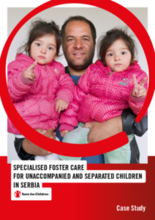
This Save the Children case study aims to briefly describe the process of developing specialised training package for foster care of Unaccompanied and Separated Children in Serbia, its key components and main lessons learned from the process.
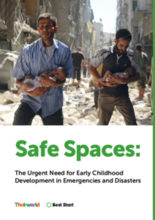
This paper from Best Start (a global campaign for Early Childhood Development led by children’s charity Theirworld) emphasizes the need for holistic early childhood development (ECD) programs - Safe Spaces - for young children in emergency situations.
Compared to children in other placements, there is much less known about the characteristics and needs of children in the UK who are returned to their birth parents with a care order still in place.
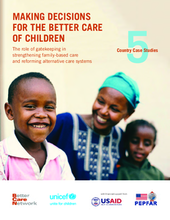
Published jointly with UNICEF, this new BCN Working Paper focuses on the role of gatekeeping in strengthening family-based care and reforming alternative care systems. This Working Paper reviews different approaches to gatekeeping in five countries--Brazil, Bulgaria, Indonesia, Moldova, and Rwanda--to consider what has and has not worked, to analyze lessons learned from practice, and to reflect on the implications for improving policy and programs in this area.
This video reveals the adverse conditions in the many unregistered orphanages in Haiti
This paper presents an overview of learning related to the prevention of family-child separation, the reintegration of children into family care, and economic interventions that support both.
This information packet provides an overview of deportation of family members in families of mixed immigration status in the United States, as it relates to child welfare.