
Displaying 101 - 110 of 214
This video examines Standard 13, “Unaccompanied and Separated Children,” of the Minimum Standards for Child Protection in Humanitarian Action, developed by the Global Child Protection Working Group and collaborators.
The video discusses the institutionalization of eight million children in Central and Eastern Europe following the fall of the Berlin Wall, and underscores that many of the children these orphanages have families.
On 10 September 2014, UNICEF and the Permanent Mission of Bulgaria co-hosted a high level Lunchtime Discussion on The right of children below three years to live in a caring and supportive family environment: examples from Central and Eastern Europe and Central Asia.The discussion took place on the margins of the September meeting of the UNICEF Executive Board and brought together over 80 participants, including members of the UNICEF Executive Board, representatives of the Permanent Missions to the UN from the CEE/CIS region, international organizations, NGOs, high level UNICEF and National Committee staff. Representatives from Croatia presented on preventing institutionalization of children.
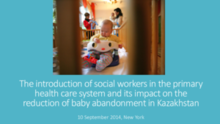
On 10 September 2014, UNICEF and the Permanent Mission of Bulgaria co-hosted a high level Lunchtime Discussion on The right of children below three years to live in a caring and supportive family environment: examples from Central and Eastern Europe and Central Asia. In its presentation at the discussion, Kazakhstan demonstrated how the integration of social workers and outreach services in the health sector is reducing baby abandonment in pilot areas of the country.
This article discusses the challenges in protecting Guatemalan children and their families from involuntary separation and presents the process, results and implications of a pilot training in which Guatemalan participants from government and civil society explored the efficacy and feasibility of the FGC model in their country.
This report presents analysis and key findings from a study aimed at fully understanding the situations of children in Indonesia that may lead to family separation.
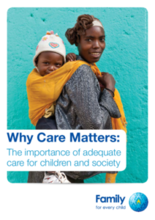
This report highlights the needs of children without adequate family care, the impact inadequate care on children and society, and why family care is important. In this report, Family for Every Child also issues several recommendations for those in all sectors of society and an example of care reform from Brazil.
This report features the results of, and recommendations based on, a study conducted in Rwanda which investigates the links between the cash transfer program “Vision 2020 Umurenge Programme (VUP),” child well-being, and children’s care and family reunification.
A Strategic Response Plan developed and designed to support the Government of the Philippines’ response to the immediate humanitarian needs of the people affected by Typhoon Haiyan (Yolanda), and to complement the Government’s National Rehabilitation and Recovery Plan.
Through participatory information gathering tools, War Child Holland implemented a Child Right Situation Analysis to discuss and analyze the issues identified by Syrian children as the most important to them.
