Displaying 61 - 70 of 214
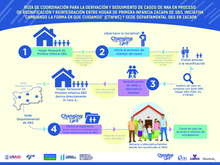
Esta Ruta de Coordinación, fue construida y diseñada de manera participativa y liderada por CTWWC Guatemala, con el objeto de articular de manera eficiente y coordinada los esfuerzos que los profesionales de las instituciones gubernamentales y municipales vinculadas a la prevención y proteccion, deben promover, gestionar y facilitar la derivación a los servicios sociales y especializados que permitan la prevención de la separación familiar innecesaria de los niños, niñas o adolescentes de su entorno familiar, basando las acciones en la metodología de manejo de casos y priorizando ante cualquier desición que se tome, la observacnia del interés superior del niño
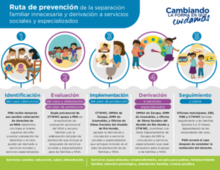
Esta ruta fue aprobada por la Secretaría de Bienestar Social para ser utilizada en Zacapa por los trabajadores sociales y psicólogas que están involucrados en el proceso de manejo de caso para la reintegración de los niños y niñas del cuidado residencial hacia el cuidado familiar. Esta diseñada para apoyar la celeridad de los procesos y atención a casos.
To complement the CIF partner interventions targeting the child and family and to enhance the sustainability of reintegration efforts, the project is using a Hotspot approach to address community-level, environmental factors that may contribute to a child’s increased risk of family separation. The collective application of the Hotspot approach is completely innovative in the Zambian child care reform space. In this brief, we spotlight the Hotspot approach and promising observations to date in undertaking this strategy.
Millions of children in developing countries are unable to live at home for a variety of reasons. The fate of these children is a concern for many people. Some start projects, volunteer with children or support an orphanage. This guide is for them. It is also important for organisations that do not specifically focus on vulnerable children. Because children without sufficient paren-tal care are everywhere: in schools, villages and poor areas in big cities.
The CIF+ pilot is a collaborative, locally led, intensive effort with the main aim to reintegrate 200 children from Child Care Facilities (CCFs) in Lusaka district, into families over a period of three years (2019-2021).
This Gatekeeping Factsheet, targeting those engaged in care decisions, including government actors/institutions, civil society organizations, practitioners and parents/caregivers explains the objectives of gatekeeping and essential components of a gatekeeping system, core principles of effective gatekeeping and signs that a gatekeeping system is operating well or needs to be strengthened.
Analiza actelor normative de reglementare a serviciilor sociale şi a finanțării acestora a fost realizată cu scopul de a elabora recomandări practice privind îmbunătățirea cadrului normativ și a mecanismului de finanțare a serviciilor sociale de prevenire a separării copilului de familie și a celor de îngrijire alternativă.
Scopul analizei de situație a copiilor din Republica Moldova, cu accent pe copiii
vulnerabili și prevenirea separării de părinți, este de a oferi o imagine completă a
situației lor actuale, inclusiv în urma efectelor pandemiei COVID-19 și care să servească
elaborării de recomandări concrete cu privire la o serie de decizii bazate pe probe, pe
care statul dar și actorii societății civile au nevoie să le ia și, ulterior, să le implementeze,
pentru a îmbunătăți situația grupurilor celor mai vulnerabile, precum și pentru a
eficientiza sistemul de îngrijire alternativă a copilului din Republica Moldova.
În 2021, Changing the Way We Care a lansat o analiză situațională a sistemului de îngrijire a copilului în Republica Moldova. Rezultatul acestei analize sunt 8 rapoarte bazate pe cercetări ample ale partenerilor CTWWC: Copil, Comunitate, Familie (CCF) Moldova, Keystone Human Services International, Moldova și Parteneriate pentru fiecare copil (P4EC). Aceste rapoarte oferă o imagine de ansamblu a situației copiilor vulnerabili și a familiilor acestora din Moldova, atât în contextul dezinstituționalizării, cât și al prevenirii plasării în instituții rezidențiale.
Miljoenen kinderen in ontwikkelingslanden kunnen tijdelijk of langdurig niet thuis wonen. Soms omdat hun ouders zijn overleden of omdat de problemen thuis te groot zijn. Soms omdat ze zijn weggelopen of van hun familie gescheiden door oorlogen, rampen of kinderhandelaren. Het lot van deze kwetsbare kinderen gaat veel mensen aan het hart. Ze starten een project, doen vrijwilligerswerk met kinderen of ondersteunen een weeshuis.
Voor hen is Kinderen zonder ‘thuis’ bedoeld.