Displaying 21 - 30 of 214
This webinar explored the role of the Catholic Church in responding to children who are migrating alone or who are at risk of or have been separated from their families&nbs

This report presents findings from qualitative interviews conducted with English-speaking Latino individuals from the United States who experienced parental deportation between the ages of 6 and 17 years old. They offer suggestions about what they needed following their loss as a child. By understanding what children need in these moments of crisis, practitioners, providers, and others are better prepared to address this form of complex childhood adversity.
This is a report about the Parental Rights in Prison Project (PRiP) based in Wales and England aimed at supporting incarcerated parents who wished to sustain their relationship with their children who are in the care of the local authority, care of family and significant others or adopted and to provide them with legal advice and support around their rights as parents.
The African Committee of Experts on the Rights and Welfare of the Child (ACERWC/the Committee), in collaboration with African Union Member States, partner organizations, children and young people, launches the first of its kind Continental Study on Children Without Parental Care (CWPC) in Africa. The study, conducted from 2020 to 2022, amid the COVID-19 pandemic, covered over 43 countries in the five regions of Africa.
Le Comité africain d'experts sur les droits et le bien-être de l'enfant (ACERWC/le Comité), en collaboration avec les États membres de l'Union africaine, les organisations partenaires, les enfants et les jeunes, a lancé la première étude continentale en son genre sur les enfants sans protection parentale (CWPC) en Afrique. L'étude, menée de 2020 à 2022, au milieu de la pandémie de COVID-19, couvre plus de 43 pays dans les cinq régions d'Afrique.
During this webinar, participants explored the role of the Catholic Church in the separation of Indigenous children from their families and the long-lasting effect on Indigenous communities.

In this webinar, a new paper on strategies to prevent family separation is presented. Examples from Rwanda, Kenya, Uganda and Namibia are presented.

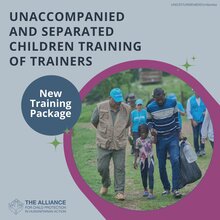
The Unaccompanied and Separated Children Training of Trainers (UASC TOT) course is designed to prepare participants to facilitate training on unaccompanied and separated children (UASC). This training reinforces participants’ understanding of the specific needs of UASC, highlight good practice in working with unaccompanied and separated children under a protection framework, and provide participants the opportunity to apply learning so they can roll out training on UASC within their own organisation and to other stakeholders.
Cazul de investiții argumentează importanța și impactul investițiilor într-un sistem de îngrijire centrat pe familie și prezintă o estimare a resurselor necesare pentru a finanța serviciile de care Republica Moldova are nevoie pentru (i) a preveni plasarea copiilor în îngrijire rezidențială; (ii) a asigura îngrijirea copiilor în familii sigure și protectoare; și (iii) a transforma instituțiile rezidențiale în centre comunitare care răspund efectiv nevoilor comunității.
The Investing in Family Care for Moldova’s Future presents the case for investing in a more child-centered social welfare system in Moldova and provides specific estimates on the resources needed including an estimate of the resources required to fund the spectrum of programs and services Moldova needs to (i) prevent children from being placed in residential care; (ii) place children in safe, nurturing, and supported families; and (iii) transform residential settings into community assets that effectively meet community needs.