Displaying 41 - 50 of 214
This presentation is by the Children’s Trust Fund Alliance and their colleagues regarding a project they have been working on in partnership with parents to identify alternatives to CPS investigations.

This Human Rights Watch report documents risks to children from institutions in areas directly affected by the conflict as well as those evacuated to other areas of Ukraine or to European countries.
This learning brief was developed as part of Changing the Way We Care's 2022 annual report and shares learning on family-based alternative care from Guatemala, Moldova, India and Kenya and links the reader to additional CTWWC resources on the topic.
This case study tracks the impact of family support services to a Ugandan mother and her family during the COVID-19 pandemic in an effort to prevent family separation.
This UNICEF ESARO webinar discussed strategies for building strong families and communities and preventing child-family separation in the region.

This analysis estimated the cost-effectiveness of family-based care environments for preventing HIV and death among orphaned and separated children in sub-Saharan Africa.
Strengthening family-based care is a key policy response to the more than 15 million orphaned and separated children who have lost 1 or both parents in sub-Saharan Africa. This analysis estimated the cost-effectiveness of family-based care environments for preventing HIV and death in this population.
This video by the Alliance for for Child Protection in Humanitarian Action details the three levels of prevention in child protection in humanitarian action.
![Watch What is Prevention? [English] on YouTube.](http://i.ytimg.com/vi/HhArcqP_SmM/sddefault.jpg)
![Watch What is Prevention? [French] on YouTube.](http://i.ytimg.com/vi/T9bBVDB0ECw/sddefault.jpg)
![Watch What is Prevention? [Spanish] on YouTube.](http://i.ytimg.com/vi/QgVBm2CruJw/sddefault.jpg)
![Watch What is Prevention? [Arabic] on YouTube.](http://i.ytimg.com/vi/Xql87Ev-8wo/sddefault.jpg)
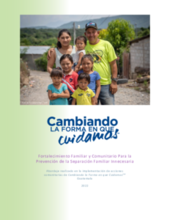
Este documento se basa en la experiencia de Cambiando la Forma en Que Cuidamos (o sus siglas en inglés, CTWWC) Guatemala en procesos de fortalecimiento familiar y comunitario en un área específica de intervención.
This Human Rights Watch report examines removals of children and termination of parental rights by state child welfare systems in the U.S., focusing primarily on four states: California, New York, Oklahoma, and West Virginia.