
Displaying 11 - 20 of 214
A key feature of CTWWC’s theory of change is building evidence on children's care and reform, particularly regarding reintegration from residential care, transitions to family-based care, and preventing separation.
This webinar looked at case management for preventing family separation in Kenya, exploring the role that case management can play in prevention and the tools and strategies for effective case management with vulnerable families.

This study protocol outlines the first randomized controlled trial of Hope Groups—a 12-session psychosocial, mental health, and parenting support program—among Ukrainians affected by war. The trial aims to assess its impact on caregiver mental health, violence prevention, and family well-being, with potential for global adaptation and scale-up in other crisis-affected settings if proven effective.

In Kenya, economic challenges often force families to place their children in residential care facilities (sometimes referred to as orphanages), leading to long-term negative impacts.

This interim report based in Australia focuses on hearing the lived experiences of children and young people in alternative care arrangements and lifts up the voices of those who have participated in private hearings as part of this Special Inquiry to date.
This is a comprehensive baseline survey by Changing the Way We Care Haiti aimed at informing the design of a robust care reform program focused on averting family separation and fostering sustainable reintegration.
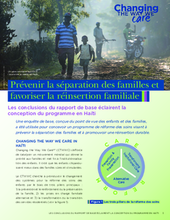
Prévenir la séparation des familles et favoriser la réinsertion familiale est une enquête de base menée par Changing the Way We Care Haïti visant à informer la conception d'un programme de réforme des soins axé sur la prévention de la séparatio
This cross-sectional study was conducted in 24 Lithuanian schools and involved parents/caregivers and their children aged 12 to 17. The study aimed to collect and analyse self-reported data on left behind children's emotional and behavioural problems and compare children’s reports with those of parents/caregivers.
This advocacy brief provides an overview of promising practices and lessons learned to end child immigration detention in the U.S. and sets out a range of policy actions needed to scale up efforts to end this form of violence.
Amy and Ano are twins, but just after they were born they were taken from their mother and sold to separate families.They found out about each other by chance and as they delved into their past, they realised thousands of babies in Georgia were stolen from hospitals and sold for adoption, some as recently as 2005. Now they want answers.
