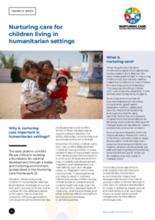
Displaying 71 - 80 of 214
The guide recommends a series of measures aimed at States, which focus on protecting family unity, preventing separation, and ensuring reunification in the context of human mobility, including for unaccompanied or separated children and adolescents, who require international protection or who leave their homes in search of better opportunities or family reunification.
This practical guidance is for anyone working with children at risk of entering, already living in, preparing or having already left care. It discusses why and how to support children who are at risk of or who have already experienced adverse experiences that might lead to distress or trauma.
The strengths-based assessment tool serves to both prevent family breakdowns and reintegrate children from institutions back into families (or other family-based or alternative care options). This article provides an overview of the tool, including its purpose, set-up and functionality within a case management system.
El mecanismo de prevención de la separación familiar innecesaria entre Cambiando la forma en que CuidamosSM y la Procuraduría General de la Nación, es un informe que resume la experiencia de Cambiando la forma en que CuidamosSM Guatemala en la implementación de una ruta de prevención de la separación familiar innecesaria con una entidad de gobierno responsable de velar por el cumplimiento de derechos de los NNA, este procedimiento fue realizado con el objetivo de evitar la separación familiar innecesaria a través del seguimiento del caso y la derivación a servicios sociales y especializados, el informe también narra la experiencia en la implementación de juntas técnicas de análisis de caso para determinar el mejor interés para los NNA y familias, este informe está dirigido a profesionales que trabajan con niñes y adolescencia y que están interesados en implementar procedimientos para cerrar la puerta de entrada al cuidado residencial.
This report includes the key lessons learned and the achievements resulting from CTWWC/PGN follow-up and family and economic strengthening activities provided to 18 families, along with information about 66 children and adolescents who remained with their family and community environment. The project also raised families’ awareness about the importance of providing children with safe and protective settings to foster their wellbeing through positive and loving parenting.
Cette évaluation dresse un tableau de la situation en Côte d'Ivoire des enfants handicapés privés de soins parentaux ou risquant d'être séparés de leur famille, ainsi que des options de prise en charge alternative disponibles.
This second webinar in the 'Introducing Guidance for Alternative Care Provision During COVID-19' webinar series hosted on 28 January 2021, is aimed at policy makers and explains their role in developing policies and guidance to prevent family separation during an outbreak.
The first webinar, hosted on 27 January 2021, is aimed at health practitioners with the goal of introducing the guidance and helping practitioners understand their role in preventing family separation and supporting unaccompanied and separated children.
The Safeguarding Resource and Support Hub (RSH) aims to support organisations in the aid sector to strengthen their safeguarding policy and practice against Sexual Exploitation, Abuse and Sexual Harassment (SEAH).
This brief summarizes actions that programme planners and implementers should take to minimize the impact that emergencies have on the lives of young children and their families.