
Displaying 451 - 460 of 786
This country care review includes the care-related Concluding Observations adopted by the Committee on the Rights of Persons with Disabilities.

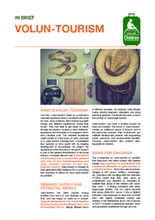
This brief from ECPAT's Global Study on Sexual Exploitation of Children in Travel and Tourism defines the term "voluntourism" and its risks to children, with a focus on orphanage voluntourism.
This report “seeks to map Australia’s contribution to residential care institutions for children overseas across a number of sectors and identify opportunities for strategic engagement with various stakeholders in the Australian context.”
In this video from the Brainwaves Video Anthology, Dr. Charles Nelson shares some findings from his research on the impacts of deprivation on children's cognitive and brain development through the Bucharest Early Intervention Project.

This brief is part of the Opening Doors for Europe’s Children campaign and is based on the proposal made to the Bulgarian Government by the Coalition ‘Childhood 2025’ to update the structure and content of the updated Action Plan.
A new video describes a Mailman School-led study to assess the size of the problem. Interspersed with footage of children in informal settlements and orphanages, researchers and officials describe the growth of residential care facilities in Cambodia, many which are operated or funded by foreign charities, including religious groups.

This tool was designed to help those seeking to assist Christian faith-based actors involved in long-term residential care programs make the transition from institutional to non-institutional (family and community-based) child welfare programs.
This report is a case study of alternative child care in Indonesia. Research was conducted that found that with an estimate of 8,000 institutional facilities servicing 500,000 children, Indonesia was overly reliant on institutional care.
Décadas de investigaciones comprueban que el crecimiento de un niño en una institución posee un impacto nocivo en cuanto a lo psicológico, lo emocional y lo físico, incluyendo trastornos de vinculación, retrasos cognitivos y en el desarrollo, y una falta de capacidades sociales y para la vida que luego concluyen en múltiples desventajas durante la adultez.
Este documento pretende impulsar un cambio en el paradigma de la institucionalización como respuesta a la situación de los niños, niñas y adolescentes privados de cuidados familiares.
