LEGE Nr. 123: cu privire la serviciile sociale
This document presents the law on social services of Moldova.
File
This document presents the law on social services of Moldova.
În temeiul prevederilor alineatului (1) al articolului 12 din Legea nr.140 din 14 iunie 2013 privind protecția specială a copiilor aflați în situație de risc și a copiilor separați de părinți (Monitorul Oficial al Republicii Moldova, 2013, nr.167-172, art.534), Guvernul HOTĂRĂŞTE:
This document present the law on the special protection of children in need at risk and children separated from their parents for Moldova.
This document presents the adoption law of Moldova.
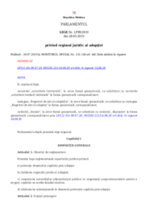
În scopul implementării prevederilor Convenţiei internaţionale cu privire la drepturile copilului, adoptate de Adunarea Generală a Organizaţiei Naţiunilor Unite la 22 noiembrie 1989, la care Republica Moldova a aderat prin Hotărîrea Parlamentului nr.408-XII din 12 decembrie 1990, Guvernul HOTĂRĂŞ
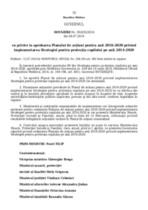
În temeiul prevederilor punctului 89 din Strategia pentru protecţia copilului pe anii 2014-2020, aprobată prin Hotărîrea Guvernului nr. 434 din 10 iunie 2014 (Monitorul Oficial al Republicii Moldova, 2014, nr. 160-166, art. 481), Guvernul HOTĂRĂŞTE:
The 2018 Annual Social Report presents an analysis of the general characteristics of the policies of the health, labor and social protection system as a whole.
This report presents data on children at risk and separated from their parents in Moldova.
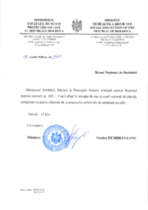
This policy brief has been developed to serve as a guidance to practitioners while developing any practice on leaving care.
This policy brief has been developed to serve as a guidance to policy makers while developing any policy on leaving care.
This report documents activities and conversations from the International Care Leavers Convention 2020, held virtually in November 2020.
This study aimed to test whether a home‐visiting intervention could improve early attachment relationships between adolescent mothers and their infants living in poverty in Brazil.
This rapid review takes stock of emerging research on nurturing care for young children during the COVID-19 crisis.
In this paper, the authors present the evidence on why childcare matters for building human capital, look at the current status of childcare provision worldwide, including an estimate of the global gaps in access, and present specific actions countries can take to expand access to quality, affordable childcare for all families that need it, especially the most vulnerable.
This handbook is part of a set of resources for implementing the Nurturing Care Framework.
Two new indicators for the Monitoring and Evaluation Framework of the Nurturing Care Framework (NCF) have been developed in support of programme implementation. These indicators need to be validated before they can be recommended widely. Read the report to learn more about the proposed indicators.
Este informe se presenta el caso de Perú y su proceso de elaboración de políticas para la primera infancia el cual cuenta con características particulares que son de interés para la Agenda Regional para el Desarrollo Integral de la Primera Infancia.
Este mapeo inicial tiene dos objetivos: a) identificar temas e intereses comunes entre las encuestas implementadas en los diferentes países de la región; y b) analizar las fortalezas y desafíos enfrentados cuando se implementan este tipo de ejercicios de medición, en particular durante una situación de distanciamiento social como la que implica la Covid-19.
This report summarizes the main findings of the High-Level Session on ‘Advancing the Early Childhood Agenda: High Level Session towards a Global Partnership Strategy’, organized by UNESCO.
This series of webinars organized by the CSO Forum Secretariat together with AfECN, UNICEF and WHO sought to strengthen the capacity of CSOs in the area of ECD to ensure greater advocacy for young children in the child rights agenda.
The aim of this paper is to examine how a strengths-based approach facilitates working relationships between child welfare services and families.
The aim of this article is to examine (1) the predictive validity of a risk assessment instrument that has been widely implemented in the Netherlands, and to examine (2) whether the actuarial risk estimation could be improved and simplified to widen the instrument’s applicability to different organizations serving different populations.
The current study used survival analysis to investigate whether the type of placement (kin versus non-kin) related to the number of placement disruptions over time.
This analysis of system dysfunction in the U.S. involving legislative powers, child welfare agencies, and peripheral systems, such as juvenile justice, schools, and healthcare, reveals a distinct misalignment in shared values.
Family for Every Child has launched a new social network platform for child rights practitioners, called Changemakers for Children (changemakersforchildren.community). Child rights practitioners are invited to sign-up to the platform and join a global movement of local leaders working in children’s care and protection.
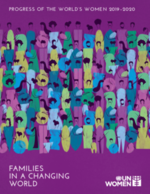
Drawing on the best available data from around the world, this Report proposes a comprehensive agenda for key policy actors – including gender equality advocates, national governments and international agencies – to make human rights a reality for all women and girls, no matter what kind of family they live in.
This article explores the concept of care and the responsibility assumed by ‘states’ when taking children into care.
Drawing on a mixed method study of grandparent carers and service providers located in Western Australia, the authors of this article argue that there are important issues of inequity and injustice associated with being a grandcarer, in particular due to systemic and discursive failures to recognize the complexity and challenges of care provision.
The article describes a new initiative aiming to foster collaborations in the field of family strengthening programs.
This paper explores how adoptive parents, with knowledge of exploitation in their own adoptions, are responding emotionally and pragmatically.
This paper analyzes the impact of adults’ interactive moves and strategies on children’s participation and agency at dinnertime in two Italian residential care facilities, one of the most widely used alternative care life-context for children and youth coming from vulnerable families.
The current study provides data-informed recommendations for faith communities to support vulnerable families during the pandemic.
The study aims to assess the professional training needs of employees of the two institutional actors for the protection of children’s rights in Ukraine; identify factors shaping these needs.
This study examines the benefits of subsidized housing with supportive services compared to subsidized housing alone.
The purpose of this study was to provide a population-based analysis of child protection system (CPS) involvement among children and adolescents who died by suicide.
This qualitative evaluation was to determine the level of fidelity of Clark County Nevada’s Foster Kinship navigator program to its navigator program manual and to ascertain if Foster Kinship’s navigator program for formal kinship families met the minimum standard for promising practice.
This study experimentally tested proximal outcomes of Connecting, a low-cost, self-directed, family-based substance-use prevention program for foster families.
This call to action calls on all states that have not already done so to commit to and start the legislative process to prohibit corporal punishment in all settings by the end of 2022
This Case Study Report, prepared in partnership with World Health Organization (WHO) and the LEGO Foundation, describes the implementation experiences and emerging lessons of COVID-19 response strategies of seven programmes that prioritize nurturing care and early childhood development (ECD) in their work.
This rapid review takes stock of emerging research on nurturing care for young children during the COVID-19 crisis.
This article compares the reception and integration of unaccompanied minors (UM) in the two countries with a particular focus on their access to education and employment.
The current study used population-based administrative records from California to assess how CPS responds to reported allegations of IPV, with and without physical abuse and/or neglect allegations.
This strategy’s overarching ambition is to build the best possible life for children in the European Union and across the globe.
Este seminario web es el segundo de una serie de la Plataforma de colaboración global Transforming Children's Care. En el seminario web, Philip Goldman de Maestral International presentó una nueva guía sobre gasto público y cuidado de los niños producida por Changing the Way We Care, que está diseñada para fortalecer la capacidad de las agencias gubernamentales en países de bajos recursos para preparar un marco presupuestario sólido.
This webinar is the second in a series for the Transforming Children's Care Global Collaborative Platform. In the webinar, Philip Goldman from Maestral International presented new guidance on Public Expenditure and Children’s Care produced by Changing the Way We Care, which is designed to strengthen the capacity of government agencies in low resource settings to prepare a sound budgetary framework.
The conversation of this webinar focused on the root causes of why there are millions of children globally growing outside of families, and discussed some of the proven ways of strengthening families and communities to provide a safe and nurturing environment for the world’s most at risk and vulnerable children.
These working methods aim to facilitate and promote the meaningful participation of all children, particularly those in disadvantaged or vulnerable situations, in days of general discussion.
This article focuses on the study of current transformation processes occurring in Ukraine in the provision of social services to various groups of children, in particular orphan children and children deprived of parental care.

This study was conducted to determine and compare the nutritional status of children living in orphanages and children living in the host communities in Nigeria.
Using a novel multisystemic trauma-informed model of care with an embedded developmental monitoring index, the Restorative Parenting Recovery Programme, pilot data was collected from young people and care staff from four residential homes over a two-year period.
The purpose of this study was to examine associations of foster care exit type (e.g., reunification with birth family, adoption, guardianship/permanent relative placement, or emancipation from care) with risk of entry into state prison in the U.S. state of Wisconsin and to examine racial disparities in those associations.
This chapter reports on one such intervention, the Family Strengthening Intervention (FSI), initially developed and tested in Rwanda to improve communication and parenting in HIV/AIDS-affected families with school-age children.
This briefing is the fifth in a series of evidence summaries on the impact of COVID-19 on the wellbeing of children and families in Scotland, drawing on wider UK and international research where appropriate.
The present research study was aimed at exploring the Psychological Capital Development in Street Children through Education at Child Protection and Welfare Bureau, Lahore.
This report explores how gender-restrictive groups are using child protection rhetoric to manufacture moral panic and mobilize against human rights, and how this strengthens the illiberal politics currently undermining democracies.
Over the past decade there has been a marked growth in the use of linked population administrative data for child protection research. This is the first systematic review of studies to report on research design and statistical methods used where population-based administrative data is integrated with longitudinal data in child protection settings.
For this article, a review of what is currently known about intensive intervention with families where there is risk of a child removal was undertaken to explore the challenges that might arise in New Zealand's bi‐ and multi‐cultural environment.
According to this report, children of prisoners in the UK are an "'invisible’ group – currently, children are not systematically identified or assessed when a parent goes to prison." The report aims to improve understanding of: who this ‘invisible’ group of children is; the extent, nature and root causes of their poorer outcomes; and how a whole family approach can be used to improve outcomes for children and parents and what needs to change.

The New Neighborhood is a limited series podcast that explores some of the dramatic changes taking place across the U.S. as people work to reinforce a sense of community, support young children and families, and work to build equity within communities.
Lighthouse Children’s Village was established in 2004 as a privately-run and privately-funded residential care institution. In 2014, its long-time principal donor made the decision to phase out of financially supporting institutional care. This case study highlights some of the early warning signs and subsequent discovery of unethical and criminal behavior that can sometimes be observed in a transition process.
This case study highlights some of the key dynamics that arose throughout one organization's process of transitioning their services from residential care to non-institutional programming and examines how those dynamics both influenced the transition and determined the type of support provided, as well as the most appropriate transition strategy. The case study is organized around the various stages of transition and explores some of the key themes outlined in the Transitioning Models of Care Assessment Tool.
This case study highlights some of the prerequisites for the starting point of a successful transition from residential care to a non-residential model, many of which are often overlooked or underestimated. The case study is organized around the various stages of transition and explores some of the key themes outlined in the Transitioning Models of Care Assessment Tool.

Цю Стратегію розроблено з метою зміни існуючої системи інституційного догляду та виховання дітей, яка не відповідає реальним потребам дітей та сімей з дітьми, і створення умов для повноцінного виховання та розвитку дитини в сім’ї.
The Alternative Report (AR) on the implementation by Ukraine of the provisions of the UN Convention on the Rights of the Child (UNCRC) is the result of the joint work of public sector experts in the field of the protection of the rights of the child.
In this How We Care series, Family for Every Child presents the programming of three CSOs on how they are supporting kin carers and the vulnerable children in their care, in their respective regions.
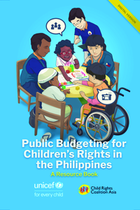
This resource book simplifies and unpacks budget processes with key guidance on specific policies and steps for those who seek to be champions for child-centered public finance in the Philippines context.
In October 2020 CELCIS convened and facilitated a virtual workshop with the Virtual School Head Teacher (VSHT) and Care Experienced Team (CET) network. Network members were asked two questions for consideration prior to the meeting. This document contains the key themes arising from question two: Did the VSHT/CET network have an impact on supporting you in your role during lockdown? What, if any, impact did being part of the network have for the children and young people that you have responsibility for?
In October 2020 CELCIS convened and facilitated a virtual workshop with the Virtual School Head Teacher (VSHT) and Care Experienced Team (CET) network. Network members were asked two questions for consideration prior to the meeting. This document contains the key themes arising from question one: Why did having your specific role within your local authority make a difference to care experienced children and young people during lockdown?

Through a diverse range of examples of how people are meeting the challenge of responding to the effects of this public health emergency, CELCIS hopes to record, reflect on, inform, and inspire others about the impact that these are having in the lives of care experienced children and young people, and all those who work and volunteer across public and voluntary services to support them.
This briefing is the fifth in a series of evidence summaries on the impact of COVID-19 on the wellbeing of children and families in Scotland, drawing on wider UK and international research where appropriate.
The U.S. National Child Abuse and Neglect Data System (NCANDS) is a federally sponsored effort that collects and analyzes annual data on child abuse and neglect. The data that are collected are submitted voluntarily by the 50 states, the District of Columbia, and the Commonwealth of Puerto Rico and published in an annual report. This document provides a summary of key information from the 2019 report.
This webinar, the fourth in the Shriver Center's Spotlight on the Foster System series, focused on intersections between the healthcare and foster systems.
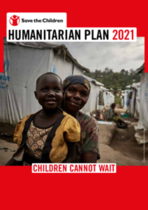
In this Humanitarian Plan, Save the Children lays out its response to the COVID-19 crisis, which is designed to directly support and advocate for children’s right to survive, learn and be protected, and will be delivered through a multi-sectoral response to children’s needs arising from the wide-ranging impacts of COVID-19 on children’s rights.
In the present report, submitted pursuant to General Assembly resolution 74/133, the Special Representative of the Secretary-General on Violence against Children, Najat Maalla M’jid, provides an overview of major initiatives and developments that sustain and scale up efforts to safeguard children’s freedom from violence and advance implementation of the 2030 Agenda for Sustainable Development.
Este recurso de CAFO provee guía a individuos dedicados a servir a niños y familias en riesgo en construir la resiliencia a través de las relaciones para ayudarles a construir un futuro mejor.

This e-book from CAFO provides guidance to individuals dedicated to serving at-risk children and families on how to build resilience through relationship to help them build better futures.

This report presents child protection data from March to September 2020 (covering the ‘first wave’ of COVID-19 restrictions for Australia, and part of the ‘second wave’ of restrictions for Victoria) with comparisons to the same period in 2019.
In this brief, the authors propose a set of enhanced Infant-Toddler policies—in the areas of income support, child care, and paid family leave—to better support families and improve their children’s long-term health and wellbeing.
This issue of the Future of Children focuses on the first years of life starting with in utero experiences.

This care system assessment is intended to support the Government of Kenya to assess and strengthen the national, formal care system.
This toolkit contains caseworker forms for: conducting child and family assessments, consent and assent from caregivers and children, case planning, placement of children and young adults, monitoring, case reviews, case closures, referrals, caregiver and child feedback, and more.
This Facilitator’s Guide is for use by the varied facilitators of the 'Promoting Family- or Community-Based Care Using a Case Management Approach Workshop,' including national and county trainer of trainers from Kenya's Department of Children's Services, and trained staff from other care reform partners.
This guide provides an overview of the principles and practices of case management for reunification and placement of children outside of parental care (e.g., children from Charitable Children’s Institutions (CCIs) and Statutory Children’s Institutions (SCIs) , and street-connected children) into family- and community-based care in Kenya.
This handbook is a key tool for supporting care reform in Kenya, promoting family-based alternative care for children, and moving away from institutional care.
Kenya's Department of Children’s Services (DCS), and its care reform partners within government and civil society, developed this Facilitator’s Training Manual for training on implementing the Guidelines for the Alternative Family Care of Children with the intent to streamline and standardize alternative family care services in Kenya through standardized training. This comprehensive training package includes the training facilitator’s manual, PowerPoint presentations, handouts, case studies, and video clips.
The current study aimed to examine effects of pre-adoptive risk on long-term functioning in children adopted from foster care.
This chapter reviews the state of the art in the study of caseworkers' psychosocial processes underlying the out-of-home placement decision following instances of child maltreatment by integrating existing literature on both child protection and social psychology.
This mixed methods research project, involving twenty participating local authorities and eight voluntary organisations from a wide geographic spread across England, was carried out between 2017 and 2019. The study was designed to investigate fathers and their recurring appearance in care proceedings at a macro, meso and micro level, with each element collecting and analysing data for distinct but related research questions.
This paper argues that kinship care – the care of children by relatives or friends of the family – represents the greatest resource available for meeting the needs of girls and boys who are orphaned or otherwise live apart from their parents.
This toolkit is developed for use by the Department of Children’s Services (DCS) and its partners engaged in care reform in Kenya. The tools herein are designed for a rapid situational analysis of children’s care institutions/statutory care institutions (CCI/SCIs) and the children living in them, and as a complement to any information already existing in the child protection information management system (CPIMS) or other government endorsed data.
The purpose of the situational analysis is to provide a snapshot of Charitable Children’s Institutions (CCIs), other private childcare institutions and Statutory Children’s Institutions (SCIs), and the children living in them in Nyamira County, Kenya.
The purpose of the situational analysis is to provide a snapshot of Charitable Children’s Institutions (CCIs), other private childcare institutions and Statutory Children’s Institutions (SCIs) and the children living in them in Kilifi County, Kenya.
The purpose of the situational analysis is to provide a snapshot of Charitable Children’s Institutions (CCIs), other private childcare institutions and Statutory Children’s Institutions (SCIs), and the children living in them in Kisumu County, Kenya.
The purpose of the situational analysis is to provide a snapshot of Charitable Children’s Institutions (CCIs), other private childcare institutions and Statutory Children’s Institutions (SCIs), and the children living in them in Kiambu County, Kenya.
The purpose of the situational analysis is to provide a snapshot of Charitable Children’s Institutions (CCIs) (registered and unregistered), and Statutory Children’s Institutions (SCIs), and the children living in them in in Murang’a county, Kenya.
The purpose of this situational analysis is to provide a snapshot of charitable children’s institutions (CCIs), other private childcare institutions and statutory children’s institutions (SCIs) in Kenya, and of the children living in them.
This paper asks the questions: What can we learn from the pandemic—and federal, state, and local governmental responses— about the cracks in the child welfare system? What lessons can be carried forward post-pandemic?
This evaluation study examined a Family Services Centre (FSC) operating in a socio‐culturally deprived suburban area of Southern Italy to explore how to promote innovative practices to meet increasingly complex family needs.
The aim of this study was to examine the experiences of mothers regarding their mothering role after participation in the ‘Mamma Trots Allt’ (MTA) program, a support program for mothers with cognitive limitations who have children in placement.