Transfer of refugee children to the UK on hold as Calais is cleared
A closer look at tends to be one of the more contentious issues surrounding the Jungle migrant camp in Calais, child migrants.
A closer look at tends to be one of the more contentious issues surrounding the Jungle migrant camp in Calais, child migrants.
Over the past week, Britain has taken in over 1300 children that were stranded in the "Jungle."
This chapter from Residential Child and Youth Care in a Developing World: Global Perspectives, First Edition discusses how residential care has evolved and how it currently exists in the English-Speaking Caribbean.
This study is a retrospective discussion of the experiences faced by young Jordanian adults who grew up in residential care before entering adult life. These young adults use their life experiences to demonstrate the challenges that people exiting residential care face. Per this chapter, post-care experience is influenced by in-care experience.
This chapter from the book Global Perspectives discusses the challenges young people in Jamaica face as they age out of care. The researchers review three Jamaican studies, which highlight challenges for young people, service providers and policy makers. The reviews found that while there are state mechanisms in place, more needs to be done to ensure these mechanisms are followed.
This chapter discusses the popular approaches used in the care of abandoned children and young people born without parents.
This paper initiates discussion by calling on Child and Youth Care (CYCCs) to offer transitional support to youth leaving care. It also intends to document and share information on new ways for youth to successfully transition out of care.
This summary examines the conditions children with disabilities face in Zambia. The summary asks if the quality of life for these children can be improved?
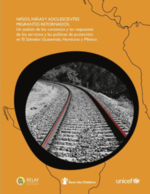
Entre 2013 y 2014, aumentó de manera considerable el número de niños, niñas y adolescentes no acompañados que migran desde los países de América Central hacia México y los Estados Unidos (EU).
El impacto de la Convención sobre los Derechos del Niño (CDN) ha sido muy importante: es el tratado de derechos humanos que goza de mayor aceptación y reconocimiento internacional, con 194 ratificaciones por parte de los Estados y cercano a la ratificación universal.
In this editorial, Laura Brigs discusses the issues that children face while attempting to apply for refugee status in the United States
This study investigates the characteristics of men who act as primary caregivers of maltreated children.
This study explores social, environmental, individual and family characteristics associated with emotional and behavioral difficulties among homeless children living in the Paris region.
This study attempts to understand the feelings and bonds of the often complex life situations of being an internationally adopted child.
This study examined whether interventions in Russian Baby Homes promoting warm, sensitive, and responsive caregiver-child interactions and relationships would be associated with advantages in those children’s behavior years after they transitioned to family care.
This is a video highlighting the education being provided to Syrian refugees in Lebanon.
This study compared the generalized anxiety, conduct and peer relationship problems and their associated risk factors among children orphaned by HIV/ AIDS and those due to other reasons in the Indian city of Hyderabad.
The present study offers examination of the association between severity and chronicity of maltreatment history and SU in youth in foster care.
This scoping study assesses the nature and extent of the evidence base in relation to increasing the number of care leavers in ‘settled, safe accommodation’. The Social Care Institute for Excellence (SCIE) carried out the study on behalf of the Centre for Excellence and Outcomes in Children and Young People’s Services (C4EO), between November 2008 and February 2009.
This study discusses a variance in results in eliminating use of large-scale residential institutions for children across the CEE/CIS region.
This article primarily discusses a study that was conducted to determine resilience and contributing factors in high-risk adolescents living in residential care facilities affiliated to Tehran Welfare Organization.
High levels of psychotropic medication use and polypharmacy are common for emotionally and behaviorally troubled youth entering residential care.
Stigma shapes all aspects of HIV prevention and treatment, yet there are limited data on how HIV-infected youth and their families are affected by stigma in sub-Saharan Africa.
This study focuses on the psychosocial well-being of youth affected by HIV and AIDS.
The researcher in this study investigates the “relationship between child labor and the opportunity cost of schooling, taking into account other factors that influence parents’ decisions about child labor and schooling.”
This article investigates the relationships and differences between statelessness and migration. Its particular focus is on migration in Malaysia and how migration can lead to statelessness.
Than Than Ei was just nine years old when she was sent to work for a family in Yangon, where she suffered years of physical and emotional abuse.
How migration policies affect family mobility and relationships is a new and emerging area of study within transnational family literature. This chapter contributes to this literature by providing an in-depth examination of Ghanaian migrant mothers’ encounters with Dutch family migration policies and the impacts such policies have on their pathways to family reunion and the consequences for family relationships.
This study notes that there are currently 700 million people below the poverty line. According to this study, around 40 percent are considered vulnerable children. It further states that according to UNICEF India has approximately 11 million children living on the streets. It is one of the highest concentration of the street children in the world. To investigate the status of street children, this study investigated outreach work in Latvia, Czech Republic and India.
This study examines the link between Rejection Sensitivity (RS), Attachment Pattern (AP) and Socio-Emotional Adjustment (SA & EA) among adolescent's living in orphanages and those living with their parents. Adolescents (N=360) ranging between 14–18 years completed self-report measures. The findings suggest that there exists significantly positive and negative correlation as well as significant interaction between gender and living conditions among the variables RS, AP, SA and EA.
This paper examines existing knowledge on raising adolescents in east and southern African countries, including Kenya, Malawi, Mozambique, South Africa, Tanzania and Zimbabwe. According to the report, and within the context of these regions, parenting is understood to be handled through extended community and family networks.
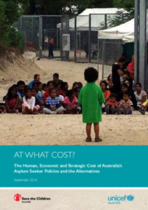
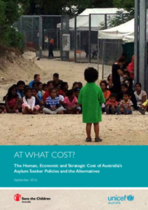
This report by Save the Children Australia and UNICEF Australia explores the human, economic and strategic cost of Australia’s current policies which seek to deter asylum seekers from migrating to Australia by sea.
This report by Women’s Link Worldwide tells the stories of twelve women who fled the bombings and violence in Syria only to end up trapped in Piraeus, Greece, deprived of their most basic rights.
The detailed study by the UN High Commissioner for Refugees (UNHCR), which tracks forced displacement worldwide based on data from governments, partner agencies and UNHCR’s own reporting, found a total 65.3 million people were displaced at the end of 2015, compared to 59.5 million just 12 months
An estimated 50 million children are on the move in the world today. Millions more have been deeply affected by migration. The need for solid evidence to develop better policies on child migration has never been greater.
This report by the UN Secretary General provides background and recommendations in preparation for the high -level plenary meeting on addressing large movements of refugees and migrants, to be held on 19 September 2016.
This is a study from Catholic Relief Services that investigates the factors related to children’s placement in Catholic-affiliated residential care facilities in Zambia. According to this study, the government estimates that there are approximately 190 residential-care facilities located in Zambia, and of those 40 are Catholic-affiliated. At the time of this study, there were 1674 residents living in residential care.
This paper discusses how Norway is in a position where it needs to balance its interests in immigration control with its obligations under international human rights law to protect the rights and liberties of asylum-seeking children. This document emphasizes the importance of protecting vulnerable children. In general this paper analyzes the ways that Norway acknowledges and protects the vulnerability of asylum seeking children. It also discusses the jurisprudence in place in relationship to vulnerable asylum-seeking children.
This is an article about therapeutic residential care. Therapeutic residential care (TRC) is becoming an increasingly relevant out-of-home care option for children and young people with multiple and complex needs.
This study used a mixed-methods multiphase, iterative process to illuminate the congruencies and incongruencies between the young adults' accounts of their foster care experiences and the legalistic, system-focused view of their experiences. This study highlights the limitations of administrative data as the primary source for evaluating systems, assessing child well-being, and for understanding child welfare outcomes.
The study is designed to identify whether effective caregiving mirrors strong parenting among typical parents or whether a set of additional skills is required to parent foster children responsively. Some of the principle features of quality caregiving for children are described particularly in the domains of family integration, relationships with biological parents, and support for children's special needs.
A random sample of licensed foster parents caring for children with disabilities in a major Canadian city was asked “what are the problems you encounter fostering a child with a disability?”
This paper discusses the study of foster parent perspectives on decision-making relevant to the use of psychotropics with children in foster care.
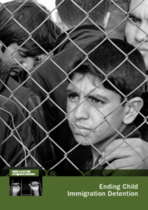
This document is a summary of the Interagency Working Group to End Child Immigration Detention Report. This article serves a summary of normative and policy developments that reflect the growing consensus and acknowledgement from the international community regarding immigrant detention. It highlights the issues specified the report and emphasizes the key issues surrounding immigration detention.
In this report from the Inter-Agency Working Group (IAWG) to End Child Immigration Detention, states that the immigration detention of children represents a serious threat to children, and a growing body of UN, regional, and domestic human rights experts have called upon States to “expeditiously and completely” end the practice.
In this report, the Special Rapporteur noted that children were disproportionately represented among migrants who were forcibly displaced. The Special Rapporteur also observed the frequent presence of children in detention in all the countries visited. In some instances, unaccompanied children in detention slept alongside adults.

This document reflects a commitment to launch a process of intergovernmental negotiations leading to the adoption of a Global Compact for Safe, Orderly and Regular Migration. It provides an outline for the proposed content and terms of the Global Compact.
This is a document that addresses the migrant and refugee crisis of 2016. It is a comprehensive refugee response developed by UNHCR, and involving other relevant UN agencies, including States, the United Nations, other international organizations, national and local authorities, civil society partners (including faith based organizations and academia), the private sector, media and refugees.
This report explores the human, economic and strategic cost of Australia’s current policies which seek to deter asylum seekers from migrating to Australia by sea.
The New York Declaration is the outcome document of the United Nations General Assembly High-level Meeting to address large movements of refugees and migrants, held in New York on the 19th September 2016.
This report contains detailed discussions that occurred during conference sessions. The first day focused on Caregivers. The second day focused on aftercare services. This report contains Article 20 UN Convention on the Rights of the Child. It provides background information on alternative care, which includes a definition and an overview of the alternative care situation in South Asia. It also includes some key guidelines from the UN Guidelines for the Alternative Care for Children.
Cate Blanchett performs the rhythmic poem ‘What They Took With Them’ alongside fellow actors Keira Knightley, Juliet Stevenson, Peter Capaldi, Stanley Tucci, Chiwetel Ejiofor, Kit Harington, Douglas Booth, Jesse Eisenberg and Neil Gaiman.
This article discusses how children's political agency manifests in everyday life. It shows how children who become aware of their legal status as 'deportable' reject this subject position and offer their own definitions of who they are and where they belong.
Lancet editorial advocating for support for migrant and refugee children
This document discusses SOS Children’s Villages years of experience in supporting vulnerable children and provides 10 recommendations to ensure proper care and treatment of migrant and refugee children.
This study reported that unaccompanied refugee children face greater challenges compared to their accompanied refugee counterparts.
This theoretical review explores the usefulness of the ambiguous loss framework for understanding the unique and complex realities of boundary-spanning relationships in transnational families.
This article explores how a child's psychological family can be affected, challenged, and transformed in the foster care system. When placed into foster care, children are often disconnected from many significant relationships, especially familial relationships (e.g., parents, siblings).
This study explores Ghanaian institutional caregivers' views of children's emotional and relational needs with the aim of understanding these caregivers' capacities to provide effective care for orphans.
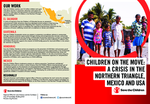
This is an at-a-glance look at the migration and refugee situation in the U.S., Mexico, and the Northern Triangle of Central America. The document contains general demographic data, as well as an overview of the potential threats that children face in the Nothern Triangle.
This report serves as a look at the people who are currently displaced around the world.
This capacity building package was developed to build the capacity of those responding to the refugee and migrant crisis to be able to address child protection concerns within the unique settings of the largely transit countries, in particular Croatia, Serbia and the former Yugoslavian Republic of Macedonia (tfYROM). The course book contains four core modules: Block A – Cultural Sensitivity; Block B – Impact of Being a Refugee/Migrant on Children; Block C – Working Together for the Benefit of Children; and Block D – Safeguarding. Each block takes about one and one-half hours.
This paper examines the association between cross-border ties and cross-border separation with the health of sub-Saharan African (SSA) migrant adults living in metropolitan France using data from the nationally representative “Trajectoire et Origines” survey.
This essay considers the recent increase in migration of unaccompanied minors from Central America and Mexico and argues that US border control and immigration officials have not addressed the specific experiences of migrating children.

This project reviews existing sources on multi-dimensional disadvantage or severe forms of social exclusion characterised as ‘deep exclusion’ for the purpose of recommending possibilities for secondary analysis of existing data sets to explore the dynamics of ‘deep exclusion’. It also ident
This guide by the UK's regulatory body, Ofsted, explains in detail what one must do in order to open a residential family centre.
This document is a literature review for the purpose of determining the drivers of social exclusion. Its objectives were to: 1) determine the current drivers; 2) determine emerging drivers that might have a future impact on social inclusion; 3) Assess the relative strength of drivers.
This article discusses how children’s political agency manifests in everyday life. It shows how children who become aware of their legal status as ‘deportable’ reject this subject position and offer their own definitions of who they are and where they belong. Simultaneously, it is argued that children with varying degrees of knowledge about their legal status also express political agency through their struggle to sustain the inclusion they experience.
This opinion piece from the Washington Post discusses how working to keep children with their families is a better option
This is the executive summary for a longer report, which gives an estimate of the number of immigrant and refugee children who will enter the United States in 2016, where they come from, and the traumas they face. It includes recommendations for policy and practice.
This report gives an estimate of the number of immigrant and refugee children who will enter the United States in 2016, where they come from, and the traumas they face. It includes recommendations for policy and practice.
This study investigated whether there is an association between family immigrant status and iron stores and evaluated whether or not there were any known dietary, environmental or biological determinants of low iron status that influenced this relationship.
Using the stories and reflections of boys and girls in Guanajuato, Mexico, this study points out how with migration, there are different ways to understand and cope with the issues that surround migration.
This article discusses the legal residency advocacy campaign that occurred in the late 2000s in the Netherlands and the United States on behalf of immigrant youths with precarious legal status.
In this talk, Emily Delap from Family for Every Child puts the use of orphanages in Nepal into a global context and explores the international evidence on the harm caused by allowing children to grow up away from families, and on the problems of orphanage voluntourism.
Next Generation Nepal Country Director Martin Punaks talks about orphanage trafficking in Nepal, why orphanage volunteers may inadvertently be part of the problem and how you can be part of the solution through ethical volunteering and other ways of "giving back."
This article examines and discusses the designation of unaccompanied Chinese children as "Unaccompanied Alien Children" and the processes experienced in obtaining such designations.
This article discusses how prevalence rates of child maltreatment (CM) can differ substantially between countries and ethnicities
This article highlights how inter-generational practices of love, care and solidarity are central to the negotiation of belonging in the settlement country.
This is an update on the ISS-USA Regional Conference in Guatemala.
This document reports on the status of children who remain in psychiatric hospitals, emergency shelters, and detention facilities in Illinois, US. In 2015, there were approximately 168 children who were hospitalized beyond medical necessity; 380 children who remained in emergency shelter beyond 30 days, and the audit reported “no available data” on children who remained in a detention facility solely because placement cannot be located.
The research in this study explores how systems strengthening approaches promoted by humanitarian agencies are perceived to have transpired in South Sudan during the country’s transition to independence.
In this new report, UNICEF notes that nearly 50 million children have migrated across borders or have been forcibly displaced.
In this video, Newsy discusses UNICEF's recent report that there are now 50 million displaced children worldwide.
This is an article discussing a research study performed to determine the best forms of out of home care for children.
This study assesses the effects of institutional care on social interaction anxiety in children and further assesses the role of social interaction anxiety in emotional and behavioral problems in children.
Kathryn Joyce discusses the issues that one mother in Uganda faced when she put her child up for international adoption.
This study examines the relationship between different areas of family need and the utilization of home-based, post-investigation services (HBPS) following a child protective services (CPS) investigation.
This is a 15 month qualitative study involving semi-structured interviews with families and boys at three stages: preparing for return, in the first three months of reintegration and successfully reintegrated.
This is an evaluation document that promotes family-based care in Cambodia.
This is a webinar that occurred on August 19 through the RISE Learning Network.
Practical guide for travel companies delivering volunteer tourism experiences.
This news article from the BBC is about a small orphan village south of Moscow, which has been experimenting with what the founders think may be a novel solution to support both foster children and the families who take them in.
A PSA produced by Hillside Digital Trust about Kick4Life's work in supporting vulnerable children in Lesotho
The story of a young boy who gave up being a child soldier to participate in UNICEF's reintegration program.
This chapter explores issues of children’s agency and participation in anti-trafficking interventions with children trafficked for exploitative labor in Vietnam.
This study examines the experiences of young female survivors of sexual violence in northern Uganda in order to explore the variety of roles (both positive and negative) that informal support networks played in contributing to survivors’ healing, recovery, and reintegration.
This study identifies risk factors for voluntarily joining armed groups, as well as to test association of conscription status and mental health.
This is a report from the International Institute for Child Rights and Development (IICRD) examining the two year (2014-2016) Child Protection Social Cohesion initiative in Burundi and Chad.