Displaying 521 - 530 of 540
This report details the situation of disappearing children during the El Salvadorian civil war. It describes the process of tracing and reunifying children with their families, as well as alternative care arrangements for separated children.
Outlines links between HIV/AIDS and armed conflict, with emphasis on their joint impacts on children. Summarizes key priorities for dealing with HIV/AIDS, children, and conflict.
Discusses the needs of women and girls during demobilization and reintegration programs and aims to identify strategized that minimize gender discrimination. Includes detailed recommendations and gender-sensitive suggestions for questionnaires.
A report about a case-study in Rwanda documenting the practice of, and policies regarding, fostering (formal and informal). The study also explored the views of children in foster care, caretakers, agencies and local authorities regarding fostering.
This article seeks to draw attention to some of the issues affecting women detainees and the applicable international humanitarian standards which afford them protection and assistance.
Training materials on the threats to children’s development from displacement and armed conflict and other emergency situations. It includes guidance on strategies to promote children’s development in adverse conditions.

A training resource pack on skills for working effectively with children, particularly children in distress.
Discusses the importance, benefits and challenges to community mobilisation for refugees and other displaced persons, with a particular emphasis on children. Includes facilitators notes, participatory exercises, overheads, and handouts.
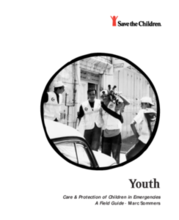
An overview of the key challenges surrounding youth in crisis and the framework for dealing with these issues based on Save the Children principles in youth programming. Includes detailed examination of international programming examples.
Outlines the planning and implementation of programs focused on recruitment prevention, demobilization, or reintegration of child soldiers. Includes notes on situation analysis, monitoring, and evaluation.