Unaccompanied minors’ needs and the child welfare response
This study examines a sample of 1705 cases of unaccompanied and separated children (UASCs) included in a pilot project for early recovery child protection intervention.
This study examines a sample of 1705 cases of unaccompanied and separated children (UASCs) included in a pilot project for early recovery child protection intervention.
this study relied on organizational survey data collected from child welfare workers and supervisors during the process of implementing an evidence-based practice—the Positive Parenting Program—and merged those data with data gathered by the Parents' Assessment of Protective Factors survey.
This brief explores how policymakers can begin to build a comprehensive and inclusive system of supports to protect immigrant families.
The goal of this case study is to demonstrate a working model of family-based care in Zambia which can produce a replicable framework that can be modified for other regions and circumstances.
This resource is structured into six ‘practices’ that the authors learned from policy actors who are working in development, consultation and evaluation of policy that directly impacts the lives of children and young people in care.

The authors round up 28 new studies that have been released since their last summary of research studies on violence against women and children (VAW/C) across disciplines and methodologies that had been published since the start of the pandemic.
The study from Chile, Lithuania and Norway explores how social workers define family and more specific the position of extended families within child welfare and thus indicate contextual differences and similarities.
This article explores the lived experiences of five fathers with care experience whose children remain in their care.
Fostering provides a family life for children who are unable to live with their biological parents. The wellbeing of foster carers is important and can have a direct impact on emotional, social and behavioural outcomes for children.
This study seeks to assess the prevalence of childhood neurodisabilities and related neurodevelopmental, emotional, behavioural and intellectual problems (NDEBIPs) among a cohort of children coming into care in an English local authority.
This article focuses on professional storytelling among child welfare social workers. It examines how social workers construct their professional role through team talk and the implications of this for our understanding of professional resilience and defensiveness.
This paper describes one researcher’s reflections about their own engagement with participants of an evaluation of a parenting course.
The purpose of this note is to clarify the linkages and complementarity between INSPIRE seven strategies for ending violence against children and the 2019 Edition of the Minimum Standards for Child Protection in Humanitarian Action (‘2019 CPMS’); and to provide some practical guidance on how to use INSPIRE and the 2019 CPMS in conjunction for preventing and responding to violence against children in humanitarian settings.
In this podcast episode, Sumnima Tuladhar, a founding member and executive director of CWIN child helpline in Nepal, discusses how calls to the helpline changed when the COVID-19 pandemic reached Nepal. They discuss the processes drawn up to allow the helpline team to continue supporting children in dangerous situations.
In this article, the authors present child abuse and neglect data available in Brazilian public health system platform and in a national childline reporting channel (Dial 100) from 2011-2017.
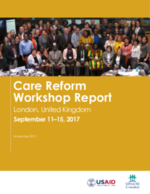
This report outlines the sessions of a workshop help in London with representatives from four countries participating in a USAID/DCOF-funded activity aimed at intensifying country leadership in advancing national efforts on behalf of children who lack adequate family care, and provides highlights, key discussion points, and action items.
This brief reviews alternative care arrangements for unaccompanied and separated children in Uganda, including challenges faced and lessons learned.
This report presents findings from assessments of the care systems in Armenia, Ghana, Moldova, and Uganda by system component and areas of care, and summarizes recommendations for strengthening alternative care systems.
This case study from ChildFund's 2018 Impact Report describes the Deinstitutionalization of Orphans and Vulnerable Children (DOVCU) initiative in Uganda, which aims to to improve the safety and well-being of children outside of family care.
This research conducted jointly by the Foundation for Human Rights Initiative and PRI assesses to what extent the guidance contained in the 'General Comment on the rights of children when their parents or primary caregivers are in conflict with the law' has been implemented in Uganda, highlighting some of the gaps that need to be filled.
This report presents the findings of the “Functional review of the Government social service workforce in relation to child protection," which aimed to inform efforts geared towards strengthening the functionality of the social service workforce in Uganda, taking into account changes in the legal and policy framework and global trends in social protection and child protection in particular.
This end of project evaluation aimed to synthesise the wealth of data and learnings captured over the life of the Family Reintegration and Prevention of Separation (FRAPS) project to determine if project objectives were met, to complement existing data with primary data collection related to final project outcomes, and to provide a final product that can be used to appreciate the project achievements, challenges and learnings and to guide future programming.
This ex-post evaluation examines the sustainability of outcomes from USAID’s Sustainable, Comprehensive Responses for Vulnerable Children and their Families (SCORE) activity.
This paper highlights human resource and funding gaps that constrain provision of child care and protection services. It advocates for strengthening of social welfare workforce and funding to improve child care and protection services in Uganda.
The purpose of the review is to provide evidence to support planning that will maximize the impact of the PEPFAR Uganda OVC portfolio.
This report presents findings of two components of a Rapid Assessment of Catholic Care for Children in Uganda. The objective of the assessment was to examine the emerging legal framework pertaining to child protection and its implications for Catholic sisters and brothers who work with vulnerable children and their families.
This revised report presents findings from an evaluation of the Child Protection Monitoring and Response System (CPMRS) in Thailand for the period 2006-2012.
This paper presents UNICEF's Social Protection Strategic Framework, which was developed to respond to the emerging global challenges and increased demand for policy and guidance on social protection.
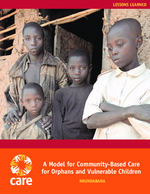
This paper describes CARE Rwanda’s Nkundabana model, which mobilizes adult volunteers from the community to provide guidance and care for children living in households without adult support, and discusses lessons learned.
This publication is a compilation of country briefs that audit and review the level of alignment of national laws with international and regional standards.
This Conference explored a range of workforce development strategies, including strategies for planning, training, and supporting the workforce incorporating lessons learned from Health Systems Strengthening and Human Resources for Health Initiatives as well as other human and institutional capacity building and training efforts.
This paper presents the results of an audit to evaluate the efficacy of the central database designed to facilitate the reunification of unaccompanied children in Rwanda with their families.
The National Plan of Action (NPA) provides an operational framework to guide stakeholders and partners in coordinating, planning, implementing and monitoring programmes for the child.
The overall goal of this policy is to realize and safeguard the rights and welfare of the child in Kenya.
The guidelines for Case Management and Referral for Child Protection Systems in Kenya is a reference material to guide different actors on how to carry out comprehensive case management and referral and defines the role of the government, civil society organizations, the communities, the family and the child to complement each other.
The Children Act, Chapter 141 is a Kenyan law that addresses provision for parental responsibility, fostering, adoption, custody, maintenance, guardianship, care and protection of children, among others.
This document outlines the regulations for charitable children's institutions (CCIs) in Kenya.
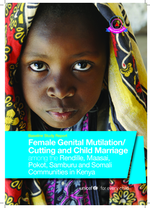
The main objectives of this study were to establish the prevalence of female genital mutilation/cutting (FGM/C) and child marriage among five ethnic communities in the following six study locations: Garissa (Balambala); Wajir South (Habaswein); Kajiado Central; Marsabit (Laisamis); Samburu (Wamba); and West Pokot (Sook).
This paper uses two approaches to understand the phenomenon of proliferation of children's institutions in Kenya.
This paper examines alternative care in Kenya. The focus will be on the genesis of alternative care; the non- prosaic multiple factors contributing to the situation, situational analysis on data, and child protection frameworks.

Employing a life course perspective and drawing upon care leavers' stories, along with focus group discussions and views from staff, this paper explores the concept of social capital and the ways in which this influences their lives before care, in care and after care.
This report presents findings from an assessment of Kenya's implementation of the UN Guidelines for the Alternative Care of Children.
Terre des Hommes Netherlands has conducted this preliminary study to examine if there is evidence of Online Child Sexual Exploitation (OCSE) in Kenya.
This paper is a summary of the findings from an ethnographic study on child developmental disabilities conducted partly in Nairobi and Kiambu Counties in Kenya.
As part of its mandate the National Gender and Equality Commission (NGEC) undertook a study whose primary objective is to identify minorities and marginalized communities of Kenya, and outline major issues affecting these communities in all counties.
Using two sources of household survey data, this paper examines school enrolment and attendance patterns for children with disabilities in Kenya.
This paper is a culmination of various studies carried out by the authors and other researchers and seeks to specifically interrogate factors in the family system in Kenya, which contributes to children leaving homes to live on the streets.
This report presents findings from the Kenya 2019 Violence Against Children Survey (VACS).
This report presents the findings of an audit of the cash transfer programs for the Orphans and Vulnerable Children (OVC), Persons with Severe Disability (PWSD), and the Elderly in 21 sub-counties of Kenya, to provide the national and county governments with a snap shot account of the implementation of the cash transfer program and the level of participation of the vulnerable populations in programs designed for them.
This report from First Focus on Children presents analysis of the U.S. spending on children and children's services, including child welfare, in 2020.
El Modelo de cuidados alternativos contenido en este documento se presenta en una coyuntura social en la que el Estado y la sociedad civil de Guatemala enfrentan el desafío de un cambio necesario.
El Consejo Nacional de Adopciones se presenta al público en general la Memoria de Labores correspondiente al 2019, en la cual el único compromiso fue restituir los derechos de la niñez guatemalteca.
La presente ley tiene por objeto crear y regular el Sistema Nacional de Protección
Integral de la Niñez y Adolescencia.
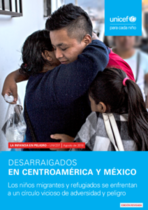
En este informe de la Infancia en peligro se evalúan las causas estructurales de las migraciones irregulares procedentes del norte de Centroamérica y México, y se analizan las distintas dificultades y peligros a los que se enfrentan los niños migrantes y refugiados y sus familias durante los arduos procesos de migración y retorno.
El informe tiene como propósito presentar a las autoridades gubernamentales, no gubernamentales, agencias de cooperación internacional, medios de comunicación social, instituciones académicas, centros de investigación y población en general, los resultados obtenidos que muestran las condiciones de salud reproductiva, salud materno infantil y para los demás temas incluidos en la encuesta.
Este reglamento tiene por objeto adecuar la práctica judicial al sistema de protección integral de niñez y adolescencia, en la aplicación de medidas de protección y abrigo provisional de niños privados de su medio familiar.
El presente reglamento tiene como objeto desarrollar los procedimientos técnicos y administrativos que realiza la Procuraduría de la Niñez y la Adolescencia y sus Delegaciones Regionales en cada una de las materias que la Ley de Protección Integral de la Niñez y la Adolescencia y otros cuerpos legales le asignan.
The State of Uganda Population Report 2019 shows the potential of social protection systems to promote inclusive development that leaves no one behind—to reduce poverty, inequality and promote social inclusion.
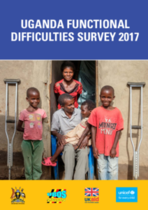
The sections in this report provide an analysis of Uganda’s disability policy and legislative framework and how it is implemented, and emphasizes the need for sound research for development, including statistics.
This study assessed child poverty, deprivation and social service delivery in refugee and host communities in selected districts in the country’s three major refugee-hosting areas: West Nile, a sub-region of Northern region that borders South Sudan; the country’s South West, which borders the DRC and Rwanda; and the capital, Kampala.
This article sets out some of the evidence of the impact of institutionalisation on children in Europe.
This document contains a list of alternative care homes in Uganda that have been approved by the Ministry for Gender, Labour and Social Development.
The study described in this report set out to identify and systematically learn about the functioning of existing community-based child protection mechanisms in Aceh, Indonesia.
This Note provides background and technical information on social protection in Cambodia to inform the development of a national social protection strategy for the poor and vulnerable by the Council for Agricultural and Rural Development (CARD).
This article analyses the interactions among global and national actors in the policy dynamics of Cambodia’s National Social Protection Strategy (NSPS); it is intended to disentangle the complex politics of global social policy at the national level.
This publication proposes a framework of core indicators for measuring and monitoring national child protection systems in the East Asia and Pacific region.
This discussion paper puts forward a set of lessons learned and recommendations for referral mechanisms and case management for vulnerable children in the Eastern and Southern Africa region (ESAR).
Este trabajo pretende identificar los principales problemas que enfrentan los países de la región en relación al tema y desarrolla someramente algunos de los estándares de derechos humanos que deben ser observados, con el objetivo de contribuir sustancialmente a la adecuación de los sistemas de protección en lo que refiere a la utilización de la internación de los niños, niñas y adolescentes en las instituciones de protección.
In this short editorial, the organization New Beginnings shares the stories of three of the families they work with who have wanted to explain what lockdown has meant for them during this peculiar time.
The report presents an overview of the Situation of Children and Women in Kenya using the results of the most significant research and analysis between 2014 and 2017 in areas related to the wellbeing of children and women.
The purpose of this study was to investigate the extent to which government allocated financial resources, management procedures and stakeholders are major determinants of implementation of cash transfer program for orphans and vulnerable children in Isiolo County, Kenya.
In 2011/12 a comprehensive Review was undertaken of Kenya’s Social Protection Sector. This Review follows up on progress made since the previous one.
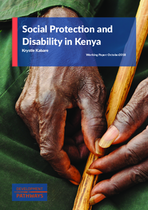
This report provides insights into the current situation in Kenya regarding the inclusivity of social protection for people with disabilities.
This publication is presented in three parts. Part 1 discusses how seeing Haitian children as part of a complex and beautiful social system can inform best practices in child care reform. Part 2 highlights eight organizations working towards family-based care and the preservation of families and communities. Part 3 provides inspiration for collective action and transformation.
The primary objective of this study was to collect baseline data on the number of children living in residential care institutions in Cambodia.
This Action Plan for improving child care, with the target of safely returning 30 per cent of children in residential care to their families 2016 - 2018, was developed to support the implementation of the Ministry of Social Affairs, Veterans and Youth Rehabilitation (MoSVY) Work Platform 2014–2018 and the Sub-Decree 119 on the Management of Residential Care Institutions, which was endorsed on 11 September 2015.
This Action Plan for improving child care, with the target of safely returning 30 per cent of children in residential care to their families 2016 - 2018, was developed to support the implementation of the Ministry of Social Affairs, Veterans and Youth Rehabilitation (MoSVY) Work Platform 2014–2018 and the Sub-Decree 119 on the Management of Residential Care Institutions, which was endorsed on 11 September 2015.
The present evaluation examines the National Child and Youth Development Plan, which provides a framework for the development of children and youth in Thailand. The evaluation aimed to review the design and implementation of the NCYDP and to generate lessons in order to improve the operation of the current plan and to inform the development of a follow-up plan for the period beyond 2016.
This is a longitudinal mixed-method study investigating the impact of parental migration on early childhood well-being and development in Thailand. This report presents the baseline results of quantitative and qualitative surveys.
This is a longitudinal mixed-method study investigating the impact of parental migration on early childhood well-being and development in Thailand.
This survey provides a unique source of data and information, covering more than 80 indicators in the areas of nutrition, child health, water and sanitation, reproductive health, child development, literacy and education, child protection and HIV/AIDS.
This survey provides a unique source of data and information, covering more than 80 indicators in the areas of nutrition, child health, water and sanitation, reproductive health, child development, literacy and education, child protection and HIV/AIDS.
This report is based on in-depth interviews with migrant children and parents, real estate and construction companies, government Ministries, and NGOs. It explores the challenges faced by children living in construction site camps, and suggests solutions that can be scaled to foster social responsibility within Thailand’s construction sector.
The Thailand Migration Report 2019, jointly produced by members of the United Nations Thailand Working Group on Migration, contains 11 chapters covering themes such as working conditions, access to services, remittances, human trafficking and exploitation. UNICEF, along with UNESCO, has co-authored Chapter 6 on Strengthening Access to Services for Migrant Children in Thailand.
The guidelines provide information for ECD professionals and parents about holistic child development, linked to the national Early Learning and Development Standards.
This report presents a Child Multidimensional Poverty Index (Child MPI) for Thailand.
This report presents a Child Multidimensional Poverty Index (Child MPI) for Thailand.
This brief from UNICEF describes the Child Support Grant (CSG), a non-contributory, non-conditional targeted cash transfer to caregivers of children between ages 0-6 in Thailand.
This brief from UNICEF describes the Child Support Grant (CSG), a non-contributory, non-conditional targeted cash transfer to caregivers of children between ages 0-6 in Thailand.
Based on three waves of semi-structured interviews, this longitudinal qualitative study aims to understand the transition from out-of-home care (OHC; foster care, residential care) to independent adulthood, for a group of Swedish care leavers aged 16 to 20 years.
The aim of this study was to explore the experiences of Victorian foster and kinship carers in accessing health services for children in their care and to quantify the frequency of potential barriers to health care.
Décadas de investigaciones comprueban que el crecimiento de un niño en una institución posee un impacto nocivo en cuanto a lo psicológico, lo emocional y lo físico, incluyendo trastornos de vinculación, retrasos cognitivos y en el desarrollo, y una falta de capacidades sociales y para la vida que luego concluyen en múltiples desventajas durante la adultez.
Décadas de pesquisas comprovam que o crescimento em instituições de acolhida gera consequências psicológicas, emocionais e físicas, incluindo transtornos de apego, atrasos cognitivos e no desenvolvimento, e uma falta de habilidades sociais e de competências para a vida, trazendo diversas desvantagens na idade adulta.
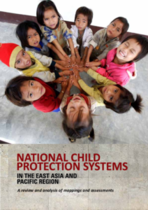
This report presents the findings of a review of mappings and assessments of the child protection system in 14 countries.
The Integrated Child Rights Policy is conceived with the objectives of strengthening the thinking and analysis around policies related to children and the coordination and implementation of Government activities for realization of children’s rights.
This Law is relating to the rights and the protection of the child in Rwanda.
This situation analysis provides a timely assessment of progress for children, achievements to date, and remaining challenges and barriers to the realization of children’s rights in Rwanda.
This study, commissioned by UNICEF, examines formal fostering policy and practice from the point of view of the Rwandan government and fostering agencies, and explores the perceptions of fostering of children, foster parents, local authorities and other members of local communities.