Benevolent harm: Orphanages, voluntourism and child sexual exploitation in South-East Asia
This paper summarises the processes by which children become vulnerable to sexual exploitation and related harms within or facilitated by orphanages.
File
This paper summarises the processes by which children become vulnerable to sexual exploitation and related harms within or facilitated by orphanages.
This article focuses on the “zero-tolerance” policy adopted in spring, 2018, in the USA.
This current systematic literature review aims to examine what is known about foster parents' needs, satisfaction and perceptions of foster parent training.
This bulletin is intended for child welfare agency leadership in the US and explores how child welfare agencies can support children who have been victimized as well as children that are at greater risk for future victimization.
This paper aims to discuss professional’s struggle to find words to talk about perceptions of violence by their colleagues in residential care.
This presentation of Family Care for Children with Disabilities: Practical Guidance for Frontline Workers in Low- and Middle-Income Countries was given at the UN Human Rights Council Side Event on Promoting Quality Alternative Care for Children with Disabilities on 5 March 2019.
Child Rights Connect delivered a written and oral statement to the UN Human Rights Council on 4 March 2019 at an event to promote the empowerment of children with disabilities to enjoy their full human rights, including through inclusive education. In the statement, Child Rights Connect says that children with disabilities "are much more likely to grow up in alternative care and face heightened risk of violence."
The importance of mental and behavioral health for child welfare clients is well-documented; yet, little is known about the challenges therapeutic service providers (TSPs) experience working in child welfare practice. To explore this topic, five focus groups were conducted with 40 TSPs in a contracted mental and behavioral health agency and data were analyzed following an inductive thematic process.
This study uses a qualitative approach to explore the experiences of 22 UK foster carers when a child is ‘moved on’ from a placement, focusing specifically on their experiences of loss.
In this study, the outcomes of a whole-community intervention program targeted at improving the well-being of LBC and other rural children ages 7–18 were examined through a quasi-experimental evaluation.
This report is about the use of ‘family orders’ to support family reunification and placement with family and friends as outcomes of S31 care and supervision proceedings brought under the UK Children Act 1989. The over-arching aim of this study is to understand the opportunities, challenges and outcomes of these orders, and their use at national and regional level.
This report turns the lens on young people who age out of foster care and explores four areas — education, early parenthood, homelessness and incarceration — where they fare worse than their general population peers in the US.

The increasing importance of higher levels of formal education and training leads to an extended transition phase to adulthood in Austria. This article explores how care leavers are confronted with new disadvantages and with a lack of political and societal attention.
This study aims to analyze the comparative effectiveness of Youth Self-Report (YSR) and the Strengths and Difficulties Questionnaire (SDQ) as screening tools of psychological (mal)adjustment, looking for differences in the way psychological problems and difficulties are identified by these two measures in adolescents in residential care (RC).
This open access study aims to gather, assess and synthesize the current empirical evidence about subjective perceptions and experiences of former youth in foster care regarding their independent living during the transition to adulthood.
This inspection framework, developed by the UK's Office for Standards in Education, Children's Services and Skills (Ofsted), provides guidance about how children’s homes are inspected, for use from April 2019.
The 2019 Prevention Resource Guide - created by the U.S. Department of Health and Human Services’ Children’s Bureau, Office on Child Abuse and Neglect, its Child Welfare Information Gateway, and the FRIENDS National Center for Community-Based Child Abuse Prevention - is designed to help individuals and organizations in every community strengthen families and prevent child abuse and neglect.
This country care review includes the care-related Concluding Observations adopted by the Committee on the Rights of the Child. The Committee's recommendations on the issues relevant to children's care are highlighted, as well as other care-related concluding observations, ratification dates, and links to the Universal Periodic Review and Hague Intercountry Adoption Country Profile.
This country care review includes the care-related Concluding Observations adopted by the Committee on the Rights of the Child.
Family for Every Child has shared three pre-recorded presentations to watch in advance of their Online Event on Kinship Care in Brazil on Wednesday 3 April at 13:00 UK time.
The objective of this study was to provide basic information on the current situation of children under institutional care in the entire country of Sri Lanka, in order to identify the issues affecting those institutionalized children and to recommend plausible solutions.
This report - prepared for the European Commission by Applica and the Luxembourg Institute of Socio-Economic Research (LISER), in close collaboration with Eurochild and Save the Children - provides a first mapping of the situation across the 28 Member States of the EU outlining the situation in relation to children, particularly the four target groups (TGs) of disadvantaged children (children in institutions, children with disabilities, children of recent migrants and refugees, and children living in precarious family situations) as well as an indication of the key issues in relation to children’s access to the five policy areas (PAs): housing, healthcare, nutrition, early childhood education and care, and education.
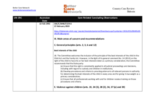
This country care review includes the care-related Concluding Observations adopted by the Committee on the Rights of the Child.
These updated UN High Commissioner for Refugees (UNHCR) Guidelines provide guidance on determining the best interests of the child in decisions affecting children at risk, in particular children who are separated from their parents and families.
This Resolution on "empowering children with disabilities for the enjoyment of their human rights" was adopted by the UN Human Rights Council on 22 March 2019. The Resolution makes mention of the particular vulnerability of children with disabilities to institutionalization, reaffirms the importance of a family environment for all children, and calls upon States to provide necessary support services to children and families so as to prevent institutionalization and family separation, encouraging States to "undertake every effort to provide alternative care within the wider family and, failing that, within the community in a family setting" where the immediate family is unable to care for the child.
The Child Protection Hub for South East Europe’s (ChildHub) overall objective is to contribute to the realisation of children’s fundamental rights across South East Europe, in particular the rights to be protected from abuse and violence. This report presents the findings of the final evaluation of this project.
This publication is aimed at children and young people (and adults too!) so that they know what the governments of the world have said they will do. As the Global Compacts can be difficult to read, this ‘child and youth friendly’ briefing summarizes what these documents say about migrant and refugee children and young people.
This study analyses the incidence of human trafficking among people travelling along the ‘Eastern Mediterranean route,’ the ‘Balkan route’ and the ‘Central Mediterranean route’; factors of resilience to human trafficking and other abuses; and factors of vulnerability to human trafficking and other abuses. The study reveals the particular vulnerability of unaccompanied minors to child exploitation and abduction and highlights key recommendations for addressing human trafficking along these routes.
This KIDS COUNT policy report underscores the importance of family-based care and calls for limiting the role of residential treatment care for children in the US
The goal of this study was to investigate the efficacy of the Balekane EARTH program, a 2-week wilderness-based therapeutic intervention in Botswana for children who have been orphaned.
This paper explores care leavers’ needs and priorities from the perspective of self-determination theory (SDT), which relates the individual’s motivation to the human need for competence, relatedness and autonomy.
As agencies consider how to build the capacity of carers to support unaccompanied young people, this study set out to learn from the experiences and views of foster carers, in order to inform the development of effective carer training and support.
This article follows on from ‘How children in foster care engage with loyalty conflict: presenting a model of processes informing loyalty’ (Dansey, John and Shbero, 2018), published in the previous edition of this journal.
This article presents a preliminary exploration of the participation in a mindfulness-based group therapy by nine looked after children aged 14 to 17.
Presented at the UN Human Rights Council side event on Promoting Quality Alternative Care for Children with Disabilities on 5 March 2019, this video highlights the work of ABLE, a program of the Cambodian NGO Children in Families that provides inclusive family-based care for children with disabilities.
Sreyny Sorn, manager of the ABLE Project at Children in Families, gave a presentation at a side event at the United Nations Human Rights Council in Geneva on 5 March, 2019.
The Global Social Service Workforce Alliance hosted the 6th Annual Social Service Workforce Strengthening Symposium on the topic of using evidence as a catalyst for advocacy efforts to support the social service workforce.
With particular attention to lower income countries, Families, Not Orphanages examines the mismatch between children’s needs and the realities and long-term effects of residential institutions.
This summary report presents key findings and recommendations from an analysis of unregistered, private children's homes in Thailand's Sangkhlaburi District.
This in-depth working paper explains how genes and the environment interact, and gives recommendations for ways that caregivers and policymakers can effectively respond to the science.
This infographic explores how epigenetics relates to child development and how early experiences can have lifelong impacts.
This document provides a conceptual framework for Family for Every Child, a global network of national civil society organisations working to mobilise knowledge, skills and resources to build a world where every child grows up in a permanent, safe and caring family, and to provide quality alternative care where needed.
This paper discusses some of the challenges facing care leavers and the development of the care-leaving debate, legislation and policy in the United Kingdom, United States and Australia. A comparison of the care-leaving arena in South Africa and the support services available to care leavers in the different countries will be presented.
This paper focuses on appropriate responses to the unique challenges faced by young people at risk who are transitioning out of state care in South Africa.
This paper discusses findings from a small-scale qualitative study conducted in Harare, Zimbabwe. Findings show that young people aging out from Harare’s care institutions face challenges making their transition from care into adulthood.
This factsheet highlights the developments and challenges still ahead in Ukraine and offers key recommendations to the EU and the national government to ensure that children are cared for in family-based settings.
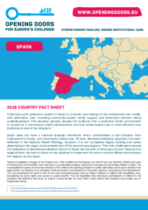
This factsheet highlights the developments and challenges still ahead in Spain and offers key recommendations to the EU and the national government to ensure that children are cared for in family-based settings.
This factsheet highlights the developments and challenges still ahead in Serbia and offers key recommendations to the EU and the national government to ensure that children are cared for in family-based settings.
This factsheet highlights the developments and challenges still ahead in Romania and offers key recommendations to the EU and the national government to ensure that children are cared for in family-based settings.
This factsheet highlights the developments and challenges still ahead in Poland and offers key recommendations to the EU and the national government to ensure that children are cared for in family-based settings.
This factsheet highlights the developments and challenges still ahead in Moldova and offers key recommendations to the EU and the national government to ensure that children are cared for in family-based settings.
This factsheet highlights the developments and challenges still ahead in Lithuania and offers key recommendations to the EU and the national government to ensure that children are cared for in family-based settings.
This factsheet highlights the developments and challenges still ahead in Latvia and offers key recommendations to the EU and the national government to ensure that children are cared for in family-based settings.
This factsheet highlights the developments and challenges still ahead in Hungary and offers key recommendations to the EU and the national government to ensure that children are cared for in family-based settings.
This factsheet highlights the developments and challenges still ahead in Greece and offers key recommendations to the EU and the national government to ensure that children are cared for in family-based settings.
This factsheet highlights the developments and challenges still ahead in Estonia and offers key recommendations to the EU and the national government to ensure that children are cared for in family-based settings.
This factsheet highlights the developments and challenges still ahead in Croatia and offers key recommendations to the EU and the national government to ensure that children are cared for in family-based settings.
This factsheet highlights the developments and challenges still ahead in Bulgaria and offers key recommendations to the EU and the national government to ensure that children are cared for in family-based settings.
This factsheet highlights the developments and challenges still ahead in Bosnia and Herzegovina and offers key recommendations to the EU and the national government to ensure that children are cared for in family-based settings.
This factsheet highlights the developments and challenges still ahead in Belgium and offers key recommendations to the EU and the national government to ensure that children are cared for in family-based settings.
This factsheet highlights the developments and challenges still ahead in Austria and offers key recommendations to the EU and the national government to ensure that children are cared for in family-based settings.
The Opening Doors for Europe’s Children – a pan-European campaign that advocates for strengthening families and ending institutional care – released 16 country fact sheets about the progress with the transition from institutional to family- and community-based care (also known as deinstitutionalisation) in 2018.
This article explores the history of strained relations between the Norwegian Child Welfare Services (CWS) and various migrant groups.
The objective of this study was to identify factors associated with difficult parenting experiences and placement disruption.
This website, developed by One Sky Foundation for the Convention on the Rights of the Child Coalition for Thailand Alternative Care Working Group, provides access to resources on alternative care in Thailand.
This summary report presents key findings and recommendations from an analysis of unregistered, private children's homes in Thailand's Sangkhlaburi District.
This summary report presents the findings of a study comparing practices within residential children's homes in the Thai province of Chiang Mai with the Guidelines for the Alternative Care of Children.
In her report, the Special Rapporteur on the rights of persons with disabilities provides an overview of the activities undertaken in 2018 and a thematic study on disability-specific forms of deprivation of liberty, in the light of the standards set forth in the Convention on the Rights of Persons with Disabilities.
In the present report, submitted pursuant to Human Rights Council resolution 37/20, the United Nations High Commissioner for Human Rights provides an overview of the legal framework and practical measures to empower children with disabilities.
The primary aim of this study is to summarise research findings about the use of assessment frameworks, that is, structured models that guide information collection and decision making in child protection services, by reviewing the literature.
This report outlines the barriers to settlement demonstrated by the work CCLC has done with children and young people and makes recommendations for the ways in which the government can ensure that these barriers can be overcome as the EU settlement scheme is rolled out.
The purpose of this paper is to describe and analyze the interactions between children and their siblings in an institutional shelter in Brazil.
Special guardians have been tasked with safeguarding the rights of unaccompanied minors in Croatia and providing general assistance within the system of care during their stay and/or during the status recognition procedure. The authors of this study discussed the experiences of practitioners in the field and some of the most important challenges they are facing within the special guardianship system.
This study examined the effectiveness of solution-focused brief therapy (SFBT) on child well-being and family functioning outcomes for child welfare involved parents.
The purpose of this paper is to explore the wider context in which the UK national evaluation of the Adoption Support Fund (ASF) was delivered and raise concerns about the sustainability of the early outcomes.
Drawing on in-depth interviews with fifteen community workers, who represent nine agencies assisting families with child protection issues in a small jurisdiction in Australia, the authors of this article show how the stigma attached to ‘bad’ parents is passed on to the community workers who are supporting them.
This research addresses one of the most pressing and controversial issues facing child welfare policymakers and practitioners today: the dramatic overrepresentation of Indigenous families in North American public child welfare systems. The article presents a successful model of inclusive education: the Center for Regional and Tribal Child Welfare Studies (the Center) at the University of Minnesota, Duluth, School of Social Work.
This article provides a review of the literature in attachment theory, outcomes of being in foster care, impacts of trauma, and long-term attachment outcomes of foster care alumni.
This paper presents and analyzes the situation of migrant children and unaccompanied minors in the EU.
Using qualitative methods of data collection, factors influencing child placement in Southwestern Nigeria were examined in this article.
This paper analyzes the United States of America (U.S). House Resolution 1409 (H.R.1409) also referred to as the “Assistance for Orphans and Other Vulnerable Children in Developing Countries Act of 2005 (AOVC).”
This article discusses the use of Ubuntu theory in social work with children in Africa.
This article provides an overview of typical experiences for unaccompanied immigrant minors (UIMs), discusses the accompanying legal and clinical implications, and offers recommendations for psychological practice at the level of providers, training programs, and child-serving systems.
This study explores the qualitative responses of child welfare workers in Florida to understand their collaboration experiences, focusing specifically on their perceptions of facilitative factors of collaboration with Intimate partner violence (IPV) services.
This study aimed to identify the interrelationships of risk and protective factors, job satisfaction and burnout to child protection workers' intent to leave, the relative impact between job satisfaction and burnout on intent to leave, and their mediating roles for the risk and protective factors.
This briefing, part of a series from the Howard Leauge, tells the anonymised stories of four children and young people who have been criminalised in residential care in their own words.
This briefing paper is part of a series from the Howard League that explores some core principles to help protect children in residential care in the UK from criminalisation.
This is the second briefing paper published as part of the Howard League’s two-year programme to end the criminalisation of children in residential care. It explores how good practice in the policing of children’s homes can significantly reduce the unnecessary criminalisation of vulnerable children and demand on police resources.
This is the first in a series of briefings to be published alongside a programme of research and campaign work to end the criminalisation of children living in residential care. The project builds on from research published in March 2016, which found that children living in children’s homes in the UK were being criminalised at much higher rates than other children, including those in other types of care.
This guidance from the UK's Department for Education presents a framework to help social care and criminal justice agencies keep looked-after children out of the criminal justice system.
This paper examines young people’s experiences of the aftercare planning process in Ireland drawing on data from the first phase of a qualitative longitudinal study of young people leaving care.
This brief summarizes insights drawn from Community of Practice conversations and provides recommendations for local governments, service providers, and other partners considering Pay for success (PFS) as a tool for financing interventions serving transitional youth.
This article aims to identify risk and protective factors associated with families returning to the US child welfare system within a social ecological framework, to identify gaps in the current literature, and to discuss areas for future research.
This series of videos highlights Save the Children's work in Honduras, El Salvador and Mexico to protect migrant and returnee children.
This study draws upon data from the Bucharest Early Intervention Project (BEIP), a longitudinal study exploring the impact of severe psychosocial deprivation on child health and development to examine the relationship between telomere length and psychopathology.
This qualitative study explores 49 orphaned children who were observed in a non-governmental organization group setting in a small, rural village located in Eastern Cape, South Africa.
The present study aimed to measure lifetime prevalence and frequency rates of child physical and emotional abuse, neglect, domestic violence, and several types of sexual and peer victimization among adolescents in residential care.
To explore the viability of positive youth development for youth in care, this observational study investigated whether participation in a summer camp-based reunification program for siblings separated by foster care in the US and Australia called Camp To Belong influenced youth resilience, a critical protective mechanism for maltreated youth.
This doctoral research explores how the European Union membership has changed the post-communist heritage of institutional care in Bulgaria, focusing on the transformation of orphanages through the deinstitutionalization reform
This publication outlines five clear steps that child welfare agency leaders in the United States can take to build and maintain a strong, stable frontline workforce.