Webinar: Religion and Child Rights in the United States
This webinar aimed to create space for reflection on how child rights, parental rights, and family values intersect within faith communities and in public discourse.
This webinar aimed to create space for reflection on how child rights, parental rights, and family values intersect within faith communities and in public discourse.
The webinar took place on 30 April 2024 and focused on Chapter IV of the Guidelines: Deinstitutionalization grounded in the dignity and diversity of persons with disabilities, and how they relate to children and other children and other at-risk populations, such as elders and women.
The aim of the report is to identify gaps in the system and assist the United Nations Task Force (UNTF) in its efforts to support the implementation of the UN Convention on the Rights of the Child (UNCRC) and ensure that all children, including those deprived of their liberty in all settings, achieve the highest attainable standard of health. This report has drawn on the expertise and insights of a broad group of collaborators including members of the United Nations Task Force on the Implementation of the Global Study on Children Deprived of their Liberty.
This 2023 update report is published during the Commonwealth Year of Youth and for the 50th anniversary of the Commonwealth Youth Programme and will support policy-makers, governments and the public to reflect on progress made over more than a decade and to develop new strategies for strengthening the enabling environment for youth empowerment.
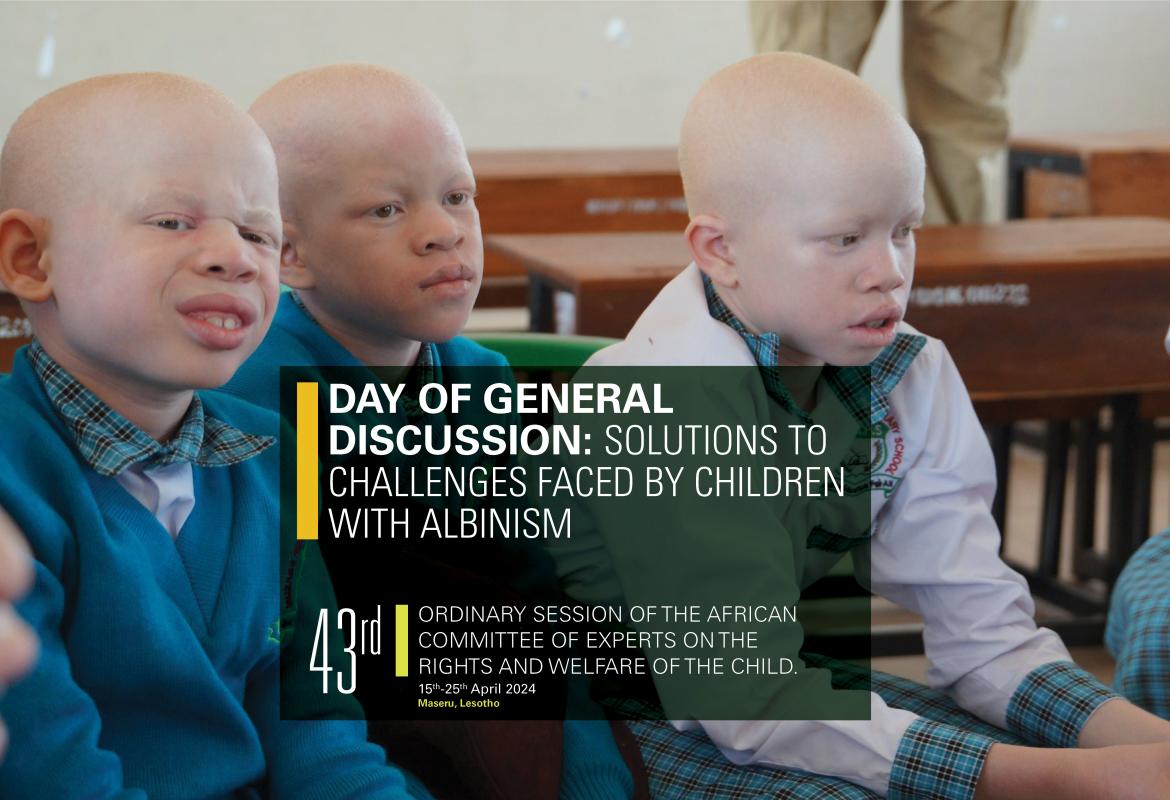
This ACERWC outcome statement of the DGD on Solutions to Challenges Facing Children With Albinism captures considerations on adopting an outcome document to emphasize the key points raised during discussions and the proposed actionable measures to ensure the full enjoyment of the rights of children with albinism.
Muluka Anne Mitti-Drummond, UN Independent Expert on the Enjoyment of Rights of Persons living with Albinism highlights how the conversation on the enjoyment of rights of children with albinism will advance the advocacy on this topic.
In this article, the authors present considerations related to the global mandate for child protection and the challenges that persist amongst marginalized communities. Subsequently, they focus on Canada and, in particular, the Ontario example: the trends from the Ontario Incidence Study of Reported Child Abuse and Neglect (OIS). This child welfare epidemiological project has highlighted the need for greater intersectional adjustments to best protect children, where the iterative research-policy cycle has most effectively been seen with a formal system for the inclusion of lived experience, as in the case of Indigenous peoples.
This article delves into the challenges faced by orphans in Nigeria, specifically focusing on their psychological development and overall welfare. The article advocates for a family-centric approach, which includes adoption, community-based upbringing, and initiatives to strengthen existing families.
This study aimed to investigate the state of transformation of the child welfare service providers for neglected children in the City of Bandung as a parameter to understand the progress of the deinstitutionalization process in Indonesia.
This cross-sectional study was conducted in 24 Lithuanian schools and involved parents/caregivers and their children aged 12 to 17. The study aimed to collect and analyse self-reported data on left behind children's emotional and behavioural problems and compare children’s reports with those of parents/caregivers.
This article is based on focus groups conducted for a wider study that aims to develop the basis for a trauma-informed care training course for foster parents and staff members working as direct caregivers in residential substitute care in Estonia.
The goal of this study is to examine the relationship between caregiver characteristics, caregiver attachment and placement type on two dimensions of mental health and substance use among a sample of older youth living in care in Ontario, Canada.
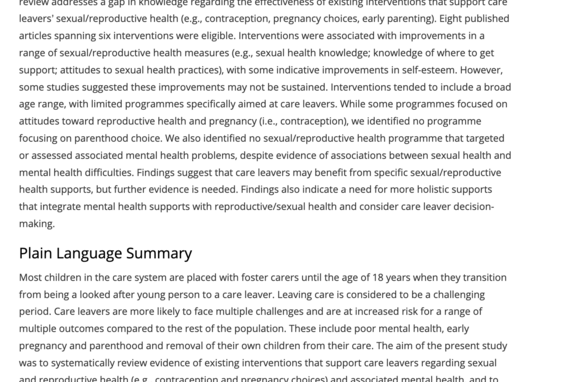
This systematic review addresses a gap in knowledge regarding the effectiveness of existing interventions that support care leavers’ sexual/reproductive health (e.g., contraception, pregnancy choices, early parenting). Eight published articles spanning six interventions were eligible.
This study investigates the well-being of primary caregivers responsible for orphaned and vulnerable children in Ethiopia. Well-being is defined as overall wellness, happiness, and satisfaction.
This study reports results concerning close embodied practices, involving touch, in early childhood care settings in Sweden during the COVID-19 pandemic.
In Romania, the right of adoptees to know their origins is enshrined in the Constitution and is regulated both in the Civil Code, adopted in 2011, and in special laws, which establish that adopted persons have the right to know their origins and their own past and, in this regard, are supported in their efforts to contact their natural parents or biological relatives.
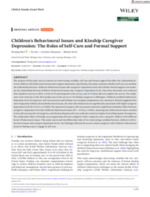
The purpose of this U.S.-based study was to examine two intervening variables, self-care and formal support that affect the relationship between children with behavioural issues and caregiver depression.
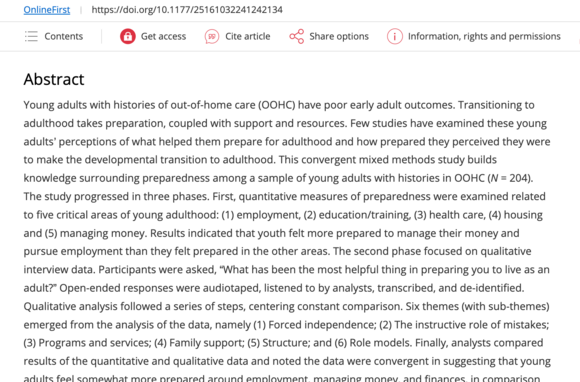
This convergent mixed methods study builds knowledge surrounding preparedness among a sample of young adults with histories in out-of-home care in the U.S.
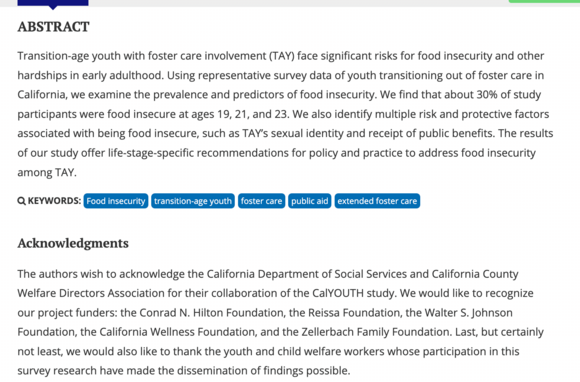
Using representative survey data of youth transitioning out of foster care in California, the authors of this study examine the prevalence and predictors of food insecurity. They found that about 30% of study participants were food insecure at ages 19, 21, and 23.
The purpose of this macro-level study is to examine the effects of social welfare benefits and services on the demand for child removals. The study is based on the panel data of Finnish municipalities and their social welfare indicators for the period 2010–2021.
This study examines the health of Canadian youth in care and their engagement with the Canadian health care system on a population level.
The purpose of this study was to examine trends in participation and understand the experiences of youth transitioning from foster care who were involved in the Iowa Aftercare Services Program.
A valuable resource for practitioners, researchers and educators, this book puts forward a powerful case to think more broadly and flexibly about transition planning with care-leavers, placing the voices of young people at its heart. This book grew out of qualitative research interviews held with a small and diverse sample of young adults who were in the process of transitioning from out-of-home care (foster care, kinship care, or residential care) in London, England.
The authors of this exploratory qualitative research study recruited 12 African youths aged between 18 and 23, with at least two years’ experience of life in the care centres of Ekurhuleni Metro Municipality in Gauteng, South Africa, to investigate their experiences when they left these centres during the COVID-19 pandemic.
This article focuses on how institutional and government authorities communicated and displayed techniques of reformative learning in New South Wales and Queensland. It examines how this learning was displayed to local communities, arguing that the work of demonstrating that the incarcerated boys in their care were learning to be good citizens was an important part of institutional governance.
This book sets out the case for Transitional Safeguarding, a new approach to protection and safeguarding designed to address the needs and behaviours of young people aged 15-24 who are falling between gaps in current global systems, with often devastating results. While the book addressed the gaps in the current system in the UK, the lessons have global application and the authors outlines how the specific needs of young people can be met through this approach.

This study examined 18 months of published Child Safeguarding Practice Reviews across England to identify the intersecting characteristics, vulnerabilities, harm types, indicators and issues with formal guardianship (safeguarding by carers, schools, local authorities, police and health professionals). Results revealed that children were missing, vulnerable, harmed and showed indicators of exploitation in numerous and intersecting ways.
This article addresses two issues: whether the inequalities faced by cared for children will persist in different stages of their lives and whether these inequalities are dependent on the specific out-of-home care setting, i.e. residential or foster care. The authors examine data from the German Socio-Economic Panel (SOEP), covering a 50-year period.
Adopting a qualitative approach, this study gave voice to seven adoption applicants in Romania who began the adoption journey with one or more children but did not complete the legal process. The goal of the researchers was to understand their experiences throughout the adoption process and disruption. The present study is part of a larger research project that focused on the resilience of the adoptive family in Romania.
The present qualitative study seeks to understand parents' perceptions of home or institutional care for children with disabilities. The study utilized an exploratory qualitative approach paradigm with five focus groups in the Qassim region of Saudi Arabia.
This qualitative exploratory-descriptive study outlines alternative approaches to psychosocial support for Orphans and Vulnerable Children in four municipalities of Vhembe district in Limpopo Province, South Africa, in the form of community-based interventions.
The authors of this study aimed to gain insight into the perceived living environment in different residential youth care settings from the perspectives of 26 youth, 14 parents, and 35 professionals in the Netherlands.
At the end of 2019, an innovative approach was launched in social work with young people in out-of-home care in Riga. This approach included prevention, changes in the form and methods of social work, and planning for the transition period.
This study investigated social orphans through narratives of young people with experiences of growing up in institutional care in Latvia. The study uses the life histories of participants to explore the phenomenon of social orphans.
This retrospective, national-scale, observational e-cohort study of children entering care in Wales looked at the impact of cumulative risks of parental difficulties on the likelihood of care entry and the impact of the parent's sex.
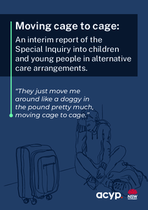
This interim report based in Australia focuses on hearing the lived experiences of children and young people in alternative care arrangements and lifts up the voices of those who have participated in private hearings as part of this Special Inquiry to date.
Although orphanage trafficking can be prosecuted under legal frameworks in some jurisdictions, including Cambodia, there have been limited prosecutions to date. One factor that likely contributes to a lack of prosecution is poor detection, yet the indicators of orphanage trafficking have not been considered by extant research. The current study was conducted as a first step towards providing evidence-based indicators of orphanage trafficking.
If you’ve watched The Love You Give, you’ll recognise Peter Kamau and his gorgeous son Jedd, who featured in this docustory about orphanages.
Bringing together interdisciplinary scholarship, Mark Henrickson argues that it is essential to understand and critique social work’s origins in order to work out what to retain and what must change if we are to achieve the vision of a truly global profession.

Orphanage volunteers may have the best of intentions - but they may unwittingly be doing more harm than good, as one ex-volunteer discovered.
One of our partner organisations and creator of the orphanage volunteering alternative Rok Kern programme, Children in Families was invited to speak about volunteering at an International School in Phnom Penh.
When Eliza was a teenager, her dream was to volunteer in orphanages all over the world. So when she turned 18, she packed her bags and headed to Guatemala to volunteer in an orphanage.
The debate around the pros and cons of international volunteering has been raging for the past decade. With hundreds of articles, blog posts and exposés out there, both in favour and against volunteering overseas, it is difficult to know what to think or where to begin when deciding what program is best to give your time and money. We have pulled together some advice on the main things you need to look out for when researching voluntary work programs, as well as some examples of the types of activities you might like to consider - especially as alternatives for orphanage volunteering placements.
This book investigates how organizations around the world responded to these dual challenges, identifying solutions, and learning opportunities to help to support young children in ongoing and future crises. Drawing on research and voices from the Global South, this book showcases innovations to mobilize new funds and re-allocate existing resources to protect children during the pandemic.
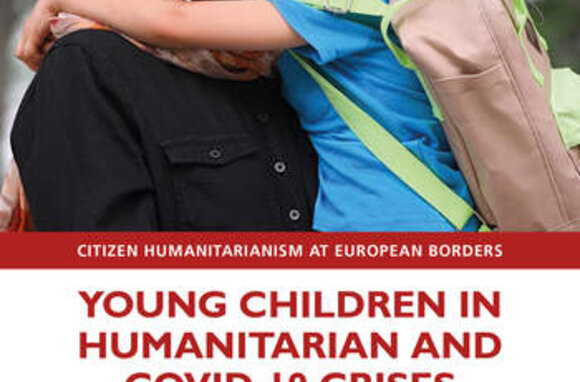
The long-term consequences of COVID-19 have been tough for children around the world, but even more so for young children already in humanitarian crises, whether due to conflict, natural disasters, or economic and political upheaval. Drawing on research and voices from the Global South, this book showcases innovations to mobilize new funds and reallocate existing resources to protect children during the pandemic.
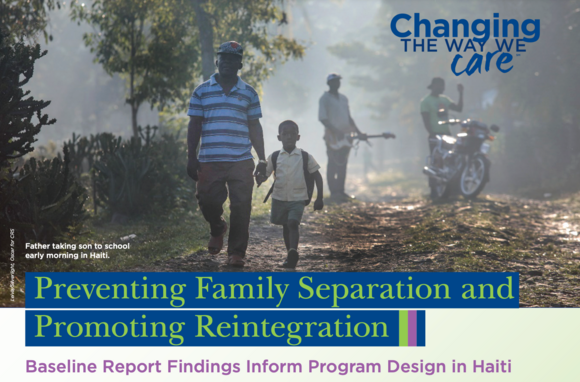
Prévenir la séparation des familles et favoriser la réinsertion familiale est une enquête de base menée par Changing the Way We Care Haïti visant à informer la conception d'un programme de réforme des soins axé sur la prévention de la séparation des familles et la promotion d'une réunification
This is a comprehensive baseline survey by Changing the Way We Care Haiti aimed at informing the design of a robust care reform program focused on averting family separation and fostering sustainable reintegration.
The current review synthesizes the literature regarding the impact of placement instability on behavioural and mental health outcomes in foster care children. Three major databases and grey literature sources were searched for all relevant quantitative research published by July 2019.
This phenomenological study explores how five institutionalised Malay adolescents used adaptive strategies towards independent living upon being released from welfare institutions. Five 17-year-old Malay Muslim adolescents, three males and two females, were recruited via purposive sampling for a focus group discussion to gather insights into their plans and strategies to cope with life challenges after being released from their respective welfare institutions.
The focus of this study was to understand youths’ processes of resilience-development through relationships with care professionals in the child welfare system. In this study, the authors held 15 narrative interviews with LGBTQ+ youth between the ages of 14 and 21 years that were living in residential care in Spain.
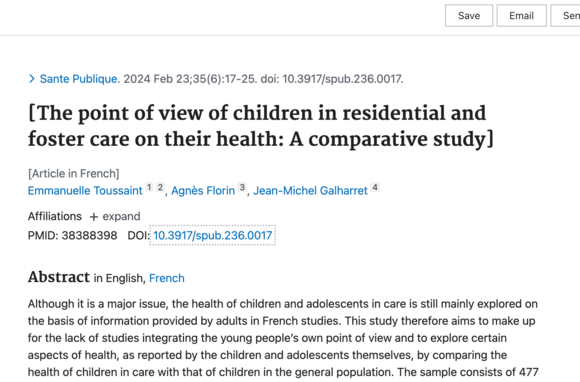
Although it is a major issue, the health of children and adolescents in care is still mainly explored on the basis of information provided by adults in French studies. This study therefore aims to make up for the lack of studies integrating the young people’s own point of view and to explore certain aspects of health, as reported by the children and adolescents themselves, by comparing the health of children in care with that of children in the general population.
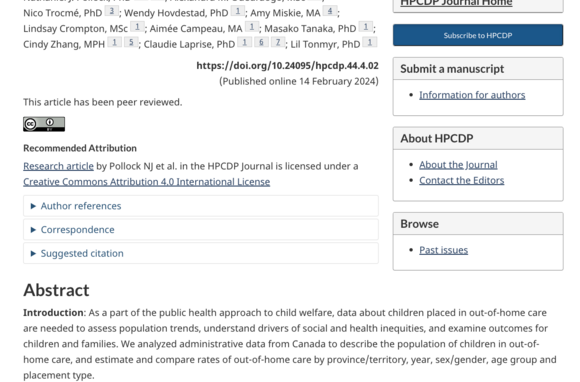
The authors analyzed administrative data from Canada to describe the population of children in out-of-home care, and estimate and compare rates of out-of-home care by province/territory, year, sex/gender, age group and placement type.
Recognizing the increasing number of orphans and vulnerable children (OVC) and the need to provide standardized and quality alternative childcare and support services, The Ministry of Women and Social Affairs (MOWSA) in collaboration with pertinent child welfare stakeholders, took the i
This report presents an analysis of focus group discussions (FGDs) conducted over the course of December 2023 and January 2024 with children affected by the conflict in Ukraine, including those displaced within Ukraine as well as those in Romania, Moldova, and Georgia.

Le présent rapport est soumis conformément à la résolution 52/39 du Conseil des droits de l'homme. Il donne un aperçu de la situation des droits humains en Haïti. La situation des droits humains en Haïti s'est fortement détériorée au cours de la période, principalement en raison de la violence endémique des gangs. Le rapport met en lumière les principaux développements liés aux institutions de l'État de droit, à la police, à la justice et au système pénitencier. Des progrès ont été réalisés dans ce domaine, mais des défis persistent.

This report provides an overview of the human rights situation in Haiti which has sharply deteriorated over the period, mainly due to endemic gang violence. The report highlights the main developments related to rule of law institutions, the police, justice, and penitentiary systems.
This perspective piece considers the impact on infant and perinatal health in the context of COVID-19 with particular emphasis on relational dynamics and attachment assessments, using a case study of a foster carer and her child in an out-of-home-care placement. Understanding these dynamics is crucial for safeguarding the well-being of both caregivers and vulnerable children during this challenging time.
This study based in Canada explored views on the changes in child safety reporting and interventions with newcomer families during the COVID-19 pandemic.
The present study conducted in Spain analyzed the relationship of care leavers once they become adults with the child protection system as parents, the penitentiary system, and residential resources for people with disabilities, analysing the results according to gender, country of origin, type of foster care when they were minors, type of support received as young care leavers and years in care.
This report identifies, critiques, and synthesises current global standards for healthcare for children deprived of their liberty in all settings.
This article uses the lens of childhood history to shed light on some of the intricacies of the attempts to regulate child labor in Iran and to analyze Western observers’ views on this issue.
This report outlines the various trends and reasons for the rise of grandparents involved in caring for grandchildren in the U.S. It also describes the different types of households involving grandparents and grandchildren, including grandfamilies, skipped-generation, and three-generation families, and summarize various theories of grandparent stress including role strain theory and social exchange theory.
This book focuses on the urgent need for global investments in young children for realizing sustainable development and equitable outcomes for all. Access to services and participation, equity and inclusion are key drivers to realize the rights of the child.
This chapter highlights the need for social protection and welfare benefits to be portable with the ability for migrants families to access entitlements as they move between locations. This chapter focuses on how this is implemented in India's labour economy.

The purpose of this CHIMES review and meta-analysis was to evaluate the effectiveness of interventions evaluated via randomized controlled trials (RCTs) for improving mental health and wellbeing outcomes for care experienced children and young people.
This paper reveals insights into how professionals working in the Australian child protection system understand and are supported in child-centered case note recording and recordkeeping practices. It also identifies the possibilities for the crucial role that interdisciplinary collaboration and alignment between social work and recordkeeping informatics can play in transforming and supporting recordkeeping approaches and practices that prioritise and uphold the rights and dignity of the child.
This article provides an overview of criticisms of the best interests construct and suggestions that the construct is a dated view about what is in a child’s best interests. There is a need for a new balance between explanations about child abuse and neglect (CAN) that takes account of poverty, social disadvantage, and the interests of children and their families.
Evidence suggests that providing out-of-home care to children is associated with high levels of compassion fatigue, possibly due to various work-related factors. This global systematic review examined the existing literature to determine the extent to which out of home care work results in compassion fatigue. To do so, it established which out of home care settings compassion fatigue has been measured in, how, and what factors contribute to developing compassion fatigue in this work.
This study addresses children’s right to family life when placed in public care and questions how the Child Welfare Service and the Child Welfare Tribunal understand and facilitate this right within a Norwegian context.
This is a program evaluation of Agape Children's Ministry's Family Strengthening Programme in western Kenya that works to reunite children from the streets with their families.
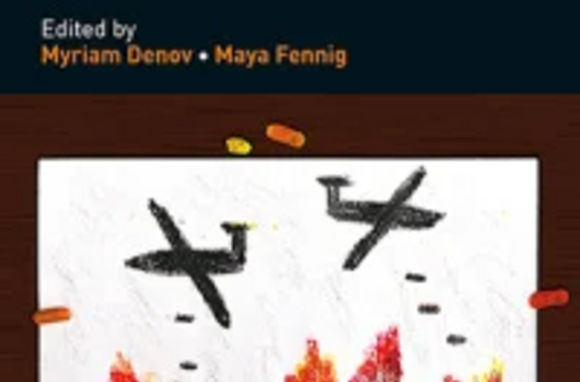
This handbook explores children’s lived realities of armed conflict and its aftermath and features empirical, conceptual and policy analyses alongside first-hand accounts of the experiences of war-affected children and youth.
The current international study sought to identify the experiences and responses of child protection professionals to child maltreatment during COVID-19.
The objective of this study was to determine if an Indigenous-led, multi-agency, partnership redesign of maternity services at a maternity hospital in Brisbane, New Zealand would decrease the likelihood of Indigenous babies being removed at birth and being placed in out-of-home care..
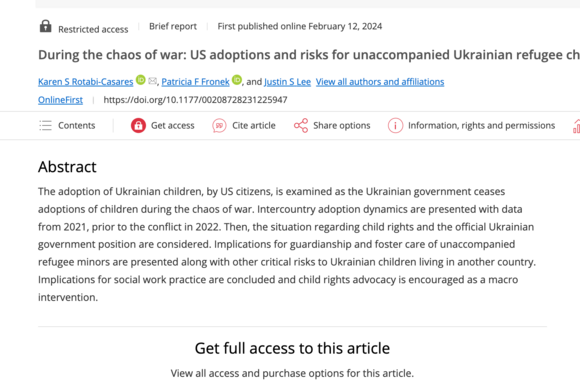
This article examines the adoption of Ukrainian children, by U.S. citizens as the Ukrainian government ceases adoptions of children during the chaos of war. Intercountry adoption dynamics are presented with data from 2021, prior to the conflict in 2022.
This study explored the experiences of children and young people in the community-based support model of the Mockingbird Family, in South Australia, during implementation and roll-out. The study involved semi-structured interviews with a diverse group of 54 participants, including 21 children and young people, 12 foster carers, and 14 agency workers.
This webinar examined care in the context of COVID-19, climate change, and conflict. Speakers explored how the pandemic has left a lasting legacy on the care system in Uganda and examined the impacts of climate change-related drought on children's care in Kenya. They also explored efforts to deliver effective care for children during conflict in Ethiopia.
Around the world, millions of children are growing up in orphanages, or children's homes as they are called in many places. But research has shown that the vast majority of them, actually have families.
The objective of this guidance is to provide a ‘how-to’ guide on developing a county-level investment case for care reform in Kenya.
This research brief summarizes what is already known about child marriage and early unions (CMEUs) in the Caribbean, complemented by the findings of research commissioned by UNICEF in the framework of the Spotlight Initiative Caribbean Regional Programme and conducted in six Caribbean countries: Antigua and Barbuda, Belize, Guyana, Haiti, Suriname and Trinidad and Tobago.
This article presents a conceptual model for identifying clientelist relationships in orphanages, allowing for the implications of clientelism for child institutionalisation, trafficking, and exploitation to be explored.
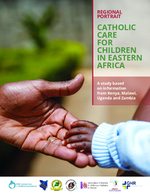
This regional portrait describes Catholic-sponsored care for children in Eastern Africa using data from Kenya, Malawi, Uganda and Zambia. The first large study of its kind, it focuses on children who are particularly vulnerable—those at risk of or those who have been separated from their families. Many are in institutional care. This portrait also describes growing efforts, led by women and men religious, to ensure children can grow up in safe, nurturing families or family-like environments rather than institutions.
This essential Research Handbook provides a multifaceted exploration of surrogacy and the law, examining a variety of critical yet under-researched perspectives including globalisation, power, gender, sexual orientation, genetics, human rights and family relations.

Este Conjunto de Herramientas está compuesto de las herramientas enumeradas a continuación, que pueden ser leídas de manera independiente o conjunta.
Ces Formulaires modèles renferment des informations importantes concernant les garanties établies par la Convention Adoption de 1993, telles que le consentement des personnes, institutions et autorités dans la procédure d'adoption (art. 4(c) et (d)), l'adoptabilité de l'enfant (art.
The Model Forms are intended to simplify and facilitate compliance with the 1993 Adoption Convention by assisting Contracting Parties in the collection of relevant information. They contain important information regarding safeguards established by the 1993 Adoption Convention.
On the 27th of March 2024, the UN Independent Expert on Albinism held a consultation workshop on ‘Children with Albinism and the Right to a Family Life’ in preparation for her official report to the United Nations General Assembly (UNGA).
Is residential care 'inherently harmful'? This book argues that this conventional wisdom is wrong and is, itself, harmful to a significant number of children and youth.
<< Back to ReThink Orphanages Home
This brief contains high-level guidance and recommendations for policy and decision-makers and development partners to consider in designing frameworks to scale up, coordinate and support the transition of individual residential care services.
Programul Național pentru Protecția Copilului pe anii 2022-2026 articulează angajamentul Guvernului Republi
This is the monthly update of the Eastern and Southern Africa Regional Learning Platform published in January 2024.
This is the monthly update of the Eastern and Southern Africa Regional Learning Platform published in December 2023.
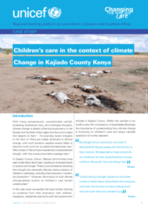
In this case study the authors look at the impact of climate change-related events on various aspects of children’s care by drawing on evidence from nine interviews with children, caregivers, residential care home staff and government officials in Kajiado County, Kenya.
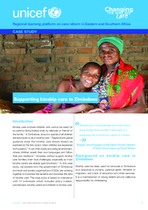
In this case study, the authors explore how the government of Zimbabwe and local civil society organisations (CSOs) are working together to maximise the benefits and minimise the risks of kinship care. The case study is based on interviews with 12 individuals which included policy makers, practitioners, kinship carers and children in kinship care.
This study analyzes statistical data on the institutionalization of children aged between 0-6 years; examines current practices of prevention, identification, assistance, referral, and placement in institutions and family based alternative care; evaluates the knowledge and attitudes of professionals and decision makers and outlines recommendations for the development and introduction of a moratorium on placing children aged between 0-6 years in residential care.