Family Strengthening in Focus - Pillar for Sustainable Development in Africa
This report shares highlights and lessons learned from PAN's work on family strengthening during the year 2015.
File
This report shares highlights and lessons learned from PAN's work on family strengthening during the year 2015.
Work is important for promoting social inclusion, especially for marginalised or economically vulnerable populations. There is also evidence that work is associated with stability and social integration for young people who have left care.
Despite the development of alternative forms of care, international and domestic pressures for change, and over 20 years of efforts at deinstitutionalization, the Czech Republic has one of the highest rates of institutionalization of children in Europe.
This strategy explains how The Global Partnership to End Violence Against Children plans to prevent and respond to violence against children over the next five years. It will provide a platform to accelerate efforts to make girls and boys safe in the future, with the aim of delivering targets to end all forms of violence against children by 2030.
Without careful consideration and awareness of the broader issues, good intentions could contribute to the exploitation and vulnerability of the children we seek to help.
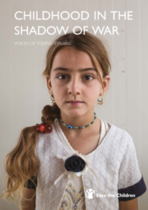
Through the voices of children, parents and staff working in the region, this report by Save the Children presents a glimpse into the struggles faced by refugee and displaced children and families from Syria. The report is primarily based on children’s stories as told to Save the Children in urban areas in Lebanon and in camps and urban areas in the Kurdistan Region of Iraq. Drawings and other playful sessions were used with the children to help them tell stories of their everyday lives without the negative impact a deep interview might have.
Mental health issues in war-affected children include depression, posttraumatic stress disorder (PTSD), and neurological problems, among others.
This country care review includes the care-related Concluding Observations adopted by the Committee on the Rights of Persons with Disabilities during the sixteenth session (15 Aug 2016 – 2 Sept 2016) of the Convention on the Rights of Persons with Disabilities.
This country care review includes the care related Concluding Observations adopted by the Committee on the Rights of the Child and the Committee on the Rights of Persons with Disabilities.
This country care review includes the care related Concluding Observations adopted by the Committee on the Rights of the Child.
This country care review includes the care related Concluding Observations adopted by the Committee on the Rights of the Child.
This country care review includes the care related Concluding Observations adopted by the Committee on the Rights of the Child and the Committee on the Rights of Persons with Disabilities.
This country care review includes the care-related Concluding Observations adopted by the Committee on the Rights of the Child.
This report by the Australian Churches Refugee Taskforce identifies problems with and makes recommendations for improvement of the current system of guardianship and care of unaccompanied children in Australia, which is inequitable and lacking in transparency and accountability.
Deportation of immigrant, undocumented parents of citizen-children born in the United States is a practice that has caused the separation of families and a variety of negative effects on the children.
This study involved a systematic review of individual, family, community and social risk and protective factors for the mental health of children and adolescents who were forcibly displaced to high-income countries.
There is limited information in the child welfare literature on the circumstances and needs of unaccompanied asylum-seeking and refugee children living in the United Kingdom. This article provides insight into the experiences and feelings of these young people by reporting the findings from a narrative-based research project involving 29 unaccompanied asylum-seeking children age 12 to 21 from a variety of African and Asian countries, with the goal of exploring how these children perceived their rights while in private foster care in the UK.
A mobile phone-based community surveillance system was piloted in the Democratic Republic of the Congo with the goal of identifying new cases of unaccompanied and separated children on a weekly basis.
This article details the introduction of a livelihood project for unaccompanied children in the Dadaab refugee camp in Kenya, which aimed at strengthening the household economy of foster families and improving the care of fostered children.
This report, authored by the United Nations High Commissioner for Refugees, calls for a global strategy to prevent the detention of asylum-seekers and refugees in countries around the world, with an initial focus 10+ "focus countries." Among the Strategy's three main goals is the call to end detention of children, which requires a new legal and policy framework, the implementation of the "best interests" principle, alternative and appropriate reception and care arrangements for children (including foster care), and the provision of age-appropriate information to the child.
This video from Child's i Foundation documents the story of Mercy from Redeemer House in Jinja, Uganda.
Five years ago, Child's i Foundation founder Lucy Buck set up a 25-bed 'transitional facility' to prove it was possible to place children in need of care into permanent families. Childs' i Foundation piloted an 'emergency care pilot' to see if there was a viable family-based alternative for
This video by Child's i Foundation in Uganda document's the journey of a little girl, Praise, from being abandoned to being placed into to a permanent family. The video shows the tracing process and temporary placement with a foster carer, Ruth.
In this video Child's i Foundation works with Care 4 Kids, an orphanage for 53 children, which wants to reintegrate children back into families but had challenges convincing the families that they could provide better care. Child's i Foundation organised an open day for families and invited parents who had taken their children back from Rafiki to explain the benefits of children growing up in families.
This report highlights stories of some children, youth and families who have been assisted under the Ishema Mu Muryango program. While each of their stories is unique, all highlight some common themes about institutionalization and child abandonment in Rwanda.
This report presents data on the total number of adoptions in the United States as well as the number of public, intercountry, and other adoptions covering 2008 to 2012.
This report on Protecting Children from Violence: A Comprehensive Evaluation of UNICEF’s Strategies and Programme Performance was prepared by independent consultants to evaluate UNICEF's work on violence against children (VAC).
Le présent document sert de guide simplifié pour l’orientation des différents intervenants impliqués dans la prise en charge psychosociale des enfants en centre de traitement Ebola depuis l’accueil en passant par le séjour hospitalier de l’enfant et la gestion de sa sortie.
Ce rapport est basé sur une évaluation indépendante du SSI réalisée en 2009. Son principal objectif est d'identifier et débattre des problèmes liés au processus d'adoption en vue d'aider le Vietnam à préparer sa ratification de la CLH-1993.
Cet article vise à analyser le point de vue des parents dont un enfant est accueilli en famille d’accueil au titre de l’ASE, sur des questions relatives à leur identité parentale et à leur relation avec les professionnels.
La question de l’abandon d’enfant est une question majeure et récurrente dans le monde. Nous l’abordons ici à travers la question du placement d’enfants en institution, qui constitue une réponse particulière à l’abandon d’enfant et nous interrogeons les dynamiques en œuvre.
Ces publications sont plus particulièrement destinées aux Autorités des Membres de la Conférence chargées d’appliquer les Conventions et peuvent représenter une source d’information utile pour les praticiens – juges, avocats, huissiers, travailleurs socia.
Le forum des ONG d'aide à l'enfance en difficulté́ est une coalition ivoirienne pour la défense des droits de l'enfant regroupant les ONG et associations qui œuvrent pour la protection et la promotion des droits de l'enfant. Le présent rapport résulte de l'analyse du cadre juridique national et de l'étude du contexte social actuel par rapport aux dispositions de la CDE et du rapport initial de Côte-d'Ivoire.
La loi doit empêcher les trafics d’enfants sous couvert d’adoption en Haïti, et les organismes de protection de l’enfance devront prendre part à la surveillance du bureau national des adoptions à créer. L’experte de Terre des hommes (Tdh) rentre d’une mission qui lui a permis de rencontrer des acteurs-clés, avant l’examen par le Sénat haïtien de la loi sur les adoptions.
L’article aborde la prise en charge des enfants privés de famille en Algérie. Ces enfants sont pris en charge dans des institutions appelées foyers pour enfants assistés (FEA). Ces foyers ont augmenté en nombre, des progrès ont été enregistrés ici et là, mais beaucoup reste à faire pour améliorer cette prise en charge institutionnelle.
Pays particulièrement marqués par la crise et la pauvreté, la Roumanie, la Moldavie et la Bulgarie bénéficient depuis quelques années d’un programme de coopération pour les droits de l’enfant, le PROCOPIL. Depuis 2005, il a enregistré des résultats encourageants.
En France, environ 273 000 mineurs sont pris en charge par les services de protection de l'enfance des conseils généraux et, parmi eux, environ 134 000 sont placés hors de leur milieu familial, en famille d'accueil ou en établissement, à la suite de décisions administratives ou judiciaires. Ces chiffres sont en augmentation depuis plusieurs années et le nombre de mineurs placés en France est, en proportion, supérieur à celui de nombreux autres pays européens.
Cette recherche-action part du constat que la situation de guerre civile dans laquelle le Burundi a été plongé depuis 1993, le SIDA et la paupérisation ont eu des conséquences dramatiques sur la vulnérabilité de la population et plus particulièrement sur les enfants. Ainsi, les conséquences sociales et culturelles de l’état de guerre alimentent des processus de marginalisation au sein de la population des moins de 18 ans, favorisent des comportements délictueux, la perte de repères sociaux et compromettent l’insertion naturelle dans la vie sociale.
L’inspection générale des services judiciaires (IGSJ) et celle des affaires sociales (IGAS) assistées de l’inspection de la protection judiciaire de la jeunesse (IPJJ) ont été saisies par les Ministres de la Justice et des Affaires sociales et de la Santé d’une mission d’évaluation des centres éducatifs fermés (CEF) dans le dispositif de prise en charge des mineurs délinquants.
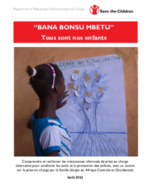
Comprendre et renforcer les mécanismes informels de prise en charge alternative pour améliorer les soins et la protection des enfants, avec un accent sur la prise en charge par la famille elargie en Afrique Centrale et Occidentale.
Au Congo, le phénomène social des enfants de la rue existe depuis les années 80 et a connu une recrudescence à la suite des conflits armés des années 90. Il s’est aggravé en raison de l’affaiblissement de la capacité de prise en charge des familles, de leur paupérisation et de l’accroissement du nombre de familles monoparentales (décès, divorce), recomposées ou des unions hors mariage.
La commission des lois du Sénat francais a examiné les crédits du programme « protection judiciaire de la jeunesse » du projet de loi de finances pour 2015. La rapporteure s’est penchée sur deux sujets liés à la protection judiciaire de la jeunesse qui ont connu récemment des développements importants : d’une part, la question difficile de la prise en charge des mineurs isolés étrangers, d’autre part celle des placements en famille d’accueil.
Ce rapport fait suite à une mission d’évaluation réalisée en Côte d’Ivoire entre le 8 et le 12 mars 2010, complétée par une compilation des informations disponibles et une analyse du cadre législatif ivoirien relatif à l’adoption. Le choix de la Côte d’Ivoire a été motivé par le fait que ce pays faisait partie des dix premiers pays d’origine des enfants adoptés en France et n’avait a l'epoque pas encore ratifié la Convention du 29 mai 1993.
Une immersion au sein du Réseau Afrique de l'Ouest (RAO) pour la protection des enfants en Afrique de l'Ouest). Ce réseau prend en charge individuellement les enfants vulnérables entre les 15 pays de la sous-région pour les réintégrer socialement et professionnellement.
Les principes directeurs inter-agences relatifs aux enfants non accompagnés ou séparés de leur famille sont destinés à garantir que toutes les mesures et décisions prises au sujet des enfants séparés de leur famille sont ancrées dans un cadre de protection et respectent les principes de l’unité de la famille et de l’intérêt supérieur de l’enfant.
25 experts ont accepté de partager le fruit de leur réflexion afin de questionner l’effectivité des droits des enfants en France, en 2015. La seule réflexion qui doit guider pouvoirs publics comme société civile est finalement bien celle qui conduit à mesurer les écarts entre les droits formels et les droits réels des enfants

Lié à l’exode rural massif, à la perte des liens sociaux traditionnels, aux mutations de la famille et au développement anarchique de l’espace urbain, le phénomène des enfants des rues constitue un des marqueurs important des transformations sociales et sociétales actuelles. Il interroge sur la place faite par nos institutions de développement et d’assistance aux groupes de population qui restent en marge des efforts nationaux et internationaux de développement économique et social.
Les enfants en famille d’accueil sont une population à haut risque de troubles d’attachement. Dans une tentative de prévention de tels troubles, une Clinique d’Attachement a été développée à Montréal (Canada) dans le but d’offrir une consultation aux intervenants en Protection de l’Enfant qui œuvrent avec les enfants 0-6 ans en famille d’accueil et leurs familles.
Le choix entre rapatrier un enfant séparé ou le garder dans le pays d’accueil est une question extrêmement complexe et délicate. Cette question nécessite une plus grande réflexion dans le cas d’enfants qui ne sont pas des demandeurs d’asile ou des réfugiés.
Version adaptée pour les enfants et adolescents des Lignes directrices relatives à la protection de remplacement pour les enfants «Ton droit de vivre au sein d'une famille et d'être pris en charge dans toutes les situations que tu traverses».
L’enfant du placement familial grandit en terre étrangère. C’est à partir de cet « exil » et dans les allers-retours entre sa famille et sa famille d’accueil qu’il va se construire. Mais sa place n’est pas pérenne. Elle peut être fragilisée par les passages à l’acte de l’enfant.
Dans le cadre des démarches engagées par le Gouvernement francais depuis quelques années sur la question de la réforme de l’ordonnance du 2 février 1945 relative à l’enfance délinquante, la Défenseure des enfants a eu régulièrement à s’exprimer sur les questions juridiques et humaines posées par la procédure et le droit pénal.La Défenseure des enfants a souhaité débuter une réflexion approfondie sur la situation en France des enfants en conflit avec la loi dans le cadre des différentes prises en charge qui leur sont proposées.
Par la présente observation générale, le Comité des Droits de l'Enfant souhaite encourager les États parties à reconnaître que les jeunes enfants jouissent de tous les droits garantis par la Convention et que la petite enfance est une période déterminante pour la réalisation de ces droits. Il aborde notamment la question des responsabilites parentales et des aides accordees par les Etats parties.
Ce Guide est un outil pour la mise en œuvre des Lignes Directrices relatives à la Protection de Remplacement pour les Enfants. Ses orientations en matière de droits de l’homme s’adressent aux opérateurs professionnels et aux personnes qui travaillent dans les institutions gouvernementales et non gouvernementales, mais aussi aux preneurs de décisions aux différents niveaux des Etats, aux autorités judiciaires, aux législateurs, etc.
La Convention de La Haye du 29 mai 1993 sur la protection des enfants et la coopération en matière d'adoption internationale protège les enfants et leurs familles des risques d’adoptions à l’étranger illégales, irrégulières, prématurées ou mal préparées. Cette Convention qui fonctionne également par l’intermédiaire d’un système d’Autorités centrales nationales, renforce la Convention des Nations Unies relative aux droits de l'enfant (art. 21).
Depuis des siècles, la situation des « orphelins » et des enfants abandonnés a généré non seulement des préoccupations, mais aussi des réponses concrètes de divers types. Ces réactions ont suscité des remises en question assez fondamentales, notamment pour ce qui est des placements en institution et, plus récemment, des justifications admissibles pour que la séparation des enfants d’avec leurs parents soit avalisée, voire imposée, par les autorités.
Cette note d'orientation de Save the Children présente le contexte, les objectifs et les principes directeurs énoncés dans les lignes directrices pour la protection de remplacement des enfants. Elle explique également pourquoi la prise en charge familiale est le mode de protection de remplacement à preferer aux placement en institutions.
This paper reports selected results from a mapping review of research conducted in the UK and published between January 2010 and December 2014. The purpose of the review was twofold: to develop a typology of child protection research; and to use this typology to describe the features and patterns of empirical research undertaken recently in the UK in order to inform a future research agenda.
The current study employed interpretative phenomenological analysis to explore 18 in-depth, qualitative interviews from six participants on the meaning and experience of motherhood among teenage mothers in the United States in foster care in the and in the years immediately after ageing out.
This is a recording of a Webinar conducted by Christian Alliance for Orphans on "Replicable Models for Transition to Family-Based Care."
The organizations profiled in these case studies have pioneered effective transitions from residential to family-based care.
This short white paper by CAFO seeks to help readers accurately understand and carefully present orphan-related statistics.
This report gives an overview of implemented activities in the process of deinstitutionalization, identifying the main obstacles, effects, and achieved results. The overall objective of the report is to achieve greater understanding of the progress and shortcomings of the process of deinstitutionalization and transformation of social protection in Serbia, and to analyze relevant policies that will provide input for the creation of new measures for further support of the reform process of social protection in Serbia.
Adoptive families are now using the Internet to give their unwanted adopted children over to complete strangers, some of whom are traffickers, pedophiles, child pornographers, or worse. This practice is known as private rehoming.
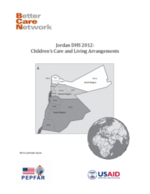
This country brief provides an overview of data on children’s living arrangements in Jordan, extracted from the 2012 DHS survey.
This report describes the situation and experience of families during the economic crisis and examines how family-focused policies have changed since 2010 in the European Union. In some countries, benefits have been reduced, affecting disadvantaged families disproportionately.
This paper examines the work Open Society Foundations have done in Croatia as part of its Mental Health Initiative (MHI), with the goal of helping people with disabilities return to their communities where they are supported by family and friends.
The main purpose of this final, summative evaluation is to evaluate the final results and achievements of the "Developing community based services for children with disabilities and their families’’ project in relation to the project log frame and theory of change.
Global policy makers are advocating that institution-living orphans and abandoned children (OAC) be moved as quickly as possible to a residential family setting and that institutional care be used as a last resort.
This study aims to determine the prevalence of maltreatment experienced by institutionalized children prior to their admission to Charitable Children's Institutions (orphanages) in western Kenya, and to describe their socio-demographic characteristics, reasons for admission, and the factors assoc
In order to investigate orphans' situation and development in Iraqi Kurdistan, samples from the two available orphan care systems, the traditional foster care and the modem orphanages, are examined at an index test and at 1-year follow-up regarding competency scores and behavioral probl
This report provides baseline information on conditions in orphanages in the Russian Federation. This information addresses three major limitations in the literature on the development of children residing in substandard orphanages and those adopted from such environments.
Drawing on existing peer-reviewed and grey literature, this article provides an overview of the major components of care reform in Ghana, including reintegration with the extended family, foster care and adoption. In addition, the article discusses the prospects and challenges involved in achieving the reform's intended component.
This chapter first traces the etymology of the definition of “orphan” and its attendant “crises.” Then, using examples from Guatemala and Uganda, the authors consider how the idea of an “orphan crisis” has traveled from development to charitable responses and what effects this has on local child protection systems.
Using a practice approach focused on interactions between foreign volunteers and local staff, this study examined the impact of volunteer tourism on Zion Primary School and Tamale Children’s Home (an orphanage), both in Tamale, Ghana.
Across China, children and young people with disabilities confront discrimination in schools.
This report by Human Rights Watch is based on field research conducted in Bacău, Bucharest, Constanţa, Giurgiu, and Ilfov counties in February 2006, and follow-up telephone and email contacts through June 2006.
Russia is home to one of the fastest-growing AIDS epidemics in the world, but the government has done little to address the problem. A growing number of HIV-positive pregnant women and new mothers must make a very difficult choice: whether or not to keep their children.
For street children in Hanoi, Vietnam is falling far short of its obligations under Vietnamese and international law, including the Convention on the Rights of the Child. Between 2003 and 2006, Human Rights Watch received credible reports of serious abuses of street children in Hanoi.
This report details the conditions of children held at an unofficial detention center in Kigali, Rwanda, held in overcrowded buildings and suffering from a lack of adequate food, water, and medical care, and subjected to abuse.
Ce résumé sur les recherches est offert aux églises, aux organisations confessionnelles et aux personnes de foi qui cherchent des informations factuelles sur les meilleures façons de venir en aide aux orphelins et aux enfants privés de la protection parentale.
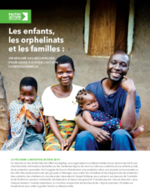
El presente resumen de investigaciones se ofrece a iglesias, organizaciones religiosas y personas de fe que buscan información basada en pruebas sobre la mejor manera de cuidar a huérfanos y niños separados del cuidado parental.
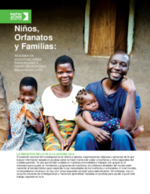
This study was carried out in rural Arkansas to examine the feasibility and usefulness of a universal screening tool--the Family Map Inventory (FMI)--to assess family strengths and needs in a home visiting program.
Shortly after Nicolar Ceauscu was overthrown on December 22, 1989, the world was exposed for the first time to the shocking images of Romania's orphans, especially its children with disabilities and babies with AIDS.
This report is based on 11 weeks of field research in Senegal and Guinea-Bissau between November 2009 and February 2010.
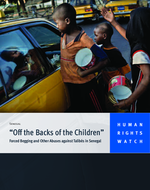
In March 2013, a fire erupted in the Dakar neighborhood of Medina and a Quranic boarding school, housed in a makeshift shack caught on fire. Eight young boys at the school were burned to death, but the guardian was absent because the house was unsanitary and uninhabitable.
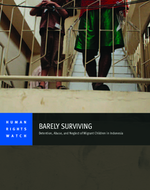
While many migrants and asylum-seeking children may try to reach Australia, they often spend months or years caught in Indonesia.
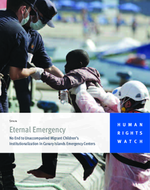
The Canary Islands were in the spotlight of international media attention in 2006 when more than 30,000 migrants arrived in rickety boats from West Africa. Among them were 928 children who arrived without a parent or care-giver.
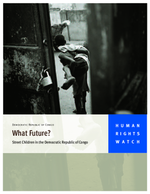
This report is based on interviews with more than fifty street children in the Democratic Republic of Congo––children who might not necessarily be without families, but who live without meaningful protection, supervision, or direction from responsible adults.
This study used a secondary analysis of data from 2003 to 2013 to better understand the situation of children temporarily abandoned in Romania. It looked at data for children aged 0-3 years who were abandoned in different hospital units or institutionalized in public orphanages or public and private foster care institutions.
Community-based organizations (CBOs) have the potential to provide high quality services for orphaned and vulnerable children in resource-limited settings.
Children who have experienced early adversity have been known to be at risk of developing cognitive, attachment, and mental health problems; therefore, it is crucial that children entering foster care can be properly assessed as early as possible.
The negative impact of childhood maltreatment, which can often extend well into adulthood, consistently appears to be ameliorated if victimized children possess several resiliencies or strengths.
The present study aimed to identify the proportion of children who are orphans and their geographic distribution in Nepal.
Eurochild contributed to the UN Office of the High Commissioner for Human Rights' report “Towards a better investment in the rights of the child” with a joint submission with Hope & Homes for Children and SOS Children’s Villages International.
This tool was designed to help those seeking to assist Christian faith-based actors involved in long-term residential care programs make the transition from institutional to non-institutional (family and community-based) child welfare programs.
The Bucharest Early Intervention Project (BEIP) examined the outcomes for children who were originally placed in institutions; these children were randomized into two groups and followed longitudinally, with some being moved into foster care and others remaining in institutional care. This study reports on the brain electrical activity (electroencephalogram, or “EEG”) of 12-year-old children in this study, in order to examine the impact of movement to foster care after early psychological deprivation as a result of institutionalization.
This TedX presentation features Greta Munns, a youth empowerment advocate who was placed in foster care at age fifteen. Her “story” is what prompted her exploration of the foster care system.
The CDC released a groundbreaking report that estimates the global burden of violence against children under 18 for each region of the world. This report is entitled “Global Prevalence of Past-Year Violence Against Children: A Systematic Review and Minimum Estimates,” and it combines data from 38 reports covering 96 countries.
This manual, produced by Save the Children in Sri Lanka, provides guidance on Family Group Conferencing (FGC), which was introduced to the governmental childcare structure in Sri Lanka's Southern Providnce between 2006-2008. The key objectives of this training manual are to pr