Legal Regime Governing Inter-Country Adoption Under the Ethiopian Family Laws; Do the Ethiopian Family Laws Totally Ban Inter-Country Adoption? Takeaways from the Chinese Family Law

Indian Journal of Law and Legal Research

This paper assesses the legal regime governing inter-country adoption under the Ethiopian family laws by making a brief comparative study with correspondent provisions of the Chinese family law.

Prioritising Displaced Children in the Global Refugee Agenda

The Lancet Child & Adolescent Health

This editorial published in the August 2023 issue of the The Lancet Child & Adolescent Health Journal discusses the needs of children who are disproportionately affected by displacement. The author urges countries to consider the unique needs of displaced children—including those displaced internally, disadvantaged, or with disabilities—in all initiatives and policies, to ensure that no one is left behind ahead of the Global Refugee Forum in December 2023.

File

Children Living in Prison with a Primary Caregiver: A Global Mapping of Age Restrictions and Duration of Stay

Marie Claire Van Hout, Ulla-Britt Klankwarth, Simon Fleißner, Heino Stöver

In this Health Policy, the authors map the global variation in age restrictions and durations of stay in prison with a primary caregiver. They show a broad range of approaches and provisions for the placement of children in prison.

Perspective din Moldova: Rolul sprijinului economic pentru familii în reintegrarea copiilor

Changing the Way We Care

In septembrie 2022, Changing the Way We Care (CTWWC) a lansat o inițiativă pentru a oferi sprijin economic direct în procesul de reintegrare a copiilor în familii sau plasament în servicii de îngrijire de tip familial. În baza experiențelor anterioare de reintegrare, dar și din informațiile extrase din evaluările individuale ale copiilor și familiilor, echipa CTWWC a dezvoltat o abordare standardizată și echitabilă pentru a identifica tipul și valoarea sprijinului economic direct necesar.

File
Insights from Moldova: Role of Targeted Economic Support in Reintegration of Children

Changing the Way We Care

In September 2022, Changing the Way We Care (CTWWC) launched an initiative to provide targeted economic support to assist the reintegration of children into families or placement into family based alternative care. Informed by previous experiences in reintegration and information captured in the individual child and family assessments, the CTWWC team developed a standardized and equitable approach to identifying the type and amount of targeted economic support required.

File

Learning Brief: How Case Management Contributes to Sustainable Reintegration of Children from Residential Care to Family-Based Care & Community Services

Changing the Way We Care

This learning brief reports on the reflection and shares a collection of case studies collated by caseworkers in Kenya. Using Most Significant Change Storytelling, the caseworkers, supervisors and program managers selected and discussed stories from their work. They discussed what lessons these stories and the discussion drew out about the case management practice. The each of the stories illustrates one or more of the case management steps.

File
Raport De Analiză Comparativă Privind Oportunitatea Unificării Serviciilor Sociale „Asistența Parentală Profesionistă” (APP) Și „Casa de Copii De Tip Familial” (CCTF)

Changing the Way We Care

Acest studiu analizează serviciile sociale de tip familial existente în Republica Moldova: Asistența parentală profesionistă (APP) și Casele de copii de tip familial (CCTF), cu scopul de a identifica argumente privind unificarea celor două servicii de îngrijire de tip familial APP/CCTF din perspectiva calității îngrijirii copiilor și a interesului superior al copiilor. Studiul include o analiză comparativă a cadrului de reglementare a serviciilor familiale alternative și recomandări privind posibilitatea și fezabilitatea unificării serviciilor sociale. Studiul a concluzionat faptul că, pentru a îmbunătăți calitatea și accesul la serviciile de îngrijire de tip familial pentru copiii aflați în situații de risc, se recomandă unificarea serviciilor APP și CCTF, revizuirea cadrului juridic al serviciului APP și luarea în considerare a celor mai pozitive aspecte ale ambelor servicii.

File

Comparative Analysis Report on the Feasibility of Merging Professional Parental Assistance (PPA) and Family-Type Children's Home (FTCH) Social Services

Changing the Way We Care

This study analyses the existing family-type social services in Moldova: Professional Parental Assistance (PPA) and Family-Type Children's Homes (FTCH) to identify the rationale for combining the two PPA/ FTCH family care services in terms of the quality of child care and the best interests of children. The study includes a comparative analysis of the regulatory framework of alternative family services and recommendations on the possibility and feasibility of combining the social services. The study concluded that to improve the quality of and access to family-based care services for children at risk, it is recommended that the PPA and FTCH services be merged, that the legal framework of the PPA service be revised, and that the most positive aspects of both services be taken into account.

File
The Standard Operating Procedures (SOPs) for the Alternative Family-based and Community-based Care of Children in Kenya

Changing the Way We Care, Republic of Kenya

The Standard Operating Procedures (SOPs) for the Alternative Family-based and Community-based Care of Children in Kenya provide guidance for the comprehensive implementation of the Guidelines for Alternative Family Care for Children in Kenya (2014).

File
Influence, Learning, and Engagement within Changing the Way We Care: Examples of learning exchanges from demonstration sites in Kenya and Guatemala
Changing the Way We Care

Changing the Way We Care created two opportunities to promote learning and influence the practice of organizations and donors engaged in child protection and care in two demonstration countries: Kenya and Guatemala.

File

На шляху до комплексної національної стратегії деінституціалізації / трансформації системи догляду та виховання для українських дітей

European Disability Forum

У рамках цього процесу Міністерство соціальної політики України об’єднало зусилля з широким колом представників громадянського суспільства для проведення п’ятиденного навчання та інтенсивного стратегічного планування деінституціалізації протягом квітня та травня 2023 року. У цьому документі представлені ключові висновки та рекомендації, зроблені під час п’ятиденного обміну думками та стратегічного планування. Ми сподіваємося, що ці рекомендації стануть основою для процесу стратегічного планування уряду, а також допоможуть донорам визначити свої пріоритети. Всі учасники висловили побажання, щоб цей захід став «останнім поштовхом» до повної трансформації системи догляду та виховання та назавжди поклав край інституціалізації дітей в Україні. 

File

Strengthening the Social Service Workforce as Part of the Recovery Process to Support a Transformed Care and Protection System for Children in Ukraine

Better Care Network and the Global Social Service Workforce Alliance

On 26 April 2023, the Better Care Network (BCN) and the Global Social Service Workforce Alliance (GSSWA) organized an event under the auspices of the Ukraine Children’s Care Group w

File

Learning Event: Strengthening the Social Service Workforce as Part of the Recovery Process to Support a Transformed Care and Protection System for Children in Ukraine

Better Care Network and Global Social Service Workforce Alliance

On 26 April 2023, the Better Care Network (BCN) and the Global Social Service Workforce Alliance (GSSWA) organized an event under the auspices of the Ukraine Children’s Care Group with child protection and care actors focused on strengthening the social service workforce as part of the recovery process in Ukraine to support a transformed care and protection system for children. The event brought actors practitioners, technical advisors, policymakers and donors together to better understand the impact of the conflict on the existing social service workforce, and to identify concrete recommendations for strengthening and reforming it as part of the recovery process to support a transformed care and protection system for children in Ukraine.

Towards a Comprehensive National Strategy for Deinstitutionalization/Care Transformation for Ukrainian Children

European Disability Forum

During April and May 2023, the Ukrainian Ministry of Social Policy joined forces with a broad range of civil society actors to facilitate five days of learning and intensive strategic planning on deinstitutionalization. This document presents the key findings and recommendations from those five days of exchange of ideas and strategic planning. It is hoped that these recommendations will inform the government’s strategic planning process, as well as providing insight for donors to inform their priorities.

File

Prevalence and Predictors of Intimate Partner Violence Among Youth With Foster Care Histories

Colleen C. Katz, Nathanael J. Okpych, Pajarita Charles, Eden Wall, Mark E. Courtney

This US-based study explores factors associated with intimate partner violence using longitudinal data from a representative sample of older youth in California Foster Care who participated in the California Youth Transitions to Adulthood Study (CalYOUTH). The authors' IPV outcome measures included victimization, perpetration, bidirectional IPV, and emotional abuse.

The Importance of Youth Perspectives in Understanding Perceptions of Safety and Outcomes in Group Homes

Kess L. Ballentine, Christina Huerta, Daniel Hyung Jik Lee, Elizabeth M.Z. Farmer

This US-based study draws from a large-scale, quasi-experimental study of group homes in a southeastern state. To date this is the study examining youth’s prospective assessment of group home treatment quality on their later treatment outcomes.

Caregivers' Perspectives on the Impact of the Group Triple P-Positive Parenting Program in Pakistani Orphanages

Amina Khalid, Alina Morawska, Karen M. T. Turner

This study involved a qualitative design with a thematic analysis approach, consisting of focus group discussions with 14 caregivers working in Pakistani orphanages who had participated in Group Triple P Parenting program.

File

The Application of Empowerment Theory in Social Work Services for Orphaned Children in Residential Institutions: The Case of M City Children's Welfare Institution

Fangsong Liu,Na Wang, Harold Chui, Xinhong Wang, Na Chen

This paper explores the strengths and weaknesses of orphaned children in orphanages in China under the guidance of enrichment theory, and then develops individualized social work service programs to help them acquire more knowledge and provide developmental services by building a trusting partnership with orphaned children and adolescents, guiding them to raise their awareness of self-change, providing supplementary learning education, and helping them to develop their potential and develop their abilities.

File

Peer Effects of Depression Between Left-Behind and Non-Left-Behind Children: Quasi-experimental evidence from rural China

Li Huang, Sizhe Zhang, Biyu Bian, Mi Zhou, Zinan Bi

The aim of the study is to investigate the interactive influence of depression on left-behind and non-left-behind children in China from the perspective of peer effects. The roles of teachers, parents, and friends are also explored.

File

eMoBo: Three Early Interactive Prototypes Supporting Positive Relational Processes between Children and Adults in Residential Care Settings

Joshua Blair, Eli Vicarte, Hsin-Ming Chao, Lucia Pannunzio, Fannie Massarsky, Alyssa Yoon, Yarden Kedar, Keith Evan Green - IDC '23: Proceedings of the 22nd Annual ACM Interaction Design and Children Conference

The aim of this child-centered project is to provide the opportunity for children who have experienced hostile environments and inappropriate care to become aware of, regulate, and express their inner socio-emotional world via tactile and visual experimentation with eMoBo so that they might more easily communicate their feelings and needs with non-biological caregivers, striving for a significant, long-standing improvement in the wellbeing of these children. In this paper, the authors present our designs and envision their use in two use cases.

Differences in the Evaluation and Satisfaction with Foster Care between Kinship and Non-Kin Foster Carers

Nuria Fuentes-Peláez, Carme Montserrat, Rosa Sitjes-Figueras, Gemma Crous

This study aims to develop an understanding of the distinctive features of kinship and non-kin foster care based on information obtained from fostered children and child care professionals in Spain.

COVID-19 and the Need for Family-Based Alternative Care for Children in India

Revati Patil, Protiva Kundu

Providing a safe and non-hostile environment for growth is every child's right. Need of Care and Protection (CNCP) and those in conflict with the law. This article discusses the limitations of institutional care and why there is a need to shift focus to Family-Based Alternative Care services (FBAC), especially in the context of COVID-19.

File

Critical Social Work and Unaccompanied Refugee Minors’ Social Inclusion: An Example of Critical Best Practice

Aikaterini Oikonomou, Agapi Kandylaki

This article presents an example of critical best social work practice with unaccompanied minor asylum seekers. Based on a critical perspective, it focuses on social and community work interventions in the first reception centre, established in Greece, before the huge influx of refugees in 2015, aiming to support, empower and achieve social integration of the hosted youths.

File

Impact of COVID-19 on Child Welfare Practice and Implications for Future Practice: Perspectives from youth, family, frontline workers, and other professionals

Haksoon Ahn, Yao Wang, Kimberly A. Williams, Elsa Moeller, Zhanea James

This US-based study examines the perspectives of families and professionals on child welfare practice during the COVID−19 pandemic.

Image
Public Child Welfare Journal

Psychosocial Support Services to Enhance Wellbeing of Orphaned and Vulnerable Learners in Eswatini Early Childhood Centres and Primary Schools

Patronella Bimha, Maureen Nokuthula Sibiya

This exploratory, sequential, mixed-methods study analyses factors that enhance the provision of psychosocial support services and the perceptions of educators towards psychosocial support delivery to orphaned and vulnerable learners in Eswatini.

File

Cumulative Incidence of Child Protection System Contacts Among a Cohort of Western Australian Aboriginal Children Born 2000 to 2013

Benjamin Harrap, Alison Gibberd, Melissa O'Donnell, Koen Simons, Jocelyn Jones, Fernando Lima, Daniel McAullay, Kathleen Falster, Emily Banks, Sandra Eades

The authors of this study aimed to provide more recent evidence on the population-level cumulative incidence of contacts for Aboriginal children with child protective services in Western Australia.

File

Mitigating the Unmet Psychosocial Support Needs of Left-behind Learners in Child-Headed Households: Exploring ‘Educare’ Support at a Zimbabwean School

Ricanos Jaure, Alfred Henry Makura

This research chapter sought to explore the fusion of education and care in schools in Zimbabwe as a holistic system of support for the left-behind at a school where left-behind children expend most of their time.

File

Anti-Child Marriage Legal Guide: End Violence Against Children Program (Asia Pacific)

World Vision

This Anti-Child Marriage Guide produced by World Vision aims to empower and educate users as how to best navigate regulatory hurdles that may arise when assisting children affected by child marriage. This fourth legal guide addresses frequently asked questions relating to protecting victims of child marriage in Australia, Mainland China, India, Indonesia, Malaysia, the Philippines, Singapore, Taiwan, Thailand, and Vietnam.

File

“Foster Care is a Roller Coaster”: A Mixed-Methods Exploration of Foster Parent Experiences with Caregiving

Taylor Dowdy-Hazlett, Shelby L. Clark

This U.S.-based mixed-methods study explored foster parent satisfaction with intent to turnover and disrupt placement in 362 foster parents through regression analyses. It included foster parents in six mid-Southwestern states who participated in an online survey between June 2021 and January 2022.

Children with Disabilities in Eastern and Southern Africa: A statistical overview of their well-being

UNICEF

This UNICEF report aims to promote the use of data to make children with disabilities in the region more visible, bringing about a fuller understanding of their life experiences. It offers evidence crucial to decision-making to fulfill obligations, both moral and legal, to give every child an equal chance in life.

File

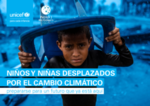
Evicted by Climate Change: Confronting the Gendered Impacts of Climate-Induced Displacement - EXECUTIVE SUMMARY FOR POLICYMAKERS

CARE

Climate-induced displacement is an option of last resort. It preys on those who are unable to adapt to the ecological and social consequences of climate change, whether due to lack of resources or other inequities. For most of these people, climate-induced displacement is triggered by direct physical harm from extreme weather events or slow-onset impacts, but also by indirect consequences on food insecurity and conflict over natural resources and land rights.

File

Expulsé·e·s par le changement climatique: répondre aux impacts genrés des déplacements climatiques - RÉSUMÉ À L’ATTENTION DES RESPONSABLES POLITIQUES

CARE

Les déplacements causés par le climat constituent une option de dernier recours. Ils concernent les personnes qui ne sont pas en capacité de s’adapter aux conséquences écologiques et sociales du changement climatique, en raison d’un manque de ressources ou d’autres inégalités.

File

Protecting Against Predators: A Scoping Study on the Sexual Exploitation of Children and Young People in Ireland

Mary Canning, Marie Keenan, Ruth Breslin

This scoping study explores forms of sexual exploitation of children and young people in Ireland, including those whose life experiences make them more vulnerable including being in care, going ‘missing’ or running away from home or a care placement.

File

Telomere Erosion and Depressive Symptoms Across Development Following Institutional Care

Charlotte Heleniak, Bonnie Goff, Laurel J. Gabard-Durnam, Eva H. Telzer, Kathryn L. Humphreys, Daniel S. Lumian, Jessica E. Flannery, Christina Caldera, Mor Shapiro MD, Jennifer Y. Louie, Fan Shen

This longitudinal U.S.-based study examined the link between caregiving-related early adversity and elevated risks for both depressive psychopathology and prematurely shortened telomeres across the lifespan of children exposed to early institutional care.

Evaluation of Family Reunification after Foster Care in the State of Minas Gerais - Brazil

Aline do Carmo França-Botelho

This study aimed to brief analyse data from the most recent SUAS census in Brazil, focusing on one of the states of the federation to verify how the referrals of children and adolescents who go through foster care are being carried out. The data showed that in certain places there is discrepancy in reintegration and adoption, the latter being the most common.

File

“Foster Care is a Roller Coaster”: A Mixed-Methods Exploration of Foster Parent Experiences with Caregiving

Taylor Dowdy-Hazlett, Shelby L. Clark

This mixed-methods study included foster parents in six mid-Southwestern states in the U.S. foster parents serve a critical role in the child welfare system; however, many report being dissatisfied with their role. As such, dissatisfied foster parents are at risk of disruption and turnover, ultimately resulting in placement moves for youth in care. Placement moves have negative impacts on youth well-being, prompting a need to explore issues related to placement longevity related to foster parent satisfaction.

Nurturing Care Framework Progress Report 2018-2023: Reflections and looking forward

World Health Organization (WHO), UNICEF

This World Health Organization (WHO) progress report looks back on the five years since the Nurturing care framework was launched. It documents achievements and presents areas for future action. Annotated with stories of change, the report provides a snapshot of progress in relation to each of the five strategic actions of the Framework and shows the breadth of activities that have been undertaken.

File

Kinship Care in Kakuma Refugee Camp: Kenya

UNICEF - Regional Learning Platform on Care Reform in Eastern and Southern Africa

This case study documents the journey of Okot, one of many children in the Kakuma camp in Kenya, living with relatives. There are over 8,000 unaccompanied and separated children living in the Kakuma and Kalobeyei camps, the majority of whom are in kinship care (children cared for by relatives or friends of the family).

Finnish Care Leavers‘ Social Inclusion During the Transition to Adulthood

Minna Kaasinen, Anja Terkamo-Moisio, Pirkko Salokekkila, Arja Haggman-Laitila

The aim of this qualitative study published in the Children and Youth Services Review journal was to describe care leavers’ experiences of social inclusion in Finland. The results can provide new insight into a vulnerable, marginally researched group with high support needs and a propensity for social exclusion.

File

Survivor-Informed Support for Trafficked Children in Scotland

Maggie Grant, Maria Fotopoulou, Scot Hunter, Margaret Malloch, Paul Rigby, Kieran Taylor - University of Stirling

The aim of this study was to fill a gap in knowledge in relation to what constitutes recovery and effective support over a longer time frame for separated children and young people who have experienced trafficking in Scotland. The study illuminates processes that have not been previously explored with this group of children and young people in Scotland.

File

Non-Kinship Foster Care in Nigeria: Socioeconomic and demographic drivers of mothers’ willingness to foster

Stanley Oloji Isangha, Tosin Yinka Akintunde, Cherry Hau Lin Tam, Wai Man Anna Choi

This study examined the socioeconomic and demographic drivers of willingness to foster non-kin children among mothers in Nigeria. The findings of this study provide implications for research, social work practice, and education in Nigeria and Africa.

A Comprehensive Multilevel Analysis of the Bucharest Early Intervention Project: Causal Effects on Recovery From Early Severe Deprivation

Lucy S. King, Katherine L. Guyon-Harris, Emilio A. Valadez, Anca Radulescu, Nathan A. Fox, Charles A. Nelson, Charles H. Zeanah, Kathryn L. Humphreys

The Bucharest Early Intervention Project is the first randomized controlled trial of foster care as an alternative to institutional care. The authors synthesized data from nearly 20 years of assessments of the trial to determine the overall intervention effect size across time points and developmental domains. The goal was to quantify the overall effect of the foster care intervention on children’s outcomes and examine sources of variation in this effect, including domain, age, and sex assigned at birth.

File

Child of Two Worlds: How foster care workers perceive their skills in dealing with worldview differences in foster care

Danielle van de Koot-Dees, Martine Noordegraaf, Bernhard Reitsma

This article looks at the strategies foster care workers employ when dealing with worldview differences between a foster family and the birth family reviewing examples from the Netherlands, Denmark and the US.

Image
Child and Family Social Work

“I hope my voice is heard”: A Mixed-Methods Study of Youths’ Perceptions of Residential Care

Shamra Boel-Studt, Hui Huang, Christopher Collins

This US-based study examined youth’s perspective of the quality of care and experiences in residential group care. This study was approved by an Institutional Review Board. Data were collected as part of a larger statewide pilot of the Quality Standards Assessment (QSA).

Image
Children and Youth Services Review

Fluid Transitions – “Weak” Constellations of Participation in the Process of Leaving Care

Carolin Ehlke, Wolfgang Schröer

This conceptual article describes how, in terms of organization theories, shifts in the chronological transition to adulthood produce “weak” constellations of participation during the process of leaving care. The authors highlight the different degrees of participation by those leaving care and the ways in which it is expressed.

Image
Children and Youth Services Review

Post-Traumatic Stress Disorder in Unaccompanied Refugee Minors: Prevalence, Contributing and Protective Factors, and Effective Interventions: A Scoping Review

Charles Oberg, Hayley Sharma

The objective of this global study was to review the current literature regarding PTSD in unaccompanied refugee minors (URM). The authors concluded that the high levels of mental health problems experienced in URM are due to exposure to traumatic experiences, separation from parents, and lack of social support.

File

Adverse Childhood Experiences and Residential Care Environment: The mediating role of trauma-related symptoms and psychological maladjustment in adolescents

Lorena Maneiro, Nerea Llerena, & Laura López-Romero

This study analyzes the sequential relationships between exposure to adverse childhood experiences, trauma-related symptoms, psychological maladjustment, and the perception of group climate and peer interactions for those in out-of-home placements in Spain.

File

Bridges between Families and Foster Children: Family Reintegration and Adoption of Disabled Children and Adolescents

Patrícia da Silva Bezerra, Yuri Leandro do Carmo de Souza, Matheus dos Santos da Silveira, Edmylla Francyelle dos Santos Silva, Simone Souza da Costa Silva

This study aimed to describe the perception of caregivers and the role of professionals in the process of family reintegration and adoption of children and adolescents with disabilities in a host institution in Belém/PA, Brazil.

File

Case Management: A Scalable Model for Reintegration of Children without Parental Care in Kenya

Changing the Way We Care (CTWWC)

To ensure a significant improvement in service delivery to children and their families, and specifically to the successful reintegration of children from residential care into families and communities, a case management approach, standard operating procedures (SOPs) and tools were required to support state and non-state service providers to standardize the way they promoted family care. This short insight document describes how the case management package was developed and rolled out.

File

A Foster Care System Where Every Child Has a Loving Home

The Audacious Project - TED Talk

In the U.S., youth in foster care are nearly twice as likely as war veterans to suffer from PTSD. Placed in foster care at just 11 months old, 2023 Audacious Project grantee Sixto Cancel experienced the faults of the system firsthand. Now, he's the founder of Think of Us, an organization working to reform child welfare by centering kinship care, or placing a child with an extended family member or a familiar adult. Learn more about his plan to help thousands of kids searching for a loving home with one simple, systemic switch.

Bulgaria: Report Card 2023 - What is the Average Government Score for Childcare?

National Network for Children

National Network for Children (NNC) released its monitoring Report Card 2023 which evaluates the progress of Bulgarian state care institutions in eight areas – Child participation, Child Welfare, Family Environment and Alternative care, Protection from all forms of Violence, Child Justice, Early Childhood Development, Child Health, Education, Sport, Culture and Leisure.

File

How Support Needs for Kinship Care Vary by Caregiver Characteristics

Family for Every Child

This is the fourth webinar in the Family for Every Child's kinship care learning series which explored the different types of kinship caregivers (e.g. grandparents, siblings, aunts and uncles, male kinship carers, friends of the family) and how their different characteristics impact the risk and support needs of kinship care placements.

Children & Young People During COVID-19: How were they impacted & what we can learn for the future?

Alliance for Child Protection in Humanitarian Action

The Alliance for Child Protection in Humanitarian Action , with the support of the Inter-Agency Network for Education in Emergencies, conducted participatory research to explore the impact of COVID-19 related school closures on children and young people in three humanitarian settings: Lebanon, Democratic Republic of Congo and Colombia.

Gatekeeping as a Systematic Process: Preventing Child’s Separation

IACN

This webinar was organized by India Alternative Care Network (IACN) in association with Miracle Foundation India, on April 28, 2023, with the objective to understand gatekeeping, it's components, tools, mechanisms, stakeholders and their role in gatekeeping and learning some promising practices at the primary and secondary levels of gatekeeping.

Collecting Data on Children Living in Residential Care

UNICEF

Accurate and reliable data on children living in residential care institutions are essential. However, these children are not identified through household surveys and, as a result, are not typically included in official national statistics on key indicators of child well-being. This includes indicators that comprise global monitoring frameworks, such as the Sustainable Development Goals. To help address this data gap, UNICEF has developed the first-ever comprehensive package to collect data on children living in residential care settings. Claudia Cappa, Senior Adviser for Statistics and Monitoring, Data and Analytics Section, DAPM/UNICEF HQ, explains more.

Ukraine Recovery Conference 2023 - Session Recordings

Ukraine Recovery Conference (URC 2023)

The Ukraine Recovery Conference 2023 focussed on action to help Ukraine build back better, greener and as a more resilient and prosperous European nation. In particular, URC 2023 aimed to generate greater momentum on the role of the private sector – and the reforms required to drive investment – as essential elements for Ukraine’s long-term recovery.

Working Group on Orphanage Trafficking and Exploitation in Residential Care Settings

Interparliamentary Taskforce on Human Trafficking

This statement was released by the Working Group on Orphanage Trafficking and Exploitation -- a global coalition of Members of Parliament, government leaders, survivor leaders, and key stakeholders committed to combatting orphanage trafficking and the exploitation through raising awareness and identifying, creating, and implementing tools that curb the demand for orphanage trafficking and stop the exploitation of children in residential care settings, including orphanages. The Working group aims to raise awareness and combat orphanage trafficking at the policy level globally.

File

Prevention of Separation Learning Package

The Alliance for Child Protection in Humanitarian Action

This introductory learning module has been developed by the Alliance for Child Protection in Humanitarian Action. The learning module is designed to strengthen participants' overall understanding of prevention related elements from the UASC Handbook and Toolkit and the ACE Toolkit.

File

Kinship Care in India: A Case Study Documentation

India Alternative Care Network (IACN)

This IACN report outlines the importance of families for the emotional, physical, and cognitive growth of children. The authors discuss that all efforts should be made to provide family-based care to children without parental care, and institutionalisation should be a measure of last resort for the optimum development of children. The report draws on the experiences of eight families in kinship care arrangements and the children placed with them.

File

UK Social Work and the War in Ukraine: A BASW Briefing on Context, Ethics and Practice Under the Visa Schemes for Ukrainians

BASW

The focus of this document is to support, inform and empower social workers across the UK in their ongoing practice and consideration of issues that arise in relation to people arriving and staying under the UK Ukraine visa schemes.

File

Alone and Exploited?: The Impacts of U.S. Immigration Enforcement on Child Migration and Labor

Collaborative on Global Children's Issues, the Institute for the Study of International Migration

During this webinar, participants explored the dynamics of migrant child labor in the United States. Will efforts to “crack down” on child labor stop exploitation? How will forthcoming changes to U.S. asylum processes impact migrant children and their livelihoods? Most importantly, what do migrant youth have to say about their experiences?

Factsheet: Childhood Statelessness and the Committee on the Rights of the Child

ISI, UNICEF

This document includes useful graphic information, ‘analysing CRC Committee recommendations on the child’s right to nationality and the protection of stateless children, capturing a snapshot of progressive engagement by the Committee on these issues between 2010-2020’. The factsheet is a brief and very useful document for all actors wishing to engage with the CRC Committee.

File

Boîte à outils visant à prévenir les pratiques illicites en matière d’adoption internationale et à y remédier

The Hague Conference on Private International Law – HCCH Permanent Bureau

Cette boîte à outils fournit aux Autorités centrales un modèle sur la manière dont elles pourraient répondre aux demandes des victimes d'adoptions illégales et illicites.

File

Research on Care Leavers in Kenya

UNICEF ESARO Regional Learning Platform

During this UNICEF ESARO webinar presenters share findings from research on care leavers in Kenya, and explore the peer-to-peer methods used in this research. The Government of Kenya also explains why this research was conducted and how it will be used.

Fostering Emotional and Mental Health in Residential Youth Care Facilities: A Systematic Review of Programs Targeted to Care Workers

Laura Santos, Rita Ramos Miguel, Maria do Rosário Pinheiro, Daniel Rijo

This Children and Youth Services Review study performed a systematic review of research on training programs aiming the fostering of emotional and mental health in residential youth care. A systematic search was conducted in nine digital databases and other sources (websites, relevant journals, reference lists of included articles and relevant reviews), for publications from 1980 to 2021.