Outsourcing and Children's Social Care: A Longitudinal Analysis of Inspection Outcomes Among English Children's Homes and Local Authorities

Anders Malthe Bach-Mortensen, Benjamin Goodair, Jane Barlow

Most residential children's social care services in England, including children's homes, are operated by for-profit companies, but the implications of this development are not well understood. This paper aims to address this gap by undertaking the first longitudinal and comprehensive evaluation of the associations between for-profit outsourcing and quality of service provision among English local authorities and children's homes.

Image
Social Science and Medicine Journal

Family Strengthening in the Context of COVID-19: Adapting a Community-Based Intervention from Kenya to the United States

Eve S. Puffer, Savannah L. Johnson, Kaitlin N. Quick, Amber D. Rieder, Mahgul Mansoor, Rae Jean Proeschold-Bell, Sierra Jones, Shaneeka Moore-Lawrence, Justin D. Rasmussen, Cameron Cucuzzella, Francelia Burwell, Latoria Dowdy, Florine Moore, Nancy Rosales

COVID-19 led to widespread disruption of services that promote family well-being. Families impacted most were those already experiencing disparities due to structural and systemic barriers. Existing support systems faded into the background as families became more isolated. New approaches were needed to deliver evidence-based, low-cost interventions to reach families within communities. The authors adapted a family strengthening intervention developed in Kenya (“Tuko Pamoja”) for the United States.

File
Adverse Childhood Experiences in Residential Care: Predicting Accumulation and Exploring Clustering of Adversity in Romanian Care Facilities

Ioana M. Neagoe, Claudiu C. Papasteri

The purpose of this study was to establish the prevalence of adverse childhood experiences (ACEs) in child residential care and to explore predictors of accumulation and clustering patterns.

Image
Child and Youth Care

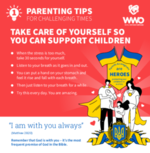
Parenting Tips for Challenging Times - Help Children Cope with a Crisis with these Practical Steps (Ukrainian)

World Without Orphans

У цьому відео ми пропонуємо прості і практичні рекомендації про те, як у цей непростий час допомагати собі та своїм дітям долати різні кризові ситуації.

File
Changing the Way We Care: First Year Summary Report

Changing the Way We Care

Cambiando la Forma en que Cuidamos SM (CTWWC) promueve el cuidado alternativo, familias que cuidan el desarrollo para la reintegración de los niños y niñas en las instituciones de acogimiento residencial y evita la separación entre familia e hijos o hijas, mediante el fortalecimiento de las familias, la reforma nacional del cuidado infantil, y del trabajo con otros actores clave para cambiar los compromisos y las conversaciones en apoyo del cuidado familiar. Lanzado el 1 de octubre de 2018, el primer año de CTWWC se resume en este informe de progreso, que incluye la influencia global y el trabajo en los países piloto como son Guatemala, Kenia y Moldavia.

File
Children's Notebook

Changing the Way We Care

This handbook was made for children to read and write in. You’ll learn about why families are important and why they are the best place for children to grow up. There is also plenty of space for children to write down their thoughts and feelings about what they have read. 

File
Closing Cases of Children and Adolescents Reintegrated into their Family and Community Environment in the Demonstration Area

Changing the Way We Care

The report is aimed at professionals in social work, psychology and pedagogy who work directly with children who are in the process of reintegration into a family and community environment. The document contemplates the process carried out for the closure of cases approached from a case management methodology. The report captures the experience that was had in Zacapa, Guatemala, and it reflects on the importance of reintegration through a planned process of case management and close accompaniment to families and caregivers.

File
Cierre de casos de niños, niñas y adolescentes reintegrados a un entorno familiar y comunitario en área de demostración
Changing the Way We Care

El documento “Cierre de casos de niños, niñas y adolescentes reintegrados a un entorno familiar y comunitario en área de demostración” es un documento dirigido a profesionales de trabajo social, psicología y pedagogía que trabajan directamente en la atención a NNA que están en proceso de reintegración a un entorno familiar y comunitario, el documento contempla el proceso realizado para el cierre de casos abordado desde una metodología de gestión de casos, dentro del documento también se narra la experiencia que se tuvo en Zacapa, Guatemala y se reflexiona sobre la importancia de la reintegración a través de un proceso planificado de gestión de casos y de acompañamiento cercano a las familias y cuidadores.

File

CTWWC and PGN's Mechanism for the Prevention of Unnecessary Child-Family Separation: Guatemala Report

Changing the Way We Care

This report includes the key lessons learned and the achievements resulting from CTWWC/PGN follow-up and family and economic strengthening activities provided to 18 families, along with information about 66 children and adolescents who remained with their family and community environment. The project also raised families’ awareness about the importance of providing children with safe and protective settings to foster their wellbeing through positive and loving parenting.

File

Children's Act, 2022 (Kenya)

Republic of Kenya

The Children Act, 2022, is an act of Parliament to give effect to Article 53 of the Constitution; to make provision for children rights, parental responsibility, alternative care of children including guardianship, foster care placement and adoption; to make provision for care and protection of children and children in conflict with the law; to make provision for, and regulate the administration of children services; to establish the National Council for Children’s Services and for connected purposes.

File

The Impact of COVID-19 on Children’s Care

This case study is part of a series of case studies conducted in India, Kenya, Moldova and Uganda over the course of 2020-2022 to share information on how COVID-19 has and is affecting family-child reunification, alternative care placement, and offers recommendations for family- and community-based care of vulnerable children in the context of COVID-19 and future emergencies.

The Impact of COVID-19 on Children’s Care: Uganda

Changing the Way We Care, Child's i Foundation

This case study is part of a series of case studies conducted in India, Kenya, Moldova and Uganda over the course of 2020-2022 to share information on how COVID-19 has and is affecting family-child reunification, alternative care placement, and offers recommendations for family- and community-based care of vulnerable children in the context of COVID-19 and future emergencies.

File

The Impact of COVID-19 on Children’s Care: Moldova

Changing the Way We Care

This case study is part of a series of case studies conducted in India, Kenya, Moldova and Uganda over the course of 2020-2022 to share information on how COVID-19 has and is affecting family-child reunification, alternative care placement, and offers recommendations for family- and community-based care of vulnerable children in the context of COVID-19 and future emergencies.

File

The Impact of COVID-19 on Children’s Care: India

Changing the Way We Care, Udayan Care, Miracle Foundation

This case study is part of a series of case studies conducted in India, Kenya, Moldova and Uganda over the course of 2020-2022 to share information on how COVID-19 has and is affecting family-child reunification, alternative care placement, and offers recommendations for family- and community-based care of vulnerable children in the context of COVID-19 and future emergencies.

File

The Impact of COVID-19 on Children’s Care: Kenya

Changing the Way We Care

This case study is part of a series of case studies conducted in India, Kenya, Moldova and Uganda over the course of 2020-2022 to share information on how COVID-19 has and is affecting family-child reunification, alternative care placement, and offers recommendations for family- and community-based care of vulnerable children in the context of COVID-19 and future emergencies.

Urgent Call to Action Regarding Ukrainian Children with Disabilities in Residential Care Institutions

Joint statement by the Committee on the Rights of the Child and the Committee on the Rights of Persons with Disabilities on Ukrainian children with disabilities

Joint statement by the Committee on the Rights of the Child and the Committee on the Rights of Persons with Disabilities on Ukrainian children with disabilities. They express concern about the thousands of Ukrainian children with disabilities who were living in residential institutions and have been evacuated from war zones to Western Ukraine or to other countries, as well as those who have remained in unsafe areas. In particular, they draw attention to children with high support requirements who are negatively affected by institutionalization.

File

La historia de la evolución y transformación de Casa Eudes, dirigido por las Hermanas de Nuestra Señora de la Caridad del Buen Pastor, en Tijuana, México

Changing the Way We Care

Este estudio de caso destaca la transición de servicios de cuidado residencial a los basados en la familia y comunidad, realizado por las Hermanas de Nuestra Señora de la Caridad del Buen Pastor, en Tijuana B.C., México. 

File

A Story of Transition of the Congregation of Our Lady of Charity of the Good Shepherd in Tijuana, Mexico

Changing the Way We Care

This case study highlights the transition of the Sisters of Our Lady of Charity of the Good Shepherd in Tijuana. It presents the highs and lows that come with a change process of moving from residential care to community-based services focused on family strengthening.

File

La historia del proceso de transformación de Casa Eudes, a cargo de la Congregación de Nuestra Señora de la Caridad del Buen Pastor en Ciudad Juárez, México

Changing the Way We Care

Este estudio de caso destaca la transición de servicios de cuidado residencial a los basados en la familia y comunidad las realizado por las Hermanas de Nuestra Señora de la Caridad del Buen Pastor, en Ciudad Juárez, México. 

File

The Transformation Process of Casa Eudes of the Congregation of Our Lady of Charity of the Good Shepherd in Ciudad Juarez, Mexico

Changing the Way We Care

This case study highlights the transition of the Sisters of Our Lady of Charity of the Good Shepherd in Ciudad Juarez. It is an honest look at the emotional, logistical, and practical elements involved in transitioning from a residential care model which existed for more than 100 years to a provider of community-based and family-centered services.

File

Child’s i Foundation Case Study: Tororo District Transformation

Child's i Foundation, Better Care Network

Based in Uganda, Child’s i Foundation successfully transitioned their residential programs before deciding to expand their vision and seek to bring about care reform to the entire district of Tororo. Partnering with the district level government and several CCIs, Child’s i Foundation carried out an extensive analysis and assessment of the Tororo region which provided information to guide the ensuing transitions of CCIs throughout the region.

File

Transition Case Study: Alliance For Children Everywhere Zambia

Better Care Network, Alliance for Children Everywhere

Alliance for Children Everywhere (ACE) Zambia is a US-funded organization that transitioned from providing residential care in Zambia to pioneering family-based care, including foster care, and supporting other residential care service providers to transition. With important links to the Zambian government, ACE Zambia has been a key actor in supporting the development of policies, programs and guidelines that are now utilized across the country.

File

Rolul comunității de credință în reforma sistemului de îngrijire a copilului: Experiența Moldovei

Changing the Way We Care

În primăvara anului 2021, programul Changing the Way We Care (CTWWC) a lansat un sondaj pentru a studia comunitatea de credință din Moldova și implicarea acesteia în reforma sistemului de îngrijire a copiilor. Scopul acestui sondaj a fost de a înțelege mai bine angajamentul actual și potențial al organizațiilor și liderilor de credință în calitate de persoane de influență și furnizori de servicii, dar și de a identifica orice obstacole în calea implicării acestora în reforma respectivă.

File

КЛЮЧОВІ МІРКУВАННЯ ТА РЕКОМЕНДАЦІЇ: Реагування на виклики у сфері опіки та догляду за дітьми в умовах війни в Україні

The Ukraine Children's Care Group

МЕТОЮ ЦЬОГО ДОКУМЕНТУ З РЕКОМЕНДАЦІЯМИ є надати певну рамку для підтримки фахівців-практиків і посадовців, відповідальних за вироблення політики у сфері опіки та піклування над дітьми, як в Україні, так і в країнах, які приймають біженців, у рамках заходів реагування, що стосуються опіки та догляду за дітьми в контексті України у відповідності до міжнародних стандартів і належної практики у сфері опіки та піклування та забезпечення альтернативних форм догляду.

File

The Social Service Workforce in the East Asia and Pacific Region: Multi-Country Review

UNICEF East Asia, Pacific Regional Office, Global Social Service Workforce Alliance

The first multi-country review of the social service workforce in the East Asia and Pacific region was prepared by the Global Social Service Workforce Alliance (GSSWA) and the United Nations Children’s Fund (UNICEF) East Asia and the Pacific Regional Office (EAPRO) with the support and contribution of many people throughout the region. This report is one of several regional reports being produced by GSSWA and UNICEF to increase the availability of information on the social service workforce, and provide a baseline from which to consider ongoing workforce strengthening initiatives.

File

Protecting Filipino Children from Abuse, Exploitation and Violence: A Comprehensive Program on Child Protection, 2012-2016 Building a Protective and Caring Environment for Children

Committee for the Special Protection of Children Department of Justice

This is a revision and update of the Comprehensive Program on Child Protection (CPCP). Now on its 3rd cycle covering the period 2012-2016, the CPCP provides the overall thrusts, directions, goals, strategies and interventions in the care and protection of Filipino children who are at risk, disadvantaged and vulnerable to various forms of abuse, neglect, violence and exploitation.

File

ICAB Annual Report for Fiscal Year 2020

Republic of the Philippines Intercountry Adoption Board

The Annual report provides an overview of the CY 2020 results of the implementation of the programs and activities aligned with the year's thrusts and
priorities: The report summarizes the capacity building activities and other initiatives to equip and empower stakeholders.

File

Child Poverty in the Philippines

Republic of the Philippines - Philippine Statistic Authority, UNICEF

Using panel data from the Philippines' Family Income and Expenditure Survey (FIES), this paper also looks into how such dynamics affects children's welfare. Meanwhile, to complement the profile on child poverty, this paper scrutinizes how the government has faired so far in addressing poverty via its biggest social protection programme, the Pantawid Pamilyang Pilipino Program (4Ps). The brief review also touches on a variant of the Pantawid Pamilya that caters to street families, particularly its design and targeting strategy, and other Department of Social Welfare and Development programmes involving the welfare of children.

File

Every Child’s Right to Family Life: An Introduction to Family Strengthening and Alternative Care in India

India Alternative Care Network, Hope and Homes for Children, UNICEF - India

This document answers the most frequently asked questions surrounding family strengthening and alternative care in India while also addressing misconceptions around it. It aims to help practitioners, child protection workers and researchers to build their understanding of family strengthening and alternative care in India. This document has been developed in accordance with the Mission Vatsalya Guidelines.

File

Annual Report of the Special Representative of the Secretary-General (SRSG) on Violence Against Children to the UNGA

Dr. Najat Maalla M’jid - Special Representative of the Secretary General on Violence Against Children

Annual report of the Special Representative of the Secretary-General (SRSG) on Violence Against Children to the UNGA. SRSG reports annually to the Human Rights Council and the General Assembly on progress achieved and lessons learned on the protection of children from violence.

File

Report of the Special Rapporteur on the Sale and Sexual Exploitation of Children, Including Child Prostitution, Child Pornography and Other Child Sexual Abuse Material

UN Special Rapporteur on the sale and sexual exploitation of children, including child prostitution, child pornography and any other child sexual abuse material

In the present report, the UN Special Rapporteur on the sale and sexual exploitation of children, including child prostitution, child pornography and other child sexual abuse material, describes the activities undertaken in relation to the discharge of her mandate since her previous report to the United Nations General Assembly. She also presents a thematic study on addressing the vulnerabilities of children to sale and sexual exploitation within the framework of the Sustainable Development Goals.

File

Motherhood in Childhood: The Untold Story

Ann Garbett, UNFPA

This report’s findings on the prevalence of motherhood in childhood across the globe and repeat adolescent childbearing highlight that more needs to be done to design, implement and evaluate programmes that target the youngest starters and girls at risk of rapid and repeat adolescent births.

File

Preventing Domestic Violence Against Children During COVID-19: A Practitioner's Toolkit

Family for Every Child

Family for Every Child Alliance members strengthened and adapted their service delivery to provide vital support in the changed circumstances. This Toolkit uses their experiences and lessons learned to guide practitioners to support children and families to prevent domestic violence from affecting children. With specific resources focused on prevention and response, a variety of practices from around the world are given here, to encourage cross-learning and exchange and to generate new learning across the alliance and beyond.

File

Resisting Calls to Invest in Institutions – a Discussion With Funders, Policymakers and DPOs

European Network on Independent Living - ENIL

This COSP 15 side event was organised by ENIL, in cooperation with Disability Rights Defenders. It addressed the issue of increasing segregation of persons with disabilities in institutions as a result of the war in Ukraine, despite lessons learned during COVID. It focused on the role of the funders in the humanitarian response and the post-war recovery, urging for full compliance with the UN CRPD and ensuring that no funding goes towards institutionalisation of persons with disabilities.

Learning Exchange on Family-Based Care Between Sri Lanka and India

CERI, UNICEF Sri Lanka, UNICEF India

Sri Lanka government officials visited the state of Rajasthan in India to view family-based care models that will inform Sri Lanka’s child protection system as the country transitions into an innovative approach that supports children in family settings. CERI, in partnership with UNICEF Sri Lanka and UNICEF India, hosted the delegation’s visit to family-strengthening, foster care, and group foster care models implemented by Foster Care Society and the Department of Child Rights in Rajasthan.

Pasos y recursos para acompañar a organizaciones en el proceso de transformación

Changing the Way We Care

Este documento está diseñado para orientar a las personas u organizaciones que están apoyando un proceso de transición para pasar de proporcionar atención residencial a un modelo que promueva la atención familiar y comunitaria. El documento está diseñado en torno a las Fases de la Transición de Better Care Network. Se basa en el trabajo que Changing the Way We Care ha realizado en los últimos años para apoyar a diferentes proveedores de atención residencial, tanto religiosos como laicos, en su propio proceso de transición. Hay ejemplos y enlaces a herramientas relevantes, mensajes y actividades sugeridas que pueden utilizarse para apoyar las diferentes fases del proceso.

File

Changing the Way We Care Household Survey of Children and Caregivers: Kenya, Guatemala

Changing the Way We Care

In 2021 Changing the Way We Care (CTWWC) completed a household survey of children and caregivers, in demonstration countries Kenya and Guatemala, to understand their experience of CTWWC services, the protective factors in their families, and the status of child well-being. Part of CTWWC’s year-three evaluation, these resulting four reports are meant to help CTWWC partners, and other care reform actors within Guatemala and Kenya, better understand CTWWC’s impact through the end of the initiative’s third year. 

COVID-19 and Street Connected Children Impacts, Responses and Opportunities

Ruth Edmonds, Shona Macleod - Consortium for Street Children

This overview considers the effect of the pandemic on street-connected children, meaning those who live or work on or have another strong connection to the street, and those who work with them. It draws on data gathered from members of the Consortium for Street Children’s network of over 180 community organisations, national and international non-governmental organisations, researchers, advocates and on-the-ground practitioners working in 135 countries.

File

Mental Health of Unaccompanied Refugee Minors in Europe: A Systematic Review

Andrea Daniel-Calveras, Nuria Baldaquí, Inmaculada Baeza

The aim of this systematic review is both to summarize findings regarding the prevalence of mental health disorders among unaccompanied refugee minors (URM) in European countries since the last available systematic review (October 2017), and to describe associated risk factors.

Image
Child Abuse and Neglect - The International Journal

Virtual Panel on Country Examples of Family Reintegration: Rwanda, Cambodia

This virtual presentation on family reunification and reintegration in Rwanda and Cambodia, highlights examples of good practice in family reintegration and lessons learned about the role of government and public policy in fostering family reintegration. The event was hosted by the Transforming Children’s Care Global Collaborative Platform Task Force on Family Reunification and Reintegration on September 20, 2022.

Case Story of Transition: Story International

Changing the Way We Care, Story International

This case story is meant to illustrate transition, the actors involved, the challenges and the success factors; recognizing that each transition is an individual process with different starting points, different dynamics and different evolutions. Story International’s transition example demonstrates the ups and downs of divesting from the orphanage model.

File

“Why Would They Call Me an Orphan When I Have Parents”: Care Leavers’ Experiences of Labelling and Stereotyping Whilst Living in Residential Care Facilities in Zimbabwe

Getrude Dadirai Gwenzi, John Ringson

There exists a gap in care leaving literature about the extent to which the labelling and stereotyping of care leavers during their time in residential care facilities affects their transitions into adulthood. This paper presents an analysis of interviews conducted with care leavers from six childcare facilities in Zimbabwe (n = 30).

Image
New Ideas in Psychology

The Health Status and Related Interventions for Children Left Behind Due to Parental Migration in the Philippines: A Scoping Review

Georgia B. Dominguez, Brian J. Hall

Overseas Filipino Workers are hailed as modern-day heroes who enable their families to climb the socioeconomic ladder. Despite their financial contribution, labour migration often separates children from their parents during their most formative years of growth, threatening healthy development. Using the Joanna Briggs Institute’s frame-work, this scoping review was conducted to identify the health outcomes of left behind children in the Philippines and health-related interventions.

File

Impact of COVID-19 Pandemic on Children in Institutions: Learning for Child Protection

Suneha Kandpal

Children First: Journal on Children's Lives is a bi-annual and peer-reviewed journal, launched by Delhi Commission for the Protection of Child Rights (DCPCR) with the aim of deepening and broadening the discourse on child rights by providing a platform to all persons who are engaged with
the rights of children in varied capacities to share their learnings, views and experiences in this context. This issue focuses on the continued impact on children in the Indian context in the second year of the pandemic and the disruptions caused in the children's lives. This is one of the articles in the latest issue.

Image
Impact of COVID-19 Pandemic on Children in Institutions: Learning for Child Protection

Challenges Experienced by Caregivers Caring for Abandoned Infants and Toddlers in Institutional Care

Lynette Oosthuizen-Erasmus, Anri Gretha Adlem

This article advances a greater understanding of the views, perceptions and experiences of caregivers caring for abandoned infants and toddlers living in institutional care in South Africa, on the basis of information obtained from 15 participants interviewed through semi-structured interviews in this qualitative study. Understanding their views, perceptions and experiences provides vital information to develop social work practices.

File

The Voices of Children, Mothers, and Fathers: Can Parenting Programs Improve Reunification Processes in the Spanish Child Protection System?

M. Àngels Balsells Bailón, Aida Urrea-Monclús, Eduard Vaquero Tió, Laura Fernández-Rodrigo

This research highlights the importance of involving parents and their children in improving parenting skills and the reunification process by implementing parental education programs through a unique work plan. This study examined the experiences of families in the Spanish Child Protection System.

File

Addressing the Need for Foster Care in the Context of the Ukraine Crisis

Ukraine Children’s Care Group

Under the auspices of the Ukraine Children’s Care Group, one of two learning events were held in July and September 2022. This event, "Addressing the need for foster care in the context of the Ukraine crisis", was held on September 7th in collaboration with HDPI. It focused on better understanding the foster care systems and services in Ukraine and neighbouring countries hosting Ukrainian refugee children, specifically Poland, Romania, and Moldova.

Addressing the Situation of Children with Disabilities in Residential Care as Part of the Ukraine Response

Better Care Network, Disability Rights International (DRI)

On 7 July 2022, the Better Care Network (BCN) and Disability Rights International (DRI) organised an event with disability and child protection actors focused on the situation of children with disabilities in residential care in Ukraine (including those children who have been returned to families or evacuated from facilities since 24 February 2022).

File

Webinar Recording: Spotlight Series on Foster Care Practice Webinar 5 - Participation of Children and Young People with Lived Experience of Foster Care in Decisions that Affect Them

Transforming Children's Care Global Collaborative Platform

The Task Force on Foster Care of the Transforming Children's Care Global Collaborative Platform held the fifth webinar in the spotlight series on Foster Care Practice on 15 September 2022. The webinar explored participation in foster care with particular focus on individual decision making for children and young people. We heard from people with lived experience of foster care in different contexts, including Uganda, Ireland and Argentina.

Effects of Foster Care Intervention and Caregiving Quality on the Bidirectional Development of Executive Functions and Social Skills Following Institutional Rearing

Selin Zeytinoglu, Alva Tang, Charles H. Zeanah, Charles A. Nelson, Alisa N. Almas, Nathan A. Fox

Institutional rearing negatively impacts the development of children's social skills and executive functions (EF). However, little is known about whether childhood social skills mediate the effects of the foster care intervention (FCG) and foster caregiving quality following early institutional rearing on EF and social skills in adolescence. Participants included abandoned children from Romanian institutions

File

Making the Family Relationships of the Unaccompanied Youth Visible: An Opportunity to Include a New Actor in Children Care

Chabier Gimeno-Monterde, Karmele Mendoza-Pérez

The objective of this article is to identify those situations where the families of fostered unaccompanied migrant children are made visible in order to favor the incorporation of these families into the pathway planning. The fieldwork was carried out in Spain and involved working groups with specialized professionals.

Making It Count: Strengthening Data and Evidence to Prevent and Respond to Violence Against Children in East Asia and the Pacific

Ramya Subrahmanian, Manahil Siddiqi, Nicole Petrowski, Claudia Cappa

This brief provides an overview of the data and evidence gaps on violence against children in East Asia and the Pacific. It calls for greater attention to generating, sharing and applying quality data and evidence to protect the safety and rights of children within the region.

File

Foster Youth's Placement Preferences: The Roles of Kin, Siblings, and Age

Shreya Mukhopadhyaya, Kelli L. Dickerson, Thomas D. Lyond, Jodi A. Quasa

Debates exist regarding whether foster youth should be asked about their placement preferences following removal, with only youth aged 12 years and older at times assumed legally competent to provide input. The present study evaluated whether placement-related factors known to predict youth's well-being also shape their placement preferences and whether preferences differ between youth below and above the age at which they are considered legally competent to provide input.

Image
Child Abuse and Neglect - The International Journal

Study on the Evolution of the Children and Armed Conflict Mandate 1996-2021

Office of the Special Representative of the Secretary-General for Children and Armed Conflict

This study looks at the results achieved under the mandate of the Special Representative of the Secretary-General for Children and Armed Conflict (SRSG CAAC) in the past 25 years, the challenges that impacted its implementation and the opportunities to improve the protection of children affected by conflict.

File

UK Social Work Practice in Safeguarding Disabled Children and Young People: A Qualitative Systematic Review

What Works for Children's Social Care

This study aimed to synthesize existing qualitative UK evidence on the known safeguarding risks and poorer outcomes for disabled children and young people who are at risk of, or who have experienced abuse. This study focused on research, which had sought the views of disabled children and young people, parents/carers and practitioners.

File

The Experience of Invisibility Among Birth Children of Foster Parents

Chaya Possick, Yael Doft, Dalit Binschtock, Merav Langental-Cohena

The purpose of this qualitative study is to explore the experience of birth children of foster parents. The study examines the retrospective narratives of 14 Israeli adults, ages 18–38, whose families fostered a child for at least one year in the context of the Israeli foster care system.

Image
Children and Youth Services Review

Guidelines on Deinstitutionalization, Including in Emergencies (2022)

Committee on the Rights of Persons with Disabilities (CRPD)

These guidelines complement the Committee’s General Comment No. 5 (2017) and its guidelines on the right to liberty and security of persons with disabilities. They are intended to guide and support States parties, in their efforts to realize the right of persons with disabilities to live independently and be included in the community, and to be the basis for planning deinstitutionalization processes and prevention of institutionalization.

File

Report of the Committee on the Rights of the Child to the 77th Session of the UN General Assembly

Committee on the Rights of the Child (CRC)

This is the CRC Committee’s report to the 77th session of the UN General Assembly which includes a section on the Day of General Discussion (DGD) on children’s rights and alternative care and the recommendations emanating from that process

File

Orphanhood and Caregiver Loss Among Children Based on New Global Excess COVID-19 Death Estimates

Susan Hillis, Joel-Pascal Ntwali N’konzi, William Msemburi, Lucie Cluver, Andrés Villaveces, Seth Flaxman, H. Juliette T. Unwin

Global totals and country comparisons were previously hampered by inconsistencies in COVID-19 testing and incomplete death reporting. The new orphanhood estimates derived here based on excess deaths provide a comprehensive measure of COVID-19’s longterm impact on orphanhood and caregiver loss.

File

How Patron-Client Relationships Influence Children’s Reintegration: Key Learnings Drawn From Kinnected Myanmar Social Work Practitioners

Better Care Network

In this video, Kinnected Myanmar Senior Social Worker, Htoo Say, describes the nature of patron-client relationships and gives examples of how they influence the participation of directors and families in the reintegration process. In addition, she shares critical insights into how the Kinnected Myanmar social workers learnt to navigate these relationships to facilitate children’s reintegration and promote their best interests.

File

Integrating Children on the Move in Care Reform in ESA: Evidence on Why Children on the Move Need to be Integrated Into Care Reform Strategies and How their Care Needs Can be Met

UNICEF ESARO, Changing the Way We Care

This short paper examines why children on the move need to be included in care reform in the region, how the care needs of these boys and girls can be met, and what lessons can be learned from the care of children on the move to inform the care of children more broadly.

Supporting Foster Care in Eastern and Southern Africa: Evidence on When and How Foster Care Should be Used to Ensure the Better Care of Children in Eastern and Southern Africa

UNICEF ESARO, Changing the Way We Care

This paper examines the nature and benefits of foster care and identifies some of the key challenges associated with this form of care in Eastern and Southern Africa. It outlines the elements of an enabling environment needed for successful large-scale foster care programmes, including legislation, guidance, changes to social norms, coordination mechanisms, and a strong social service workforce. The paper also provides lessons learnt from the region on how to support each stage of the foster care process.

Case Story of Transition: Transition of Residential Care for Children with Disabilities - Returning to the Original Vision of Community-Based Care

Changing the Way We Care (CTWWC)

The Returning to Original Vision case story demonstrates reunification of children with disabilities as a critical step in transition. It also highlights the challenges of maintaining organizational vision within a process of transforming services. 

File

Case Management Toolkit: A User's Guide for Strengthening Case Management Services in Child Welfare

Center for International Social Work at Rutgers University’s School of Social Work, International Social Service-USA

The toolkit provides the user with a comprehensive assessment framework for analyzing current systems, procedures, and practices against international standards and professional case management practices at both the case level and system level. This toolkit does not promote a specific model of case management since no one approach or model can be applied to every situation. Rather, it outlines the beneficial aspects, processes, and strategies of case management that have shown improved outcomes for children and families.

File