UNICEF Child Protection Earthquake Response April-May 2015
This document reviews UNICEF’s achievements in ensuring children’s protection in the 6 weeks following the devastating earthquakes in Nepal in 2015.
File
This document reviews UNICEF’s achievements in ensuring children’s protection in the 6 weeks following the devastating earthquakes in Nepal in 2015.
This paper reviews the empirical literature on the effects of institutionalization on young children’s development from the perspective of global child welfare practice and policy.
This study, conducted in eastern Zimbabwe, addresses the gap in current understanding about the extent to which household-based cash transfers differentially impact individual children’s outcomes, according to risk or protective factors such as orphan status and household assets.
This resource guide offers a fairly comprehensive guide to engaging with the Aboriginal community on Prince Edward Island, Canada. It includes a history of the use of residential schools for Aboriginal children, as well as a description of the widespread removal of Aboriginal children from their families and communities for adoption placement in the 1960s through the 1980s.
This Framework is designed as a practical resource to promote accountability for serious violations of international law committed against children in armed conflict.
This article provides an overview of the Triple P Parenting Program in Australia. The article presents the evidence supporting the Triple P Program and describes how a public health approach to parenting support works.
This report describes themes and findings from the first round of in-depth interviews conducted as part of a qualitative study on the views and experiences of fathers who voluntarily enroll and participate in Responsible Fatherhood (RF) programs in the US.
The aim of this study was to assess the occurrence of violence among orphaned children in institutions in Egypt and its consequences on their physical and psychological health status.
This paper describes the diversified approaches in Eastern and Central Europe and Central Asia to end the placement of children under three in institutions and prevent the separation of children from their families.
This paper from the US Congressional Research Service provides an overview of fatherhood initiatives in the United States and includes brief evaluations of five of these initiatives.
This paper describes the myriad of issues and barriers that Australian mothers face on exiting prison in their attempts to regain parental responsibility of their children.
The aim of this research was to explore and describe the lived experiences of children living on the streets of Hillbrow, Johannesburg, with a focus on children’s mental health and wellbeing.
This Doctoral Thesis explores whether children in South Africa who reside with their biological father have better health than children whose fathers live elsewhere.
This qualitative study explored perceptions of youth with foster care experiences in the US, regarding successful adoption.
Document d’orientation sur la mise en œuvre et le soutien d’une transition durable des soins en institution vers les soins de proximité et familiaux pour les enfants, les personnes handicapées, les personnes atteintes de problèmes de santé mentale et les personnes âgées en Europe.
These virtual study visit resources from Lumos have been developed for those professionals and policy makers who are involved in the transition from institutional to community and family-based care.
This information packet from the National Center for Child Welfare Excellence presents demographic data on pregnant youth in foster care and best practice tips for pregnancy prevention among youth in foster care in the US, as well as an overview of a model pregnancy prevention program and a list of additional resources.
This study was designed to “identify factors that contribute to the educational success of children in care in Manitoba” and to “make recommendations regarding what schools, school divisions, and the provincial Department of Education and Advanced Learning could do to contribute further to the educational success of children in care.”
This paper, from the Juvenile Law Center in the United States, provides an overview of the Preventing Sex Trafficking and Strengthening Families Act of 2014 as it relates to promoting well-being and normalcy for youth in foster care.
This research report analyzes the contributing factors in children and youth’s ability to be placed in care alongside siblings, as well as how caseworkers view sibling placements in Australia’s child welfare system.
This qualitative study, conducted as part of a Doctoral dissertation, used intensive interviews to explore the trajectory of a small number of youth who have transitioned out of foster care in the US, outlining the social, economic and psychological barriers they faced while also charting the attitudes, behaviors and experiences that allowed them to successfully exit the foster care system and move toward productive adult lives.
This document provides a brief overview of the findings of a study on public resources and policies that can help prevent or mitigate homelessness among young adults who have aged out of foster care in the US.
This study examines whether participation in Extended Foster Care (EFC) or the Aftercare Program in San Bernardino County, California, USA increases perceptions of independence in former and current foster dependents ages eighteen and older.
Omprakash EdGE and the Staley School of Leadership Studies at Kansas State University (KSU) in the US have announced a new partnership, through which they will be offering a first-of-its-kind, fully-accredited online course designed to prepare students for social impact work in international contexts.
This fact sheet describes the rights of native children and families under the Indian Child Welfare Act (ICWA) in the United States.
This essay examines institutional care not as a structure or facility, but as a model of care and protection for orphans and vulnerable children in Kenya.
This article describes the current strategies of the “Building a Europe for and with Children” programme, a programme of the Council of Europe. The strategy focuses on four areas of action: promoting child-friendly services and systems; eliminating all forms of violence against children; guaranteeing the rights of children in vulnerable situations, and promoting child participation. A further standard is available on children’s rights and social services friendly to children and families for ensuring that children lacking or placed outside parental care are given adequate treatment.
In this paper, Lumos reviews Bulgaria’s national strategy on deinstitutionalisation, adopted in 2010, and provides recommendations for ensuring the rights of children in the process.
Using empirical data and interviews with orphans in Jordan, this article investigates how they experience the patriarchy of law, society, and the state.
This paper reports on the development and piloting of a manualized treatment foster care program in the US designed to step down older youth with high psychiatric needs from residential programs to treatment foster care homes.
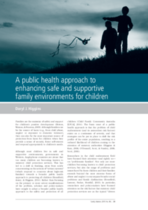
This report proposes a public health approach to promoting safe and supportive family environments for children and preventing child maltreatment in Australia.
This information packet presents an overview of facts, statistics, policies, legislation, best practices, model programs, and additional resources related to the US child welfare system and the emotional and psychological well-being of children involved in that system.
This paper addresses the disconnect between research and practice in regards to child welfare and child mental health services in the US.
The current review collates research and policy regarding use of residential schools for children and young people with intellectual disabilities in the UK and transition from these settings to adult services.
This article reviews current efforts to train child welfare workers in the US in trauma informed practices and argues that trauma informed care adaptation and training must transcend case workers and supervisors in order for true systemic change to occur.
This study examined psychopathology at age 12 years in a cohort of Romanian children who had been abandoned at birth and placed into institutional care, then assigned either to be placed in foster care or to care as usual.
This document stresses the importance of healthy attachments for children, especially looked after children. It provides an overview of attachment theory, presents the policy context of looked after children in Scotland, outlines the evidence on effective interventions for children in care and their families, and highlights findings and practice implications.
Following a consultative mapping, a regional learning meeting took place on 19-20 August 2014 in Nairobi, Kenya. The theme of this meeting was "Reflection on past, current and future efforts aimed at strengthening child care systems in East and Southern Africa."
This report presents policy and practice recommendations for the care and protection of unaccompanied migrant children in the United States, based on the wisdom and learning shared by participants in three Roundtable meetings convened by Lutheran Immigration and Refugee Service (LIRS).
This paper presents an overview of learning related to the prevention of family-child separation, the reintegration of children into family care, and economic interventions that support both.
New indicators and tools developed by MEASURE Evaluation, with support from the OVC technical working group of the U.S. President’s Emergency Plan for AIDS Relief (PEPFAR), simplify and standardize the data needed to set measurable goals for an OVC intervention.
The Child, Caregiver & Household Well-being Survey Tools for Orphans & Vulnerable Children Programs have been translated into French for use in francophone countries globally.
The questionnaire for children ages 10-17 years is intended for use as one of the OVC survey tools developed by MEASURE Evaluation, with support from the OVC technical working group of the U.S. President’s Emergency Plan for AIDS Relief (PEPFAR).
The questionnaire for children ages 0-9 years is intended for use as one of the OVC survey tools developed by MEASURE Evaluation, with support from the OVC technical working group of the U.S. President’s Emergency Plan for AIDS Relief (PEPFAR).
The caregiver questionnaire is intended for use as one of the OVC survey tools developed by MEASURE Evaluation, with support from the OVC technical working group of the U.S. President’s Emergency Plan for AIDS Relief (PEPFAR).
Ces outils de collecte de données sont des questionnaires destinés à une enquête auprès de ménages avec des enfants âgés 0 à 17 ans et les adultes du ménage qui s'occupent des enfants.
This manual describes the purpose of the orphans and vulnerable children (OVC) program evaluation tools, including when to use these tools, and how to use the tools.
On July 28, 2015, the CPC Learning Network hosted a webinar featuring Joanna Wakia, Monitoring and Research Advisor at Retrak, Charles Gwengwe, Executive Director at Chisomo Children’s Club, and Mr. McKnight Kalanda, Director of Child Affairs in the Malawi Ministry of Gender, Children, Disability, and Social Welfare.
This final section of Program P: A Manual for Engaging Men in Fatherhood, Caregiving, and Maternal and Child Health is designed for health sector workers and activists who are interested in developing and implementing social-awareness-raising activities in their community that promote the benefits of active fatherhood as a way to achieve gender equality, benefit children, and improve the lives of men and women.

This section is the second of three in Program P: A Manual for Engaging Men in Fatherhood, Caregiving, and Maternal and Child Health.

This section is the first of three in Program P: A Manual for Engaging Men in Fatherhood, Caregiving, and Maternal and Child Health.

This animated video, made for an Australian audience, illustrates the orphanage industry in Cambodia, particularly how Australian “voluntourists” unwittingly contribute to the exploitation and traumatization of children in orphanages.
This video from Globalsl.org, produced by Kindea Labs, describes both the negative impacts of orphanage volunteering and tourism as well as the ways in which international volunteering can be conducted appropriately for a positive impact on a community.
This document includes the Minimum Standards on Alternative Care for Children set out by the Government of Cambodia, including both the Minimum Standards for Residential Care for Children and the Minimum Standards on Alternative Care for Children in the Community.
This Prakas is intended to define roles and responsibilities of relevant competent agencies and establish procedures, operational guides, and forms to implement the Policy on Alternative Care for Children.
This document presents the full policy on the alternative care of children in Cambodia.
This video describes the work of the Alternative Care Panel in Uganda, a panel composed of professionals who assess the stability of potential adoptive or foster parents to determine if the parents can provide for needy and vulnerable children, with the ultimate goal of keeping children out of institutional settings and in family-based care.
This post from the Faith to Action Initiative highlights the work of the Abide Family Center in Uganda, which helps to keep families together.
This 6-minute video from the Center on the Developing Child at Harvard University explains the importance of human interaction with a caregiver to an infant’s brain development and the dangers of neglect to a child’s cognitive development, particularly the neglect that occurs in institutional settings.
This paper presents a policy position which argues that, “as the Greek authorities map out the road to long-term recovery, several key steps to reform the child protection and care system should be taken as a matter of priority.”
The Common European Guidelines on the Transition from Institutional to Community-based Care (‘the Guidelines’) provide practical advice about how to make a sustained transition from institutional care to family-based and community-based alternatives for individuals (including children) currently living in institutions and those living in the community, often without adequate support.
This toolkit, originally published in September 2010 and updated in February 2015, serves as a resource for social workers in the US who are working with immigrant families within the child welfare system.
This Guide, written in Spanish, features a compilation of several social protection programs, services and public policies that resulted in the prevention of family breakdown and in the support of families and communities in caring and protecting their children. All these examples are taken from the Latin American region, Italy and Romania.
Esta Guía, escrito en español, es una herramienta diseñada para colaboración con profesionales quienes trabajan en la implementación y manejo de programas de acogimiento familiar en América Latina.
In 2015, the Parliament of the Republic of Uganda considered the Children Amendment Bill, which has several implications for children’s care in the country. The object of the bill is to amend the Children Act Cap. 59, enhance protection of a child, provide for the guardianship of children, provide for inter country adoption, prohibit corporal punishment, and provide for related matters.
In 2013 The Better Care Network and Save the Children UK began an inter-agency initiative to review and share existing knowledge on international volunteerism as related to the alternative care of children in developing countries.
This paper provides a brief overview of basic family structures in EU countries and a description of family breakdown and its impact on children’s wellbeing.
This review synthesized the literature from 1990 to 2013 regarding the subject of grandparents raising grandchildren, particularly grandchildren with disabilities.
This study focuses on examining the mediating effects of social support on familial well-being or quality of life in order to help professionals identify and enhance sources of support for all grandparent caregivers.
This quasi-experimental study tested a model of adult mentorship and support to improve psychosocial outcomes among youth-headed households in a rural area of Rwanda.
This report presents the strategic thinking and proposed stages of development of the Better Volunteering Better Care initiative, as a result of its work during its first year.
This paper provides new evidence on parent and child reporting of corporal punishment, drawing on data from the Fragile Families and Child Wellbeing Study, a birth cohort study of families in 20 medium to large US cities.
This study described the magnitude of physical abuse during childhood in a representative sample of young adults selected from public universities in Albania, and to identify relationship between socioeconomic characteristics and behavioural/lifestyle factors associated with adverse childhood experiences.
This literature review highlights the practices, policies and research on violence and abuse prevention in early childhood. it is guided by a socio-ecological model of contexts, participants and interactional complexity.
This article examines the recruitment and transportation of internally trafficked children from Benue State in the north-central geo-political zone of Nigeria to Oyo State in the south-western zone of Nigeria
This National Gender and Children Policy developed by the Ghana Ministry of Women and Children's Affairs aims to mainstream gender concerns in the national development process.
This executive summary is the first document in a series of six reports, from the International Institute of Social Studies of Erasmus University (ISS), about the International Forum on Intercountry Adoption and Global Surrogacy, held in August 2014.
This report discusses concerns raised by participants of Thematic Area 2 (Intercountry Adoption, Countries of Origin, and Biological Families) of the International Forum on Intercountry Adoption and Global Surrogacy held in August 2014.
This report discusses concerns raised by participants of Thematic Area 3 (Intercountry Adoption Agencies and the HCIA) of the International Forum on Intercountry Adoption and Global Surrogacy held in August 2014.
This report summarises discussions of participants in Thematic Area 5 (Global Surrogacy Practices) of the International Forum on Intercountry Adoption and Global Surrogacy held in August 2014.
This report presents the topics and prevalent discussion points of the participants in Thematic Area 1 (HCIA implementation and the best interests of the child) of the International Forum on Intercountry Adoption and Global Surrogacy held at the International Institute of Social Studies in The Hague, the Netherlands, 11-13 August 2014.
This report discusses concerns raised by participants of Thematic Area 4 (Force, Fraud and Coercion) of the International Forum on Intercountry Adoption and Global Surrogacy held in August 2014.
Anna McKeon, consultant for the Better Volunteering Better Care initiative, presented at a launch event of a new report on orphanage volunteering from Next Generation Nepal.
This paper presents the findings of an exploratory research study of foster care youth residing in group homes in a mid-Atlantic state in the USA.
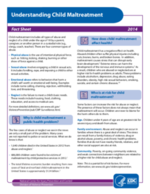
This brief factsheet from the U.S. National Center for Injury Prevention and Control of the CDC provides an overview of child maltreatment.
This guide serves as a supplement to the United States CDC guide “Essentials for Childhood: Steps to Create Safe, Stable, Nurturing Relationships and Environments.” It provides guidance on creating a context for increasing safe, stable, nurturing relationships and environments for children and families by promoting positive community norms.
This brief factsheet from the National Center for Injury Prevention and Control presents current data on child maltreatment in the United States.
This article, published in the book ‘Assessing the Long-Term Effects of Foster Care: A Research Synthesis,’ provides an overview of the history of the foster care system in the United States and findings from multiple studies on the effects of foster care on children.
This report presents analysis and key findings from a study aimed at fully understanding the situations of children in Indonesia that may lead to family separation.
This report, commissioned by the Ministry of Gender, Labour and Social Development of Uganda and supported by UNICEF, presents findings from an analysis on child poverty in Uganda, undertaken by the Economic Policy Research Centre.
This report presents findings of a study on the childhood and family backgrounds of 1,435 participants who were newly incarcerated in 2005 and 2006 in the United Kingdom. The report has a special focus on the experiences of abuse and care placement in childhood.
This report from the National Working Group on Foster Care and Education provides statistical and demographic data on the education of children in foster care in the United States and highlights promising programs around the country that promote positive educational outcomes for children in foster care.
This report from Retrak provides information on how to best count and develop estimates of the number of street-connected children in a particular area.
This report includes the statistical information regarding looked-after children in the UK for the year 1 April 2013 to 31 March 2014.
This document is a statistical first release issued by the Department for Education in England that provides national and local authority level information on the outcomes for children who have been looked after continuously for at least 12 months at 31 March 2013. Outcomes reported include educational attainment, special educational needs (SEN), health and wellbeing, offending, substance misuse and exclusions from school.

This document is the 16th annual report on child protection in Australia. The report includes detailed statistical information on child protection services provided on the state and territory level as well as demographic and background information on the children receiving services.
A brief revised draft resolution from the UN General Assembly on the twentieth anniversary of the International Year of the Family and its recognition of the continued importance of “giving due consideration to advancing family policy development in the ongoing discussion on the post-2015 development agenda.”
The present report is submitted pursuant to General Assembly resolution 68/136. The report focuses on the initiatives and activities by Member States and other relevant stakeholders in observance of the twentieth anniversary of the International Year of the Family, at all levels, and on recent family policy developments.
This Joint General Recommendation from the Committee on the Elimination of Discrimination against Women (CEDAW) and the Committee on the Rights of the Child (CRC) is aimed at clarifying the obligations of States to these Conventions regarding “harmful practices.”
This research brief provides an overview of an impact evaluation of the “Parents Make the Difference” program, conducted by the International Rescue Committee (IRC) and research partners at Duke University. The “Parents Make the Difference” program is a parenting intervention aimed at promoting the well-being of children in post-conflict Liberia.