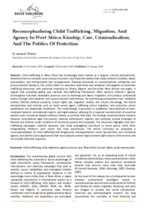
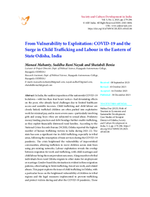
Contemporary Perspectives on Child and Youth Welfare From Different European Countries

Alexandra Geisler, Marco Wille, et al.

This book offers a comparative analysis of child and youth welfare systems across eight European countries, highlighting how diverse legal, historical, and institutional contexts shape responses to young people with complex support needs. Through contributions from researchers and practitioners, it reveals shared tensions—such as care versus control and participation versus coercion—while providing a multi-perspective foundation for transnational learning and policy reflection.

File

Inclusive Care Reform in India: Analyzing States’ Readiness and Responsiveness

Keystone Human Services, RIST, Hope and Homes for Children, and CINDI

This report documents the finding of the exercise undertaken by the Children and Families Together (CAFT)-India consortium to assess how Indian states are positioned for disability-inclusive care reform. Drawing from data across States, this highlights each State’s existing care systems and inclusion practices, offering valuable insights for policymakers, practitioners, and organizations advancing inclusive child protection and care reform in India.

File

Adaptation of Case Management Tools Under the Juvenile Justice System for Disability Inclusion

Keystone Human Services, RIST, Hope and Homes for Children, and CINDI

This report presents suggested adaptations to include disability-related questions across three key case management tools under the Indian Juvenile Justice Act 2015 – the Social Investigation Report, Individual Care Plan and Case History Form. It also documents the consultative process undertaken for these adaptations and offers practical recommendations to help child protection systems better identify, support, and include children with disabilities.

File

Disability and Child Protection Laws in India: A Study of the Juvenile Justice (Care and Protection of Children) Act 2015 and Disability Laws

Avaantika Chawla, Arushi Singh and Abhishek Rana

This report examines how India’s child protection laws interact with disability legislations, highlighting areas where greater focus is required to bring consonance to ensure that the rights of children with disabilities in need of care and protection are upheld.

File

From Vulnerability to Strength: The Impact of Thrive Scale™ on Family Strengthening and Child Separation Prevention in Urban and Rural India

Subroto Chatterjee and Richa Tyagi

This study addresses the urgent need for family-based care for children without parental care, as emphasised by the UN General Assembly’s 2019 resolution, India’s Juvenile Justice Act 2015, and Mission Vatsalya. The primary aim is to evaluate the effectiveness of the Thrive Scale™ tool developed by Miracle Foundation India in generating measurable, data-driven decisions to plan and implement suitable interventions for family strengthening.

File

Young People Transitioning from Out-of-home Care in Sweden, Norway and Australia: Comparison of the Enablers and Barriers

Philip Mendes, Jeanette Olsson, Ingrid Höjer, and Inger Oterholm

This article compares the existing legislative, policy and practice supports for young people transitioning from out-of-home care (known as care leavers) aged 18–25 years in three jurisdictions: Sweden, Norway and Australia. Attention is drawn to the impact of the different welfare regimes in these countries (i.e., social democratic vs liberal), the inconsistencies across different states and regions, and the eligibility and adequacy of existing support programmes.

File

From Institutional Care to Family-Based Alternatives: A Narrative Synthesis (2009–2025) and Policy Implications for Ogun State, Nigeria

Azorondu, A. Abigail, Adeniyi Ayomide, Somoye Adeyinka E., Couple Favour A., et al.

This article reviews global evidence on the impacts of institutional care versus family-based alternatives and examines how these findings inform foster care reform in Ogun State, Nigeria. It synthesizes research from 2009–2025 to identify key developmental outcomes, implementation lessons, and policy priorities for transitioning away from institutional care.

File

A scoping review of policies and practices to support young people transitioning from out-of-home care in Asia

Rangga Radityaputra, Susan Baidawi, Philip Mendes

This scoping review examines evidence from Asia and culturally comparable contexts to understand the experiences and support needs of young people transitioning from out-of-home care, with a particular focus on Indonesia. The findings highlight widespread gaps in formal leaving-care and aftercare support, alongside promising practices, the importance of informal networks and independent living skills, and the influence of stigma, gender, and resilience on care leavers’ transitions to adulthood.

File

Children living in illegal children’s homes

UK Children's Commissioner

New data from the Children’s Commissioner for England found 669 children living in unregistered children’s homes as of 1 September 2025—a 12% decrease from the previous year. While the reduction is welcome, these placements remain unlawful and unsafe, highlighting an ongoing failure to adequately protect vulnerable children.

File

Is Alternative Care on the Violence Against Children Agenda? A Review of Pledges Made at the 1st Global Ministerial Conference on Ending Violence Against Children

Justin Rogers, Aisling Ledwith, Florence Martin, Enrique Restoy, and Caroline Rose

In 2024, the 1st Global Ministerial Conference on Ending Violence Against Children (VAC) brought together 103 governments to make formal commitments to prevent and respond to VAC. This review analyses the pledges announced at the time of the conference, while acknowledging that some governments may have subsequently refined or expanded their commitments, as noted in the limitations.

File

Continuum of Care

Faith to Action

This interactive graphic depicts the vital processes, mechanisms, and care options necessary for supporting children at risk of being or already separated from their parents. It illustrates how best practices work together to prioritize family care, reduce unnecessary separation, and support

Image
Image of graphic

Nurturing childhood through group foster care system: A case study of hope community village

Punnya S. Pradeep and Francina P.X

This study examines the group foster care model at Hope Community Village in Kerala, India as an innovative, family-based approach to supporting children in need of care and protection. Findings show the model delivers rights-based, comprehensive care aligned with the Convention on the Rights of the Child, while highlighting challenges related to funding, policy, staffing, and social acceptance, and demonstrating its potential as a replicable framework for child protection.

File

Care Orders in Child Protection: A Human-Rights Based Approach

Patrick Agyare

This paper presents a rights-based framework for assessing when care orders are justified in child protection, integrating human rights standards, statutory criteria, and international jurisprudence around the principles of necessity, proportionality, and the child’s best interests. It offers practical guidance to improve consistency and accountability in decision-making, supporting evidence-based reform while reducing arbitrary or disproportionate child removals and prioritizing family preservation where possible.

File

Potential Role of Paraprofessionals Within Child Protection and Care

UNICEF and Maestral

This brief presents the case for engaging paraprofessional social service workers as part of a strengthened child protection and care system in Ukraine. The advocacy brief outlines how paraprofessionals—working under the supervision of qualified professionals—can help address workforce shortages, particularly in crisis-affected and resource-constrained contexts.

File

Youth Independent Living

UNICEF and Maestral

Youth Independent Living outlines the role of supported and supervised independent living as a key care option for adolescents and young people transitioning out of alternative care in Ukraine. Grounded in international legal frameworks and global evidence, the brief explains how independent living services support youth to safely transition to adulthood while prioritizing their best interests over institutional care.

File

Meaningful Participation of People with Lived Experience of Care

UNICEF and Maestral

This brief outlines why and how the voices of children, young people and caregivers with lived experience of the care system should be central to child protection and care reform in Ukraine. The brief clarifies key concepts and levels of participation, emphasizing that meaningful engagement goes beyond tokenism and must ensure influence, feedback and accountability.

File

Collective Impact and Care Reform in Ukraine

UNICEF and Maestral

This paper introduces the Collective Impact (CI) approach as a structured, equity-focused framework for advancing complex care reforms involving multiple actors. It explains how coordinated action across government, civil society, communities and non-traditional partners can move efforts from fragmented or isolated interventions toward shared goals, common metrics and sustained systems-level change.

File

Rapid Mapping and Analysis of Laws and Policies

UNICEF and Maestral

The paper provides an overview of Ukraine’s legal and policy framework related to child protection and care reform. The document reviews key national laws, strategies and regulations to assess their alignment with international child rights standards and the objectives of the reform to ensure that every child grows up in a family environment.

File

Economics of Better Care

UNICEF and Maestral

This paper outlines the economic case for investing in family- and community-based care as a foundation for children’s well-being and long-term human capital development. Focusing on Ukraine, the paper highlights systemic underinvestment in social services and argues that rebalancing public spending toward an integrated “cash plus care” approach would generate significant economic and social returns.

File

Service Package for Ensuring the Right of Every Child to Grow Up in a Family Environment within the Child Care and Support System Reform

UNICEF

This document outlines a minimum package of social services aimed at preventing child-family separation, supporting reintegration of children from institutional care into families, and sustaining family-based care. The package includes eight core services: resilience-building support; accompaniment for families raising orphans; early intervention; inclusive education assistance; day care for children with disabilities; social support for families in difficult life circumstances; social integration for care leavers; and supported living for young people with disabilities.

File

Technical Guidance for Oblast-level Better Care Start-Up

UNICEF and Maestral

The Technical Guidance for Oblast-Level Better Care Start-up outlines how to implement Ukraine’s Better Care programme at the regional level, in line with the National Strategy for Ensuring the Right of Every Child to Grow up in a Family Environment (2024–2028). It assigns clear roles to government, local authorities, civil society, and development partners, and provides a step-by-step approach for oblasts: forming Better Care Councils and community taskforces, conducting situational analyses, creating costed plans, setting monitoring frameworks, and delivering ISSB and family-based care.

File

The Strategy for Ensuring the Right of Every Child in Ukraine to Grow up in a Family Environment Costing Model and Resource Requirements

UNICEF and Maestral

The Costing Model and Resource Requirements report presents a comprehensive financial analysis of Ukraine’s National Strategy to ensure every child grows up in a family environment. It estimates the resources required to implement the Strategy and its multi-year implementation plan across national, oblast and hromada levels, with a focus on strengthening families, expanding family-based care, reintegrating displaced children and transforming institutional care.

File

Parenting Support in Ukraine

UNICEF, Maestral International

The report analyses existing parenting support policies, programmes and service models relevant to child protection and care reform. Drawing on international evidence and national sources, the review highlights the role of parenting support in preventing family separation, strengthening caregiving capacities and improving child well-being across the life course.

File

Climate Resilient Child Protection Systems in East Asia and Pacific

UNICEF EASRO

This technical brief describes how climate change is a child protection crisis that disproportionately affects children in East Asia and the Pacific, driving displacement, family separation, violence, and overwhelming already-strained protection services. Investing in climate-resilient child protection systems strengthens families and communities to prevent and respond to climate-related risks, while ensuring climate adaptation efforts are more effective, inclusive, and sustainable.

File

Working Together: The Story of the Orphan Care Movement in Ethiopia

The Christian Alliance for Orphans (CAFO)

This video highlights the rise of a locally led movement in Ethiopia, where Christian leaders and organizations are transforming child welfare practices following the end of intercountry adoption. It showcases the impact of the CAFO-supported DEBO Alliance as churches and advocates embrace domestic adoption and best practices to bring hope and lasting care to vulnerable children and families.

Integrated Social Protection in Ukraine: Cash Benefits for Children within Ukraine’s Better Care Initiative

UNICEF and Maestral

This publication examines the role of an integrated social protection system in strengthening family resilience, preventing family separation and supporting child protection and care reform. The brief outlines how coordinated cash transfers, social services and case management can more effectively address multidimensional vulnerabilities faced by children and families, particularly in the context of conflict, displacement and decentralization.

File
Exploring the prevalence, forms, risk factors, and interventions associated with violence against children in alternative care settings: A scoping review

Justin Rogers, Susie Wilson, Jen Dixon

This scoping review synthesises evidence from 77 studies (2014–2024) on violence against children in foster, residential, and kinship care, finding neglect to be the most common form of maltreatment, alongside physical, emotional, sexual, and peer violence across settings. While evidence on effective interventions is limited, the review highlights key risk factors and consequences, underscores the protective role of supportive relationships and trauma-informed care, and calls for stronger family-based care, oversight, and child-centred practices to reduce harm and promote well-being.

File

Supporting the cultural connections of children from culturally diverse backgrounds in out-of-home care: perspectives from Australian foster and kinship carers

Rebekah Gracea, Kathy Karatasasa, Adaora Ezekwem-Obia, et. al

This study examines the views of Australian foster and kinship carers on the importance of cultural connection for children from culturally diverse backgrounds, finding broad agreement that culture is central to identity and wellbeing. The findings highlight challenges in delivering cultural care and underscore the need for training in cultural humility, improved cultural data collection, and collaborative cultural care planning that includes children and birth parents as key decision-makers.

File

Exercising Agency for a Better Future: Adolescents in Korea's Kinship Care

Eunju Lee, Choong Rai Nho, Jinjoo Hong, Eun Hye Kim, and Jeesoo Jung

This study explores the lived experiences of adolescents in grandparent kinship care in South Korea, drawing on interviews with 22 grandparent–adolescent pairs to examine how young people respond to adversity, build support, and exercise agency. Despite widespread experiences of parental abandonment and stigma, adolescents demonstrated resilience and intentionality, highlighting the need for stronger, coordinated services to support grandparent kinship families within Korea’s underdeveloped foster care system.

File

Synthesis Report: Developing an investment case for strengthening the social service workforce for Child Protection in Kenya and Zambia

UNICEF ESARO

A strong social service workforce (SSW) is the backbone of effective child protection systems. Across Eastern and Southern Africa, social service workers play a critical role in preventing and responding to violence, abuse, neglect, and exploitation of children. Yet, the workforce remains underfunded and understaffed, limiting its ability to deliver essential services. To address this gap, UNICEF Eastern and Southern Africa Regional Office (ESARO) has developed this Synthesis Report , providing a detailed guide to developing an investment case, drawing on lessons from Kenya and Zambia.

File

Policy Brief: Developing an investment case for strengthening the social service workforce for Child Protection

UNICEF ESARO

A strong social service workforce (SSW) is the backbone of effective child protection systems. Across Eastern and Southern Africa, social service workers play a critical role in preventing and responding to violence, abuse, neglect, and exploitation of children. Yet, the workforce remains underfunded and understaffed, limiting its ability to deliver essential services. To address this gap, UNICEF Eastern and Southern Africa Regional Office (ESARO) has developed this Policy Brief summarizing the rationale and approach for building an investment case for strengthening the SSW.

File

Programmatic Guidance on Cross-Border Case Management

UNICEF and UNHCR

Cross-border case management (CBCM) is a component of child protection case management that supports children on the move and their families who cross international borders, requiring identification and registration, safe cross-border information sharing, and coordinated action among authorities across jurisdictions. This programmatic guidance provides practitioners with recommendations to implement CBCM in line with international refugee protection standards and the best interests of the child, emphasizing engagement with national authorities, continuity of protection, durable solutions, and the upholding of children’s rights within broader child protection systems.

File

Framing child protection systems: Toward a normative framework and operational definition for policy and practice

Bruce Grant

This paper proposes an expanded conceptual and normative framework for child protection systems to promote coherence, inclusivity, and accountability in both development and humanitarian contexts. Drawing on global data, recent initiatives, and a dual-axis framework distinguishing norms of operation and intent, it offers a field-tested definition to guide national planning, partner alignment, and systems-focused reform that upholds every child’s right to protection.

File
From Surviving to Thriving: The seven drivers of well-being for children in care and care leavers

Linda Briheim-Crookall, Dr Emily Blackshaw, Richard Ollerearnshaw, Narendra Balla, and Dr Claire Baker

This report from the Coram Institute for Children marks the 50th anniversary of Coram Voice and highlights the Bright Spots programme, which captures the perspectives of children and young people in care and care leavers to inform local and national policy. Drawing on 27,000 responses collected between 2015 and 2024, the study focuses on what matters most to children and young people in their lives, emphasizing their voices rather than care system outcomes or reasons for entering care.

File

Adoption in contemporary India: Insights from the lived experiences of adoptive mothers

Charu Jain and Waheeda Khan

This qualitative study explores the emotional, psychological, and social experiences of adoptive mothers in India through in-depth interviews, identifying key themes related to adoption processes, wellbeing, family dynamics, personal values, and societal influences. The findings highlight how these experiences interact with biopsychosocial factors, underscoring the need for more informed, mother-centred policies and support mechanisms in the adoption system.

File

Socio-Psychological Factors and Parents' Attitudes toward Fostering Children in Akwa Ibom State, Nigeria

Helen Ama Umana

This study examines how socio-psychological factors influence parents’ attitudes toward fostering children in Akwa Ibom State, Nigeria, using a correlational design and survey data from parents in urban and rural communities. Findings show that family communication patterns and disciplinary beliefs significantly predict positive attitudes toward fostering, highlighting the need for sensitization and education initiatives led by government and social welfare organizations.

File

Reconceptualizing rehabilitation: Institutional care and empowerment of street girls in Pakistan

Ms. Aaleen Khattak, Dr. Shakeel Ahmed, Mr. Sohail Ahmad, and Mr. Ijaz Muhammad Khan

This study examines whether institutional rehabilitation for street girls in Pakistan is genuinely transformative by assessing services at the Zamung Kor Model Institute through a gender- and child-centred lens. While findings show improvements in safety, emotional regulation, and educational engagement, persistent gaps in trauma-informed care, vocational pathways, and post-discharge support highlight the need to reconceptualize rehabilitation as a continuous, community-linked process.

File

Challenges Facing Orphans and Vulnerable Children in Zimbabwe

John Ringson

This book explores the challenges facing orphans and vulnerable children in Zimbabwe within the broader context of the Global South, highlighting how poverty, inequality, HIV/AIDS, and economic instability deepen children’s vulnerability. Drawing on Ubuntu philosophy, neoliberalism, and African Renaissance perspectives, it underscores the importance of community-led, culturally sensitive, and African-driven approaches to inform policy and practice supporting OVCs.

Image
Image of Book Cover

Kinship care as living law – an unwritten source of child protection law

Dr. Lilla Garayová

This article examines kinship care as an unwritten but legally significant source of child protection law, drawing on concepts of living law to show how informal caregiving practices operate across diverse legal and cultural contexts yet remain largely invisible within formal legal systems. Using comparative analysis from Europe and the Global South, it highlights both the strengths and risks of informal kinship care and calls for a child-centred, legally pluralistic approach to better align community norms with state and international law.

File

Co-producing research into kinship care: A report into opportunities and challenges

Professor Judith Harwin, Clare Walsh, Anam Raja, et. al

This report examines opportunities and challenges in co-producing research on kinship care, highlighting the need to involve carers as equal partners rather than treating them solely as research subjects. Drawing on a study conducted between 2022 and 2025 and accompanied by a practical toolkit, it emphasizes inclusive approaches that leverage kinship carers’ lived experiences to produce research relevant to policy and practice across all types of kinship care.

File

India’s Child Protection Framework: Achievements, Shortcomings and Roadmap for Reform

Dr. Uttam Kumar Panda and Ms. Sanya Kumar

This paper critically examines India’s child protection framework, highlighting that despite comprehensive legislation like the JJ Act, POCSO, and programs such as Mission Vatsalya, systemic gaps in implementation, funding, institutional capacity, and data collection leave millions of children—particularly those in Child Care Institutions (CCIs)—vulnerable to abuse, neglect, and child marriage.

File

Reimagining Family Support Services : Perspectives from Kinship Caregivers

Shari Monsma, Gail Molliet, Barbara Lee, et. al

This report presents findings from a 2022 consultation with kinship caregivers across British Columbia, highlighting their experiences navigating children and family services. Analysis revealed the need for recognition and respect for kinship families, improved access to consistent and equitable supports, trauma-informed and culturally grounded practices, and stronger collaboration with service providers, with caregivers’ calls for action emphasizing system improvements to sustain caregiving and promote children’s well-being.

File

Perceived Supports and Barriers in Transitioning to Adulthood From Alternative Care: A Multinational Study of 962 Adults With Care Experience

Amanda Hiles Howard, Megan Roberts, Peter K. Muthu, et. al

This study examines the experiences of 962 care-experienced adults from over 20 countries, focusing on the supports and barriers they encountered transitioning to adulthood after separation from parental care. Findings highlight the critical roles of supportive relationships, mental health and resilience, and access to education and resources, while also noting how financial hardship and limited services hinder successful transitions, informing recommendations for strengthened support systems.

Evaluating Caregivers-Orphans Relationship and State of Shelter in The Selected Orphanages of Khyber Pakhtunkhwa, Pakistan

Dr. Amir Alam, Dr. Sajjad Hussain, and Subhan Ullah

This study evaluates the shelter conditions and caregiver–orphan relationships in orphanages in Khyber Pakhtunkhwa, Pakistan, using both quantitative and qualitative methods. Findings indicate that while most orphans are satisfied with basic shelter, their relational and developmental needs are often unmet, highlighting the need for well-trained residential care staff and the recommendation that institutional care be used only as a last resort to support successful reintegration into communities.

File

Exploring young residential care leavers’ participation in care leaving decisions in Ghana: An interpretive analysis using Hart’s ladder of participation

Frederick Godwill Amissah

This qualitative study examines how young care leavers in Ghana are involved in decisions about their transition from residential care, revealing that despite national and international policy commitments, their participatory rights are often neglected. Findings show that care leavers frequently feel excluded or manipulated in key decisions, highlighting the need for more inclusive, rights-based approaches that recognize them as active partners in planning their post-care futures.

File

Transformation of care regimes in Central Eastern Europe: the case of Croatia and the Czech Republic

Ivana Dobrotić and Blanka Plasová

The multiple and extensive transformations that have occurred in Eastern Europe since the 1990s did not bypass care, bringing diverse care regimes. This chapter, in the Research Handbook on Social Care Policy, aims to explore the main trends in the development of care policies in Croatia (a post-Yugoslav country) and the Czech Republic (a Visegrád country).

Invisible No More: National Solutions for Protecting Unaccompanied and Separated Migrant Children in Egypt

Enas Abdel Azim, Noran Khorsheed, Raghda Bahy Elessawy, Tharwat Abaza

This policy paper examines Egypt’s protection framework for unaccompanied and separated migrant children, highlighting both significant recent advances, such as national SOPs, a new asylum law, and expanded residence permits, and persistent challenges related to legal visibility, registration delays, and service access. It proposes actionable reforms to strengthen legal, administrative, and service systems, including expanding family-based alternative care to migrant and refugee children, developing child-friendly asylum procedures, and better integrating NGO, refugee-led, and community-based support into state structures.

File

Promoting the rights of infants in care: Advocating advocacy

Tarja Pösö

This article explores how infants’ rights in alternative care are understood and advocated for by practitioners in Finland, drawing on interviews with foster carers, social workers, and other professionals. The findings show that advocacy is driven by recognition of gaps in standardised practice and is enacted through embodied, institutional, and structural approaches, highlighting the need for age-aware expertise to fully recognise infants as rights holders in care.

File

Exploring vulnerability in residential childcare institutions in Addis Ababa, Ethiopia. The narrative on institutionalised children

Chiara Costa

This article examines how vulnerability is constructed and experienced within residential childcare institutions involved in humanitarian interventions in Addis Ababa, Ethiopia, with particular attention to adult narratives and Western positionality. Drawing on ethnographic research, it deconstructs structural and relational factors shaping children’s marginalisation and proposes methodological approaches that centre children’s perspectives in research.

File

Strengthening child welfare policies for Indian orphaned and abandoned children: Bridging gaps through comprehensive review

Ms. Anmol Shekhar Srivastava and Dr. Jaya Bharti

This paper critically reviews India’s child welfare policies, highlighting how gaps in implementation, funding, and monitoring continue to leave millions of orphaned and abandoned children vulnerable despite existing legal frameworks. Drawing on international best practices, it proposes a shift toward family-based care, strengthened mental health and social work systems, technology-enabled monitoring, and greater child participation to build a more inclusive, child-centred welfare system.

File

Beyond the Walls: Systemic Barriers to Education in Institutional Care and the Role of Social Work

Abdul Rasheed K.M and Dr. Noor Mubashir

This study examines the educational barriers faced by children in institutional care in India, identifying how structural rigidity, limited resources, stigma, and emotional neglect undermine equitable access to meaningful learning. Drawing on qualitative insights from care and education professionals, it highlights the critical role of social work in advancing child-centred, rights-based approaches to transform institutional care into an environment that supports inclusion, wellbeing, and educational equity.

File

Trapped in a State-of-Nowhere: Bhutanese Unaccompanied and Separated Refugee-Children in Nepal

AKM Ahsan Ullah and Diotima Chattoraj

This paper explores the lived experiences of Bhutanese unaccompanied and separated refugee children living in camps in eastern Nepal, examining how they navigate prolonged displacement, statelessness, and institutional neglect through ethnographic and narrative methods. It argues that these children exist in a “state-of-nowhere,” rendered politically and administratively invisible within refugee governance systems, and calls for rights-based, child-centred responses that address the structural and epistemic violence shaping their exclusion.

Motivations, expectations, and social perceptions of foster families in Albania

Megi Xhumari, Juliana Ajdini, and Genta Kulari

This qualitative study examines the lived experiences, motivations, and expectations of foster parents in Albania as the country transitions from institutional to family-based care, drawing on in-depth interviews with all active foster families at the time of the research. Findings reveal that fostering is driven by faith and compassion but shaped by limited state support, social stigma, and increasing awareness of children’s trauma, offering rare insight into how institutional and social contexts affect the sustainability of foster care in Albania.

File

Hearing the voices of girls in residential care in Pakistan: Exploring perceived influences on mental health and wellbeing

Hafzah Shah, Michelle O’Reilly, Diane Levine, et. al

This paper explores the mental health and wellbeing of care-experienced girls in Pakistan, highlighting how structural and systemic factors shape their experiences. Using focus group data, it identifies limited mental health awareness, gender discrimination and harassment, and restricted opportunities as key challenges, and offers recommendations framed within children’s and women’s rights to better support their futures.

File

Poverty and parental discipline

Mo Alloush, Emily Conover and Susan Godlonton

This study examines how the introduction of a conditional cash transfer program in Peru affects parental discipline practices. It finds that in districts receiving the program, reports of physical punishment by mothers and fathers among low-income families decrease by at least 2.7 percentage points (11%), suggesting the program may provide additional benefits by reducing harsh disciplinary practices.

File

Leaving Care around the World: Policy, Practice, Research, and Youth Participation

Tehila Refaeli and Varda Mann-Feder

This book reflects two decades of work by the International Network on Transitions to Adulthood from Care (INTRAC) to advance academic research and policy reform on leaving care globally. It includes thirty-two country chapters, each providing background information and key statistics on children in care and care leavers based on available national data.

Image
Image of Book Cover

Navigating Parental Challenges in Child Welfare

James C. Wadley

This book chapter examines the child welfare system, parental challenges, and family resistance, presenting a theoretical framework for building family resilience. It highlights stressors such as financial instability and mental health issues, and emphasizes collaborative, dignity-centered strategies that combine social work, mental health, and community support to improve outcomes for parents and children.

Deconstructing the role of gender and power in restorative approaches to child protection: Reimagining justice for children

Decent Munzhelele, Hasandi Rannzida, Talifhani Trevor Ramatswi, et al.

This article examines how gendered power dynamics influence restorative approaches to child protection, showing that traditional practices can marginalize children, especially girls and gender-diverse individuals. It highlights the potential for restorative justice to be transformed into a more inclusive and equitable system that addresses harm while challenging systemic power imbalances.

File

Children in War: Attachment, Trauma, Support and Recovery

Marinus H. van IJzendoorn, Dmytro Martsenkovskyi, and Marian Bakermans-Kranenburg

War negatively affects adults’ mental and physical health, which in turn impacts their parenting, exposing children to both direct and indirect stressors. This book examines these consequences, using evidence-based research and case studies from the Russian-Ukrainian war to highlight the importance of attachment, trauma-informed support, and interventions for families during and after conflict.

File

Young people’s experiences of support, belonging, and freedom before and after leaving residential care institutions in Kenya

Sarah Elizabeth Neville, K. Megan Collier, Elizabeth K. Klein, Joanna Wakia, et. al

In Kenya, young people’s experiences of residential care and life after leaving care highlight trade-offs between material support, emotional guidance, and personal freedom. The study emphasizes that family strengthening and individualized case management are crucial to support children reunifying with families and successfully transitioning out of residential care.

Image
Image of article

When the temporary becomes permanent: liminal parenthood in adoptions from foster care in Chile

Irene Salvo AgogliaI and Beatriz San Román Sobrino

This article critically analyzes the complex journey undertaken by foster families who decide to adopt the children or adolescents they initially cared for on a temporary basis. Through the study of four cases, it examines the experiences and perspectives of Chilean families who chose to transform their role from foster care to adoption, presenting narratives that highlight the controversies, inconsistencies, and tensions between the logics of temporary and permanent care within the Chilean child protection system.

File

‘Caring for the carers’: Compassion fatigue and associated factors in foster and kinship carers

Christine Clark and Emily P. Taylor

This study examines the presence of compassion fatigue among foster and kinship carers in the United Kingdom and explores factors associated with it using survey data from 180 caregivers. Findings indicate that carers experience higher levels of compassion fatigue than helping professionals, with greater fatigue linked to lower parenting satisfaction, attachment avoidance, and unmet expectations of social support, highlighting important implications for social and clinical support systems.

File

Protocol for preparing youths leaving child and youth care centres in South Africa: Insights from social workers

Fezeka Mbangula and Elzahne Simeon De Jager

There is still limited research on South African youths aging out of residential care, and there is no established protocol to guide social workers in preparing them for independent living. This study aimed to investigate what elements should be included in a protocol for social workers to effectively prepare youths leaving child and youth care centres (CYCCs).

File

Youth “Aging Out” of Substitute Care in Canada: A Scoping Review of the Scientific Literature

Laurence Magnan-Tremblay, Varda Mann-Feder, Tristan Légaré & Ariane Montminy

This scoping review examined the scientific literature on youth aging out of substitute care in Canada to address challenges in estimating the country’s contribution to this growing global research field. The review identified key trends, research gaps, and future directions, emphasizing the need to better integrate existing findings to build a more cohesive Canadian evidence base.

[Webinar Recording] Child Protection in the Era of Localization: Context, voice, and ownership

CPC Learning Network

This webinar, co-hosted by the Columbia University Seminar on Global Mental Health, examined how the shift toward localization is reshaping community-based child protection. The session explored both the challenges and opportunities of localizing child protection and well-being initiatives, emphasizing the need to transfer power to communities and support genuine local ownership for sustainable impact.

So Goes China: The End of Intercountry Adoption as We Know It?

Kristen E. Cheney and Karen S. Rotabi-Casares

This article presents a brief history of intercountry adoptions from China and other countries, discusses reasons for its demise, and considers the consequences—for China’s children and for intercountry adoptions more broadly. It questions whether we are indeed seeing the end of intercountry adoption “as we know it,” while recognizing the emergence of new systems of care.

Image
Image of article

‘If We Do Not Speak Out, No One Else Will’: Adoptee Activism and Its Impact on Intercountry Adoption in The Netherlands

Shila Khuki de Vries, Sarah Janaki Peshala de Vos, and Kristen E. Cheney

This article highlights the role of adoptee activism in raising awareness and changing policy regarding Intercountry Adoption (ICA) in The Netherlands. Through interviews with a selection of adoptees engaged in activism, this study shows that adoptees became engaged in activism as a result of growing adoptee consciousness in combination with encountering irreconciliation; they employed many types of activism, sometimes with different goals and strategies; they cooperated in different constellations and with many allies such as journalists, lawyers and scholars; and their activism had significant impact on general awareness and government policy.

File

[Video] Global Charter on Children’s Care Reform: Guidance for Requesting Technical Assistance

Maestral International

This video provides a short overview of the Global Charter on Children's Care Reform:Guidance for Requesting Technical Assistance, which provides instructions on how governments can request technical support from a team of care reform advisors to develop or begin implementing those commitments. This includes a description of the different types of technical assistance available, ways it can be provided, and a step-by-step guidance for submitting requests.

[Video] Global Charter on Children's Care Reform: Guidance for Developing Commitments

Maestral International

This video provides a short overview of the Global Charter on Children's Care Reform: Guidance for Developing Commitments, which supports governments to design ambitious, measurable, and context-specific commitments that align with the Charter’s principles. It includes practical criteria, examples, and participatory approaches to ensure commitments are realistic, well-resourced, and responsive to children’s needs. 

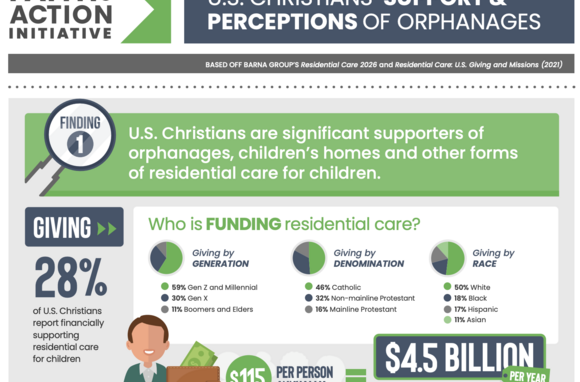
Shifting U.S. Christian Support in Global Orphan Care: Learning and Strategy Session

Faith to Action

This webinar presented findings from a 2025 Media Landscape Analysis by Pinkston and Barna’s 2025 survey of U.S. Christians, highlighting a significant shift in Christian media narratives away from orphanages and toward family-based care, alongside rising awareness that poverty—not orphanhood—drives most placements.

Alone, On the Move and Unseen: Spotlighting the urgent needs of unaccompanied and separated children

International Data Alliance for Children on the Move (IDAC)

This brief by the International Data Alliance for Children on the Move (IDAC) calls for urgent global action to close these data gaps and strengthen evidence-based policies that uphold the rights of unaccompanied and separated children. Based on a 2025 literature review of more than 200 sources, it identifies key trends by age, gender, migration status and route, and other variables.

File

Webinar Recording: Strengthening  Children’s Care Reforms through Access to Justice

Better Care Network, Child Identity Protection (CHIP), Institute for Inspiring Children's Futures, UK Foreign, Commonwealth and Development Office, Pathfinders for Peaceful, Just and Inclusive Societies & UNICEF

This webinar, held December 16, 2025, spotlighted the powerful intersection between two consequential global advocacy movements in human rights: the reform of alternative care systems for children and the advancement of children’s access to justice.

Transition Case Study: Alliance For Children Everywhere Zambia

Better Care Network, ACE Zambia

ACE Zambia, founded in 1998 as a faith-based organization supporting orphans and vulnerable children, gradually shifted from operating multiple residential care facilities toward strengthening family- and community-based services after recognizing the harms of long-term institutionalization. Between 2014 and 2025, the organization closed all residential homes, expanded preventative and family-focused programs, and ultimately increased its reach by supporting far more children in safe family settings using the same level of resources.

File

Assessing the impacts on child welfare practice of important articles of the UN convention on the rights of the child: A comparison of Australia, Canada and the USA

Bob Lonne, Ashley Stewart-Tufescu, Shawna Lee, and Christine Morley

The 1989 Convention on the Rights of the Child (CRC) affirms the importance of family, culture, and community in children’s lives and obligates governments to support families and protect children from discrimination, violence, and exploitation, yet many countries still lack policies that require a child-rights approach, prioritize best interests in decision-making, or prohibit corporal punishment. This article critically examines how effectively Australia, Canada, and the United States have implemented key CRC principles—particularly best interests and corporal punishment—by comparing their child protection policies, legislation, and practices to assess the Convention’s influence and its potential to drive broader system reform.

File

Effects of My First Place on Labor Market and Postsecondary Educational Outcomes

Amy Dworsky, Amanda M. Griffin, and Molly Van Drunen

The Chapin Hall report evaluates the My First Place program, which provides intensive case management and fully subsidized housing to young people aging out of extended foster care in six California counties. Using data on 2,598 participants, the report finds that program completers were more likely to be employed, earned higher wages, and were more likely to enroll in and complete a semester of college compared with nonparticipants or those who did not complete the program.

File

Child adoption as an oppressive child protection practice: The voices of adopted adolescents in Zimbabwe

Taruvinga Muzingili, Charles S. Gozho, Tinos T. Mabeza, et al.

Adoption in Zimbabwe, while intended to provide stable families for children without parental care, often marginalizes adopted adolescents by excluding them from decisions, limiting transparency, and severing cultural ties. This study highlights the emotional distress and identity challenges this creates and calls for more inclusive, transparent, and culturally grounded adoption practices that uphold children’s rights and voices.

File

Safety under scrutiny: How children and young people perceive safety in residential care settings

Carina Pohl

This study examines how children in Swiss residential care perceive safety, revealing that while institutions aim to protect them, many still experience both safety and unsafety shaped by physical spaces, institutional rules, and relationships with staff. By centering children’s voices, the article highlights gaps between residential care’s protective mandate and children’s lived experiences, calling for a more nuanced, justice-oriented understanding of safety in child welfare.

Image
Image of article

الميثاق العالميّ لإصلاح رعاية الأطفال: إرشادات لوضع الالتزامات وإعدادها

UK Foreign, Commonwealth and Development Office

كجزء من الحملة العالميّة لإصلاح رعاية الأطفال، تُحثّ الدول على تقوية الأسر، وتوسيع نطاق الرعاية البديلة الآمنة والحانية ضمن بيئة أسريّة، والإنهاء التدريجيّ والمستمرّ لاستخدام المؤسّسات لرعاية الأطفال.

File

Charte mondiale pour la réforme de la prise en charge des enfants: guide pour l'élaboration des engagements

UK Foreign, Commonwealth, and Development Office

Dans le cadre de la Campagne mondiale pour la réforme de la prise en charge des enfants, les pays sont encouragés à renforcer les familles, développer des modes de prise en charge alternatifs sûrs et favorables au développement de l’enfant, et mettre progressivement fin au recours aux centres d’a

File

Carta Global para la reforma del cuidado de la niñez y adolescencia: guía para la formulación de compromisos

UK Foreign Commonwealth and Development Office

Como parte de la Campaña global para la reforma del cuidado de la niñez y adolescencia, se exhorta a los países a fortalecer a las familias, ampliar los cuidados alternativos seguros y protectores basados en la familia y poner fin progresivamente al uso de instituciones para el cuidado de la niñe

File

Child Protection in Ukraine − Social Work Challenges Amidst Shifting Global Child Rights Discourse

Timisha Dadhich & Ruchi Sinha

This paper analyzes child rights in conflict, with a particular focus on the ongoing war in Ukraine, where children face heightened vulnerabilities to trafficking and exploitation. It identifies the key impacts of contemporary conflicts on children and the role of social workers in these contexts.

Image
Image of article

I Can’t Hold On: Understanding the Instability of Female Syrian Care Leavers in Turkey

Metin Gani Tapan

This study explores the experiences of young Syrian migrant women transitioning out of institutional care in Türkiye, revealing how gender, migration status, and structural barriers shape their pathways to adulthood. It finds that gaps in education, employment support, housing, social capital, and aftercare services create persistent instability and exclusion, underscoring the need for more inclusive, gender-sensitive aftercare policies.

Image
Image of article

Childhood at Risk on a Heating Planet: Exploring the impact of Climate Change on children without parental care

International Social Service

Climate change is increasingly recognized as a child rights crisis, with children without parental care being particularly vulnerable to its impacts. This brief highlights how climate change heightens risks of losing parental care, creates unaccompanied children, and disrupts alternative care systems, and it offers recommendations for policymakers and practitioners to prevent separation and protect these children.

File
Statutory family support in Europe and Central Asia

UNICEF ECARO

Governments across Europe and Central Asia have advanced child care reforms, yet many children—especially those with disabilities or from marginalized communities—still face risks of separation without strong statutory family support systems in place. This White Paper outlines the essential policies, services, workforce standards, and rights-based approaches countries need to prevent unnecessary separation, strengthen families, and ensure every child can grow up safely in a supportive family environment.

File
Transformation of Residential Care Facilities for Children in Moldova

Beth Bradford, Parascovia Munteanu, Kelley Bunkers

The Moldova Transformation Guidance aims to support the transformation process of residential care facilities (RCF) to models that promote family support and community-based services, or to safely close them and redirect their resources. National and local authorities can use this guidance to design, plan, budget, communicate, and coordinate transformation at both individual and system levels.

File
Handbook of good practice on faith engagement for better care in Moldova

Misiunea Socială Diaconia a Mitropoliei Basarabiei

The publication summarizes lessons and good practices from the Community Engagement for Better Care pilot project implemented in four communities by Diaconia of the Bessarabian Orthodox Church in Moldova in 2024-2025. The project explored how faith communities - especially the Orthodox Church - can support children and families in need.

File
Booklet of Sermons on Caring for Children, Families and Communities

Pr. Ioan Cosoi, Misiunea Socială Diaconia a Mitropoliei Basarabiei

This booklet of sermons, developed by Diaconia of the Bessarabian Orthodox Church in Moldova promotes solidarity-based communities where children and families thrive in safe and nurturing environments. It provides sermons for priests to emphasize child protection, family values, and community engagement.
File