Measuring Success for Care Leavers in England: Whose Definition Counts?

Nikki Luke, Áine Rose Kelly, Amirali Arian, et al.

This article reviews how ‘success’ is defined for young adults, comparing academic and care-experienced perspectives with the narrow statutory outcome measures currently used for care leavers in England. It finds that existing measures are limited and advocates for a more comprehensive approach that centers care leavers’ own definitions of success.

File

Social Cohesion for Disability Inclusion in Kenya​

Joanna Wakia, Peta-Gaye Bookall, Edith Apiyo, Musa Abdallah, and Fidelis Muthoni

This document presents a comprehensive report on a pilot project in Kenya that tested the Social Cohesion for Disability Inclusion Approach as part of the Changing the Way We Care℠ initiative. The report details the implementation process, participant feedback, and measurable shifts in knowledge, attitudes, and behaviors among caregivers and community members, highlighting increased empathy, inclusion, and advocacy.

File

Global Charter on Children’s Care Reform: Guidance for Requesting Technical Assistance

UK Foreign, Commonwealth and Development Office

Countries that sign the Global Charter on Children's Care Reform are encouraged to make their own commitments describing specific actions they will take to realise the aims of the Charter. This guidance provides instructions on how governments can request technical support from a team of care reform advisors to develop or begin implementing those commitments.

File

Global Charter on Children's Care Reform: Guidance for Developing Commitments

UK Foreign, Commonwealth and Development Office

Countries that sign the Global Charter on Children's Care Reform are encouraged to make their own commitments describing specific actions they will take to realise the aims of the Charter. This guidance document aims to support governments to design ambitious, measurable, and context-specific commitments that align with the Charter’s principles.

File

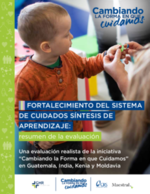
Care System Strengthening Learning Synthesis

Joanna Wakia, Alexandra Safronova, Kelley Bunkers, Sully Santos and Beth Bradford

This report presents findings from an evaluation by Changing the Way We Care (CTWWC) that used a realist approach to examine how care reform progressed in Guatemala, India, Kenya, and Moldova across five key system components. It identifies advocacy, government ownership, collaboration, and capacity-building as major drivers of change and offers recommendations for governments and partners to embed family care in national systems, strengthen coordination and workforce capacity, and sustain reforms through evidence, shared learning, and long-term commitment.

File

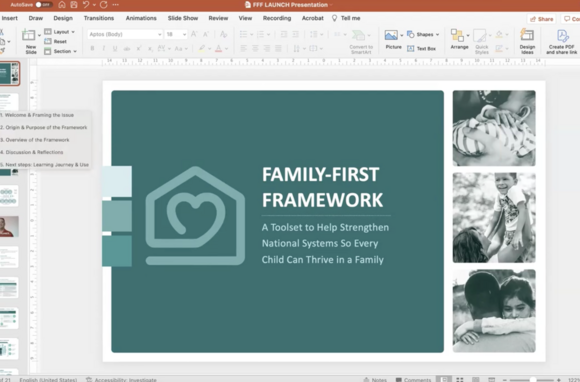
Family-First Framework

A Family for Every Orphan

This toolset provides a concise, adaptable framework to help national leaders and stakeholders strengthen child protection systems that prioritize family-based care. It distills key international standards and guidance into accessible materials to support informed, strategic conversations on building “Family-First” systems for all children.

So I told myself I couldn’t stay here …Unaccompanied Children at the Belarusian Border and in the Polish Alternative Care System in 2024

Save the Children

The report is an attempt to capture the complex and difficult situation faced by unaccompanied children seeking international protection at the Polish-Belarusian border. It describes the legal and factual state of affairs in 2024.

File

Country Care Profile: Kenya

Better Care Network and UNICEF

This country care profile provides an overview of key lessons learned in the children’s care reform process in Kenya, including successes, challenges and areas for progress, and gaps in learning and best practice.

File

Alternative Care Survey

Alliance for Child Protection in Humanitarian Action

Children affected by conflict, displacement, and disasters face heightened risks of family separation, underscoring the need to strengthen alternative care systems. To update and adapt the Alternative Care in Emergencies (ACE) Toolkit to current realities, the Alliance for Child Protection in Humanitarian Action’s Unaccompanied and Separated Children Task Force conducted a 2024 global survey—led by Save the Children and the International Rescue Committee—to inform revised, context-responsive guidance and address emerging policy and practice gaps.

File

Outil d’evaluation pour la transition vers d’autres modeles de protection

Rebecca Nhep and Hannah Won - Better Care Network & Kinnected, an intitiative of ACC International Relief, with support from Changing the Way We Care and Martin James Foundation

Cet outil vise à aider les praticiens à atteindre les objectifs suivants lorsqu'ils fournissent un soutien technique aux institutions en transition :

Freiwillig ins Waisenheim? Waisenheime im globalen Süden und ihre Unterstützungsmechanismen

Markus Köker

Dieser Beitrag beschäftigt sich mit theologischen und historischen Hintergründen christlichen Engagements für Waisen speziell im deutschen Kontext und stellt wichtige Forschungsergebnisse der letzten Jahrzehnte zum Kindeswohl in Waisenheimen dar. Dabei werden auch gewohnten Denkmuster hinterfragt und Alternativen aufgezeigt, die im besten Interesse der Kinder sind.

File

Voluntarily into an Orphanage? Orphanages in the Global South and their support mechanisms

Markus Köker

This article, by Markus Köker, examines the theological, historical, and practical dimensions of Christian involvement in orphanages, particularly focusing on institutions in the Global South and the support they receive from the Global North. Köker traces how good intentions, religious motivations, and volunteer tourism have sustained orphanage systems that often harm children’s development and perpetuate family separation.

File

Reforming Care Systems: Evidence from Practice Webinar Series: System Strengthening Learning from Changing the Way We Care

Transforming Children's Care Collaborative and Changing the Way We Care

Changing the Way We Care (CTWWC) is a global initiative which promotes safe, nurturing family care for children. Since 2018, the focus has been on the reform of national systems of care for children, grounded in demonstration country work in Guatemala, India, Kenya and Moldova.

Interventions for Street-Connected Children: Micro-, Mezzo-, and Macro-Level Suggestions from Social Workers in Accra, Ghana

Abraham Tetteh Teye and Richard Akuetteh Adjetey

Street-connected children in Ghana face systemic marginalization, requiring comprehensive interventions at the family, community, and policy levels. Based on insights from 12 social workers, this study highlights micro-, mezzo-, and macro-level strategies to reduce the number of street-connected children and support their reintegration into society.

Institutional structures, fragile transitions: Reception systems and transitions to adulthood for unaccompanied foreign children in Italy and Türkiye

Apak Kerem Altıntop

Italy and Türkiye, both key transit countries for unaccompanied children, have legal frameworks to support them, yet gaps between policy and practice hinder access to services and a smooth transition to adulthood. This study, based on qualitative fieldwork and 23 interviews conducted in both countries, examines reception systems, accommodation services, and the challenges unaccompanied children face during this critical life stage.

File

Mental health status of orphans and vulnerable children in residential institutions in a city in South-West Nigeria

Mercy Aladegboye, Adekemi Olowokere, Adeniyi Adediran, et al.

This study assessed the mental health of children in 12 Nigerian residential institutions and found that many had abnormal scores on the Strengths and Difficulties Questionnaire, with risks linked to orphan status, type of institution, and length of stay. The findings highlight the urgent need for routine mental health assessments and better care for children in residential settings.

Listening to Children about Kinship Care, Child Welfare, and Permanence: A Child-Centred Approach to Navigating Relational Spaces

Paul Daniel Shuttleworth

This book unveils unique research on the transformative power of listening to children, exploring how they navigate family life and relationships. It offers fresh insights for theories, policies and practices in support of children’s welfare.

Image
Cover of book

“It’s not a normal upbringing”: Insights from young mothers with care experience to improve parenting support and prevent intergenerational out-of-home care

Ren´ee Usher, Lauren Parsons, Melissa O’Donnell, et al.

This study explored the experiences of 11 young mothers in Western Australia with out-of-home care (OHC) backgrounds, highlighting that leaving care planning and post-care support often failed to meet their needs, particularly around parenting. Participants felt underprepared and under-supported, but expressed determination to break cycles of OHC, pointing to the need for improved services and future research.

File

Voice of the Child: A toolkit involving children and young people in research and service provision

Centre for Community Child Health and Murdoch Children’s Research Institute.

The Voice of the Child toolkit is an evidence-based resource designed for researchers, service providers, clinicians, and others keen to involve children and young people in their work – whether they are just starting out or looking to expand their skills. Drawing on research, consultations, and best practice, this toolkit offers practical guidance for planning, designing, and implementing a process of involvement – whatever your context. 

File

PROTECCIÓN DE LA INFANCIA Y LA ADOLESCENCIA EN LOS VIAJES Y EL TURISMO UN ESTUDIO DE CASO GLOBAL: ¿CÓMO REGULAR LA CUESTIÓN DEL VOLUNTURISMO CON NIÑOS, NIÑAS Y ADOLESCENTES?

ECPAT

Este estudio de caso sobre cómo regular el volunturismo que involucra a niñas, niños y adolescentes se basa en el análisis de modelos viables resultantes de las experiencias de los países de origen y destino seleccionados que emprendieron iniciativas para abordar esta cuestión en los últimos años.

File

La Transformación de Hogar Esquipulas a un Centro de Fortalecimiento Familiar

Changing the Way We Care

Este documento es un estudio de caso basado en la historia de transformación del Hogar Esquipulas, liderada por la Asociación de Religiosas Franciscanas de San Antonio en Esquipulas, Chiquimula, Guatemala, representa un testimonio inspirador del compromiso profundo con el bienestar de los niños, niñas y adolescentes.

File

Centro Eudes: del cuidado institucional al abrazo familiar y comunitario

Centro Eudes, UNICEF, and Changing the Way We Care

Desde Tijuana, este relato muestra cómo una comunidad religiosa, las Hermanas de Nuestra Señora de la Caridad del Buen Pastor, decidió pasar de un modelo institucional de cuidado a un enfoque centrado en las familias y la vida comunitaria, priorizando el derecho de cada niña, niño y adolescente a crecer en un entorno seguro, amoroso y protector.

File

The National Framework for the Implementation of Kafaalah Care for Children in Kenya

Government of Kenya

The Government of Kenya’s National Framework for the Implementation of Kafaalah Care provides structured guidance for practitioners, aiming to promote childcare to family-based settings. It outlines roles, coordination mechanisms, and monitoring strategies to ensure safe, standardized care for vulnerable children, and is intended for use by both state and non-state child protection practitioners.

File

Supporting Young Children’s Participation in Child Welfare: European Perspectives

Karen Winter and Gillian Ruch

This Policy and Practice Short has emerged from an Erasmus+ Key Action 2 project funded by the European Union (EU). The project has become known as the PANDA project, an acronym drawn from the words participation and collaboration for action, and its focus is on promoting the participation rights of young children, aged 12 and under in child welfare and child protection.

File

‘Handcuffed Parenthood’: Parents of Young At‐Risk Children Who Were Removed From Their Homes in East Jerusalem

Mayis Eissa, Anat Zeira

This study explores the experiences of Palestinian parents in East Jerusalem whose young children were removed from their homes due to verified maltreatment, highlighting the disruption to their parental roles and the added challenges of legal, political, and geographic barriers. Findings show how parents cope with separation, from acceptance to viewing it as temporary, and call for policies and interventions that address the intersecting socio-political and legal complexities shaping their lives.

File

Legal and Policy Responses to Child Abuse In Pakistan: A Critical Analysis of Current Approaches

Liaqat Ali, Saeed Ahmed Soomro and Mahir Ahmed Qureshi

This study reviews Pakistan’s legal and policy responses to child abuse, noting that while comprehensive laws exist, enforcement remains fragmented and inconsistent across provinces. It calls for systemic reforms—including centralized coordination, victim-centered services, mandatory reporting, and stronger prevention measures—to move from reactive responses toward a sustainable, multi-sectoral child protection framework.

File

Alternative care of refugee children in the Czech Republic

Czech Republic Ministry of Education, Youth and Sports and UNICEF

The Ministry of Education, Youth and Sports (MoEYS) and the UNICEF Refugee Response Office in the Czech Republic commissioned this report to assess the situation of refugee children in alternative care. While examining the broader system and identifying how this system can be improved, the analysis pays particular attention to the needs of refugee children from Ukraine following the significant increase in refugee arrivals since 2022.

File

Partnering with Parents: Promising Approaches to Improve Reunification Outcomes for Children in Foster Care

J D. Berrick et al.

This study examines the Parent Partner program, which employs parents with lived experience of child removal to support families in the reunification process. Findings suggest that children whose parents worked with Parent Partners were more likely to be safely reunified, indicating the model’s potential as an effective child welfare intervention.

File

Stigma in Abortion, Poverty and Foster Care: common themes and ways forward

Keetie Roelen, Ayomide Oluseye, Carrie Purcell, Justin Rogers

This position paper examines how stigma shapes reproductive health, poverty alleviation, and child welfare, influencing policy, service provision, and lived experiences. It argues that stigma is a structural barrier that worsens inequalities and calls for a cross-sectoral, lived experience–informed approach to reduce exclusion and improve outcomes.

File

Care and support for children with disabilities within the family environment and its gendered dimensions

Heba Hagrass

In this report, the Special Rapporteur on the rights of persons with disabilities, Heba Hagrass, highlights barriers faced by children with disabilities and their caregivers to the enjoyment of their human rights, in the absence of adequate support services.

File

Foster Care in Nigeria and the Woes of an Unregulated Practice

Ejomafuvwe Taiga

This article examines the challenges of foster care in Nigeria, highlighting risks of abuse—especially in informal placements—and questioning whether foster care is always necessary or suitable. It concludes that foster care should be a last resort, urging preventive measures and, where unavoidable, the use of safe and appropriate foster homes that prioritize the best interests of the child.

File

Exploring the Policy Environment Deficit Associated with the Care of Children by Grandparents in Libode, Eastern Cape Province, South Africa

Aseza Soganga & Simon Murote Kang’ethe

This study explores the policy environment for children cared for by grandparents in Libode, Eastern Cape, South Africa, finding no specific policies to guide or support such caregiving. It recommends developing dedicated policies, resources, and information to better equip grandparents, while contributing new insights to scholarship and informing policymakers.

File

Strengthening Child Protection for Children with Disabilities in Sri Lanka: Insights from Expert Interviews

Noriko Hatanaka and Ian Forber-Pratt

This article examines challenges in Sri Lanka’s child protection system for children with disabilities, drawing on insights from 11 professionals to identify critical gaps in policy, services, and societal attitudes. It proposes eight practical, cost-conscious strategies to strengthen disability-inclusive protection aligned with the UN CRPD, offering lessons for global child protection reform.

Image
Screenshot of online article

Kafaalah Community Engagement Facilitator’s Flipbook

Ms. Khadija Karama, Ms. Diane Rop, Ms. Fidelis Muthoni, and Ms. Jane Munuhe

The Kafaalah Community Engagement Facilitator's Flipbook is a practical guide designed to support trained facilitators—such as Children Officers, Imams, Ustadh, Ustadhas, and other Muslim community leaders—in delivering community sessions on the Kafaalah. It offers structured guidance for engaging male caregivers, female caregivers, and children through interactive sessions.

File

Kafaalah Facilitator’s Guide: A Family-Based Care Option for Children in Kenya

Ms. Khadija Karama, Ms. Diane Rop, and Ms. Jane Munuhe

The Kafaalah Facilitator’s Guide is part of a training package to strengthen understanding and implementation of Kafaalah, a family-based alternative care option for children in Kenya. Developed by the Government of Kenya with support from Changing the Way We Care, it provides structured session plans, tools, and activities to help child protection professionals and community members effectively promote and practice Kafaalah.

File

Family relationships between normative orientations and lived diversity – experiences of care leavers with their mothers and fathers

Stephan Sting, Georg Streissguertl , Julia Weissnar

This article examines how care leavers navigate their relationships with biological mothers and fathers. It is based on a qualitative study from Austria, which focused on social networks and family relationships of 18-to 27-year-old care-experienced youth.

Image
Screenshot of article

Understanding the burden of COVID-19 orphanhood and caregiver loss among children and adolescents living in South Africa

Christina Laurenzi, Ramsha Hisham, Tatenda Mawoyo, et al.

This study examined the short-term impacts of COVID-19-related orphanhood on children and adolescents in peri-urban Khayelitsha, South Africa, finding that those who lost a parent or primary caregiver experienced significantly greater mental health burdens, food insecurity, caregiving responsibilities, and engagement in social risk behaviours compared to peers without such loss.

File

The Resilience of the Mind: Understanding Cognitive Strength in Abused Orphaned Children in Foster Care

Jaya Bharti, Manisha Sharma

This study explores the experiences of exploited orphans in institutional care in India and the factors that contribute to their cognitive resilience, using qualitative interviews with 20 children aged 12–16. Findings show that resilience is shaped by problem-solving skills, goal setting, self-regulation, peer support, education, and stable caregiving, highlighting the need for policies and interventions that strengthen both individual and environmental supports.

File

The Social Challenge of Unaccompanied and Separated Migrant Children in South Africa: Implications for Social Work

Ntobeko Bambeni

This paper reviews the challenges faced by unaccompanied and separated migrant children (USMC) in South Africa and the implications for social work practice. It highlights how social workers often lack adequate training and resources to meet the complex, multicultural needs of USMC, emphasizing cross-cultural social work as the most appropriate model for support.

File

A scoping review of the transition experiences and outcomes of young women leaving residential out-of-home care

Yujie Zhao, Jacinta Waugh, Philip Mendes

This scoping review analyzes 31 studies on young women leaving residential care worldwide, highlighting their unique gender-specific challenges such as early pregnancy and gender-based violence. Despite recurring patterns across contexts, research on this group remains limited, especially as they are often treated as a subset of broader studies, pointing to the need for more focused investigation.

File

“You are nothing and you have nothing”: Exploring social justice for youth leaving care in African contexts

Berni Kelly, Adrian D. van Breda, Kwabena Frimpong-Manso

This article uses Nancy Fraser’s social justice framework to examine the experiences of youth leaving care in Ghana, South Africa, Uganda, and Zimbabwe, drawing on interviews with 45 care-leavers conducted by peer researchers. Findings reveal how intersecting injustices—such as stigma, exclusion, and lack of resources—undermine their transition to adulthood, underscoring the need for stronger aftercare services, recognition of diverse identities, and greater youth participation in shaping policy and support.

File

A System Stretched Beyond Its Elastic Limits: The South African Foster Care Grant System

Sipho Sibanda

This review explores South Africa’s foster care grant system, highlighting how rising numbers of children in foster care have strained social workers and overwhelmed the system. It examines challenges such as lapsing foster care orders, dependency concerns, and unsustainable practices, while offering recommendations to strengthen the system and better support children and families.

File

Placing Children in Residential Care: A Scoping Review of Decision-Making and Matching Criteria

Chiara Monti

This scoping review examines how social workers decide to place children in residential care and how facilities are selected, drawing on 10 global studies analyzed through the Decision-Making Ecology framework. Findings reveal that decisions are often shaped by a child’s age, clinical needs, and professional discretion, but frequently lack structured assessments, consistent child involvement, and reliable information—pointing to the need for stronger collaboration and research to support more child-centred practices.

File

Enhancing child protection and care reform in Moldova through EU accession

Hope and Homes for Children

A round table in Brussels, co-hosted by Hope and Homes for Children and European Parliament Vice President Victor Negrescu, explored child protection and care reform in Moldova within the context of EU accession. The report highlights progress made, ongoing challenges, and shared commitments to ensuring every child in Moldova grows up in a safe and caring family.

File

Kinship Care Mediation

Hannah Lawrence, Mia Johnson, Elizabeth Raws, et al.

Many children in kinship care face trauma, poverty, and strained family relationships, yet their carers often lack adequate support. This feasibility study of Family Solutions’ mediation and positive parenting intervention in South Hampshire, U.K. highlights promising approaches to strengthen communication, reduce conflict, and improve outcomes for kinship families.

File

Towards a More Sustainable Future: Addressing Young Children and the Changing Climate—Promising Examples from Around the World

Joan Lombardi and Lauren Simmons

This working paper by Joan Lombardi, senior advisor to the Collaborative on Global Children's Issues, and Lauren Simmons provides a brief overview of the risks and potential of early childhood and the changing climate and showcases a dozen innovative approaches where early childhood and climate sectors have successfully converged.

File

Syria's Stolen Children

Lighthouse Reports

A new investigation by Lighthouse Reports, with a coalition of six Syrian and international media, reveals how a major EU and UK-funded childcare charity, SOS Children’s Villages, held children in orphanages to extort their parents. 

Children and Youth Services Review Special Issue: The governance of national care systems for orphans and vulnerable children in low-income countries.

Children and Youth Services Review

This special issue of the Children and Youth Services Review concerns the governance of children's care systems in low and middle-income countries, with a focus on Cambodia, Uganda and Zambia. The special issue focuses on the political and bureaucratic factors that shape priority for and the effectiveness of national children's care systems in low and middle-income countries.

Compassion for the caregivers: an Indian perspective on the burnout of caregivers in child care institutions

Arora Akansha , Kalra Gurneet, Modi Kiran

India’s 23.6 million orphaned and abandoned children often rely on overburdened caregivers in child care institutions, where staff shortages and high demand affect quality of care. This study evaluates a capability-building program by Udayan Care and Duke University, showing how strengthening caregivers’ skills, knowledge, and wellbeing can improve outcomes for vulnerable children.

File

The evolution of priority for the care of orphans and vulnerable children in Zambia

Yusra Ribhi Shawar, Joseph Mumba Zulu

Given the severe impacts of the HIV/AIDS epidemic and chronic poverty, the care of orphans and other vulnerable children (OVC) is a significant national issue in Zambia. This article examines the evolution of governance and policy for the care of OVC and identifies the factors that have shaped Zambia’s priority for and capacity to address this issue.

File

Political factors shaping national systems of care for orphans and vulnerable children in low-income countries: Scoping review and framework

Yusra Ribhi Shawar, Shafkat Meraj, Adam D. Koon, and Jeremy Shiffman

This article reviews the political factors shaping orphan and vulnerable children (OVC) care systems in low-income countries, highlighting weak governance, limited political commitment, and heavy dependence on external actors. It introduces a social science–based framework of eight key factors—spanning policymaking, governance, and context—to guide research and strengthen OVC care systems.

Image
Image of article

Uganda’s system to care for orphans and vulnerable children: a sociopolitical analysis of its evolution

Eddy J. Walakira, Adam D. Koon, Rita Nakanjako, Innocent Kamya, Jeremy Shiffman

Alarmingly high numbers of Ugandan children experience or are at risk of experiencing abuse and neglect. This article analyzes the state of priority for and quality of governance of Uganda’s formal system for the care of orphans and vulnerable children (OVC).

File

Family first, institution last, what in between? A study of institutional stakeholder attitudes toward alternative care of children in Bangladesh

Bangladesh Ministry of Social Welfare and the Department of Social Services and UNICEF

This study is complementary to the alternative care assessment and explores the perceptions and attitudes of policymakers, judges, and frontline child protection practitioners toward alternative care in Bangladesh. It finds broad consensus that children thrive best in families, yet institutional care remains the default due to the lack of structured alternatives.

File

Study on Alternative Care for Children in Bangladesh: A National Assessment of the Residential Care System

Bangladesh Ministry of Social Welfare and the Department of Social Services and UNICEF

This landmark national assessment, led by the Ministry of Social Welfare and the Department of Social Services with UNICEF support, provides the first comprehensive mapping of residential childcare institutions across Bangladesh.

File

La develación del abuso sexual infantil en residencias de protección en Chile

Lorena Contreras-Taibo, Camila Peralta-García, Constanza Albarrán-Ávalos, and Antonella Bossano-Colombo,

El abuso sexual infantil constituye un grave problema mundial que resulta muy difícil develar, particularmente en contextos institucionales y sin soporte familiar. Desde allí, se busca comprender, desde la perspectiva de personas adultas sobrevivientes y psicólogas tratantes, las experiencias de develación del abuso en entornos residenciales en Chile y las respuestas institucionales tras su develación.

File

Foster Care on the Market: Swedish Independent Foster Care Agencies in an International Context

Evelina Fridell Lif , Tommy Lundström, David Pålsson, Marie Sallnäs, and Emelie Shanks

This article examines the rise of independent foster care agencies (IFAs) in Sweden, which have introduced a market-based model into a system once managed solely by child welfare authorities. Drawing on national data and social worker perspectives, it explores the benefits, costs, and controversies of IFAs, including concerns about profit-making in foster care.

File

From global families to domestic solutions: China’s child welfare after international adoption

Shian Yin

China’s decision to end its international adoption program after 30 years affects over 160,000 children, many with disabilities, raising concerns about increased institutionalization and developmental risks. This commentary highlights the need for reforms such as expanding domestic adoption, improving foster and kinship care, enhancing institutional quality, and strengthening cross-sector collaboration to create a more family-centered child welfare system.

File

The Challenges of the Child Protection System With Respect to Refugee Child Marriages in Turkey: A Qualitative Research

Hande Albayrak

This study examines the challenges faced by child protection professionals in Turkey when addressing refugee child marriage, highlighting issues in identification, assessment, and residential care due to cultural acceptance and systemic weaknesses. The findings emphasize the need for culturally informed, system-wide interventions to better protect at-risk refugee children.

File

Care Leaver Statistics (CLS): Ethical challenges, rights-based perspectives and data protection in longitudinal research with marginalized and vulnerable groups

Maria Groinig, Martina Pokoj

This article presents the Care Leaver Statistics (CLS) study, the first nationwide panel study in Germany focused on young people leaving out-of-home care, like foster or residential care. It follows about 1,500 youth aged 16–19 over several years to understand their life transitions, including education, employment, housing, health, social networks, and societal participation. The study also emphasizes ethical research practices, diversity sensitivity, and participatory methods that can empower care-experienced youth.

File

Orphaned and Vulnerable Children (OVC) Integration in Orphanages and Home Based Facilities, and Barriers to African Government’s Initiatives: Lessons from Zambia

Richard Sililo, Nsala Mauzu

This study examines the challenges African governments face in integrating orphaned and vulnerable children into orphanages and home-based care facilities, with a focus on Zambia. Findings reveal major barriers including insufficient funding, unregistered orphanages, poor coordination with NGOs, cultural factors, and the attitudes of the children themselves.

File

Placing Children in Residential Care: A Scoping Review of Decision-Making and Matching Criteria

Chiara Monti

This article reviews research on how social workers decide to place children in residential care and how facilities are selected, highlighting the complexity and discretion involved in these decisions. It underscores the influence of factors such as children’s age, clinical needs, professional judgment, and limited information on facilities, while calling for more structured, child-centred approaches and stronger collaboration across services.

File

Nowhere to grow: The hidden harm of temporary accommodation on children

New Economics Foundation

This report exposes the severe harm temporary accommodation inflicts on children’s health, education, and wellbeing, with over 160,000 affected across England and rising numbers in London, particularly Southwark. It calls for urgent reforms—including stronger accountability, better inter-agency coordination, and dedicated support roles—to protect children’s rights and prevent lasting damage.

File

Community-Embedded Child Protection: Lessons from China's Child Directors System for Global Policy Innovation

Guizhen Li

This article explores China’s Child Directors System, a nationwide initiative that appoints trained community members to safeguard vulnerable children and connect them with essential services. It highlights the system’s strengths—such as early intervention, broad coverage, and multi-sector collaboration—while noting its potential as a model for other countries.

File

Realising Aboriginal Community Controlled Approaches to Child Reunification

B. J. Newton, Paul Gray, Kathleen Falster, Ilan Katz, Kyllie Cripps

This article examines why reunification rates for Aboriginal and Torres Strait Islander children in out-of-home care in New South Wales, Australia remain so low, despite being the preferred permanency option. Drawing on insights from practitioners, it highlights the need for culturally grounded approaches and a redefinition of reunification that centers ongoing family and community connections.

File

الميثاق العالميّ لإصلاح أنظمة رعاية الأطفال

U.K. Foreign, Commonwealth and Development Office

يُمثّل الميثاق العالميّ لإصلاح رعاية الأطفال دعوة لقادة العالم للعمل معاً من أجل: الالتزام باتفاقيّة الأمم المتحدة لحقوق الطفل واتفاقية الأمم المتحدة لحقوق الأشخاص ذوي الإعاقة; الاستثمار في الأسر والأطفال ومغادري الرعاية وفي الخدمات الدامجة;القضاء على العنف ضدّ الأطفال وعلى الممارسات الضارّة، مثل سياحة دور الأيتام.

File

Country Care Profile: Cambodia

Better Care Network

This country care profile provides an overview of key lessons learned in the children’s care reform process in Cambodia, including successes, challenges and areas for progress, and gaps in learning and best practice.

File

Why Climate Change Requires a New Approach to Family Strengthening in South Asia

E. Delap, G. Mann, S. Sharmin, et al.

Research across Bangladesh, India, Nepal, and Sri Lanka shows that climate change is intensifying drivers of family separation—including poverty, food insecurity, child migration, early marriage, and trafficking—while placing children with disabilities at heightened risk. The study calls for family strengthening to be a central pillar of climate adaptation strategies, emphasizing resilience-building, child and community engagement, and advocacy for both emission reductions and reparations for affected communities.

Image
Screen shot of article

Managing Risk and Child Participation in Out-Of-Home Care: Practitioner Perspectives

Eliana Morenoa , Rhys Thorpea , and Amelia Wheelerb

This study explores how caseworkers in Australia’s out-of-home care system balance children’s right to participate in decisions with concerns about risk and trauma. Findings show that while participation is valued, caseworkers often limit or delay it due to fears of destabilizing placements or harming children’s wellbeing, highlighting the need for more reflexive approaches to strengthen participatory practice.

File

Orphan Sponsorship for Children of Unknown Parentage in Algeria: A Mechanism for Achieving Their Identity and Citizenship
Siham Abbassi, Yousra Boulakouas, Youcefi Alaeddine, and Mounir Benazzoug

This study examines Algeria’s use of kafala as a legally recognized alternative to adoption, highlighting its role in protecting the identity and citizenship rights of children of unknown parentage. While kafala aligns with Islamic principles and offers a protective framework, legal gaps, administrative barriers, and social stigma persist, underscoring the need for reforms to ensure children’s full legal identity and social inclusion.

File

Bullying in Orphanages: Psychological Consequences for Institutionalized Children in Pakistan

Namra Shahzadi, Misbah Arshad

Bullying in Pakistani orphanages is a serious but understudied issue that threatens children’s physical and psychological well-being. This study surveyed 600 adolescents aged 10–19 from orphanages in Gujrat, Gujranwala, and Lahore to examine the effects of bullying.

File

Orphanage Home and Child's Personality Development: A Case Study of Selected Orphanage Homes in Akwa Ibom State, Nigeria
Ekaette Raphael Udoh

This study investigated how conditions in orphanages—such as limited resources, unstable relationships, and overcrowding—affect children’s personality development in Akwa Ibom State, Nigeria, using surveys of both caregivers and orphans. Findings showed that these factors negatively impact self-esteem and overall development, highlighting the need for greater government investment, adequate resources, and specialized caregiver training in child psychology and development.

File

Benefits of foster care: Insights from foster care leavers and social workers in Tshwane District Municipality.

Sandile Lucas Dhludhlu

This paper examines the benefits of foster care by exploring the experiences of foster care leavers and the perspectives of social workers in Tshwane District Municipality, Gauteng Province, South Africa. The findings highlight that foster care placements provide foster care leavers with essential support, including basic necessities, a family-like environment, improved relationships, independence, recreational opportunities, poverty reduction, therapeutic support, and educational benefits.

Child Protection AoR Ukraine Mid-Year Narrative Response Report

Child Protection AoR Ukraine

This response report provides an overview of child protection concerns in Ukraine. The war in Ukraine has deeply fractured the primary protective environment for children—the family. Mass displacement has separated millions of children from parents, siblings, and extended relatives, while indiscriminate attacks continue to kill and injure children at alarming rates.

File

Strengthening child protection systems: A comprehensive approach to addressing the needs of refugee and marginalized children in the Czech Republic

UNICEF

This assessment examined how the child protection system supports children and families in vulnerable situations, with a particular focus on supporting the significant number of refugee children from Ukraine who have come to the Czech Republic since the start of the war in Ukraine in February 2022.

File

Transitioning from Residential Care Services to Community-Based Support for Children with Disabilities: A Case Study of the Kar Geno Center in Siaya County, Kenya

Brenda Schuster with support from Kate Greenaway, Leia Isanhart, Marie Blum and Teresiah Kamau

This case study showcases Kar Geno’s transition from institutional care to community-based support for children with disabilities in Siaya County, Kenya, guided by CTWWC and Catholic Relief Services. Through family reintegration, disability-inclusive services, and strong collaboration with government and civil society, Kar Geno has become a model for sustainable care reform, reintegrating nearly all resident children while continuing to provide accessible medical and psychosocial support through a community drop-in center.

File

Changing the Way We Care Case Study: An approach to formalizing an informal alternative family care option

Changing the Way We Care

This case study, developed by an external evaluation team as part of the Changing the Way We Care (CTWWC) initiative’s five-year evaluation, examines efforts in Kenya to promote and formalize Kafaalah as a recognized alternative family care option.

File

Changing the Way We Care Case Study: An approach to collectively design a strengthened social service workforce

Changing the Way We Care

This case study, part of the five-year evaluation of the Changing the Way We Care (CTWWC) initiative, highlights Moldova’s Social Service Workforce Strengthening Working Group (WG), launched in 2022 by CTWWC and the Ministry of Labor and Social Protection.

File

Changing the Way We Care Case Study: An approach to building consensus, collaboration, and scale: The Transforming Children’s Care Collaborative

Changing the Way We Care

This case study, developed as part of the five-year evaluation of the Changing the Way We Care (CTWWC) initiative, examines one of five approaches used to advance care reform and collaboration within the care sector. Drawing on document analysis, interviews, and stakeholder input, it offers insights into the Transforming Children’s Care Collaborative’s role in promoting care reform and informing future investment in the global care movement.

File