Independent Review of the Implementation of the IASC Protection Policy
File
This is a recording of the first session in a webinar series celebrating the launch of of a themed issue of Global Childhood Studies journal (Volume.2; Issue.1). This first webinar focuses on Responding to varied experiences of childhood separation.
Through 2020 and 2021, the COVID-19 pandemic led to prolonged school closures in Uganda. These closures exacerbated sexual and gender-based violence (SGBV) against girls.
This guidance has been compiled for service providers who are working with children, families, and separated children in response to the current humanitarian situation in Ukraine and surrounding countries.
The Toolkit for Community Child Protection Volunteers and supplementary training manual aim to promote evidence-informed best practices when engaging community volunteers in child protection responses. This toolkit is based on the Community Engagement in Case Management study, which was commissioned by the Alliance and completed in 2020.
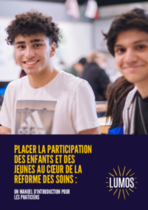
Putting Children and Young People at the Heart of Care Reform is an introductory manual aimed at practitioners. The manual provides a comprehensive overview of how to meaningfully engage children and young people in care reform. It covers the legal and theoretic framework, the basics in how to engage with children and young people, how to be inclusive and practical ways to engage children and young people in monitoring and evaluation. It also has an extensive chapter on how children and young people can and should be involved throughout care reform, from making decisions about their own care, right up to engaging in global policy decisions. It will challenge readers to increase participation in their own work and equip them with tools to do so in a safe and meaningful way.
This Handbook explains the processes of the Foster Care Programme based on the “Manual on Foster Care for UASC”, which sets the minimum standards for providing foster care for children without parents or an adult to care for them in Malaysia.
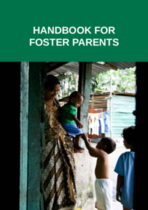
This is a child-friendly summary of a handbook developed specifically to create a Foster Care Programme for unaccompanied and separated children (UASC) within the Rohingya community in Malaysia.
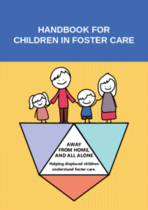
This is a child-friendly summary of a handbook developed specifically to create a Foster Care Programme for unaccompanied and separated children (UASC) within the Rohingya community in Malaysia.
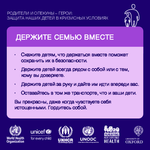
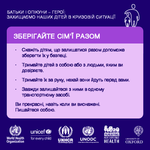
Це керівництво складено таким чином, щоб забезпечити базове розуміння того, як надавати першу психологічну допомогу в умовах надзвичайного стану. Воно засноване на Керівництві Всесвітньої організації охорони здоров'я з надання першої психологічної допомоги для працівників, які працюють на місці (2011), та було адаптоване спеціально для надання допомоги біженцям з України в умовах Молдови.
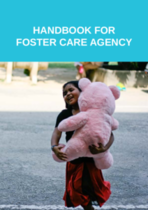
This handbook was developed specifically to create a Foster Care Programme for unaccompanied and separated children (UASC) within the Rohingya community in Malaysia. Article 20 (Children deprived of family environment) and Article 22 (Refugee children) of the Convention on the Rights of the Child (CRC) require that special care arrangements and protection are provided for UASC while preserving their ethnicity, religion, culture and language. In the case of Rohingya UASC, this calls for a special Foster Care Programme where these children are placed under the care of families from the Rohingya refugee community.
A documentary from UNICEF Ghana on the work of BRAVEAURORA in order to raise awareness about the harm of residential care.
The Community Placement and Case Management (CPCM) Programme aims to provide a holistic case management system that specifically looks into the protection concerns of migrant, undocumented, stateless, refugee, and asylum seeking Unaccompanied and Separated Children (UASC) at risk of arrest and detention and those directly affected by immigration detention in Malaysia.
The Task Force on Foster Care of the Transforming Children's Care Global Collaborative Platform held the third webinar in the spotlight series on Foster Care Practice on 2 June 2022.
This research aims to identify and better understand what it is that enables and challenges the necessary improvements needed at national and local level to support children and young people to successfully transition to adulthood.
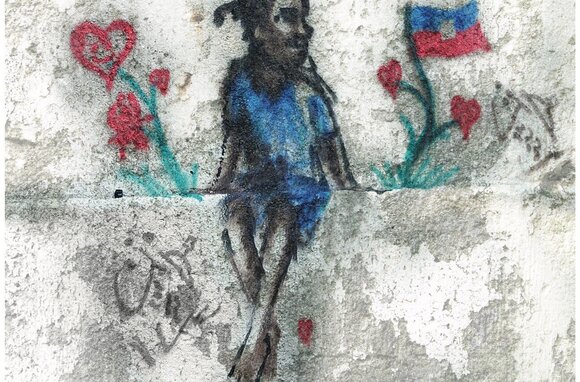
Not About Me is a feature documentary about good intentions and unintended consequences. When Morgan Wienberg, a well-meaning Canadian teenager, volunteers at a Haitian orphanage in the aftermath of the 2010 earthquake, her plans take a turn. She is part of an army of NGOs and volunteers with billions in promised aid, all rushing to respond to the disaster. But once on the ground, she begins to see their earnest actions have their own devastating impacts.
Through a new partnership between VOICE and HIAS, and as part of a six-country assessment in the region, VOICE conducted a three-week remote rapid assessment in Ukraine to assess the needs of women and girls affected by the war, and the needs of WROs and groups responding to the emergency. The assessment revealed that the top concerns for women and girls include threats to physical safety from active conflict and continual bombardment; food insecurity; and lack of access to healthcare, including the full range of reproductive health services, care for survivors of rape, and mental health.
This is the first report from The Promise Oversight Board on progress that Scotland is making to keep the promise. It was a promise made to care experienced infants, children, young people, adults and their families. It was also made to families who live around the ‘care system’ and whose lives are impacted by its decisions. The promise made reflects a commitment that had already been made through the National Performance Framework - that every child grows up loved, safe and respected and able to realise their full potential.

In the last decade, a lot of research has been undertaken on the issue of domestic or intimate partner violence in India but limited research has been undertaken on the issue from a child’s perspective, that is, intra-parental violence. The children – silent witnesses of intra-parental violence (IPV) are neglected not only by the parents but also by researchers and the state. Thus, there remain very few opportunities to bring the children to the notice of the society. Often the society and the legal systems designed to help victims of domestic violence fail to address the needs of the children due to lack of sensitivity towards their vulnerability. Ample laws do exist in India that deal with the issue of domestic violence, still there is a long way to go to understand the plight of children being exposed to IPV as silent witnesses and give it recognition as a social problem that requires legal intervention.
The European Parliament adopted a resolution on the impact of the war against Ukraine on women on 5 May 2022.
Communication from the Commission on Operational guidelines for the implementation of Council implementing Decision 2022/382 establishing the existence of a mass influx of displaced persons from Ukraine within the meaning of Article 5 of Directive 2001/55/EC, and having the effect of introducing temporary protection 2022/C 126 I/01.
During emergencies, such as conflict, it is a well-accepted principle of States’ obligations under international law that adoption is not an appropriate response for unaccompanied and separated children. This is a joint call for a moratorium on intercountry adoption in response to the conflict in Ukraine. In line with the Ukrainian Government’s suspension of intercountry adoption, the joint statement urges receiving States, international bodies, and humanitarian agencies to adopt a harmonised approach and call for a moratorium on intercountry adoptions from Ukraine.
The WHO European Framework for Action on Mental Health (EFAMH), covering the period 2021–2025, sets out a response to current mental health challenges arising from the negative impact that the COVID-19 pandemic has had on population mental health and well-being. The EFAMH provides a coherent basis for intensified efforts to mainstream, promote and safeguard mental well-being as an integral element of COVID-19 response and recovery; to counter the stigma and discrimination associated with mental health conditions; and to advocate for and promote investment in accessible quality mental health services. Implementation and monitoring of this Framework for Action will be powered by the Pan-European Mental Health Coalition, a flagship initiative of the European Programme of Work 2020–2025. Draft of this document was tabled as a background document for the discussion on mental health during the 71st session of the Regional Committee for Europe, Virtual session, 13–15 September 2021.
Collaborating across humanitarian sectors is crucial to protecting children, promoting their well-being, and making the most of available funding. The CPMS Working Group’s “Working Across Sectors” initiative is gathering technical resources to help practitioners from all sectors achieve just that. The new Working Across Sectors Toolkit for Building Awareness and Support in English, Arabic, French and Spanish contains a wealth of ready-to-use materials for communicating the benefits of cross-sectoral collaboration.
This report provides a review of international and national models of engagement, support and advocacy for parents who have contact with child protection systems. How statutory child protection systems engage with parents ultimately affects the outcomes for children, including safety, permanency and wellbeing. While social work practices that emphasise people’s self-determination and strengths are recognised as fundamental to eliciting change in parents when care standards have faltered, there is widespread acknowledgment of the struggle child protection authorities have to meaningfully engage parents and families.
This video explains the implementation of the UN Convention on the Rights of Persons with Disabilities in the European Union. The Committee is checking if the EU made progress in the implementation of the UN Convention on the Rights of Persons with Disabilities since 2015. The European Network on on Independent Living (ENIL) submitted a shadow report to the Committee. This video explains what you can find in ENIL's shadow report.
This video explains the implementation of the UN Convention on the Rights of Persons with Disabilities in the European Union. The Committee is checking if the EU made progress in the implementation of the UN Convention on the Rights of Persons with Disabilities since 2015. The European Network on on Independent Living (ENIL) submitted a shadow report to the Committee. This video explains what you can find in ENIL's shadow report.
This session on the central role of social protection in tackling child labour took place as part of the 5th Global Conference on Child Labour in Durban, South Africa, on May 18, 2022.
This webinar presents the findings from the stage one analysis of the legal, policy and procedural frameworks of orphanage trafficking in Cambodia, Uganda, and Nepal. It also featured presentations on the situation of orphanage trafficking from in-country investigators and experts.
The Eastern and Southern Africa Regional Learning Platform hosted a webinar on 11 May 2022 examining why it is important to align care systems in development and humanitarian contexts and provides practical examples from Kenya and Uganda.
There were an estimated 100,000 children in Ukraine’s institutions before Russia’s war on Ukraine which began in February 2022.
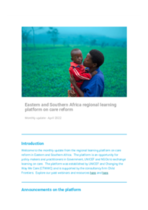
This is the first monthly update of the Eastern and Southern Africa Regional Learning Platform published in May 2022.
The European Commission has proposed a “10-Point Plan for stronger European coordination on welcoming people fleeing the war from Ukraine” (endorsed by the European Parliament and the Council) that includes: creation of an EU platform for registration; an EU level coordinated approach for transport and information hubs; and a call to enhance reception systems and ensure continuity of care and suitable accommodation, among others.
การศึกษาสถานการณ์การเลี้ยงดูทดแทนเด็ก (อพยพโยกย้ายถิ่นฐาน) ในพื้นที่อ. สังขละบุรี จ. กาญจนบุรี อาจารย์คณะสังคมศาสตร์ ม.มหิดล ร่วมกับมูลนิธิวันสกาย ทีมวิจัยได้ศึกษาสถานการณ์การเลี้ยงดูทดแทนในสถานรองรับในรูปแบบต่างๆ ไม่ว่าจะเป็นสถานสงเคราะห์เอกชน รร.ประจำ (สงเคราะห์) และวัด รวมทั้งการเลี้ยงดูทดแทนโดยเครือญาติ ผลของการศึกษาและข้อเสนอแนะ นำเสนอสู่กรมกิจการเด็กและเยาวชน และสำนักงานพัฒนาสังคมและความมั่นคงของมนุษย์ จ.กาญจนบุรี เพื่อดำเนินการการเลี้ยงดูทดแทนให้มีประสิทธิภาพและประสิทธิผลต่อไป
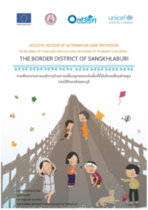
This review was conducted in different forms of institutional care: private residential care, (charity) boarding schools, and temple as well as (informal) kinship care. The findings and recommendations were presented to the Thailand Provincial Social Development and Human Security Office and the Department of Children and Youth to further develop an alternative care road map and plan of action.
On 7 April 2022, the European Parliament adopted a resolution on "EU Protection of Children and Young People Fleeing the War Against Ukraine" calling for greater protection of children fleeing war in Ukraine, particularly vulnerable children, for the registration of children entering the EU from institutional care, as well as monitoring their well-being and location in the EU. MEPs called on member states to halt child adoptions in order to avoid further or permanent separation of children from their parents and families against their best interests.
The European Parliament adopted this resolution on the "Protection of the Rights of the Child in Civil, Administrative and Family Law Proceedings" on April 5, 2022.
These advocacy messages have been developed to support advocacy efforts conducted by Alliance members and wider humanitarian actors responding to and working on the Ukraine crisis response. The global subgroup on Children's Care and Ukraine, which is co-led by the Alliance's Unaccompanied and Separated Children Task Force (UASC) and the Global Collaborative Platform on Transforming Children's Care, developed the messaging for the UASC section.
Placer les enfants et les jeunes au cœur de la réforme des soins est un manuel d’introduction destiné aux praticiens. Le manuel fournit un aperçu complet de la façon d’impliquer de manière significative les enfants et les jeunes dans la réforme des soins. Il couvre le cadre juridique et théorique, les bases de l’engagement avec les enfants et les jeunes, la manière d’être inclusif et les moyens pratiques d’impliquer les enfants et les jeunes dans le suivi et l’évaluation. Il contient également un chapitre détaillé sur la manière dont les enfants et les jeunes peuvent et doivent être impliqués tout au long de la réforme des soins, depuis la prise de décisions concernant leurs propres soins jusqu’à l’engagement dans des décisions politiques mondiales. Il mettra les lecteurs au défi d’accroître leur participation à leur propre travail et de les doter d’outils pour le faire de manière sûre et significative.
Situar la participación de niños, niñas o adolescentes y jóvenes al centro de la transformación del cuidado es un manual introductorio dirigido a los profesionales. El manual proporciona una visión general completa de cómo involucrar significativamente a los niños y jóvenes en la reforma del cuidado. Cubre el marco legal y teórico, los conceptos básicos sobre cómo interactuar con los niños y los jóvenes; Cómo ser inclusivos y formas prácticas de involucrar a los niños y jóvenes en el monitoreo y la evaluación. También tiene un extenso capítulo sobre cómo los niños y los jóvenes pueden y deben participar en la reforma del cuidado, desde la toma de decisiones sobre su propio cuidado, hasta la participación en decisiones de política global. Desafiará a los lectores a aumentar la participación en su propio trabajo y los proveerá con herramientas para hacerlo de una manera segura y significativa.
Poziționarea Copiilor și a Tinerilor în Centrul Reformei Sistemului de Îngrijire este un manual introductiv destinat practicienilor. Manualul oferă o imagine de ansamblu extensivă asupra modului de implicare semnificativă a copiilor și a tinerilor în reforma sistemului de îngrijire. Acesta acoperă cadrul juridic și teoretic, elementele de bază pentru implicarea copiilor și a tinerii cu experiență trăită în mod incluziv și modalități practice de antrenare a copiilor și a tinerilor în monitorizare și evaluare. De asemenea, are un capitol amplu despre modul în care copiii și tinerii pot și ar trebui să fie implicați pe întreg parcursul reformei sistemului de îngrijire, de la luarea deciziilor cu privire la propria lor îngrijire, până la implicarea în deciziile de politică globală. Manualul va provoca cititorii să sporească implicarea copiilor și a tinerilor cu experiență trăită în munca lor și îi va dota cu instrumentele necesare pentru a realiza această implicare într-un mod sigur și semnificativ.
Disability Rights International (DRI) published these recommendations in response to a visit to Ukraine’s institutions for children with disabilities in late April 2022. DRI visited three facilities for children aged six to adult, and one “baby” home for children from birth to age six.
DRI found that Ukraine’s children with disabilities with the greatest support needs are living in atrocious conditions – entirely overlooked by major international relief agencies and receiving little support from abroad.

The Task Force on Foster Care of the Transforming Children's Care Global Collaborative Platform held the second spotlight webinar series on identifying foster carers on 5 May 2022.
The purpose of this U.S.-based study was to determine whether children with developmental disorders (DDs) in protective custody are more likely to experience specific placement types and stay in care longer than their typically developing peers. Furthermore, in the DD-only group, the authors examined whether the likelihood of each placement type differed by specific DD diagnosis.
This chapter in the "Attachment-Informed Parent Coaching" book discusses how to use attachment-informed parent coaching to help children in foster care heal from the multiple layers of attachment trauma they have experienced. The author describes how to help children in foster care develop healthier relationships with both foster and biological parents.
This paper describes a mixed methods approach that was applied to evaluate the complex intervention Fostering Connections: The Trauma-Informed Foster Care Programme, a recently developed trauma-informed psychoeducational intervention for foster carers in Ireland.
Young Australians exiting Out-of-Home Care (OOHC) face some of the most challenging access to justice issues due to experiences of trauma, increased interactions with the justice system, distrust of government services, high rates of socioeconomic disadvantage and a lack of accessible support services. This article outlines the experience of the Mid North Coast Legal Centre (MNCLC) which, through the LevelUP Project, aimed to bridge this access to justice gap with a shake-up of the traditional legal services model. Through this experience, MNCLC offers some suggestions for legal centres seeking to improve access to justice for this disadvantaged group.
This article explores neighbour protective intervention (protective informal social control) in child neglect. It draws on narrative interviews with seventeen female parents from seven settlements in Ghana.
The aim of this study is to analyse the consequences after one year of the pandemic on a group of children and adolescents assessed at the beginning of the pandemic in 2020 and to determine the most effective ways of psychologically coping with this pandemic.
This study examines the perceptions of 145 incarcerated mothers of minor children in a large Midwestern jail to understand the correlation between where their children are living during their incarceration and the mothers’ feelings about these placements and relationships with their children. Mothers were most satisfied if children lived with maternal grandparents, and least satisfied if children were in foster care. Women with higher scores for the relationship with close relatives, those having contact with their child(ren) while incarcerated, and mothers with no children in foster care reported feeling better about these placements. The findings highlight the importance of women maintaining contact with their children and their children’s caretakers while incarcerated.
This study, based on interviews with 10 Aboriginal and Torres Strait Islander youth from Victoria and Western Australia (who were a sub-set of a larger study of 34 care leavers), examined their transition experiences and outcomes in relation to accessing stable and affordable housing. While all care leavers spoke of poor or non-existent transition planning, Aboriginal and Torres Strait Islander participants were more likely to report incidences of homelessness and more complex experiences in a range of areas. Importantly, the group identified a need for culturally appropriate service models which built on and enhanced cultural and kinship connections.
Many young people in foster care experience significant mental health difficulties, leading to attendance at services where engaging them in psychotherapy that adequately meets their diverse needs is an ongoing challenge. This Ireland-based study illuminates the inherent challenges of working with this population, while informing practice about how to engage with young people in foster care in a meaningful and helpful way.
The internalizing behavior problems (IBPs) of left-behind children (LBC) due to parental migration are a widespread public health concern in China. A previous study showed that the detection rate of behavioral problems in the Hui was far higher than in the LBC of the Han nationality. However, to date, limited research has focused on IBPs in Chinese LBC of the Hui nationality. The aims of this present study are to explore the prevalence of IBPs and the influencing factors among the Hui LBC in the rural areas of China.
Emerging evidence suggests that distant placements and multiple moves may be detrimental to young people in care settings. Less is known about the characteristics of young people in secure care most affected by these processes. This UK study examined distance from home and number of previous placements in English young people detained in secure care and their relationships with organisational and individual characteristics.
This qualitative interview study assessed the pandemic’s impact on the educational experiences of foster youth in the United States from the perspectives of their caseworkers. Participant caseworkers discussed how the pandemic affected the academic progress and social/emotional development of youth in foster care and highlighted some challenges of online learning.

This paper describes tradeoffs in child welfare policy in the United States and provides background on the latest trends in foster care practice to highlight areas most in need of rigorous evidence. These trends include efforts to prevent foster care on the demand side and to improve foster home recruitment on the supply side. With increasing data availability and a growing interest in evidence-based practices, there are opportunities for economic research to inform policies that protect vulnerable children.
In this video Simon Kanyembo, Director of Social Services at ACE Zambia, addresses the following questions: why child welfare organizations should prefer family-based care to institutional care and response to children who are abandoned or unable to be reintegrated.
In this video Chilala Shilimi Nyendwa, Manager of the Family Preservation and Empowerment Program for ACE Zambia, addresses the following questions: social stigma facing reintegrated children; ability of families to financially support their children and how organizations might respond when families cannot; and child safety outside of institutional care.
In this video Daisy Muzukutwa, Executive Director of ACE Zambia, addresses the following questions: financial viability of reintegration; future of institutional staff after the transition; and where to begin when considering a transition.
This is the second monthly update of the Eastern and Southern Africa Regional Learning Platform published in April 2022.
In this best practice article, the challenges faced by these children with disabilities and the potential for inclusion within the CCI are discussed based on the field action project intervention of the Tata Institute of Social Sciences (TISS), Mumbai, with selected government CCIs. The article suggests a multi-pronged intervention approach for the Children with disability (CWD) at the levels of the individual CWD, peer group, CCI and the juvenile justice (JJ) System, which are together recognised as the stakeholders of an ‘inclusive ecosystem’. The article arrives at the ‘Inclusive Ecosystem Model of Rehabilitation’ by drawing from the individual–environment interaction model of disability.
This article identifies risks and vulnerabilities that child monks can face, including sexual abuse. It reflects on how aspects of entrusting young children to live as child monks do not necessarily fit with principles articulated in the Convention on the Rights of the Child (UNGA, 1989) and the United Nations Guidelines for the Alternative Care of Children (UNGA, 2009).
The Task Force on Foster Care of the Transforming Children's Care Global Collaborative Platform held the first spotlight webinar series on foster care practice on 7 April 2022.
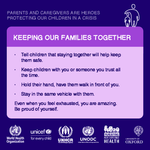
This new set of evidence-based parenting tips were developed in response to the war in Ukraine and focus on the prevention of child trafficking and child sexual violence.
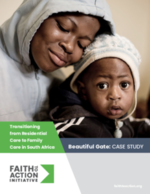
Engaging with key stakeholders is an essential part of any transition and must be handled with tact and wisdom. Located in South Africa, the organization Beautiful Gate began its ministry to protect street children and later grew to provide residential programs for children in need. Yet, as they began to learn more about the needs of children in families, they decided to shift away from residential care and expand their services to include the families of the children they served. This case study summary explains how Beautiful Gate communicated these changes with donors.
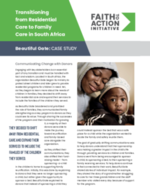
This case study documents the successful transition of Beautiful Gate, a children's home in Cape Town, South Africa, from the orphanage model to a family-based and community-based approach.
This article explores the role resilience processes play in education and well-being outcomes for street-connected children. It draws on research and practice undertaken as part of the Building with Bamboo Programme (BwB) on resilience. BwB investigated the forms a resilience-based approach might usefully take in practice, the effect this has on promoting resilience in children, and how this resilience leads to improved outcomes in their lives.
In this editorial published in the special edition of the Global Studies of Childhood journal focused on separated childhoods in April 2022, the authors aim to create the space to gather and share new findings from around the world, especially evidence that centres on the voices of children and family members with lived experience of separation, and on the practical experiences of social service workforce who are key to providing adequate support to strengthen the capacity of families to remain together and to reunite safely.
The Eastern and Southern Africa Regional Learning Platform hosted a webinar on April 13, 2022, featuring a panel of people with lived experience in care.
Despite high risks en route and upon arrival, Rohingya movement to Malaysia continues. This snapshot focuses on the specific risks facing Rohingya women and children before leaving Myanmar or Bangladesh, during their journey, and upon arrival in Malaysia. MMC Asia has been conducting survey with Rohingya in Malaysia since January 2019 in order to better understand their migration experiences. This snapshot contributes to building a solid evidence base to inform targeted responses that improve protection for Rohingya refugees and inform advocacy efforts related to movements to Malaysia.
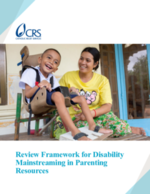
This Framework for Disability Mainstreaming in Parenting Resources is a tool to help organizations and practitioners to review existing parenting resources in terms of information and content gaps, limitations of instructional guidance, and at-home activities. The aim of the framework is to ensure parenting resources are inclusive of the needs of parents of children with disabilities ages 0 to 17 years.
Informed by a case review of 36 Guatemalan children supported to reintegrate into families, and interviews with social workers and psychologists engaged in the process, this article explores the role of the “community connectedness” wellbeing domain. The authors explore how community connectedness or lack thereof, can contribute to child and parent/caregiver wellbeing and successful reintegration—the different types of community connectedness and who/what was involved in establishing and fostering these connections.
The International Data Alliance for Children on the Move (IDAC) held this webinar on April 11, 2022, to discuss the need for concrete data and information crucially needed to support affected children inside and outside Ukraine. Representatives of countries directly affected by the Ukrainian crisis as well as key partners on the ground shared their insights.
This study looked at how well matched children in England are to their homes and the extent to which their participation, views, wishes and feelings are considered in the decision-making process. The study looked at a small group of children who have a very wide and diverse set of needs and who live in children’s homes that were visited by Ofsted inspectors in late 2019.
Typical large-group institutions for abandoned children or orphans are known to be bad for the development of children, but what about small-group care?

The report shows that, overall, although legislative changes have taken place in many Member States, national guardianship systems continue to face many challenges. The guardianship systems also still vary greatly across the EU.
This case study focuses on kinship care in the Kenya context. The purpose is to help practitioners better understand the practical implications of kinship and other forms of family-based alternative care and inform similar work in other contexts.
These two case studies focus on kinship care: one describes kinship care in the Kenya context and the other describes family-based alternative care in Guatemala, including kinship care. They are meant to help practitioners better understand the practical implications of kinship and other forms of family-based alternative care and inform similar work in other contexts. These case studies have been produced by Changing the Way We CareSM, a global initiative implemented by Catholic Relief Services and Maestral International, and other global, national and local partners working together to change the way we care for children around the world.
El mecanismo de prevención de la separación familiar innecesaria entre Cambiando la forma en que CuidamosSM y la Procuraduría General de la Nación, es un informe que resume la experiencia de Cambiando la forma en que CuidamosSM Guatemala en la implementación de una ruta de prevención de la separación familiar innecesaria con una entidad de gobierno responsable de velar por el cumplimiento de derechos de los NNA, este procedimiento fue realizado con el objetivo de evitar la separación familiar innecesaria a través del seguimiento del caso y la derivación a servicios sociales y especializados, el informe también narra la experiencia en la implementación de juntas técnicas de análisis de caso para determinar el mejor interés para los NNA y familias, este informe está dirigido a profesionales que trabajan con niñes y adolescencia y que están interesados en implementar procedimientos para cerrar la puerta de entrada al cuidado residencial.
Данное руководство предназначено для детей и молодежи, выходящих или вышедших из служб альтернативного ухода, и содержит информацию и советы, которые помогут им развить навыки, необходимые для жизни. Государственным учреждениям, некоммерческим организациям, а также всем, кто предоставляет поддержку молодым людям покидающим службы ухода, рекомендуется распечатать и распространить среди них данное руководство.
Acest ghid este destinat copiilor și tinerilor care sunt pe cale de a ieși sau deja au ieșit din serviciile de îngrijire alternativă și oferă resurse și sfaturi pentru dezvoltarea abilităților practice de integrare în societate pentru acest grup. Instituțiile guvernamentale, organizațiile non-guvernamentale, societatea civilă și alți actori care susțin acest grup sunt încurajați să tipărească acest ghid și să-l distribuie printre copii și tineri.
This guide is for children and young people who are about to leave or have left alternative care services and provides life skills resources and advice targeted to this group. Government institutions, non-profits, civil society, and other actors supporting this group are encouraged to print and distribute this resource to them.
Since the start of war in Ukraine, more than 4 million people have fled, half of whom are children. As of today there is the Mylifejourneybook for these children: an activity book in which children can write their experiences of the journey, but also their memories of Ukraine and their hopes for the future. The book can be downloaded free of charge for everyone at www.lifebookforyouth.com/mylifejourneybook

The Toolkit is intended for field practitioners working with Children Associated with Armed Forces and Armed Groups (CAAFAG), who are interested in designing and implementing quality, gender-sensitive and participatory programming.
A joint endeavor of Watchlist on Children and Armed Conflict, the Alliance, and its CAAFAG Task Force, the operational guidance aims to support the signing and implementation of handover protocols. It provides child protection actors with good practices, lessons learned, and other useful information on previous and ongoing negotiations and implementation processes in various countries.
Останній раунд дослідження, яке провела МОМ, був завершений, а його результати презентовані 5 квітня, унаслідок чого вдалося оновити дані щодо кількості ВПО в Україні, яка нині становить 7,1 мільйона осіб (на 10% більше порівняно з попередньою цифрою). Цей раунд опитування також продемонстрував зростання кількості ВПО з числа мешканців Півночі (Суми, Житомир, Чернігів) та Києва.
The latest round of IOM’s survey was completed and presented on 5 April, leading to the updated population figure of 7.1 million IDPs in Ukraine (10% increase compared to the previous round). The second round also observed an increase of IDPs coming from Northern areas (Sumy, Zhytomyr, Chernihiv) and Kyiv.
This book presents new and vivid findings concerning the extensive vulnerability of this population of children at the point of entry to care. It also shows that there is much to learn at an international level from the experiences of those involved in mandatory face-to-face post adoption contact - a uniquely Australian policy. The book provides evidence which shows how continuing post-adoption contact was experienced by adoptees and their adoptive parents. This book is open access, which means that you have free and unlimited access.

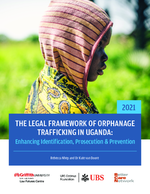
This report seeks to examine Uganda’s legal and policy framework to identify the relevant offences and mechanisms that could contribute towards the development of a prosecutorial strategy for orphanage trafficking in Uganda.
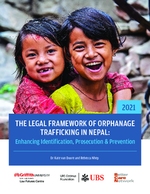
This study examines Nepal’s compliance with international legal obligations, its child protection and anti-trafficking laws, and its criminal and procedural laws that regulate illegal transfer and trafficking of children. The study also raises issues regarding victim identification, inspection of child care homes and complaint mechanisms.
Orphanage trafficking occurs at the nexus of criminal law (human trafficking offences) and child protection regulation. This report examines the intersection of these two legal systems for the purpose of developing a strategy to identify and prosecute orphanage trafficking.
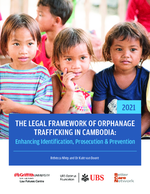
This study assesses and maps the legal, policy and procedural frameworks in both domestic and international law across Nepal, Uganda and Cambodia, where orphanage trafficking continues to undermine domestic efforts to stem the overuse of institutionalisation of children.
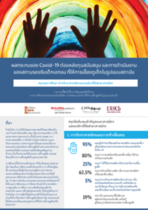
โควิด-19 ก่อให้เกิดการหยุดชะงักอย่างไม่เคยปรากฏมาก่อนในระดับโลก รัฐบาลบังคับใช้มาตรการด้านสาธารณสุขในวงกว้าง ซึ่งรวมถึงคำสั่งให้อยู่บ้าน เคอร์ฟิว และข้อจำกัดการเดินทาง มาตรการเหล่านี้มีผลกระทบทั้งทางตรงและทางอ้อมต่อการจัดหาบริการดูแลเด็กในที่พักอาศัย และบังคับให้สถาบันดูแลที่อยู่อาศัย (RCI) ต้องเ

การศึกษานี้เป็นงานวิจัยเชิงคุณภาพขนาดเล็กที่เกี่ยวข้องกับการสัมภาษณ์แบบกึ่งโครงสร้าง 21 ครั้งกับผู้ก่อตั้ง ผู้ให้ทุน และผู้อำนวยการ RCI ใน 7 ประเทศ ได้รับการออกแบบมาเพื่อให้เข้าใจผลกระทบของโควิด-19 ได้ดีขึ้นในการดำเนินงานของสถาบันการดูแลที่อยู่อาศัย ซึ่งรวมถึงการจัดหาเงินทุน การจัดหาบุคลากร อาสาสมัคร การดูแลเด็ก การศึกษา ความสัมพันธ์ในครอบครัว และการรวมตัวกลับคืนสู่สังคม
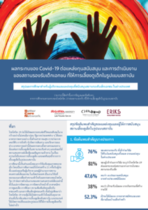
เอกสารสรุปนี้ดึงข้อมูลและผลการวิจัยจากรายงาน: ผลกระทบของ COVID-19 ต่อสถาบันการดูแลที่อยู่อาศัยที่ดำเนินการโดยเอกชน: ข้อมูลเชิงลึกและนัยสำหรับการสนับสนุนและการให้ความรู้
เอกสารสรุปนี้ดึงข้อมูลและผลการวิจัยจากรายงาน: ผลกระทบของ COVID-19 ต่อสถาบันการดูแลที่อยู่อาศัยที่ดำเนินการโดยเอกชน: ข้อมูลเชิงลึกและนัยสำหรับการสนับสนุนและการให้ความรู้
In response to requests for information, ECRE has compiled a non-exhaustive document of measures taken by European countries to address the arrival of people fleeing the war in Ukraine (UA). The document provides country-by-country information regarding two main areas of policy and legal developments in response to arrivals from UA: the first part identifies measures adopted on entry/stay requirements, reception-related arrangements, as well as asylum procedures; the second part provides information on national measures implementing the Council implementing decision of the Temporary Protection Directive, or establishing other special statuses for persons fleeing Ukraine.
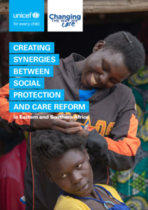
Social protection is increasingly being used in Eastern and Southern Africa to address economic and social vulnerability. Many governments in the region are also engaged in care reform to prevent family separation, support families to care for children well and provide quality alternative care. The same frontline workers are also often engaged in these two streams of work. This paper provides an outline of the key concepts and processes involved in social protection system strengthening and care reform and makes an argument for encouraging greater synergies between these two systems.